

REVIEW · JEWISH HERITAGE TOURS
Jerusalem Jewish Orthodox Neighborhood Walking Tour
Stepping into Mea She’arim feels like getting a front-row seat. This tour is led by a local guide and mixes practical street-level context with real-world stops like a working synagogue, a bakery tasting, and a visit to a neighborhood library. I also like that it includes a home visit concept, not just photos and passing glances.
One thing to weigh: parts of the day can depend on access and schedules. If you’re hoping for every single listed stop every time, keep expectations flexible, and remember food and drinks are not included.
In This Review
- Key things I’d watch for on this Jerusalem Jewish Orthodox Tour
- How this tour gives you more than a checklist
- Davidka Square to start, a practical place to regroup
- Me’a She’arim streets: symbols, customs, and the rules you notice
- A working synagogue, not just a photo stop
- Community center and soup kitchen: where help becomes visible
- Bakery stop: rugelach and challah time, with an important budget note
- The Hasidic tomb stop: spiritual geography you can feel
- Meeting a Haredi family in their home, and why access matters
- Neighborhood library and ancient religious artifacts
- Price and logistics: $45 is fair for this kind of access
- What to wear, how to act, and how to make it easier for everyone
- Who should book this tour, and who might prefer something else
- Should you book the Jerusalem Jewish Orthodox Neighborhood Walking Tour?
- FAQ
- What is the meeting point for the Jerusalem Jewish Orthodox Neighborhood Walking Tour?
- What time does the tour start?
- How long is the tour?
- What is included in the price?
- Do I need a modest dress code?
- Will I taste any Jewish pastries?
- How big is the group?
Key things I’d watch for on this Jerusalem Jewish Orthodox Tour
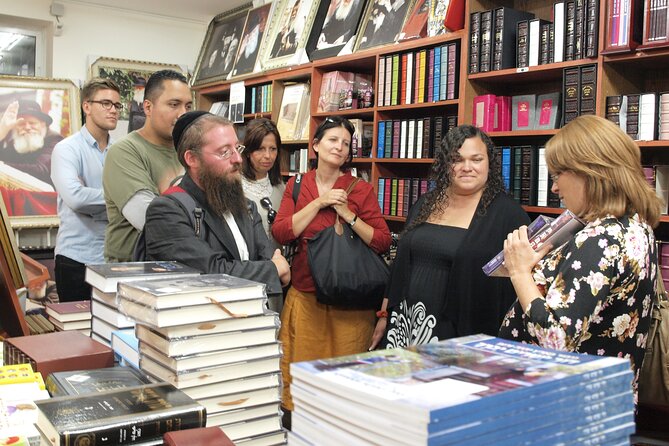
- A local guide from inside the community, including clear answers to questions you actually have
- Stops that go beyond street viewing, including a working synagogue and community services like a soup kitchen
- Bakery time with Jewish pastries such as rugelach and challah, plus bread
- Sacred sites you can map in your head, including an important Hasidic tomb
- A neighborhood library visit with ancient Jewish religious artifacts
- A small group size, with a maximum of 20 people, which helps you ask questions
More Jewish heritage walks, from Safed to the Old City
How this tour gives you more than a checklist
This isn’t a museum walk where the whole point is looking, reading, and moving on. It’s a neighborhood visit designed to explain how Haredi life works day to day, with the guide pointing out religious symbols, customs, and the logic behind ordinary routines. That is the real value here: you get cultural context as you’re standing in the street, not just after you get back to your hotel.
The tour is also structured around “people and places.” You spend time at community spaces like a synagogue and a community center, then you shift toward everyday culture like bakery stops, and finally you add the heavier spiritual layer with a Hasidic tomb and religious artifacts.
The group stays small (up to 20), which matters in a place like this. It keeps things calmer for you, and it makes it easier for a guide to pause and answer questions instead of rushing you through everything.
Davidka Square to start, a practical place to regroup
Your day starts at Abraham Jerusalem on Ha-Nevi’im Street (67), with a start time of 4:30 pm. Davidka Square is a strong launch point because it’s a real Jerusalem junction, not a hidden back alley. You’ll see how the area connects to major movement routes and services nearby, including the light rail station and the pedestrian areas that feed into the market district.
Why that matters: it helps you get your bearings quickly before you step into a neighborhood where things feel more protected and inward. Davidka Square also gives you a clear “before” moment. You can look around at the flow of people and transportation, then your guide transitions the conversation into what life looks like once you’re inside the Haredi area.
Even though this stop is only about 15 minutes, it’s the kind of timing that works well. You get oriented, you don’t feel locked into a long first segment, and you’re ready for the walking.
Me’a She’arim streets: symbols, customs, and the rules you notice
Me’a She’arim is where the tour really turns from general Jerusalem to a specific way of life. Your guide brings you through nearby streets in the Haredi neighborhood, pointing out what to notice, like how people dress, what kinds of signs and markers you might spot, and how public space is used differently here than in many other parts of the city.
This is also where a guided explanation makes a huge difference. If you’re traveling without context, the neighborhood can feel like you’re observing from far away. With a local guide, you learn what religious meaning certain details carry, and why community life is organized the way it is.
One more practical point: you’ll need modest dress for both men and women. This isn’t just “be respectful” advice. In this neighborhood, your clothing helps you move comfortably through spaces where visitors are expected to blend in rather than stand out.
More Israel taken at walking pace

A working synagogue, not just a photo stop
One of the strongest parts of the tour is the focus on religious spaces that are active, not closed for tourists. You’ll visit a working synagogue and also see how community life connects to other services around it, including a community center and a soup kitchen.
In real terms, this means you’re not only looking at architecture. You’re learning how a synagogue fits into a broader network. Religious life here is not separate from everyday support. The tour places you where those connections become visible.
That said, access can vary. Some experiences may only allow viewing from outside if timing or rules require it. So if a full interior visit is a must for you, plan to be flexible. The guide can still provide meaning even if entry is limited.
Community center and soup kitchen: where help becomes visible
Seeing a soup kitchen and a community center is one of those “you learn by seeing” moments. It helps you understand that the Haredi community is not just faith and study in theory. It’s also mutual aid, structure, and care for neighbors.
Even when you don’t speak the language, you can read the purpose of these places. The tour turns that observation into explanation: what the community is trying to accomplish, and how these services reflect values in daily life.
For you as a traveler, this can also change your perspective. Jerusalem can be easy to treat like a set of landmarks. This tour reminds you that local communities exist there, functioning in real time.
Bakery stop: rugelach and challah time, with an important budget note
One of the most enjoyable segments is stepping into a bakery and sampling Jewish pastries and bread. Rugelach and challah are specifically mentioned, and the setting is part of the fun. Food turns the cultural lesson into something you can taste and remember.
Now, the budget reality: food and drinks are not listed as included. That means you should treat tastings as part of the experience, but you might still pay if you want additional items beyond the sampling. If you’re the type who always tries one extra pastry just because it looks good, bring a bit more cash or card space than you think you need.
Also, expect this to be a short, sensory stop, not a long meal. The tour keeps moving, so eat lightly or plan to pick up snacks later if you’re hungry after the walk.
The Hasidic tomb stop: spiritual geography you can feel
You’ll also visit an important Hasidic tomb. This kind of stop can be surprisingly grounding because it gives you a concrete place to attach religious tradition and devotion to. Instead of only hearing stories about faith, you stand where belief is expressed through reverence, memory, and community practice.
What makes this worthwhile is the way the guide frames it. You start to see that the neighborhood isn’t random. Sacred points create a spiritual map, and community movement often relates to that map, even if visitors don’t immediately notice.
If you prefer quieter moments to process what you’re hearing, this is one part of the day that tends to slow down naturally. It’s also a good place to ask a question that feels personal, like how a tradition is practiced today.
Meeting a Haredi family in their home, and why access matters
The tour description includes an opportunity to be welcomed into a local family’s home and learn about their culture from the inside. This is the kind of experience that can feel special because it goes beyond public spaces.
However, home access can be sensitive and dependent on scheduling. If a family visit is your top priority, I recommend you arrive prepared to be flexible. A community home visit is not something a tour operator can force at the same moment for every group, and that’s simply part of how these community encounters work.
Even when home visits are limited, the tour still aims to deliver core cultural learning through synagogue, community services, bakery experiences, and the library visit.
Neighborhood library and ancient religious artifacts
Another standout element is the neighborhood library, where ancient Jewish religious artifacts are housed. This is where the tour becomes more tangible and educational in a quiet way. You’re not only hearing about tradition, you’re seeing physical materials that carry meaning over generations.
For many travelers, that shift from street life to preserved artifacts is what makes the day feel balanced. It prevents the tour from becoming only observational, and it gives you something to take home mentally, like how learning and faith are maintained through time.
Even if you’re not a scholar, you’ll likely appreciate this stop. It’s the kind of visit that makes you slow down and look carefully, and a good guide can explain what you’re seeing in terms that actually make sense.
Price and logistics: $45 is fair for this kind of access
At $45 per person, this tour sits in a value range for Jerusalem guided experiences. The reason it can be worth it is not the walking itself. It’s the access and guidance: working religious spaces, community services, bakery sampling, a Hasidic tomb stop, and time in a library with ancient artifacts. Those elements require more coordination than a generic sightseeing walk.
The main logistic note is that duration can feel fluid. The overview talks about a longer walking tour feel, while the summary lists around 2 hours 30 minutes. Either way, you should plan for an afternoon that turns into early evening on foot. The start time is 4:30 pm, and the neighborhood experience tends to benefit from a calmer light and less midday rush.
You’ll also get a mobile ticket, which keeps things simple when you’re meeting up. Confirmation is received at booking time, and the tour is capped at 20 people.
What to wear, how to act, and how to make it easier for everyone
This is one of those tours where your behavior can make or break the experience for you. The modest dress code requirement is clear for both men and women. Dress in a way that covers appropriately and helps you feel comfortable inside religious community spaces.
A few more practical tips that are especially relevant here:
- Keep your phone use low and intentional, especially near religious spaces.
- Ask questions when your guide offers chances to do so. The best part of this tour is guided explanations, not silent wandering.
- Walk at a respectful pace. This is a working neighborhood, not a themed park.
If you follow that simple mindset, you’re more likely to get the best version of the tour: more conversations, more context, and fewer awkward “what are we allowed to do?” moments.
Who should book this tour, and who might prefer something else
Book this if you want more than standard sightseeing and you’re genuinely curious about how Haredi life is lived day to day. It’s ideal for:
- People who like neighborhood tours with a strong local guide component
- Travelers who want to connect religious practice to real community spaces like synagogues and community services
- Food-inclined visitors who enjoy cultural tasting moments like rugelach and challah
You might choose a different tour if you strongly need guaranteed interior access to every religious site or if you’re only interested in historical viewing. This experience depends on access and community schedules for certain encounters, like a family home visit.
Should you book the Jerusalem Jewish Orthodox Neighborhood Walking Tour?
I think it’s a smart booking for the right traveler. If you want context from a local guide and you’re open to a guided walking day that includes community spaces, a bakery tasting, a Hasidic tomb, and a library with ancient artifacts, this is a strong fit for $45.
Just don’t treat it like a locked itinerary where every door always opens. The tour’s concept includes meaningful experiences, but community access can be variable. If you keep your expectations realistic, you’ll end up with the kind of day that feels personal and grounded, not staged.
FAQ
What is the meeting point for the Jerusalem Jewish Orthodox Neighborhood Walking Tour?
The meeting point is Abraham Jerusalem, Ha-Nevi’im St 67, Jerusalem 9470211, Israel.
What time does the tour start?
The start time listed is 4:30 pm.
How long is the tour?
The duration is listed as approximately 2 hours 30 minutes, and the overall tour description also refers to a 4-hour style walking experience.
What is included in the price?
The guided tour is included. Food and drinks are not included.
Do I need a modest dress code?
Yes, a modest dress code is required for both men and women.
Will I taste any Jewish pastries?
The tour description includes sampling Jewish pastries such as rugelach and challah at a bakery, plus bread.
How big is the group?
The tour has a maximum of 20 travelers.
Other Tours We Have Reviewed in Israel
- From Jerusalem: Masada & Dead Sea Full Day Tour with Pick Up
★ 4.5 · 815 reviews - From Jerusalem: Nazareth and Sea of Galilee Tour
★ 4.5 · 588 reviews - From Jerusalem: Masada&Dead Sea Tour INCLUDING ENTRANCE FEES
★ 4.3 · 392 reviews - Jerusalem: Guided Walking Tour of the Old City
★ 4.7 · 386 reviews
More Israel Tour Reviews
- From Jerusalem: Masada & Dead Sea Full Day Tour with Pick Up
★ 4.5 · 815 reviews - Masada and the Dead Sea Day Trip from Jerusalem
★ 4.5 · 757 reviews - From Jerusalem: Nazareth and Sea of Galilee Tour
★ 4.5 · 588 reviews - Nazareth and the Sea of Galilee Day Trip from Jerusalem
★ 4.5 · 446 reviews
Jewish Heritage on Foot in Israel
- Jerusalem: Meet the Orthodox Jews Tour
★ 4.9 · 103 reviews - Jerusalem: Old City Shabbat Experience and Walking Tour
★ 4.8 · 8 reviews - Experience Shabbat With Dinner In Jerusalem
★ 5.0 · 5 reviews
Recently Added Israel Tour Reviews
- jerusalem classic tour★ 5.0 · 3 reviews
- Private Walking Tour in Jerusalem’s Old City★ 5.0 · 3 reviews
- Private Tour Bethlehem and the Dead Sea★ 5.0 · 3 reviews
- Jerusalem Temple Mount & Dome of the Rock★ 4.5 · 3 reviews
- Jerusalem and the Dead Sea★ 5.0 · 3 reviews
Jewish Heritage Tours, compared.
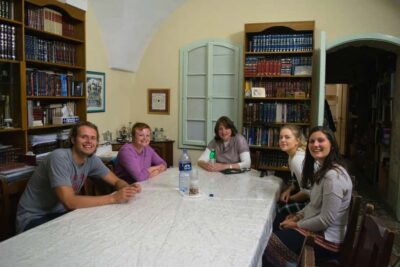 ★ 4.9Jerusalem: Meet the Orthodox Jews TourFrom $53103 reviews
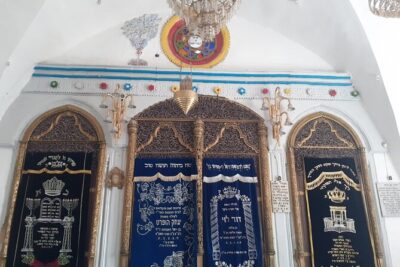 ★ 5.0Kabbalah Heritage WalkFrom $4523 reviews
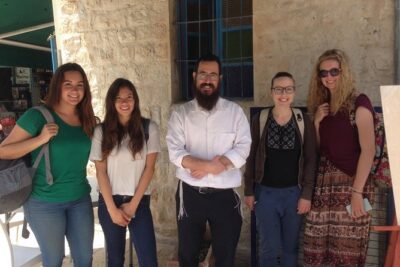 ★ 5.0Tour The Mystical City Of SafedFrom $48511 reviews
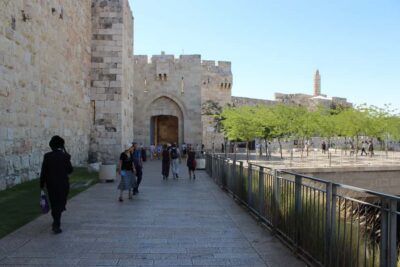 ★ 4.8Jerusalem: Old City Shabbat Experience and Walking TourFrom $478 reviews
 ★ 5.0Experience Shabbat With Dinner In JerusalemFrom $1815 reviews
Lists this tour appears in