
REVIEW · JERUSALEM OLD CITY
Private Walking Tour in Jerusalem’s Old City
Jerusalem’s Old City can feel like a jumble of stones and stories. This private walking tour turns it into a clear, human route through four quarters and the Temple Mount, guided by Orna Simchi, a licensed guide certified through Israel’s Ministry of Tourism. You’ll get the big picture of how these places tie to Judaism, Christianity, and Islam, plus the everyday connections locals still make today.
What I like most is the way Orna ties architecture to lived meaning, from the walls at Jaffa Gate to the twists of the Cardo. I also like the pacing: six hours that actually gives you time to look, ask, and understand what you are seeing instead of rushing like a checklist.
One consideration: this is a holy-sites tour with security and dress requirements, and parts of the route can shift around Temple Mount access rules on Fridays, Saturdays, and holidays.
In This Review
- Quick hits before you go
- Jerusalem’s Old City, mapped for first-time clarity
- Starting at Jaffa Gate: the walls, the breach, and the quiet mysteries
- Armenian Quarter pause at James Cathedral: why one community built a home
- Jewish Quarter, synagogues, and the Cardo: names you can connect
- Western Wall and why it is not the only holy point
- Temple Mount: sacred for Judaism and Islam, with real access rules
- Muslim Quarter: markets, spices, and a short sweet break
- Via Dolorosa and the Church of the Holy Sepulchre: tight lanes, big emotions
- Christian Quarter finishing stops: local shops, stories, and a rooftop view
- Price and pacing: is $650 per group good value?
- Who this tour suits best (and who might want something different)
- Should you book this private Old City tour?
- FAQ
- How long is the private walking tour in Jerusalem’s Old City?
- What is the group size for this private tour?
- What is included in the tour price?
- Where do we start and where does the tour end?
- Is the Temple Mount always included?
- What should I wear for holy sites like the Western Wall and Temple Mount?
- What should I bring with me?
- What is the cancellation policy?
Quick hits before you go
- Private, up to 8 people, so you can move at your group’s pace and ask real questions
- Entry fees included, so your budget stays steadier for a day of major sites
- Temple Mount context plus real-world constraints, including what happens when it is closed
- Old City quarters in a single loop, from Armenian and Jewish quarters to the Christian sites
- A rooftop panoramic stop at Our Lady of Peace, with a view across multiple quarters and key holy sites
Inside the walls: other Old City routes we have reviewed
Jerusalem’s Old City, mapped for first-time clarity
The Old City feels compact on the map, but it is not simple on the ground. Streets slope, lanes narrow, doors appear and disappear, and each quarter seems to tell a different version of the same city. Orna’s approach helps you build a mental map fast, so you do not just “see” famous places, you understand why they matter.
What makes this tour practical is how it is organized around transitions. You start at the Old City walls and gates, then move quarter by quarter: Armenian, Jewish, Muslim, and Christian. Each section adds a new layer, like learning the rules of a game before you watch the match. And because it is private, you can stop for questions when something sparks your curiosity, instead of waiting for a group shuffle.
You’ll also notice the guide keeps bringing things back to connections between faiths and communities, not just dates. That is the difference between memorizing names and actually understanding Jerusalem.
Starting at Jaffa Gate: the walls, the breach, and the quiet mysteries
You begin at Jaffa Gate with an orientation to the Old City walls. This matters more than people expect, because once you understand the walls, you start reading the rest of the Old City like a plan. Orna explains who built the walls and when, and why the Jaffa Gate carries that specific name and significance.
You also get the “how could anyone miss this?” kind of context. The guide points out what the gateway area looked like in the past and what evidence you can still spot today. Then the story turns to more specific details tied to the breach in the wall, including who it was done in honor of, and the mysterious tombs associated with the gate area.
Even though this stop is short, it sets expectations for the whole day. You learn where to look, what to notice, and what questions to ask as you move deeper inside.
Armenian Quarter pause at James Cathedral: why one community built a home
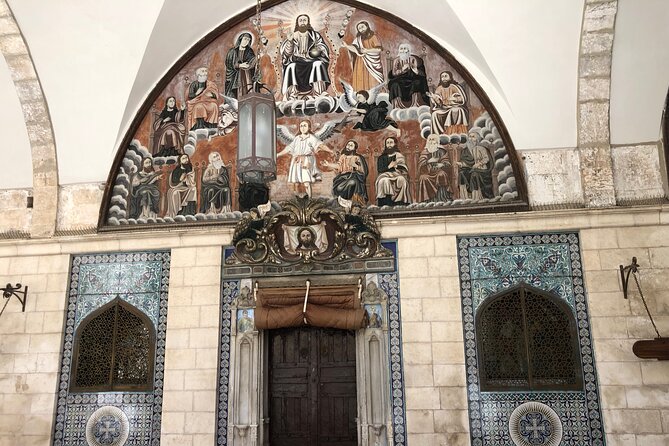
Next comes the Armenian Quarter, where you visit the courtyard of James Cathedral. This is a brief stop, but it is timed well. After the walls and gates, you shift into how different groups carved out space inside the Old City.
Orna focuses on why the Armenians received their own quarter, who James is in this context, and how the community organized itself with walls around the quarter. Then you get a practical explanation of how renovation funding worked, including the role played by the Armenian Patriarch in raising money to restore the Cathedral.
This is the kind of stop that helps you avoid the common trap: thinking each quarter is just a tourist district. Here, you see that these areas were built for real community life, with decisions shaped by history, politics, and religion.
More of Jerusalem, beyond the Old City gates
Jewish Quarter, synagogues, and the Cardo: names you can connect
The Jewish Quarter segment is one of the richest parts of the day. You visit the four Sephardic synagogues, and Orna walks you through who built them, when, and how they connect to key figures in Jewish history. You also hear the story of the man who left a besieged Jerusalem in a coffin to save Judaism, and how that episode shaped identity and memory.
Then you move to the Cardo, the ancient main street. This is where the tour earns its “how is this connected?” reputation. Orna explains the Cardo’s story so it stops being just a narrow walkway and starts feeling like a spine of the city. And you get a connection between the Hurva Synagogue and Jewish communities who traveled from Europe to Jerusalem while waiting for the return of the Jewish Messiah.
You’ll spend about an hour here, which is important. This is not a quick glance at ornate doors. You have enough time to look around, understand the flow of the area, and connect names and places into a coherent picture.
Western Wall and why it is not the only holy point
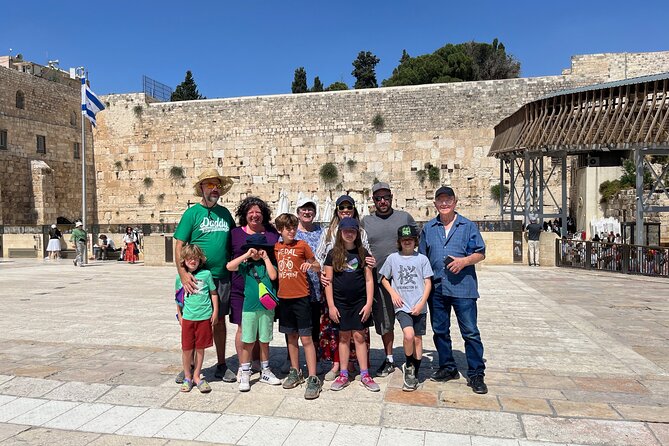
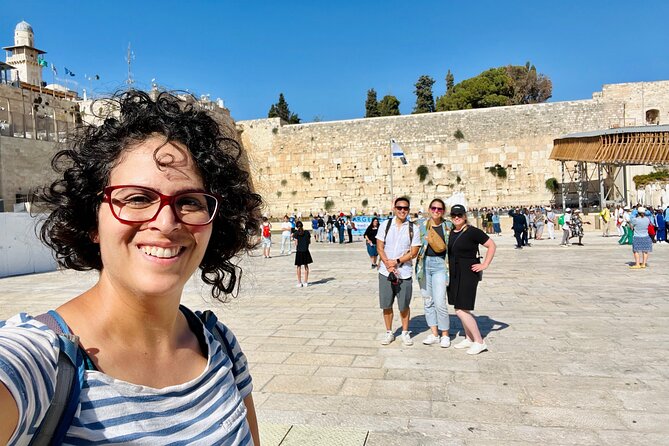
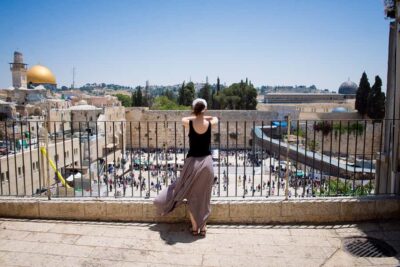
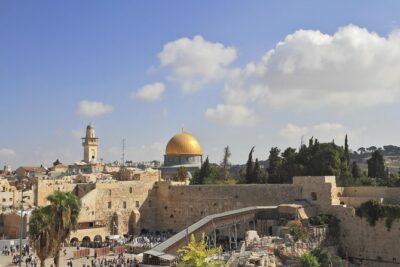
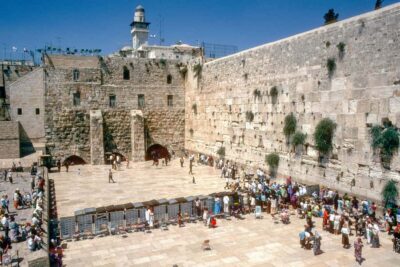
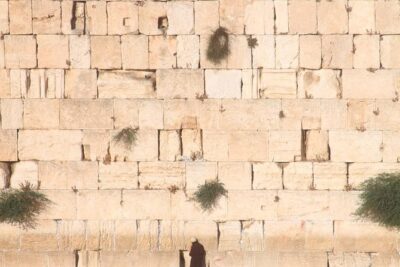
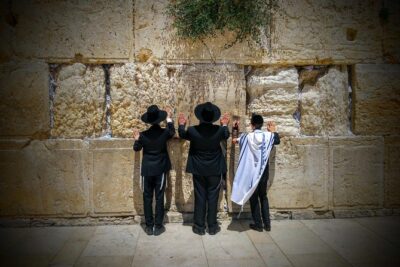
You continue to the Western Wall, known worldwide as a central Jewish site. The tour visits the Western Wall and focuses on how it was built, by whom, and why it is sacred.
Then Orna adds a careful piece of nuance: she explains why this is not the holiest place for Jews. That sounds like it could confuse people, but it actually helps you understand sacred geography. You begin to see that Jewish holiness is not just one location, it is tied to broader religious meaning and historic context.
This is also a useful reminder for visitors trying to sort religious sites by rank. Orna’s goal is not to argue, it is to help you read the map of belief correctly while staying respectful of how people experience these places.
Temple Mount: sacred for Judaism and Islam, with real access rules
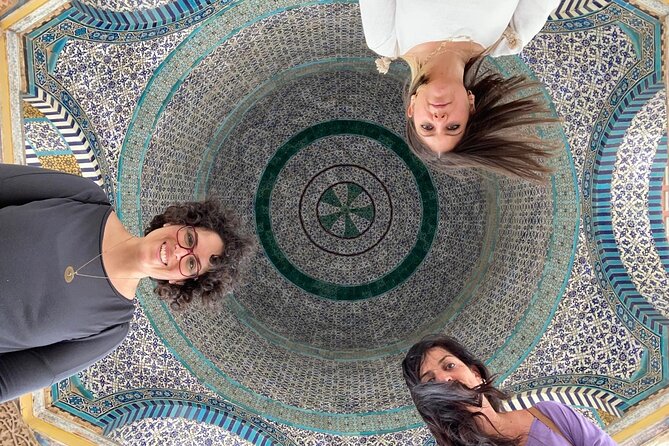
The Temple Mount stop is both the emotional center of the tour and one of the places where logistics matter. Orna explains why the mountain is sacred in the monotheistic religions, and gives the historic timeline tied to the Second Temple period, including the fact that Jews did not have control over it after 70 AD until 1967, following the Six Day War.
You also learn about the Temple Mount’s modern story, including illegal excavations and the sifting project designed to save archaeological finds from the soil. Then the tour addresses the way different groups talk about the future, including Messianic Jews who want to build the Third Temple, and the presence of Muslim graves found in the holiest place for Jews.
Dress and visitor rules are strict here, so this stop is also about preparation. Temple Mount dress code is clearly stated:
- Men: pants below the knees, T-shirt
- Women: long skirt or pants (not skinny), long-sleeve shirt, no cleavage
If you do not have a proper cover, workers there provide a skirt.
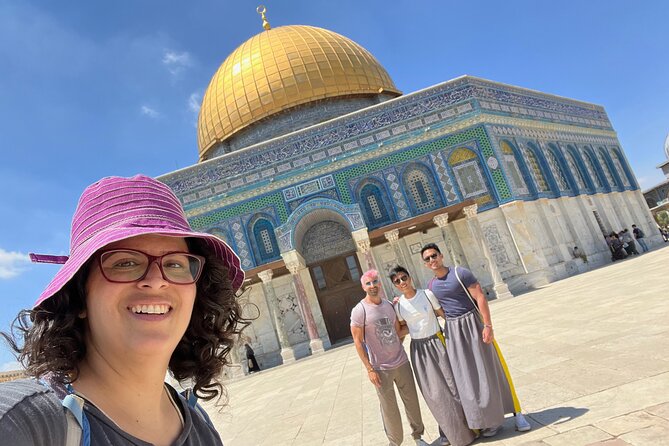
Also, plan around what you bring. The guide notes that you should not bring holy books and sacred objects, weapons (including Lederman), laptops and tablets or iPads, alcohol, or musical instruments. Temple Mount includes the Dome of the Rock and Al-Aqsa Mosque, and it is closed for visitors every Friday, Saturday, and during various Muslim and Jewish holidays. When it is closed, you still get a visit to a viewpoint that overlooks the Temple Mount.
This part of the tour gives you a balance of reverence and realism: you learn why it matters, and you understand why the experience can change based on access rules.
Muslim Quarter: markets, spices, and a short sweet break
After Temple Mount, you move into the Muslim Quarter. Orna covers who built the Muslim quarter and why, then you get a more sensory pause.
You stop at a local spice store to try unique Arab sweet delights, then walk through the Arab market. This is not just for taste. It helps you feel the city as a living place, not just a museum of sacred buildings.
The time here is about 30 minutes, so it stays purposeful. You do not get dragged through a maze of shops. Instead, you get guided context for what you are seeing, plus a quick taste of local flavors that fits the rhythm of a long day.
Via Dolorosa and the Church of the Holy Sepulchre: tight lanes, big emotions
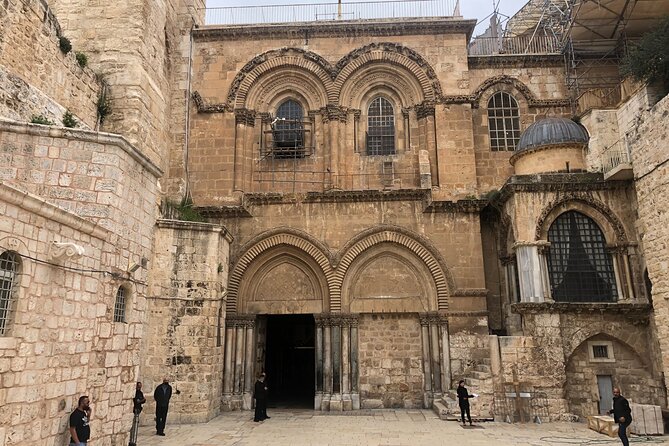
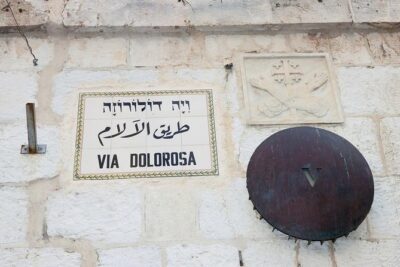
Next comes Via Dolorosa, where you walk through some of the stations on the way to the Church of the Holy Sepulchre. This portion is short, about 20 minutes, but it is part of the emotional arc of the day. The point is not to finish every station like a mission. It is to show you how this corridor functions as a lived religious path and why it remains central to Christian devotion.
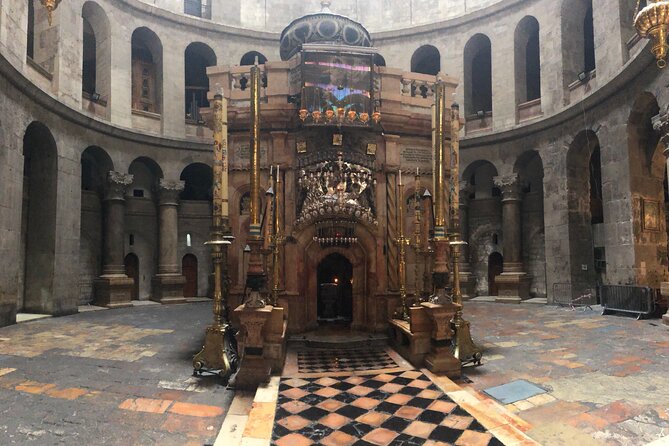
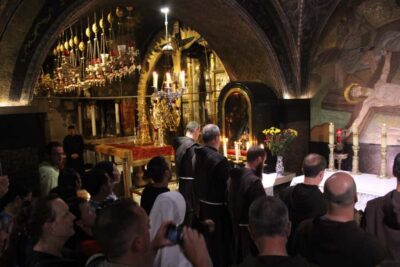
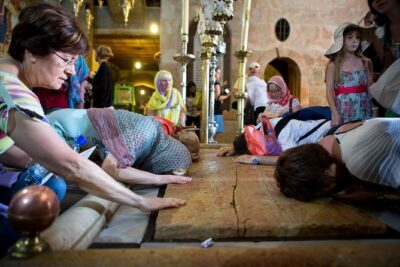
Then you reach the Church of the Holy Sepulchre, described here as the most sacred place for Christianity, connected with Jesus’ crucifixion and burial. You visit the place of crucifixion and the tomb, and Orna explains the Christian faith tied to these sites.
Expect about 45 minutes here. That is long enough to take in the space and hear the story, without feeling like you are stuck in a line forever. If you want to understand how different Christians interpret sacred spaces, this is a strong moment to ask questions.
Christian Quarter finishing stops: local shops, stories, and a rooftop view
In the Christian Quarter, Orna highlights a story about a patriarch who locked himself in his room and received food through the window. It is the kind of tale that makes the area feel human and specific, not just “old church buildings.”
You also stop to visit an Armenian ceramics shop. Then you have a break that is designed to give you energy for the final viewpoint. You can eat a cake and drink coffee at a local cafe, and you learn about the lowest statue in Jerusalem. There is also time to meet local merchants, though this depends on availability.
Note: hot drink and cake are not included, so build that small extra into your day if you want the cafe stop.
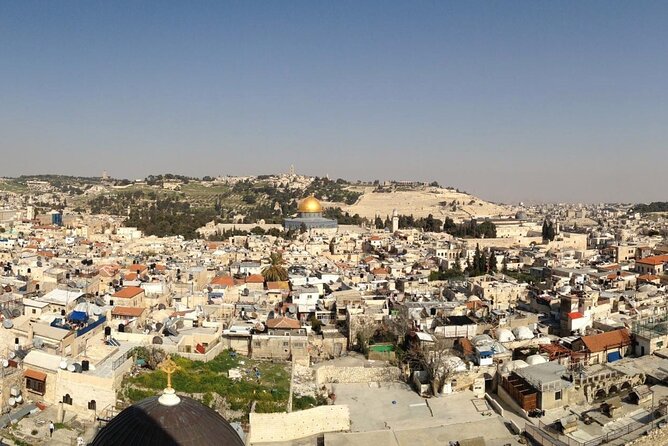
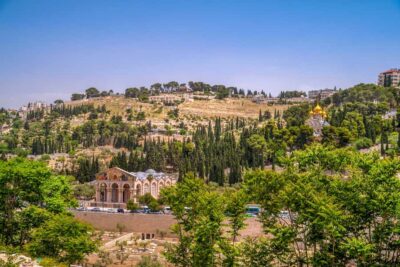
Finally, you end at Our Lady of Peace, where the tour takes you to a place that feels like a European chapter dropped into Jerusalem. Orna explains why the hotel was built here, who built it, and how it is related to the Crimean War. Then you go up to the roof for panoramic views of the new city and the Old City, where you can see different quarters, the Temple Mount, and the Mount of Olives.
You also learn who blew up the hotel and why, and that the building stood on the border between Jordanian Jerusalem and Israeli Jerusalem for 19 years. The viewpoint is also a great way to anchor what you learned earlier: suddenly you can connect directions and distances to the stories you heard all morning.
Price and pacing: is $650 per group good value?
The price is $650 per group up to 8, for about a 6-hour private experience. Because it is per group, your per-person cost drops fast when you travel with friends or family. If you fill the group, it works out around $81 per person before extras like the cafe drink and cake.
Where the value comes from is not only the “private” factor. It is the structure: major sites in the Old City plus entry fees included. When you see places like the Western Wall area, Temple Mount access rules, and the Church of the Holy Sepulchre, the logistics and restrictions can chew up time. A guide who knows how to connect the dots helps your day feel intentional, not frantic.
The tour also stays realistic about time. You get enough minutes at each stop to understand what you are looking at, including a full hour in the Jewish Quarter and substantial time at the Holy Sepulchre and Temple Mount. For a first-time Jerusalem day, that is a smart use of limited time.
Who this tour suits best (and who might want something different)
This tour is a strong fit if you:
- Want a private Old City Jerusalem walking tour with expert interpretation
- Care about understanding the connections between religions, not just seeing famous buildings
- Appreciate a guide who can handle mixed ages and mixed backgrounds, since Orna has 10 plus years of experience with different age groups and cultural or religious backgrounds
It may be less ideal if you:
- Want a purely light, casual stroll without dress code and security rules
- Dislike walking and standing for long stretches, since you are moving through several quarters over about 6 hours
- Are not comfortable with the possibility that Temple Mount access may shift on Fridays, Saturdays, or holidays, though you still get a viewpoint when the site is closed
If you do book, go in with comfortable shoes and a flexible mindset. Jerusalem rewards patience.
Should you book this private Old City tour?
I think you should book it if you want your Old City day to feel guided, not chaotic. Orna’s license and certification matter here because holy sites are not one-size-fits-all, and the details are the whole point. I also like that entry fees are included, so your day budget does not get squeezed by add-ons once you arrive.
If your group includes people who struggle with long religious or historical explanations, you can still make this work. The tour is private, so you can set the tone with Orna and ask for emphasis on what interests you most, whether that is archaeology context, faith stories, or the city’s past and present human side.
Just be ready for the practical parts: dress code at sacred sites, security rules on Temple Mount, and walking through tight lanes. If you match that energy, you will come away with a much clearer sense of Jerusalem as a living city with layers you can actually place.
FAQ
How long is the private walking tour in Jerusalem’s Old City?
The tour lasts about 6 hours.
What is the group size for this private tour?
It is private, with up to 8 people per group.
What is included in the tour price?
The tour includes a licensed tour guide and entry fees. Hot drinks and cake are not included.
Where do we start and where does the tour end?
The tour starts at Jaffa Gate in the Old City, Jerusalem, and ends at Notre Dame of Jerusalem Center, HaTsanhanim St 3, Jerusalem.
Is the Temple Mount always included?
Temple Mount is closed for visitors every Friday, Saturday, and during various Muslim and Jewish holidays. When it is closed, the tour includes a viewpoint overlooking the Temple Mount instead.
What should I wear for holy sites like the Western Wall and Temple Mount?
For the Western Wall and Church of the Holy Sepulchre, avoid tank tops and wear pants or skirts to the knees. For Temple Mount, men need pants below the knees and a T-shirt. Women need a long skirt or pants (not skinny), and a long-sleeve shirt with no cleavage.
What should I bring with me?
Bring a hat, water, and comfortable walking shoes.
What is the cancellation policy?
You can cancel for free up to 24 hours in advance for a full refund. If you cancel less than 24 hours before the experience starts, the amount paid is not refunded.
More Israel Tour Reviews
- From Jerusalem: Masada & Dead Sea Full Day Tour with Pick Up
★ 4.5 · 815 reviews - Masada and the Dead Sea Day Trip from Jerusalem
★ 4.5 · 757 reviews - From Jerusalem: Nazareth and Sea of Galilee Tour
★ 4.5 · 588 reviews - Nazareth and the Sea of Galilee Day Trip from Jerusalem
★ 4.5 · 446 reviews
Jerusalem, Other Days Out
- Full Day City Tour of Jerusalem
★ 4.1 · 367 reviews - Old and New Jerusalem Full-Day Tour
★ 4.0 · 273 reviews - Jerusalem and Bethlehem Day Tour from Jerusalem
★ 4.5 · 258 reviews - Jerusalem Half-Day Sightseeing Tour
★ 3.9 · 177 reviews
More Ways Through the Old City
- Jerusalem: Guided Walking Tour of the Old City
★ 4.7 · 386 reviews - Old and New Jerusalem Full-Day Tour
★ 4.0 · 273 reviews - From Jerusalem Small group tour Old&New City ENTRY FEES INCL
★ 4.0 · 135 reviews - Best seller! Jerusalem old city four quarters tour
★ 5.0 · 123 reviews
Recently Added Israel Tour Reviews
- jerusalem classic tour★ 5.0 · 3 reviews
- Private Walking Tour in Jerusalem’s Old City★ 5.0 · 3 reviews
- Private Tour Bethlehem and the Dead Sea★ 5.0 · 3 reviews
- Jerusalem Temple Mount & Dome of the Rock★ 4.5 · 3 reviews
- Jerusalem and the Dead Sea★ 5.0 · 3 reviews
Jerusalem Old City, compared.
 ★ 4.2From Tel Aviv: Jerusalem Old & New City Bus TourFrom $95824 reviews
 ★ 4.4From Tel Aviv: Jerusalem Old City & Dead Sea Guided Day TourFrom $133389 reviews
 ★ 4.7Jerusalem: Guided Walking Tour of the Old CityFrom $57386 reviews
 ★ 4.5Old and New Jerusalem Day Trip from Tel AvivFrom $95296 reviews
 ★ 4.0Old and New Jerusalem Full-Day TourFrom $75273 reviews
 ★ 4.0From Jerusalem Small group tour Old&New City ENTRY FEES INCLFrom $97135 reviews
 ★ 5.0Best seller! Jerusalem old city four quarters tourFrom $450123 reviews
 ★ 5.0Private Tour Jerusalem Old CityFrom $500118 reviews
Lists this tour appears in