
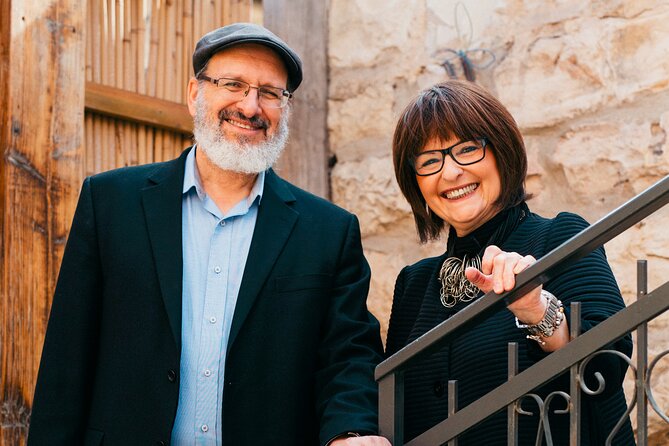
REVIEW · JEWISH HERITAGE TOURS
Experience Shabbat With Dinner In Jerusalem
Dinner in Jerusalem starts with a little magic. This Shabbat experience with Osnat and Rabbi Shaul feels like stepping into a real Friday night rhythm, with Kabbalah and Hassidic teachings, plus singing and dancing. I also love that it is kosher Le’Mehadrin and built from fresh, seasonal ingredients, not a canned performance. And I really like how the evening is interactive, so you learn the spirit of Shabbat through the meal, the songs, and the conversation.
The only real drawback to plan for: this is not a quiet, sit-back-and-watch kind of dinner. If you have strict dietary needs or you dislike religious participation, you will want to think carefully and communicate your requirements early.
In This Review
- Key things to know before you go
- A Sunset-Switched Start on Elisha Street
- Osnat and Rabbi Shaul: Family Hosts, Student Energy
- Kosher Le’Mehadrin Meal, Built From Fresh Seasonal Ingredients
- What the Kabbalah and Hassidic Study Feels Like
- Singing, Dancing, and the Joy of a Friday Night Table
- Price and Value: What $181.61 Buys in Jerusalem
- Practical Notes That Make the Night Easier
- Who Should Book This Shabbat Dinner With Osnat and Rabbi Shaul
- Should You Book This Shabbat Dinner in Jerusalem?
- FAQ
- What time does Shabbat dinner start?
- Where do we meet and where does the experience end?
- Is the dinner kosher?
- What is included with the meal?
- How long is the experience?
- How large is the group?
- What should I do if I have a food restriction?
Key things to know before you go
- Sunset-based timing: The start shifts with the entrance of Shabbat, so plan around a sunset-controlled schedule.
- A small circle, max 15: With a limited group size, you get more time with Osnat, Rabbi Shaul, and the students.
- Kosher Le’Mehadrin multi-course meal: Fresh, seasonal food made on the premises by the family.
- Kabbalah and Hassidic teachings, not just a speech: The evening includes study moments woven into the night.
- Singing and dancing: Expect joy that goes beyond background music.
- Drinks included, BYOB optional: Israeli wines and soft drinks are part of the deal.
More Jewish heritage walks, from Safed to the Old City
A Sunset-Switched Start on Elisha Street
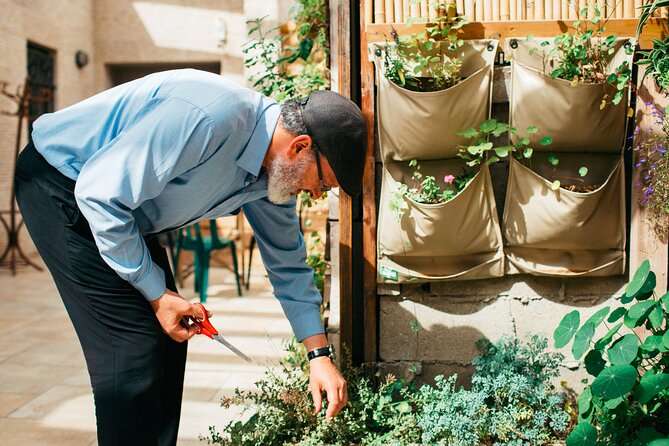
You meet on Elisha Street, Jerusalem, and the night begins around 8:00 pm on the listing details. The catch is that the actual flow of the evening ties to when Shabbat begins. That means the start time can vary depending on sunset, which is completely normal in Israel but important for your planning.
Practically, arrive a few minutes early. Elisha Street is in a walkable, local-feeling part of Jerusalem, and you will want a calm start before the evening’s rhythm begins. Also, keep your phone charged. You have a mobile ticket, so you will rely on it at check-in.
This timing detail matters because the meal is the center of the experience. When people get the tempo right, Shabbat feels like Shabbat. When people show up late, it turns into logistics. The hosts are clearly aiming for the first one.
Osnat and Rabbi Shaul: Family Hosts, Student Energy
This is hosted by Osnat and Rabbi Shaul, with Yeshiva students involved in the group. The vibe is warm and family-focused. Osnat is described as an artist and event producer, and Rabbi Shaul teaches Judaism, spirituality, and Kabbalah. In other words, you get both heart and structure.
One nice detail is how much work is described as happening right there. The meals are made on the premises from fresh, seasonal ingredients, and the hosts’ daughters help cook, bake, and serve. That matters because it changes the feel of the night. You are not eating at a generic dinner setup. You are joining a family table where multiple generations are part of the work.
In real terms, that means questions come easily. You can ask about what you are seeing, and you will get answers that connect to the meaning behind the rituals, not only the outward steps. The reviews I read also mention how welcoming the hosts are and how the atmosphere encourages people rather than just entertaining them.
There is one social consideration. Because it is participatory and includes singing and dancing, you should go in ready to join, not just observe. If you feel shy, that is okay, but choose clothing and attitude that match the night.
Kosher Le’Mehadrin Meal, Built From Fresh Seasonal Ingredients
The big reason this is good value is the food plus the setting. You get a multi-course Kosher Shabbat dinner made from fresh, seasonal ingredients, described as Kosher Le’Mehadrin. That level of kosher detail is not a minor footnote. It signals that the household takes standards seriously, and it helps the meal feel authentic rather than improvised.
The dinner is made on the premises. That means the kitchen is part of the experience, even if you are not watching every step. You will feel it in the pacing, the warmth, and the way courses flow as part of Shabbat rather than as a restaurant service.
Drinks are also included: Israeli wines and soft drinks. You can also BYOB if you want something specific. For many visitors, that inclusion makes a real difference. At this price point, food plus drinks plus a guided spiritual and cultural program would still be fair even if the group were larger. Here, the group is limited to a maximum of 15 people, so your money stretches further into time with the hosts.
Possible downside: since you are joining a home-style meal with religious flow, you cannot expect a restaurant-like menu transparency in advance. If you are picky or have sensitive allergies, communicate early. The provider notes that you need to share food restrictions like allergies or special diets when booking.



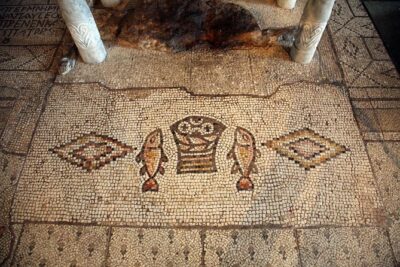
What the Kabbalah and Hassidic Study Feels Like
This is not only eating. You will also experience Kabbalah and Hassidic teachings and study. The hosts are described as teaching Judaism, spirituality, and Kabbalah, and the format is woven into the evening.
The practical way to think about it: plan to spend part of the night listening, asking, and connecting ideas to what you are doing at the table. Instead of treating the lesson like a classroom lecture, the hosts are aiming for meaning through the experience. That is why the singing, the meal, and the study are in the same arc.
This is especially useful if you have ever felt lost when learning about Shabbat from a guidebook. Shabbat is not just a set of rules. It is a whole mood: timing, family, gratitude, and rhythm. When someone explains it while you are literally inside the rhythm, it can click faster.
One review also mentions learning the true meaning and spirit of Shabbat through experience, not just being a seat-filler. That matches what you are set up for here: you are not supposed to be a distant observer. You will be part of the night’s energy.
If you are someone who prefers purely secular activities, this might feel too religious. If you are open-minded and curious, it can be one of those evenings that changes your understanding more than another museum hour ever will.
Singing, Dancing, and the Joy of a Friday Night Table
The evening includes singing and even dancing. That is not a throwaway line, and it is not only for show. It signals a key feature of the experience: joy as a ritual, not just a mood.
From what is described, the group includes hosts and Yeshiva students, and the night has a celebration feel. One review even calls it soul-satisfying and family-like. Another mentions singing and information about Shabbat that encouraged the heart. If those reactions are a good signal, you should expect the tone to move from welcome into celebration.
For you, that means two things. First, bring a mindset that allows you to participate. You do not have to become a performer, but be ready to clap, sing along if you can, and follow the group’s momentum when dancing starts.
Second, be mindful of comfort. This is a 2 hours 30 minutes experience, and dancing means you might be on your feet longer than you expect. Wear shoes you can move in easily. Keep your phone away during the most active moments if you can. You will get more from the night if you are present, not filming everything.
Price and Value: What $181.61 Buys in Jerusalem
At $181.61 per person for about 2 hours 30 minutes, you might wonder if it is worth it. Here is my practical take: the price works because the dinner includes multiple parts that are usually sold separately.
You are paying for:
- A Kosher Le’Mehadrin multi-course meal made fresh on-site
- Israeli wines and soft drinks included, with BYOB allowed if you want
- A guided cultural and spiritual program with Kabbalah and Hassidic teachings and study
- A small group size (max 15), so your time with the hosts is not diluted
- An experience element that is not usually offered in a standard meal, singing and dancing
In other words, it is not only dinner. It is dinner plus a guided Shabbat night with a real family table as the setting.
Is it cheaper than an average restaurant meal? No. But it is also not just dinner. It is access to a Shabbat celebration format that you cannot really recreate on your own the first time in Jerusalem, especially if you do not already know people.
Timing also affects value. Because the start connects to sunset, you are going for the actual moment, not a staged imitation. That is a big part of why the evening can feel special.
Practical Notes That Make the Night Easier
Here are the details that help you enjoy the evening instead of spending your time worrying:
- Dietary needs: If you have allergies or a special diet, tell the provider at booking. Do not wait until the last minute. The dinner is prepared with care, but you need to give them a clear heads-up.
- Time flexibility: The start time can vary with the entrance of Shabbat. Keep some buffer in your schedule so you do not feel rushed.
- Meeting point: Elisha Street is your anchor. The activity ends back at the meeting point.
- Group size: With a maximum of 15, you will likely get better interaction, but it is still a group evening. Expect a shared flow.
- Location and transport: It is near public transportation, so you should be able to get there without a complicated route.
One more small thing: bring a sense of humor and patience. This is a family celebration with students and a religious schedule. It is not a tightly scripted theme park show. That is also why it can feel real.
Who Should Book This Shabbat Dinner With Osnat and Rabbi Shaul
This experience is a great match if you want a Jerusalem evening that feels local and personal. You should especially consider it if you:
- Want Shabbat explained through a real home table experience
- Like food that is actually cooked on-site, with seasonal ingredients
- Enjoy singing and a participatory cultural night
- Prefer small groups over big tours
- Are curious about Kabbalah and Hassidic teachings in an accessible way
It may be less ideal if you:
- Need a fully silent, no-participation experience
- Have complicated dietary restrictions and do not want to communicate details in advance
- Are uncomfortable with a religious environment
For couples, it can feel intimate because of the small group size and the family setting. For friends, it can feel like a shared celebration you talk about for weeks.
Should You Book This Shabbat Dinner in Jerusalem?
I think you should book it if your idea of a great Jerusalem night includes joining real people at a real Shabbat table, eating a Kosher Le’Mehadrin multi-course meal, and spending time with Osnat and Rabbi Shaul, with Kabbalah and Hassidic teachings woven into the evening.
Book it sooner rather than later because it is the kind of experience that fills up quickly, based on how people describe needing to reserve. If you want a one-time, high-value cultural evening that mixes food, meaning, and joy in the same package, this is a strong pick.
If you want a purely secular activity or you need strict dietary certainty beyond what you can communicate early, then you should reconsider. In the right mindset, though, this is exactly the kind of Shabbat dinner that turns a trip into a memory with a pulse.
FAQ
What time does Shabbat dinner start?
The starting time can vary based on the entrance of Shabbat, which depends on sunset time. The listed start time is 8:00 pm.
Where do we meet and where does the experience end?
You meet on Elisha Street in Jerusalem, Israel. The experience ends back at the meeting point.
Is the dinner kosher?
Yes. The multi-course Shabbat dinner is Kosher Le’Mehadrin.
What is included with the meal?
The dinner includes Israeli wines and soft drinks. You can also BYOB if you want.
How long is the experience?
It lasts about 2 hours 30 minutes.
How large is the group?
The group has a maximum of 15 people.
What should I do if I have a food restriction?
You need to communicate any food restrictions, including allergies or special diets, when booking. Confirmation is received at the time of booking.
More Israel Tour Reviews
- From Jerusalem: Masada & Dead Sea Full Day Tour with Pick Up
★ 4.5 · 815 reviews - Masada and the Dead Sea Day Trip from Jerusalem
★ 4.5 · 757 reviews - From Jerusalem: Nazareth and Sea of Galilee Tour
★ 4.5 · 588 reviews - Nazareth and the Sea of Galilee Day Trip from Jerusalem
★ 4.5 · 446 reviews
Jewish Heritage on Foot in Israel
- Jerusalem: Meet the Orthodox Jews Tour
★ 4.9 · 103 reviews - Jerusalem Jewish Orthodox Neighborhood Walking Tour
★ 4.0 · 21 reviews - Jerusalem: Old City Shabbat Experience and Walking Tour
★ 4.8 · 8 reviews
Recently Added Israel Tour Reviews
- jerusalem classic tour★ 5.0 · 3 reviews
- Private Walking Tour in Jerusalem’s Old City★ 5.0 · 3 reviews
- Private Tour Bethlehem and the Dead Sea★ 5.0 · 3 reviews
- Jerusalem Temple Mount & Dome of the Rock★ 4.5 · 3 reviews
- Jerusalem and the Dead Sea★ 5.0 · 3 reviews
Jewish Heritage Tours, compared.
 ★ 4.9Jerusalem: Meet the Orthodox Jews TourFrom $53103 reviews
 ★ 5.0Kabbalah Heritage WalkFrom $4523 reviews
 ★ 4.0Jerusalem Jewish Orthodox Neighborhood Walking TourFrom $4521 reviews
 ★ 5.0Tour The Mystical City Of SafedFrom $48511 reviews
 ★ 4.8Jerusalem: Old City Shabbat Experience and Walking TourFrom $478 reviews
Lists this tour appears in