
REVIEW · JERUSALEM OLD CITY
All Inclusive Walking Tour Old City Jerusalem
Six hours inside Jerusalem’s Old City flies by. What makes this walk compelling is the small-group pace, with a guide steering you through major faith sites and the quieter corners you might otherwise miss. You also get first-rate context for what you’re seeing, so the Old City stops feel connected instead of random.
I also like that the day is genuinely practical, with lunch at a local restaurant and a included cup of tea or coffee to reset you mid-walk. One thing to plan for: the dress code is strict at worship sites, and you can be refused entry if knees and shoulders are not covered.
In This Review
- Key things to know before you go
- From Jaffa Gate to the first big wow moments
- Armenian Quarter and the Cardo: where Jerusalem’s layout starts making sense
- Jewish Quarter highlights: Broad Wall, Hurva Synagogue, and Western Wall
- Temple Mount: the Dome of the Rock and Al-Aqsa Mosque area
- Golden Menorah, Via Dolorosa, and a reality check on photos
- Church of the Holy Sepulchre and Deir Al Sultan: where the day’s emotion peaks
- The included lunch and tea or coffee: why it matters in a 6-hour walk
- Pace, group size, and guide style: what you can actually expect
- Dress code and worship-site entry: the one rule you cannot wing
- Price and value: is $120 worth it?
- Who this tour suits best
- Should you book the All Inclusive Walking Tour of Jerusalem’s Old City?
- FAQ
- What is the duration of the Jerusalem Old City walking tour?
- How many people are in the group?
- What is included in the tour price?
- What should I wear for places of worship?
- Do I need a printed ticket?
- Where do I meet the guide?
Key things to know before you go
- Max 15 travelers means you can actually ask questions, not just follow a crowd
- Mobile ticket keeps check-in simple
- Includes lunch plus tea or coffee, so you are not hunting for food between holy sites
- A timed visit to hard-to-find spots like Deir Al Sultan and the rooftop view at Hurva Synagogue
- Dome of the Rock, Western Wall, and the Holy Sepulchre are all on one route, with smart guidance
- Entry at Hurva Synagogue is included, plus plenty of photo opportunities from the rooftop area
Inside the walls: other Old City routes we have reviewed
From Jaffa Gate to the first big wow moments
You start at the Tourist Information Center at Omar Ibn Katab, and the day begins at 9:00 am. Expect a walking rhythm that mixes big landmarks with short, focused stops. That matters in Jerusalem’s Old City, where the streets can feel like a puzzle. A guide helps you understand where you are, why the place mattered, and what to look for in each doorway of stone.
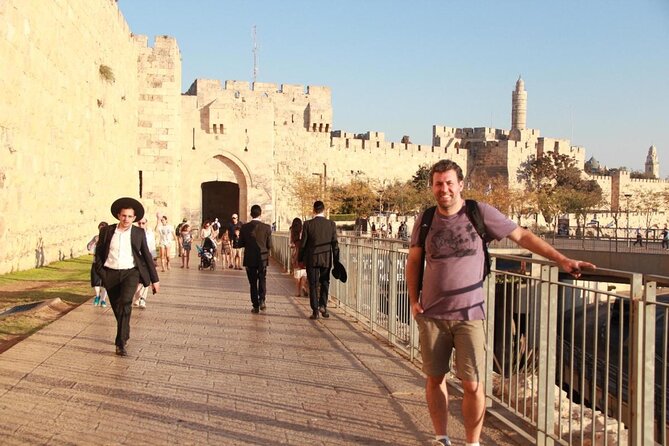
Jaffa Gate is your gateway in, literally. It is the main entrance for visitors, and it is also a helpful mental marker. Once you step away from the bustle near the gate, you start moving through the quarters with less guesswork and more clarity.
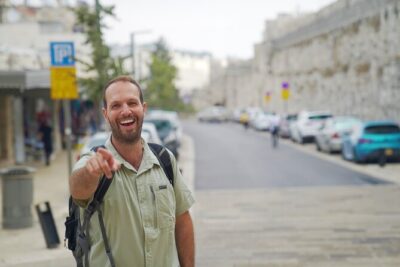
If you are the type who likes to know what something is before you take a photo, you will enjoy this format. Guides such as Efrat tend to be patient and ready to answer questions, and that makes the walk feel interactive instead of scripted. You will still do plenty of looking, but you will understand what you are looking at.
Armenian Quarter and the Cardo: where Jerusalem’s layout starts making sense
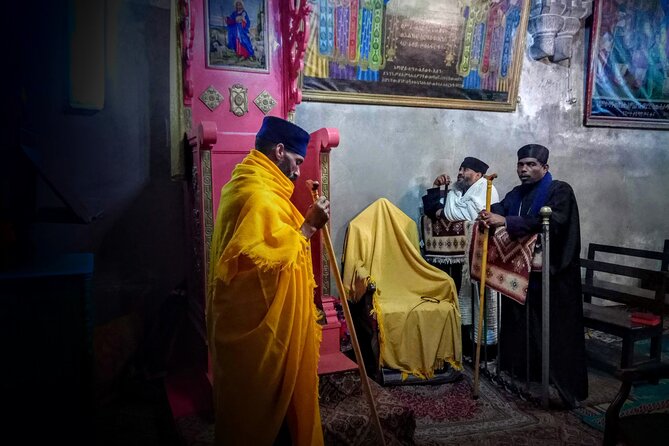
A short stop in the Armenian Quarter gives you a foothold in one of the Old City’s smallest quarters. The Armenian presence dates back to the 4th century AD, tied to Armenia adopting Christianity as a national religion, with Armenian monks later settling in Jerusalem. Even if you do not remember the timeline perfectly, you will feel the difference in atmosphere once you are off the main tourist flow.
Then you head to the Cardo, the famous main street in Ancient Jerusalem under Byzantine rule, running north to south with columns along both sides. This stop is valuable because it helps you picture the city as a real, walkable place built for daily movement, not only a stage for pilgrimages. When you can see the street logic, the Old City feels easier to navigate later on your own.
Jewish Quarter highlights: Broad Wall, Hurva Synagogue, and Western Wall
The Jewish Quarter area gives you a series of stops that layer time on top of place.
Broad Wall is your early historical anchor. It is a defensive wall dated to the reign of King Hezekiah. Think of it as the Old City’s “why this spot mattered” starter. It is not just a wall. It is evidence of a city that had to protect itself.
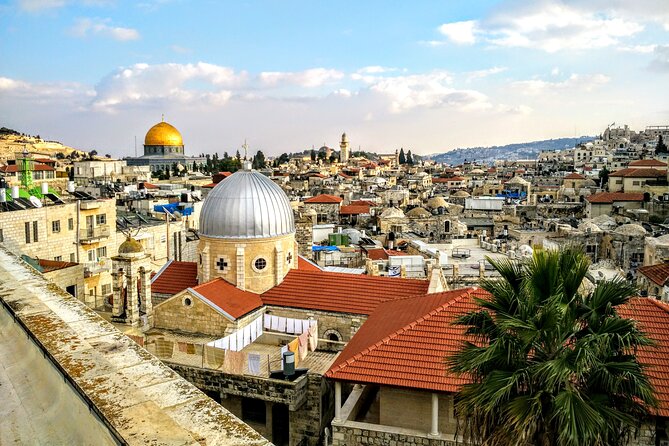
Next comes Hurva Synagogue, one of the most impressive stops on the day. You can admire the interior beauty, then learn the story of the Hurva Synagogue. The Holy Ark inside is described as the world’s tallest Holy Ark, holding Torah scrolls. You also get a 360 degree view from the rooftop, which is a huge bonus when you want a sense of orientation. The rooftop element turns this stop from “look at a building” into “see how everything fits together.”
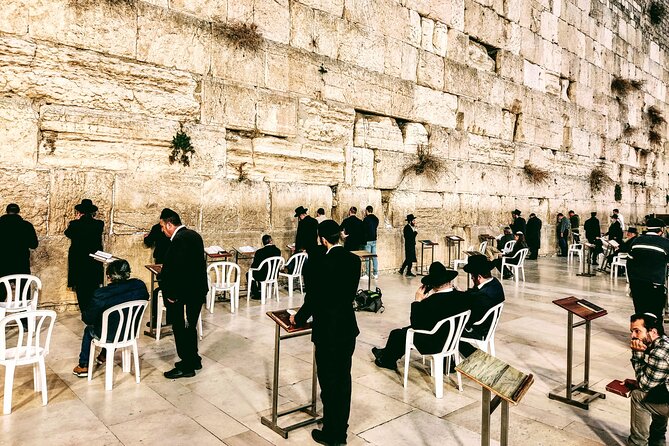
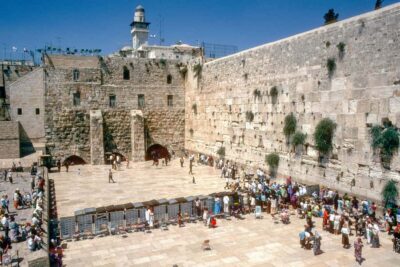
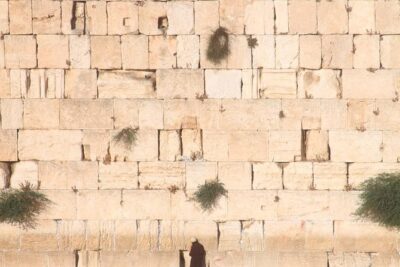
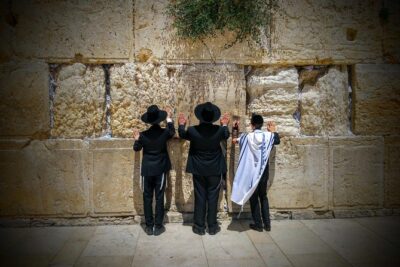
From there, you move to the Western Wall, also called the Wailing Wall or the Kotel. This is a place of prayer and pilgrimage sacred to the Jewish people. You are visiting the retaining wall surrounding the Temple Mount, a site associated with the First and Second Temples. It is a deeply emotional location for many people, and a guide helps you keep the focus on meaning rather than only monuments.
One practical consideration: the time at Western Wall is fixed, so you may not get a long personal moment right at the wall. If you want a longer pause for prayer or reflection, plan to return on another day, or build in extra time nearby outside the tour.
More Israel taken at walking pace
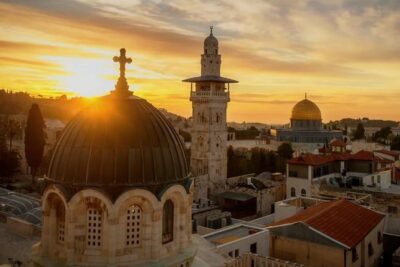
Temple Mount: the Dome of the Rock and Al-Aqsa Mosque area
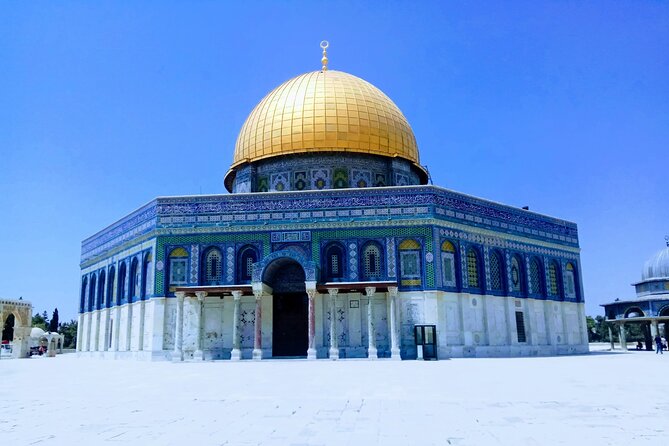
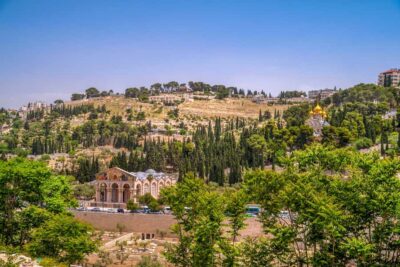
Temple Mount is the big-ticket stop, with the Dome of the Rock and Al-Aqsa Mosque. This is the elevated site of the two Jewish Holy Temples, and today it is a focal point of reverence for multiple faith communities.
You get a set amount of time here, and that can be enough to see the main visual anchors. But it is also the kind of place where your experience depends on how you prepare. Your best move is to go in calm, with your questions ready, and with your expectations realistic. You will likely not see every corner in a short guided window, but you can leave understanding what makes the area so central.
Golden Menorah, Via Dolorosa, and a reality check on photos
After Temple Mount, the tour moves toward the Golden Menorah stop. The menorah is described in the Bible as the seven-lamp ancient Hebrew lampstand made of pure gold and used in the tabernacle set up by Moses, and later in the Temple in Jerusalem. This one is a replacement constructed by the Temple Institute, based on extensive research by academic and biblical researchers.
This is a fascinating stop, because it is not just a “look, a menorah.” It is a chance to understand how interpretation and reconstruction play out in modern Jerusalem. If you like history as something alive and argued over, you will appreciate this framing. If you prefer strictly modern sightseeing, you might find it more thought-provoking than you expected.
Then you walk the Way of the Cross, also known as Via Dolorosa. The processional route represents the path Jesus would have taken, forced by Roman soldiers, on the way to crucifixion. The time here is brief, but it sets the stage for what comes next.
Photo note, plain and simple: the Old City is busy and the route is tight. You will get pictures, but you will also have moments where your best shot is waiting, not snapping. A good guide helps manage that energy so you do not waste time.
Church of the Holy Sepulchre and Deir Al Sultan: where the day’s emotion peaks
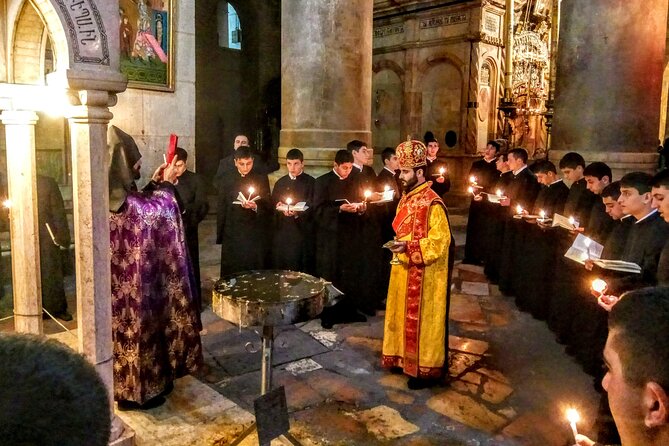
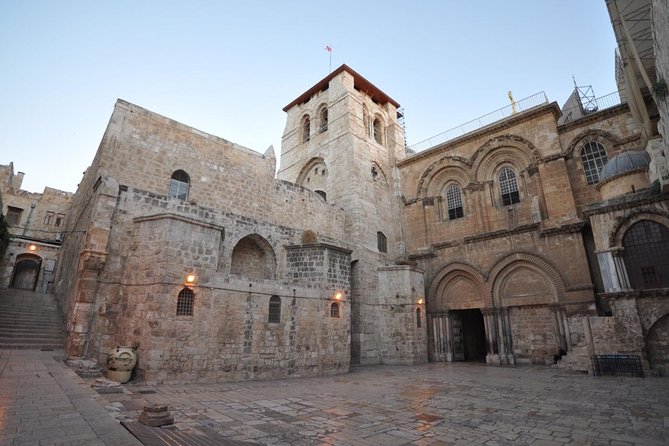
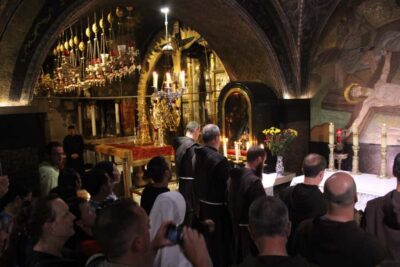
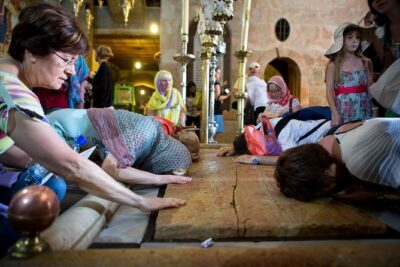
Church of the Holy Sepulchre is the most sacred site in the world for Christians, and the visit backs that up. The church includes the site of the crucifixion, burial, and resurrection of Jesus. Golgotha, the place of the crucifixion, is inside the church.
This is the stop where the tour stops feeling like a checklist. Even with a guide explaining what you are seeing, your experience will be shaped by the space itself. It is crowded at times, it is heavy with meaning, and it rewards respectful pacing. A small group helps you move through the experience without feeling like you are getting shoved.
Then comes Deir Al Sultan, a monastery located on the roof of the Church of the Holy Sepulchre. There is also the Status Quo, an over 200 years old understanding between religious communities during Ottoman rule, and that applies here. Even if you do not know all the details beforehand, your guide can help you understand why different spaces coexist in complicated ways.
This rooftop monastery stop is one of the reasons the tour feels more than just “see the big church.” You get an elevated perspective, plus a concrete sense of how different traditions are layered vertically, literally, in one of the world’s most important religious complexes.
The included lunch and tea or coffee: why it matters in a 6-hour walk
A walking tour can be great in theory and exhausting in practice. This one avoids that trap with an included restaurant lunch and a complimentary tea or coffee in a local cafe.
The value here is not only the food. It is the timing. You do not have to choose between continuing with your group or detouring to find something that is open, affordable, and close enough to get back on schedule. Lunch also gives you a mental break after the density of sacred sites. When you eat, you reset your attention, and the afternoon stops can land with more clarity instead of blur.
If you are the type who remembers good coffee, you will like this. Guides like Efrat and Leontine are praised for placing lunch and coffee stops in convenient spots, which helps you stay comfortable and focused.
Pace, group size, and guide style: what you can actually expect
The tour runs about 6 hours and caps at 15 travelers. That small size changes everything.
In a crowd, you only hear the guide when you are close. In a small group, you are more likely to hear the explanation clearly, and you can ask follow-up questions without feeling rushed. That is where the guide’s style becomes part of your experience. People talk about Efrat as friendly and patient, with history literature ready to answer questions. Leontine also gets credit for exceptional command of history and culture, and for pacing the day well.
What I would watch: some people feel a guide’s political tone is not needed. If you prefer a strictly neutral, cultural approach, consider that your guide’s emphasis might reflect their own perspective. On the flip side, a good guide also keeps it respectful, so you still get the context you came for.
Dress code and worship-site entry: the one rule you cannot wing
Here is the big planning item: a dress code is required to enter places of worship and selected museums. No shorts or sleeveless tops. Knees and shoulders must be covered for both men and women. If you do not comply, you risk refused entry.
This matters for your day, not just your photos. If you have to adjust clothes right before a checkpoint, you lose tour time, and the group keeps moving. Bring a light layer you can work with, and if you are traveling in hot weather, plan for covered skin that is still breathable.
Also, if you have a preference for skirts, long pants, or a shawl, this tour is one of the better times to use it. You will feel more comfortable and less stressed.
Price and value: is $120 worth it?
At $120 per person, this is not a budget-only tour, but it is also not priced like a private custom guide. The value is in what you get inside those 6 hours.
You get:
- A guided route through the Old City’s major religious sites
- A small-group limit of up to 15, which is where the quality comes from
- Lunch in a local restaurant
- Tea or coffee included
- Hurva Synagogue admission included
- A route that includes both obvious landmarks and less obvious stops like Deir Al Sultan
When you compare that to paying separately for entry tickets, lunch, and a guided walk, the overall math often makes sense. The other value is time saved. In the Old City, time wasted is not free, it is painful. Getting help navigating the route, understanding what you are seeing, and staying on schedule usually justifies the fee.
If you are traveling with limited sightseeing days and want a strong first pass, the price feels more reasonable. If you are staying longer and plan to explore extensively on your own, you might prefer booking a shorter, more focused tour. But for first-time visitors, this is a solid spend.
Who this tour suits best
This works especially well if you:
- Are visiting Jerusalem for the first time and want a guided orientation through the Old City
- Like your history connected to real places, not just names in a guidebook
- Prefer small-group pacing with time for questions
- Want a practical day plan, including food and drinks
It is also a good fit if you enjoy spiritual sites but want context, because the guide helps tie together Jewish, Christian, and Muslim sacred locations on the same route.
If you are very sensitive to time limits at major prayer spots, keep in mind stops are timed. You will see a lot, but you will not have unlimited time at every location.
Should you book the All Inclusive Walking Tour of Jerusalem’s Old City?
If you want a first-day win, I would book it. The combination of major stops like the Dome of the Rock, Western Wall, and the Church of the Holy Sepulchre, plus “bonus” viewpoints like Hurva Synagogue rooftop views and Deir Al Sultan, is a strong use of your limited time.
Book it if you also appreciate a guide who can explain what you’re seeing and keeps the day moving in a way that still feels human. Guides such as Efrat and Leontine are repeatedly praised for pacing and for bringing useful context, including history materials you can use to follow along.
Skip it only if you know you will struggle with the strict dress code, or if you are expecting long, unstructured prayer time at the Western Wall and Temple Mount. This is a guided walking tour with fixed stop durations. You will get clarity and coverage, then you can choose your own extra time later.
FAQ
What is the duration of the Jerusalem Old City walking tour?
The tour lasts approximately 6 hours.
How many people are in the group?
The tour has a maximum of 15 travelers.
What is included in the tour price?
The tour includes lunch at a local restaurant and a complimentary tea or coffee. Admission is included for Hurva Synagogue.
What should I wear for places of worship?
A dress code is required: no shorts or sleeveless tops. Knees and shoulders must be covered for both men and women. You may risk refused entry if you do not comply.
Do I need a printed ticket?
You use a mobile ticket.
Where do I meet the guide?
The meeting point is the Tourist Information Center at Omar Ibn Katab, Jerusalem. The tour starts at 9:00 am and ends back at the meeting point.
Other Tours We Have Reviewed in Israel
- From Jerusalem: Masada & Dead Sea Full Day Tour with Pick Up
★ 4.5 · 815 reviews - From Jerusalem: Nazareth and Sea of Galilee Tour
★ 4.5 · 588 reviews - From Jerusalem: Masada&Dead Sea Tour INCLUDING ENTRANCE FEES
★ 4.3 · 392 reviews - Jerusalem: Guided Walking Tour of the Old City
★ 4.7 · 386 reviews
More Israel Tour Reviews
- From Jerusalem: Masada & Dead Sea Full Day Tour with Pick Up
★ 4.5 · 815 reviews - Masada and the Dead Sea Day Trip from Jerusalem
★ 4.5 · 757 reviews - From Jerusalem: Nazareth and Sea of Galilee Tour
★ 4.5 · 588 reviews - Nazareth and the Sea of Galilee Day Trip from Jerusalem
★ 4.5 · 446 reviews
More Ways Through the Old City
- Jerusalem: Guided Walking Tour of the Old City
★ 4.7 · 386 reviews - Old and New Jerusalem Full-Day Tour
★ 4.0 · 273 reviews - From Jerusalem Small group tour Old&New City ENTRY FEES INCL
★ 4.0 · 135 reviews - Best seller! Jerusalem old city four quarters tour
★ 5.0 · 123 reviews
Recently Added Israel Tour Reviews
- jerusalem classic tour★ 5.0 · 3 reviews
- Private Walking Tour in Jerusalem’s Old City★ 5.0 · 3 reviews
- Private Tour Bethlehem and the Dead Sea★ 5.0 · 3 reviews
- Jerusalem Temple Mount & Dome of the Rock★ 4.5 · 3 reviews
- Jerusalem and the Dead Sea★ 5.0 · 3 reviews
Jerusalem Old City, compared.
 ★ 4.2From Tel Aviv: Jerusalem Old & New City Bus TourFrom $95824 reviews
 ★ 4.4From Tel Aviv: Jerusalem Old City & Dead Sea Guided Day TourFrom $133389 reviews
 ★ 4.7Jerusalem: Guided Walking Tour of the Old CityFrom $57386 reviews
 ★ 4.5Old and New Jerusalem Day Trip from Tel AvivFrom $95296 reviews
 ★ 4.0Old and New Jerusalem Full-Day TourFrom $75273 reviews
 ★ 4.0From Jerusalem Small group tour Old&New City ENTRY FEES INCLFrom $97135 reviews
 ★ 5.0Best seller! Jerusalem old city four quarters tourFrom $450123 reviews
 ★ 5.0Private Tour Jerusalem Old CityFrom $500118 reviews
Lists this tour appears in