
REVIEW · JERUSALEM OLD CITY
Jerusalem: Guided Walking Tour of the Old City
Jerusalem’s Old City can feel like a living maze of faith. This guided walking tour gives you a clear path from Jaffa Gate through multiple quarters, with stories that connect religious sites to the streets you’re standing on. I like how the route covers big crossroad landmarks, so you get orientation fast instead of bouncing around on your own.
I also really like the way the guide links what you’re seeing to meaning for different communities. You’ll hit the Western Wall and Temple Mount area, then continue onward to places central to Christians, including the Via Dolorosa route and the Church of the Holy Sepulchre. That makes the experience feel more like understanding the city than just checking boxes.
One practical drawback: it is a lot of walking, and the tour is not suitable for wheelchair users or people with mobility impairments. Add in uneven historic streets and warm weather, and you’ll want to dress smart and pace yourself.
In This Review
- Key takeaways before you go
- Jaffa Gate Start, Four Quarters in One Walking Block
- Western Wall and Temple Mount Viewpoints, When Access Changes
- Church of the Holy Sepulchre and the Via Dolorosa Footsteps
- Jewish Landmarks You See as More Than Old Stones
- Muslim Sacred Sites: Dome, Al Aqsa, and the 5 Pillars Context
- How the Guide Turns a Walk Into Real Understanding
- What 4 Hours Feels Like on Foot (and How to Plan Your Day)
- Price and Value: Why $57 Can Be a Smart First-Day Choice
- Meeting Point, Dress Code, and What You Need to Bring
- Who Should Book This Old City Tour, and Who Might Prefer Another Plan
- Should You Book? My Practical Take
- FAQ
- Where does the tour start?
- How long is the Jerusalem Old City walking tour?
- What sites are included in the tour?
- Is Temple Mount always included?
- What should I wear and bring?
- Is food included?
- What language is the tour conducted in?
- Is this tour suitable for wheelchairs or limited mobility?
Key takeaways before you go
- Jaffa Gate start point makes it easy to find the group, right at the action outside the Old City
- Four quarters in 4 hours helps you get bearings quickly, without trying to master Jerusalem in a day
- Temple Mount access changes on Fridays and Saturdays, with a viewpoint swap when needed
- Western Wall and Church of the Holy Sepulchre anchor the tour with two of the most meaningful stops
- Guides with strong English and lots of Q&A are a consistent highlight, including named guides like Shahar, Tanya, and Yoni
Inside the walls: other Old City routes we have reviewed
Jaffa Gate Start, Four Quarters in One Walking Block
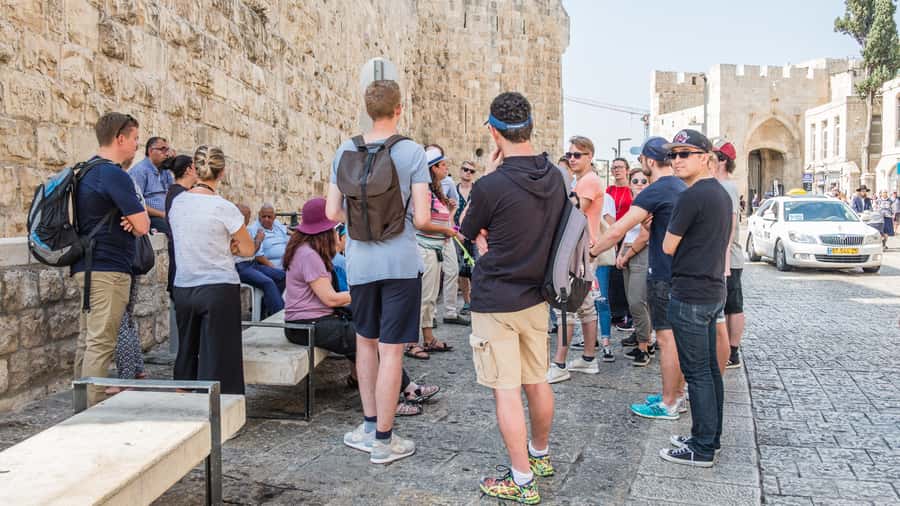
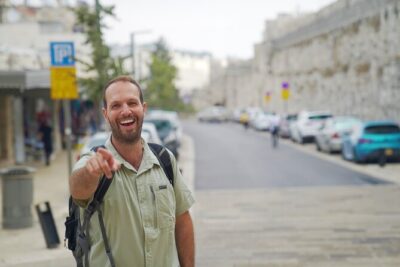
The tour kicks off at the stone bench just outside Jaffa Gate. Look for the guide wearing a green shirt with Guide written in yellow on the backside. From that first turn into the Old City walls, the pacing is designed for first-time visitors: you’re not just walking, you’re being guided through how the Old City is organized, quarter by quarter, and what makes each area feel different.
Expect narrow streets, crowds at key moments, and a steady rhythm of stopping to look closely at sacred landmarks. The best part is that the tour doesn’t treat religion like separate chapters. Instead, it treats Jerusalem like one layered place where Jewish, Muslim, and Christian traditions overlap in real geography, real time, and real community memory.
Western Wall and Temple Mount Viewpoints, When Access Changes
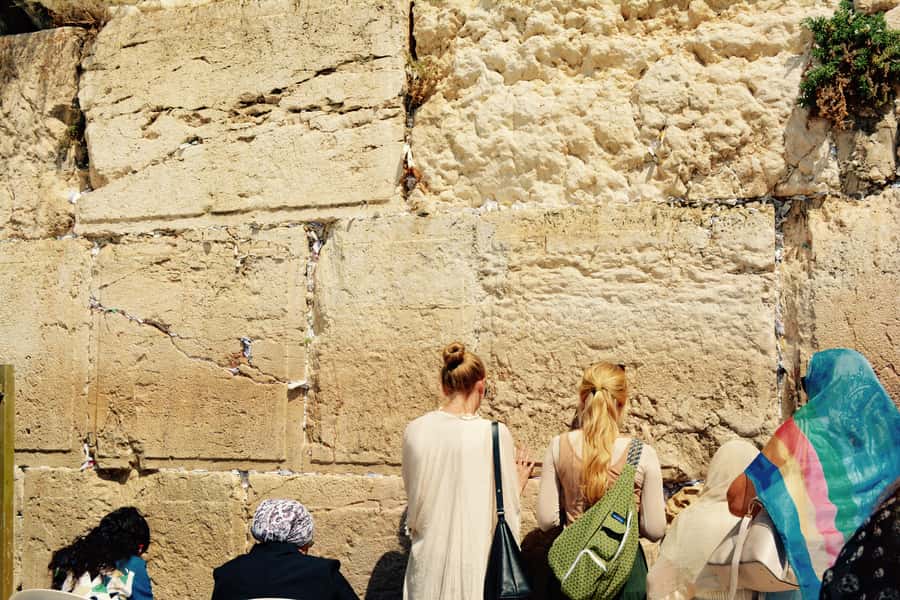
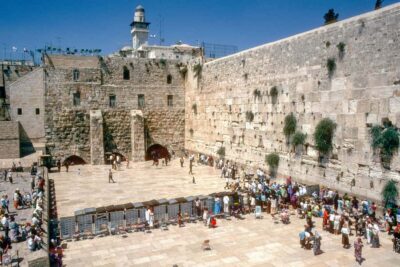
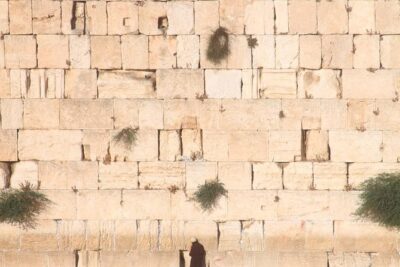
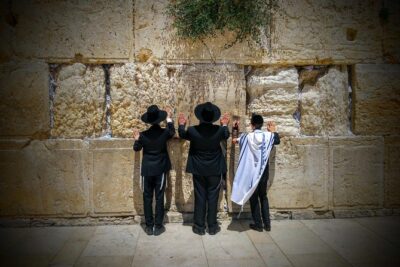
You’ll spend time at the Western (Wailing) Wall area, which is one of the most powerful places in the Old City to see in person. The guide frames it as the last remains connected to the Jewish Temple that once stood here thousands of years ago. In other words, you’re not only looking at stone, you’re looking at the physical edge of a much larger story.
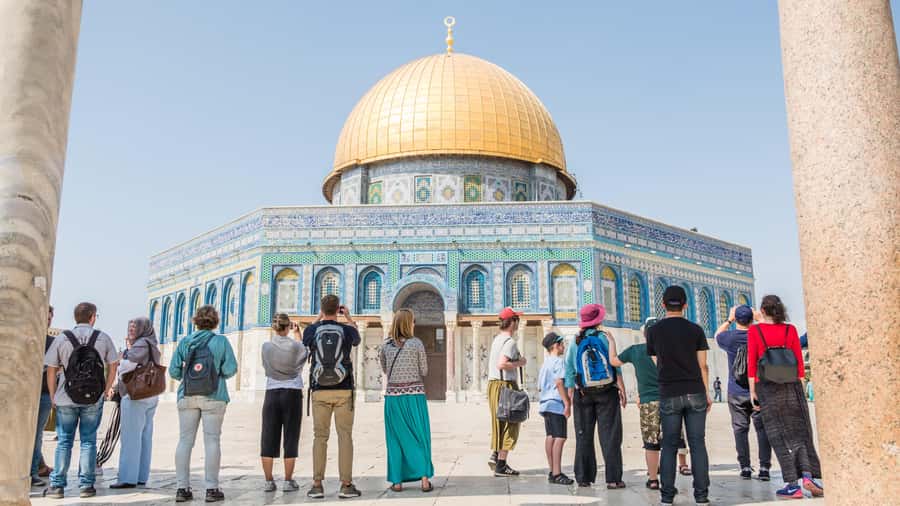
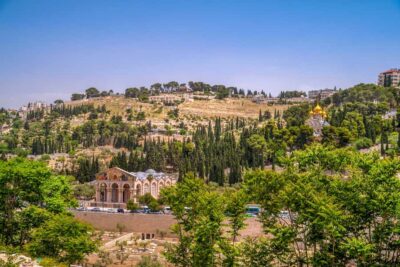
From there, you move toward the Temple Mount area, including what visitors typically associate with the Dome of the Rock and Al Aqsa Mosque. Here is the key logistics point that can affect your day: Temple Mount, including the Dome of the Rock and Al Aqsa Mosque, is closed to visitors every Friday, Saturday, and during various Muslim and Jewish holidays. When that closure applies, the tour includes a viewpoint overlooking the Temple Mount instead.
That viewpoint swap matters. It means you’re not stuck with a missing stop, but you do need to shift your expectations. You’ll still learn the same context, but the perspective is outward instead of inside.
Church of the Holy Sepulchre and the Via Dolorosa Footsteps

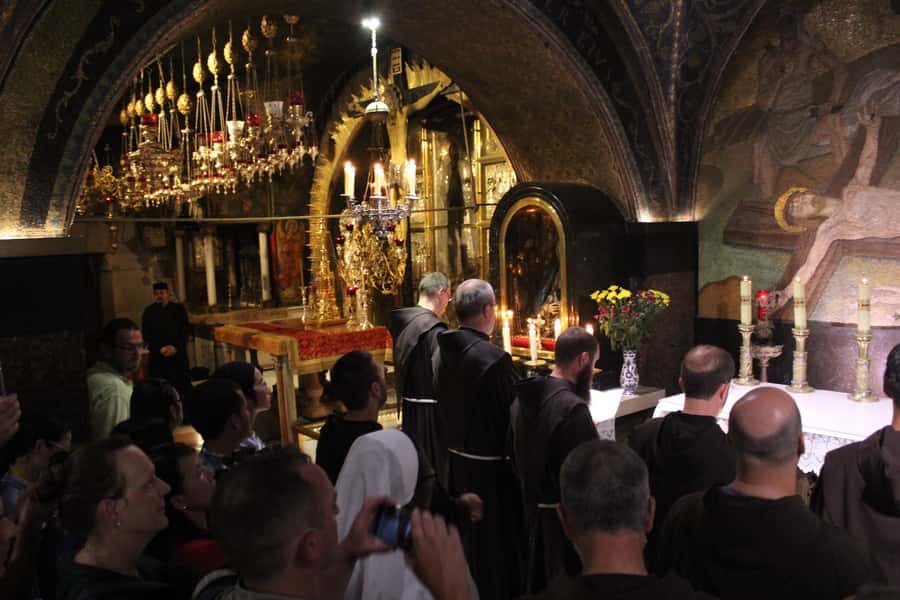
For many people, the most emotional stretch of this tour is the Christian sites route. The guide takes you along the Via Dolorosa, the path associated with Christ walking with his own cross to his crucifixion. Even if you don’t follow every detail of the tradition, you’ll feel how the city itself shapes the story. The street layout, the closeness of buildings, and the constant movement around you make the experience intense in a very physical way.
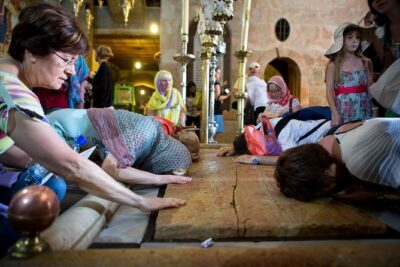
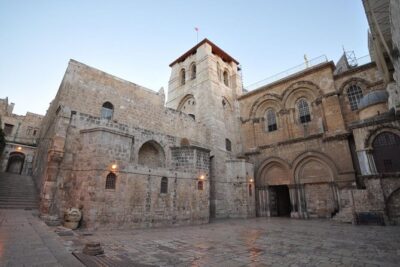
You’ll also get time at the Church of the Holy Sepulchre, including entering the church. This is one of those places where the building, the crowd flow, and the layered sacred spaces can feel confusing at first. A guide helps you understand why there are multiple points of reverence in one footprint and how the church connects to the larger timeline of Christian tradition, not just to one single stop.
When you visit places like these, a big part of what you gain is context. You’ll hear biblical stories put into place as you stand in the areas linked to those moments. That approach tends to turn a fast visit into a memory that makes sense later, when you’re back in your hotel trying to recall what you saw.
More Israel taken at walking pace

Jewish Landmarks You See as More Than Old Stones
The tour includes stops connected to Jewish tradition as well as the Western Wall itself. You’ll hear about King David’s Tomb as part of the Jewish context of Jerusalem. Whether you grew up with the stories or you’re learning for the first time, seeing these sites in their actual urban setting helps you understand why Jerusalem matters beyond any single era.
I like that the tour treats this as part of the city’s identity, not just as a historical detour. When the guide connects the foundation of the Jewish nation and Jerusalem’s long timeline to the street level you’re walking, the Old City stops feeling like a museum and starts feeling like a hometown with many generations.
Muslim Sacred Sites: Dome, Al Aqsa, and the 5 Pillars Context
For the Muslim sites portion, the tour highlights areas tied to the Prophet Mohammed’s ascension to heaven, including the Dome of the Rock and Al Aqsa Mosque. If you visited Temple Mount on a day when closures apply, you may get the viewpoint version instead, but you still get the religious and historical context explained.
The tour also connects the sites to broader Islamic foundations, including the 5 Pillars of Islam. That’s the difference between seeing a landmark and understanding it. You’re not only looking at architecture and sacred space, you’re also hearing how belief practices tie into daily life and identity.
In one highlight theme from guides working in the area: safety and careful navigation through the Muslim Quarter is taken seriously. That matters because the streets can be busy and the crowd pattern changes quickly.
How the Guide Turns a Walk Into Real Understanding
The guides are the engine of this tour. A repeated strength is that the guide answers questions clearly, stays organized through four hours of moving, and keeps the experience moving at a good pace without rushing you through the important bits.
You may run into guides like Shahar, Tanya, Yoni, Nimrod, Nirit, Yariv, Shimon, Talia, or Orna. Across these examples, a consistent pattern shows up: storytelling that links what you’re standing next to with why it matters, and a comfortable handling of questions from different backgrounds.
Another big plus: you’ll get a sense of how the three religions interact in the same streets. That’s not just academic. It’s practical. It helps you understand why the Old City can feel crowded, emotional, and deeply layered all at once.
What 4 Hours Feels Like on Foot (and How to Plan Your Day)
This tour runs 4 hours, and the Old City is not a slow stroll even when the pace is “good.” Expect plenty of standing in meaningful spots, pausing for explanation, and some time inside major sites like the Church of the Holy Sepulchre.
If you’re planning the rest of your day, I’d treat this as your anchor activity. Do it early enough that you can still explore on your own afterward with better bearings. The guides often give you an orientation that helps you decide where to go next, whether that means revisiting a sacred site you want more time with or wandering the quarters you didn’t have space to linger in.
Also, you’re walking through areas where shade can be limited. That’s why the clothing and weather prep matters so much, especially in hot months.
Price and Value: Why $57 Can Be a Smart First-Day Choice
At $57 per person for a 4-hour guided walk, this is a reasonable price for Jerusalem’s top Old City anchors. What makes it good value is not just the number of stops, it’s the structure. You’re getting a guided route that strings together the Western Wall, Temple Mount area, Via Dolorosa, and Church of the Holy Sepulchre into one logical flow.
If you try to do this solo, you’ll still see the sites, but you’ll likely spend extra time figuring out what you’re looking at. Here, the guide saves you that time, and you get context on major themes like the Western Wall’s connection to the Jewish Temple period, Islamic foundations like the 5 Pillars, and Christian landmarks along the crucifixion pathway.
One more practical note: the tour includes the guided tour only. Food and drinks are not included. For value, I recommend you plan a simple snack or meal either before you start or after you finish.
Meeting Point, Dress Code, and What You Need to Bring
Meeting is straightforward, which is a big deal on busy travel days. You start at the stone bench just outside Jaffa Gate, and you’re looking for the green-shirt guide with Guide written in yellow on the backside.
Bring comfortable shoes because the Old City is uneven. Bring water. Add a sun hat if it’s bright out. A scarf is useful not just for comfort, but because the tour has strict clothing rules: no shorts and no sleeveless shirts.
You should also carry your passport. A copy is accepted, so if you don’t want to travel with the original in your day bag, you can bring a copy instead.
Who Should Book This Old City Tour, and Who Might Prefer Another Plan
This tour is a great fit if you:
- want a strong first-day orientation in Jerusalem’s Old City
- care about the meaning behind sacred landmarks across multiple religions
- enjoy walking but you want guidance to make sense of what you see
You might want a different plan if:
- you need a wheelchair-friendly or mobility-friendly route, because this tour is not suitable for mobility impairments
- you dislike religious sites and prefer strictly secular attractions
If you’re traveling with kids, it can still work well if the guide’s style matches your family. Some guides are known for using humor to keep younger people engaged, especially while waiting or moving through crowded sections.
Should You Book? My Practical Take
If this is your first time in Jerusalem, I think this is an excellent way to start. You get a focused 4-hour walk that hits the big anchors and adds meaning so the city stops feeling like chaos. The Temple Mount access rule is the only major variable, and even then, you’re not left without something to do, because the tour includes a viewpoint when access is closed.
Book it if you value interpretation, not just sightseeing. Skip it if your main goal is a low-walking day, or if you’re not able to handle uneven Old City streets. For most people, though, it’s one of the simplest ways to turn Jerusalem into something you actually understand.
FAQ
Where does the tour start?
The meeting point is the stone bench just outside Jaffa Gate. Look for the tour guide wearing a green shirt with Guide written in yellow on the backside.
How long is the Jerusalem Old City walking tour?
The duration is 4 hours.
What sites are included in the tour?
You’ll see the Western Wall, Temple Mount (with an outside viewpoint on closure days), the Dome of the Rock and Al Aqsa Mosque area, the Via Dolorosa route, and the Church of the Holy Sepulchre.
Is Temple Mount always included?
Temple Mount is closed to visitors every Friday, Saturday, and during various Muslim and Jewish holidays. When it is closed, the tour includes a viewpoint overlooking the Temple Mount.
What should I wear and bring?
Wear comfortable shoes and avoid shorts and sleeveless shirts. Bring a sun hat, water, and a scarf. Bring your passport (a copy is accepted).
Is food included?
No. Food and drinks are not included.
What language is the tour conducted in?
The live tour guide speaks English.
Is this tour suitable for wheelchairs or limited mobility?
No. It is not suitable for people with mobility impairments or wheelchair users.
Other Tours We Have Reviewed in Israel
- From Jerusalem: Masada & Dead Sea Full Day Tour with Pick Up
★ 4.5 · 815 reviews - From Jerusalem: Nazareth and Sea of Galilee Tour
★ 4.5 · 588 reviews - From Jerusalem: Masada&Dead Sea Tour INCLUDING ENTRANCE FEES
★ 4.3 · 392 reviews - Full Day City Tour of Jerusalem
★ 4.1 · 367 reviews
More Israel Tour Reviews
- From Jerusalem: Masada & Dead Sea Full Day Tour with Pick Up
★ 4.5 · 815 reviews - Masada and the Dead Sea Day Trip from Jerusalem
★ 4.5 · 757 reviews - From Jerusalem: Nazareth and Sea of Galilee Tour
★ 4.5 · 588 reviews - Nazareth and the Sea of Galilee Day Trip from Jerusalem
★ 4.5 · 446 reviews
More Ways Through the Old City
- Old and New Jerusalem Full-Day Tour
★ 4.0 · 273 reviews - From Jerusalem Small group tour Old&New City ENTRY FEES INCL
★ 4.0 · 135 reviews - Best seller! Jerusalem old city four quarters tour
★ 5.0 · 123 reviews - Private Tour Jerusalem Old City
★ 5.0 · 118 reviews
Recently Added Israel Tour Reviews
- jerusalem classic tour★ 5.0 · 3 reviews
- Private Walking Tour in Jerusalem’s Old City★ 5.0 · 3 reviews
- Private Tour Bethlehem and the Dead Sea★ 5.0 · 3 reviews
- Jerusalem Temple Mount & Dome of the Rock★ 4.5 · 3 reviews
- Jerusalem and the Dead Sea★ 5.0 · 3 reviews
Jerusalem Old City, compared.
 ★ 4.2From Tel Aviv: Jerusalem Old & New City Bus TourFrom $95824 reviews
 ★ 4.4From Tel Aviv: Jerusalem Old City & Dead Sea Guided Day TourFrom $133389 reviews
 ★ 4.5Old and New Jerusalem Day Trip from Tel AvivFrom $95296 reviews
 ★ 4.0Old and New Jerusalem Full-Day TourFrom $75273 reviews
 ★ 4.0From Jerusalem Small group tour Old&New City ENTRY FEES INCLFrom $97135 reviews
 ★ 5.0Best seller! Jerusalem old city four quarters tourFrom $450123 reviews
 ★ 5.0Private Tour Jerusalem Old CityFrom $500118 reviews
 ★ 5.0All Inclusive Walking Tour Old City JerusalemFrom $12083 reviews
Lists this tour appears in