
REVIEW · THE DEAD SEA
Jerusalem and the Dead Sea
Jerusalem can feel like a living maze. This private, full-day combo adds Old City quarters and Dead Sea floating into one smooth schedule, with a guide who keeps the day moving. I especially like the rooftop approach to the Old City and the way the drive out to the desert never feels like dead time. One thing to consider: it is a long day (about 6 to 8 hours) with walking, and the tour does not include food and drinks, so you will want to plan for breaks.
I also appreciate the practical comfort factor: door-to-door pickup and drop-off, plus a mobile ticket. In the hands of Hands on Israel, led by guide Shachar Gel, the history is organized like a storyline, not a lecture. The possible drawback is simple, you are covering a lot in one day, so if you want a slow, sit-and-stare pace, this may feel fast.
In This Review
- Quick hits before you go
- Mount Scopus, start high with Jerusalem in view
- Rooftop Ramparts and the Western Wall, walking the Old City from two angles
- Four quarters, then a focused walk through major Jewish landmarks
- Cardo to synagogues, then a structured look at Jerusalem’s layers
- New City drive-by: Knesset, courts, and major institutions
- Ein Gedi Oasis walk, freshwater in a desert pocket
- Dead Sea, float time and mud-covered fun
- How to enjoy the Dead Sea safely
- Price and value for a private group up to five
- What this tour style means for your day
- Who should book this private Jerusalem and Dead Sea day
- Should you book it? My decision guide
- FAQ
- How long is the Jerusalem and Dead Sea tour?
- What time does the tour start?
- Is hotel pickup and drop-off included?
- Is this a private tour or shared group?
- Are Dead Sea entrance fees included?
- Are food and drinks included?
Quick hits before you go
- Mount Scopus overview: Start with a wide view of Jerusalem near the modern Hebrew University.
- Old City rooftops: The Rooftop Ramparts route helps you read the city from above.
- Cardo and Byzantine street level: You walk the main thoroughfare of Byzantine Jerusalem.
- Four Sephardic synagogues: A specific stop that adds depth beyond the usual big sights.
- Ein Gedi oasis walk: A short nature stretch with freshwater waterfalls in the desert.
- Dead Sea mud and float time: Entrance fees are included, so you can focus on the experience.
Still choosing a Dead Sea day? Here are the alternatives
Mount Scopus, start high with Jerusalem in view
You begin the day with a pickup and head up toward Mount Scopus, where the Mount Scopus National Botanical Garden gives you that first, helpful big-picture view. It is right by the modern Hebrew University area, so you get a clean contrast: old Jerusalem below, modern life nearby.
This first stop is smart for two reasons. First, it sets context fast. Instead of jumping straight into crowds in the Old City, you get a moment to understand where things sit relative to each other. Second, it is a gentle entry point. The garden visit is listed at about 30 minutes, so you are not immediately spending the whole morning in steep, packed streets.
What to watch for: Even if the time is short, the morning start matters. An 8:00 am start means you will want to be ready to go, especially if you are traveling with kids or anyone who hates early days.
Rooftop Ramparts and the Western Wall, walking the Old City from two angles
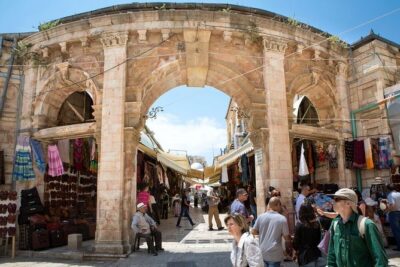
The Old City is where most people get overwhelmed. Too many signs. Too many alleys. Too much noise. This tour helps you solve that by approaching the same sights from different layers, starting with the Rooftop Ramparts tour.
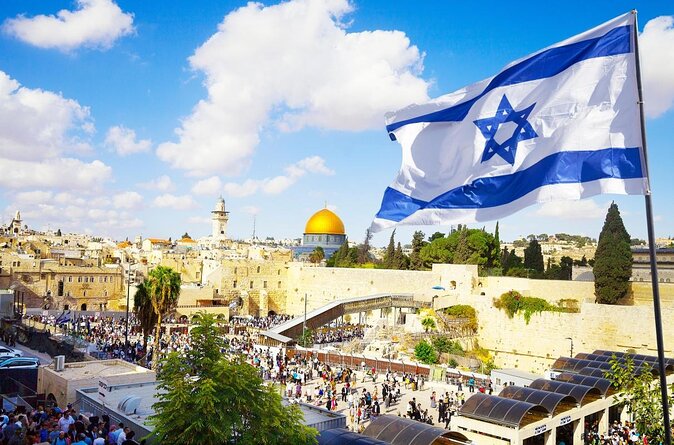
Rooftop routes change how you experience Jerusalem. From above, you can trace connections and understand how quarters relate without constantly fighting crowds at street level. You also get an efficient path to cover major landmarks, including the Western Wall, while still feeling like you are actually seeing the city rather than just passing through it.
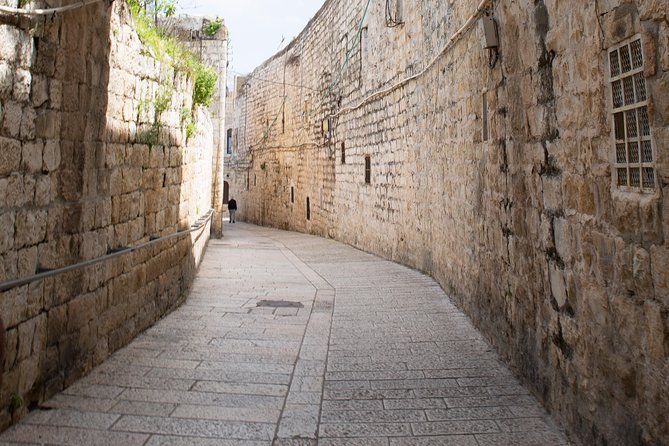
After the rooftop portion, you continue into the ancient streets of the Old City toward the holiest of Jewish sites, again focusing on the route back through time. The tour then moves along the Cardo, the main thoroughfare of Byzantine Jerusalem. That matters because it is not just a name. The Cardo represents the idea of Jerusalem as a crossroads, where life, trade, and faith moved along the same spine.
Four quarters, then a focused walk through major Jewish landmarks
A strong part of this experience is that it builds the Old City as four connected quarters rather than isolated photo stops. As you move, the tour includes a stop at the four famous Sephardic synagogues, then continues through toward the Western Wall again.
If you are the kind of traveler who likes details, you will probably enjoy this. It gives you specific places to anchor in your mind. It also helps you avoid the common issue where the Old City feels like a blur of walls and stairs.
Possible drawback: rooftop and Old City walking can be uneven. Even if you take your time, this is not the easiest day for anyone with mobility limits or anyone who hates stairs. If that is you, plan on slower pacing and consider whether your group needs a different tour style.
Cardo to synagogues, then a structured look at Jerusalem’s layers
The Old City part is more than a highlight reel. It is built like a timeline you can walk.
You start with the rooftop ramparts approach, then drop into the streets where the Cardo takes you into the Byzantine-era feeling of a major thoroughfare. The added synagogues stop gives you a more textured sense of Jewish life in different periods, not just the best-known wall and plaza.
One of the most useful skills a good guide brings here is what to prioritize when you have limited time. With Shachar Gel and Hands on Israel, the day is described as structured and story-driven. That style matters because it keeps your mental map organized, so you leave with more than selfies.
What you will likely like: you will get the feeling that the Old City is arranged in understandable parts. When a guide connects rooftops, street-level landmarks, and specific synagogues, you stop feeling lost, and you start feeling oriented.
New City drive-by: Knesset, courts, and major institutions
After the Old City, you drive through Jerusalem’s New City. This part is not a long walking tour, but it is valuable because it shows the city as it exists today, not just as an ancient set.
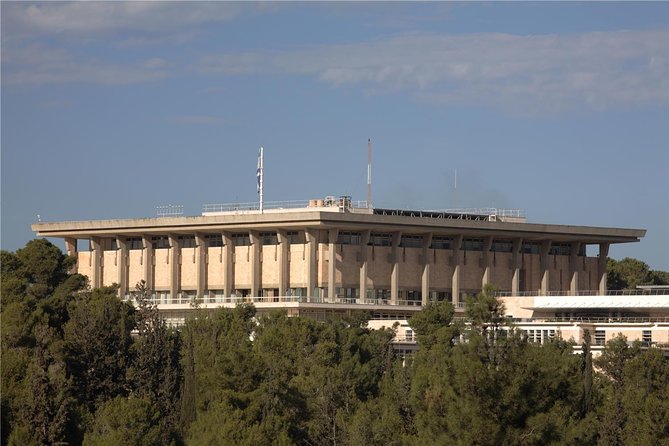
You pass highlights such as the Israeli Parliament (Knesset), the High Court of Justice, and major cultural anchors like the Israeli Museum.
Why I think this drive-by segment works: it gives you context for where power and public life play out in modern Jerusalem. The Old City is the spiritual and historical center for many visitors, but the New City is where you see the everyday functioning of the country. Even a short pass helps balance the day.
Consideration: since it is mostly a drive-through, you will not get long time for photos the way you might on a slower city day. If you love window-shopping with your camera, you may want to bring extra patience, or plan to return later for a standalone visit.
Ein Gedi Oasis walk, freshwater in a desert pocket
Then the tour shifts into the desert region with a stop at Ein Gedi. Ein Gedi is famous for being a freshwater oasis inside one of the driest places on earth. On this tour, you take a short nature walk through the oasis, with a chance to enjoy the freshwater natural waterfalls.
This is a great change of pace. After stone streets and dense crowds, the desert walk gives your body a different rhythm. You get movement, air, and a sense of scale that is hard to grasp from the Old City alone.
It also gives you a more physical way to understand the region. You are not only learning about extremes in theory. You are stepping into one of the places where water still shapes life.
What to pack (practical advice): consider comfortable shoes. Even a short walk can mean uneven ground. Also think about sun protection, because desert light can be intense, even when the walk is brief.
Dead Sea, float time and mud-covered fun

Next comes the highlight that most people book for: the Dead Sea experience.
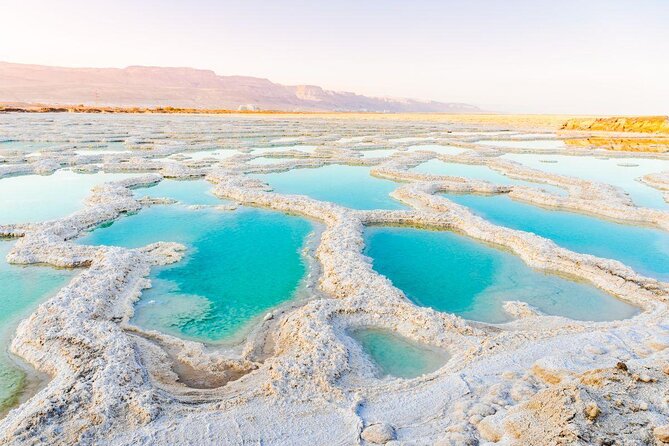
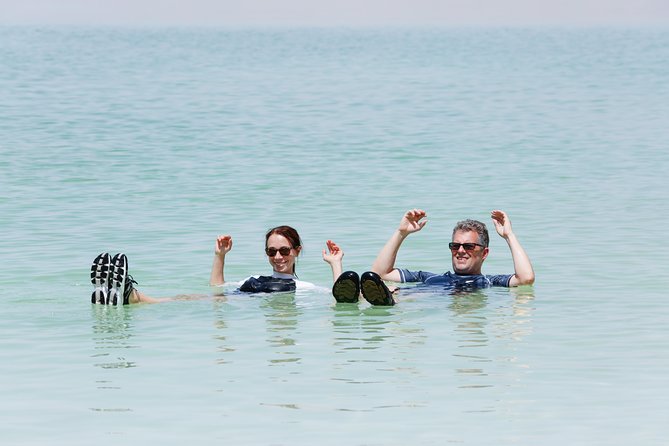
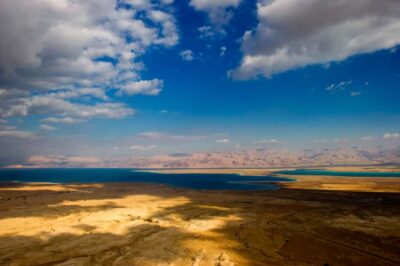
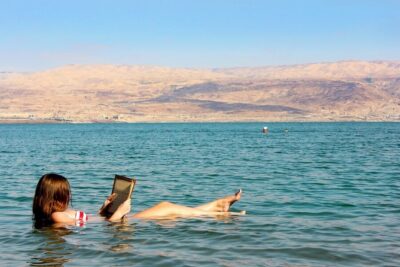
The tour descends toward what is widely known as the lowest spot on the planet, then ends with the classic Dead Sea moment: floating and covering yourself with mud. Entrance fees are listed as included, which is one less thing to manage.
This is the kind of experience that is both silly and unforgettable. You lie back, you float, and for a few minutes you stop thinking like a tourist and start thinking like, how is this even possible?
How to enjoy the Dead Sea safely
Even though this is fun, treat it with respect. The Dead Sea environment is harsh on skin and eyes. I strongly suggest you keep water out of your face and avoid rubbing your eyes. Rinse up afterward as best you can, and plan to change out of anything you do not want to smell like salt and mud.
Possible drawback: the session is listed at about 2 hours for the Dead Sea region. That is enough time to float and enjoy the mud, but if you are sensitive to heat or just hate being in the sun, you may want to keep an eye on how your body feels during the hottest part of the day.
Price and value for a private group up to five
Let’s talk money, because private tours only make sense when the value is real.
The price is $1,700 per group (up to 5). That means the effective per-person cost can land around $340 if you fill five spots, and closer to $850 if you are just two. So the value depends heavily on your group size.
Where I see the value coming from:
- Door-to-door pickup and drop-off: You are not coordinating buses or taxis across a long day.
- Private vehicle for the desert drive: Getting from Jerusalem to Dead Sea territory efficiently is not trivial.
- Admission included for the Dead Sea: That helps keep the tour predictable.
- A guide who organizes the day: In a place like the Old City, good guidance can be worth its weight in patience.
If you are a family, a couple of friends, or a group of up to five, this feels like a solid deal because you split the cost and still get real flexibility. If you are traveling solo and paying the full group amount, you might want to compare it against shared tours or a more Old City-focused private option.
What this tour style means for your day
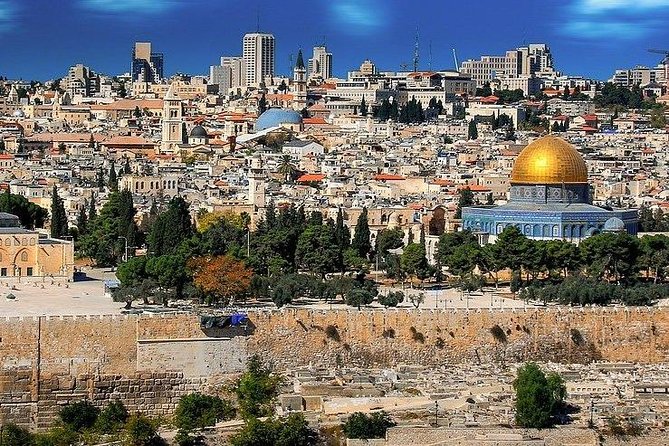
This is not a hop-on hop-off day. It is a guided, structured route that mixes big iconic stops with a few very specific choices.
The Rooftop Ramparts route, the Cardo segment, and the four Sephardic synagogues stop are the kinds of details that separate a quick tour from something you remember. Then you get a nature interruption at Ein Gedi, followed by the full-on Dead Sea payoff.
I like this structure because it keeps your brain engaged. You go from stone streets to desert water to floating mud. That rhythm matters when you have limited time and want variety without planning a full itinerary yourself.
Who should book this private Jerusalem and Dead Sea day
I think this works best for:
- Families who want one day that hits both the Old City and a major nature and spa-style stop.
- Small groups who want a private vehicle and fewer logistical headaches.
- First-time visitors to Jerusalem who need help building a mental map fast.
It may not be the best fit if:
- You want lots of free time wandering on your own.
- Your group prefers minimal walking, or you are avoiding uneven steps.
- You cannot handle long sightseeing hours, especially with an early 8:00 am start.
Should you book it? My decision guide
Book this tour if you want a single organized day that covers Jerusalem’s spiritual core, gives you modern city context, and ends with a Dead Sea experience that feels unlike anything else. The private format and hotel pickup make it easier to execute without stress, and the guide approach matters in a place where it is easy to feel lost.
Skip it or consider a different format if you are sensitive to a long day and you rely on food breaks being included. Since food and drinks are not part of the package, you will want to plan your own snacks or be ready to purchase along the way.
If you do book, the best move is to treat it like a “plan for walking and hydration” day. Wear comfortable shoes, protect yourself from sun, and go into the Old City expecting crowds. With the right pacing, this day is a satisfying mix of meaning and fun.
FAQ
How long is the Jerusalem and Dead Sea tour?
The experience runs about 6 to 8 hours.
What time does the tour start?
It starts at 8:00 am.
Is hotel pickup and drop-off included?
Yes, hotel pick up and drop off are included as part of the private tour.
Is this a private tour or shared group?
This is private, meaning only your group participates.
Are Dead Sea entrance fees included?
Yes, entrance fees for the Dead Sea are included.
Are food and drinks included?
No, food and drinks are not included. Souvenir photos may be available to purchase.
More Israel Tour Reviews
- From Jerusalem: Masada & Dead Sea Full Day Tour with Pick Up
★ 4.5 · 815 reviews - Masada and the Dead Sea Day Trip from Jerusalem
★ 4.5 · 757 reviews - From Jerusalem: Nazareth and Sea of Galilee Tour
★ 4.5 · 588 reviews - Nazareth and the Sea of Galilee Day Trip from Jerusalem
★ 4.5 · 446 reviews
More Days Down at the Dead Sea
- From Jerusalem: Masada & Dead Sea Full Day Tour with Pick Up
★ 4.5 · 815 reviews - Masada and the Dead Sea Day Trip from Jerusalem
★ 4.5 · 757 reviews - From Jerusalem: Masada&Dead Sea Tour INCLUDING ENTRANCE FEES
★ 4.3 · 392 reviews - Masada, Ein Gedi and The Dead Sea from Jerusalem
★ 4.0 · 267 reviews
Recently Added Israel Tour Reviews
- jerusalem classic tour★ 5.0 · 3 reviews
- Private Walking Tour in Jerusalem’s Old City★ 5.0 · 3 reviews
- Private Tour Bethlehem and the Dead Sea★ 5.0 · 3 reviews
- Jerusalem Temple Mount & Dome of the Rock★ 4.5 · 3 reviews
- Jerusalem and the Dead Sea★ 5.0 · 3 reviews
The Dead Sea, compared.
 ★ 4.5From Tel Aviv: Masada & Dead Sea Full Day Tour with Pick UpFrom $1171,496 reviews
 ★ 4.5Masada and the Dead Sea Day Trip from Tel AvivFrom $1201,014 reviews
 ★ 4.0Tel Aviv: Jerusalem, Bethlehem & Dead SeaFrom $109881 reviews
 ★ 4.5From Jerusalem: Masada & Dead Sea Full Day Tour with Pick UpFrom $111815 reviews
 ★ 4.5Masada and the Dead Sea Day Trip from JerusalemFrom $111757 reviews
 ★ 4.2From Tel Aviv: Masada, Ein Gedi & Dead Sea TourFrom $99705 reviews
 ★ 4.5Jerusalem and the Dead Sea from Tel AvivFrom $133444 reviews
 ★ 4.3From Jerusalem: Masada&Dead Sea Tour INCLUDING ENTRANCE FEESFrom $111392 reviews
Lists this tour appears in