
REVIEW · ISRAELI WINE TOURS
kosher Israel wine tour
Wine in Israel is never just drink. It is tied to blessings, holidays, and stories that reach back thousands of years. This private kosher Israel wine tour pairs tastings with pilgrimage-style stops, so you taste the present while walking through the past.
I especially loved how the day links the meaning of wine to real places, starting at Ancient Shiloh where the Tabernacle stood for generations. I also loved the wine part, because Psagot is not only award-winning, it has a tangible story tied to its cave cellar and even finds like a coin and an amphora. One thing to consider: some admissions are not included, so you will want to budget a bit more for Shiloh and the Gvaot tasting stop.
In This Review
- What makes this day feel worth your time
- Quick hits before you go
- A Judean Hills day that connects wine to scripture
- Jerusalem pickup, private group pacing, and what that means for you
- Stop 1: Ancient Shiloh at Tel Shiloh, where the Tabernacle lasted 369 years
- Stop 2: Psagot Winery near Michmash, the cave story behind award-winning wines
- Stop 3: Gvaot winery tasting, another Judean Hills taste session
- The guide factor: why the experience feels memorable
- How to taste like you actually care (without making it stressful)
- Price and value: $762.83 per group up to 7
- Who should book this kosher Israel wine tour
- Should you book this kosher Israel wine tour?
- FAQ
- What is the duration of the kosher Israel wine tour?
- Where does the tour start and end?
- Is pickup offered?
- How many people are in the group?
- Are admission tickets included for all stops?
- Is it a mobile ticket?
- How soon will I get confirmation after booking?
- Can service animals attend?
- Can I cancel for a full refund?
What makes this day feel worth your time
This is set up as a true private experience, up to 7 people, with pickup offered from central Jerusalem and a mobile ticket for easier day-of logistics. The pacing also makes sense, because you get a big historical start, then shift into a focused tasting flow rather than sprinting from one winery to the next. The main drawback is that you should expect a longer day overall, since the tour runs roughly 7 to 10 hours.
More Israeli vineyards worth the detour
Quick hits before you go
- Ancient Shiloh (Tel Shiloh): Tabernacle site for 369 years, plus stories of Joshua’s inheritance division and Hannah’s prayer
- Psagot Winery’s cave origin: an underground discovery tied to an ancient wine operation and a coin from the Great Revolt era
- Kosher wine tastings with context: you get both the wine and the why behind it
- Free admission at Psagot: Psagot’s stop includes free admission, while other stops may require extra tickets
- A small private group (up to 7): easier conversation and more flexible pacing than big group tours
A Judean Hills day that connects wine to scripture
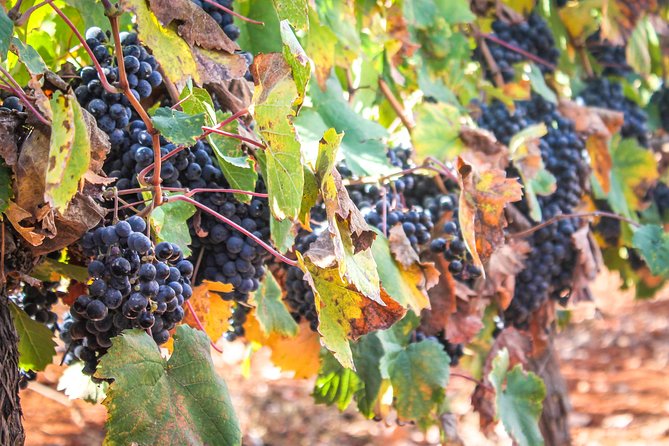
Israel treats wine like a language. You hear it in blessings, holiday table talk, and old texts that talk about vines, trees, and fruitfulness. What I like about this tour is that it takes that idea seriously. You are not just chasing tastes. You are learning the setting wine comes from, then drinking in a way that feels like it belongs to the land.
The day is also a nice mix of styles. You start with an ancient sacred site, then head to boutique wineries in the Judean hills region, where cool caves and old vines help explain why these producers take craft so seriously. If you want a day that feels both meaningful and fun, this fits.
Jerusalem pickup, private group pacing, and what that means for you
The tour starts at ICC / Shazar in Jerusalem, and it ends back at the same meeting point. Pickup is offered, and you will have a mobile ticket, which makes the start smoother.
Why does the private-group setup matter? In wine tastings, you learn faster when you can ask questions. In historical sites, you get more out of it when you can slow down and look, rather than being shoved along. This tour is set for a small group, up to 7 people, and that helps keep the day comfortable, especially if you want explanations in plain language.
The tour duration is listed as 7 to 10 hours (approx.), so plan your day like a real excursion. Wear comfortable shoes for the historical stop, and expect that the day can run long depending on the pace and timing of the tastings.


Stop 1: Ancient Shiloh at Tel Shiloh, where the Tabernacle lasted 369 years
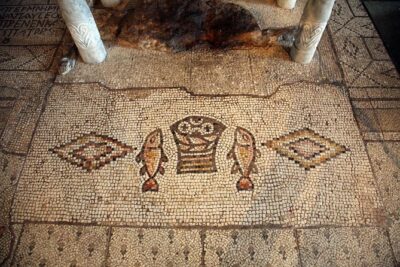
Your first big stop is Ancient Shiloh (Tel Shiloh). This is the site where the Tabernacle stood for 369 years, and it served as a central place for the Jewish people during that long span. If you like biblical geography and places that feel rooted in a specific time period, this is a strong opener.
Here is what makes Shiloh more than a quick photo stop:
- You get the sense of Shiloh as a capital of the Jewish people during those centuries.
- The tour context includes how Joshua divided the inheritance to the tribes of Israel in Shiloh.
- You also connect to a deeply personal story: Hannah prayed there, and the place is tied to prayer traditions that have continued for generations.
There is also a visitor’s center and antiquities on site. That matters because the setting helps you understand what you are seeing, not just where you are standing. If you have ever felt that “ancient ruins” tours can be vague, this one is set up to do the opposite, giving enough context that the stones start to make sense.
One practical consideration: admission for this stop is not included, so bring a little extra money or budget for tickets tied to the site.
Stop 2: Psagot Winery near Michmash, the cave story behind award-winning wines
After Shiloh, you shift from sacred history to wine history, and Psagot is built for that change. The winery is located near the Michmash crossing, an area associated with a major ancient clash: the battle between Yonatan ben Shaul and the Philistines.
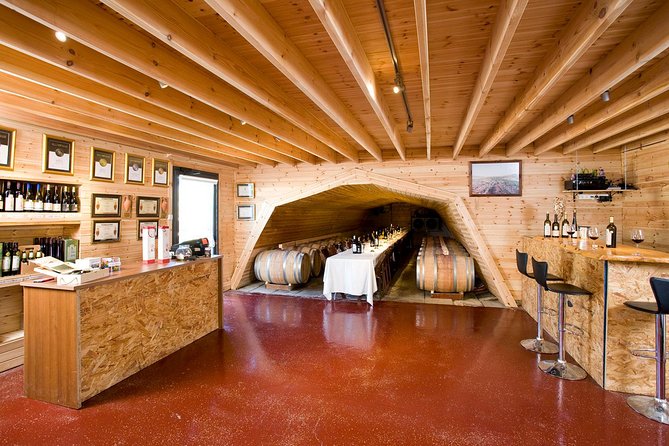
Psagot’s story is what really sells the stop. It started with a dreamer who made a winery in the parking lot of his home. The need for a cheap cooling solution pushed the search underground, and that is where the tour gets especially interesting for anyone who likes real-world origin stories.
In the area, workers found a small opening of a cave filled with dirt. After months of excavation, they discovered an ancient cave that was used as a winery around 2000 years ago. They also found a coin from the time of the Great Revolt against the Romans, and on the coin was an amphora, a classic ancient wine vessel. The founder, Jacob Berg, took this as a sign that the cave and its purpose were meant to be part of the modern winery.
That is the kind of story that makes tastings feel connected to place. You are not just sampling bottles. You are hearing why these caves matter, why producers care about temperature control, and why the past shows up in artifacts, not only in legends.
Tasting time here is listed as 30 minutes, and the admission is marked free. That makes Psagot one of the best value stops on the day, especially if you want your day to stay price-predictable.
Stop 3: Gvaot winery tasting, another Judean Hills taste session
Your final wine stop is Gvaot winery for a 45-minute wine tasting. Admission for this stop is not included, so again, keep a small buffer in your budget.
Gvaot is a useful contrast after Psagot because the day stops being only one producer’s story. You get another set of wines and another style of how a boutique winery talks about its product. Even without getting too technical, the tasting rhythm helps you compare how similar regional inputs can lead to different wine expressions.
Because this is a structured tour with a set timing window, it is also easier to stay focused. You can taste, ask questions, and then move on without feeling rushed.
The guide factor: why the experience feels memorable
One of the strongest parts of the day is how the tour guide handles both history and wine. The reviews rate the experience at 5 and repeatedly point to a guide who is friendly, entertaining, and able to translate winemaking talk into everyday language.
A big practical win here: the guide is described as fluent in three languages and serves as a translator when discussing techniques and viticulture. That means if you are not fluent in local wine terminology, you still get the meaning. You are not left nodding along, hoping the important details land.
Also, the day includes natural beauty in the sense of vine scenes and winery surroundings. You get time to enjoy the setting, not just stand behind a table and rush through samples. When a guide blends storytelling with tasting, the whole day stops feeling like a checklist and starts feeling like a conversation with the land.
How to taste like you actually care (without making it stressful)
You are likely to taste multiple wines across the day, and it is easy to lose the thread. Here is how I’d keep it enjoyable and useful:
- Start with one question at each winery. Ask what the grapes or the conditions change in the glass, not just what the wine is called.
- Take small notes on your phone right after each tasting. Even one phrase per wine makes comparisons easier later.
- Stay hydrated between stops. It sounds obvious, but a long day in Jerusalem plus tastings can sneak up on you.
- Eat before you go if you can. The tour timing is long, and you do not want hunger to turn wine into a chore.
You do not need to be a wine expert. The goal is to leave with a clearer sense of how Israel’s boutique wineries connect craft, land, and story.
Price and value: $762.83 per group up to 7
At $762.83 per group for up to 7 people, the math works out best when you share it with others you can actually spend a day with. If you are traveling solo, it may feel steep, but if you are a small group of friends or family, it can be a solid value for a private, guided day.
What you are paying for is not only tastings. You are also paying for:
- guided access to Ancient Shiloh with a context that turns ruins into a narrative
- time at Psagot Winery, including a tasting window and free admission at that stop
- wine tasting time at Gvaot, plus the structure of a single, coordinated day
- pickup offered and a small private-group format, which reduces the time-waste that can happen with DIY transport
Also remember: admissions are noted as not included for Shiloh and Gvaot, so the final cost can be slightly higher once you add those. Psagot’s stop being free helps offset that.
So is it worth it? If you want a day that blends Jewish and Israeli cultural context with kosher tastings, in a private group pace, I think it is a fair price. If you only want wine and could handle DIY, you might spend less. But you would likely miss the Shiloh-to-winery connection that makes this tour feel special.
Who should book this kosher Israel wine tour
I think this tour is a great fit if you:
- want kosher wine tastings with real cultural and historical context
- like the idea of pairing scripture-linked places with modern boutique wine makers
- prefer a private group up to 7, where questions are welcome and pacing is comfortable
- enjoy stories about origin, like how cave spaces led to modern winemaking at Psagot
It might be less ideal if you:
- have limited patience for a day that includes a long historical start before the wine
- are trying to keep the day strictly short or strictly low-cost once admissions are added
Should you book this kosher Israel wine tour?
If your ideal day in Jerusalem is part meaning, part tasting, and you want the chance to ask questions in a small group, I’d book it. The blend is strong: Ancient Shiloh’s prayer and Tabernacle story sets a thoughtful tone, then Psagot’s cave origin gives the day momentum, and Gvaot closes with another clear tasting session.
My only caution is the extra budgeting for tickets not included at every stop. If you plan for that and you like learning as you go, this tour feels like time well spent.
If you want a smooth day with pickup, a private group size, and a guide who can translate both history and wine talk, this is the kind of experience that tends to stick with people long after the last glass.
FAQ
What is the duration of the kosher Israel wine tour?
The tour runs about 7 to 10 hours.
Where does the tour start and end?
It starts at ICC / Shazar in Jerusalem and ends back at the same meeting point.
Is pickup offered?
Yes, pickup is offered.
How many people are in the group?
This is a private tour, and the group size is up to 7 people.
Are admission tickets included for all stops?
Admission is free at Psagot, but admission is not included for Ancient Shiloh and for the Gvaot winery stop.
Is it a mobile ticket?
Yes, the tour includes a mobile ticket.
How soon will I get confirmation after booking?
You should receive confirmation within 48 hours of booking, subject to availability.
Can service animals attend?
Yes, service animals are allowed.
Can I cancel for a full refund?
Yes. You can cancel for a full refund if you cancel at least 24 hours in advance of the experience’s start time.
Other Tours We Have Reviewed in Israel
- From Jerusalem: Masada & Dead Sea Full Day Tour with Pick Up
★ 4.5 · 815 reviews - From Jerusalem: Nazareth and Sea of Galilee Tour
★ 4.5 · 588 reviews - From Jerusalem: Masada&Dead Sea Tour INCLUDING ENTRANCE FEES
★ 4.3 · 392 reviews - Jerusalem: Guided Walking Tour of the Old City
★ 4.7 · 386 reviews
More Israel Tour Reviews
- From Jerusalem: Masada & Dead Sea Full Day Tour with Pick Up
★ 4.5 · 815 reviews - Masada and the Dead Sea Day Trip from Jerusalem
★ 4.5 · 757 reviews - From Jerusalem: Nazareth and Sea of Galilee Tour
★ 4.5 · 588 reviews - Nazareth and the Sea of Galilee Day Trip from Jerusalem
★ 4.5 · 446 reviews
Other Israeli Wine Days
Recently Added Israel Tour Reviews
- jerusalem classic tour★ 5.0 · 3 reviews
- Private Walking Tour in Jerusalem’s Old City★ 5.0 · 3 reviews
- Private Tour Bethlehem and the Dead Sea★ 5.0 · 3 reviews
- Jerusalem Temple Mount & Dome of the Rock★ 4.5 · 3 reviews
- Jerusalem and the Dead Sea★ 5.0 · 3 reviews
Israeli Wine Tours, compared.
 ★ 5.0GoKEDEM Golan Heights ATV Action & Wine-Tasting Tour From Tel AvivFrom $5398 reviews
 ★ 5.0Israel private tours,wine tours,off-road, tailor made,culinary,the bestFrom $9236 reviews
 ★ 5.0Private wine tour of Northern IsraelFrom $1,1494 reviews
 ★ 5.0Private Israeli Wines Tour of the Central IsraelFrom $1,0493 reviews
Lists this tour appears in