
REVIEW · JERUSALEM CITY TOURS
Jerusalem: Dual Narrative Tour
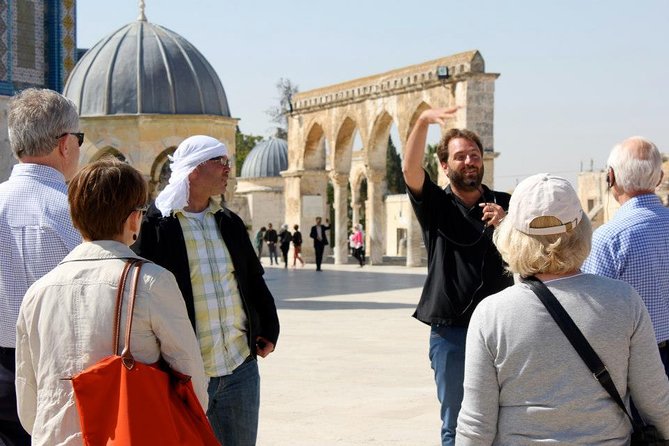
Jerusalem is never just one story. This dual narrative tour pairs a Jewish guide and a Palestinian guide so the Old City stops feel like arguments with history attached. I love how the route connects religion, archaeology, and modern conflict in one continuous walk, and I also love that the format is built for questions, not lectures.
One thing to plan for: the tour runs about 4.5 hours and it does not include food or drinks, so if you get hungry or overheated easily, you will want to pace yourself and bring water and sun protection.
In This Review
- Key takeaways before you go
- What $65 and 4.5 hours really buys you in the Old City
- Start at Jaffa Gate: the Old City as a map of claims
- Armenian Quarter stop: genocide memory inside a multi-faith neighborhood
- Jewish Quarter and the Roman Cardo: layers under your feet
- St Mark’s Syriac Church rooftop view: borders you can see
- Church of the Holy Sepulchre: the same site, different meanings
- Muslim Quarter and current tensions: communities, not slogans
- Via Dolorosa ending near the 5th Station: walking the route with context
- Western Wall and Al Buraq Square: Second Temple tradition meets the Islamic story
- Al Masjid Al Aqsa and the Temple Mount: why a tiled platform sparks conflict
- How to prepare so the day feels manageable (not miserable)
- Who this tour is best for, and who should pick another plan
- Should you book the Jerusalem: Dual Narrative Tour?
- FAQ
- What is the duration of the Jerusalem: Dual Narrative Tour?
- Where does the tour start and what is the meeting point?
- Where does the tour end?
- What is the required dress code?
- Is food or drink included?
- How big is the group?
- What is the cancellation policy?
Key takeaways before you go
- Two professional guides with different lenses: a Jewish guide and a Palestinian guide lead the conversation, side by side.
- Old City architecture with political meaning: you learn to read symbols, borders, and signage as power shifts over time.
- Holy sites plus the human stories around them: Jewish, Christian, and Muslim traditions are treated as lived narratives, not museum labels.
- Behind-the-sight explanations: you see the Church of the Holy Sepulchre and Temple Mount areas, then hear why they matter in competing narratives.
- A tight route, capped at 20 people: small group size helps discussions stay personal, even when crowds are loud.
More of Jerusalem, beyond the Old City gates
What $65 and 4.5 hours really buys you in the Old City
At $65 per person for about 4 hours 30 minutes, this tour is good value if you want context, not just check-the-box sightseeing. You are paying for two professional guides, plus an escort or host, and the big benefit is that you get two interpretations delivered in real time as you walk.
The schedule is also dense. You start at 9:30 am at Jaffa Gate and finish near the Austrian Hospice on Via Dolorosa. You will move through several quarters and major landmarks, including Western Wall and Al Masjid Al Aqsa. That means it is a walking day, not a sit-and-stretch day.
Group size is up to 20 travelers, so it is not a giant bus crowd. Still, Old City lanes can feel narrow and busy, and this tour spends time on discussion. Plan on staying alert and patient.
Start at Jaffa Gate: the Old City as a map of claims
You begin right outside the Old City at Jaffa Gate, where the tour quickly turns geography into a lesson. The guides point out how rulings and identities can be read on entrances and signs, especially in a place that has changed hands many times.
This is a smart warm-up. Before you hit the big religious sites, you learn how to look at the city like a layered system: borders, thresholds, and who gets to define what space means. Even if you already know Jerusalem’s basics, the way the tour frames the gate makes the rest of the walk click faster.
Armenian Quarter stop: genocide memory inside a multi-faith neighborhood
In the Armenian Quarter, you notice commemoration signage tied to the Armenian genocide. The guides use that pause to talk about Armenian history and identity in Jerusalem and where a community like this fits inside a crowded religious and political landscape.
What I like about this stop is that it widens the lens. You are not only learning about the usual three religions. You are also learning how Jerusalem includes communities with their own historical anchors, even when the global conversation keeps narrowing to Israel and Palestinians.
The downside is time. This is a brief stop, so you get the “why it matters” overview, not a deep, museum-style treatment. If you want more detail, you could follow up later on your own.

Jewish Quarter and the Roman Cardo: layers under your feet
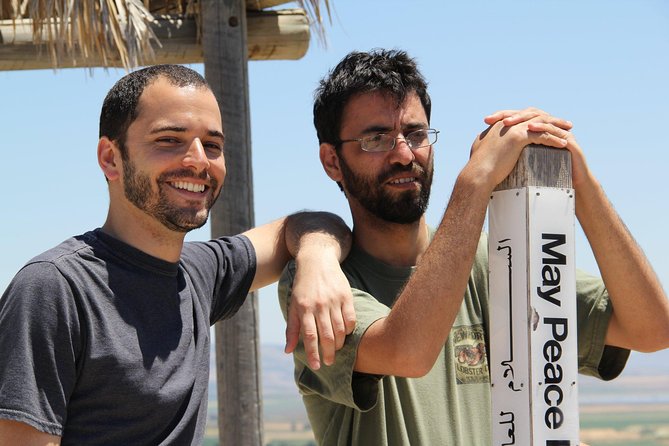
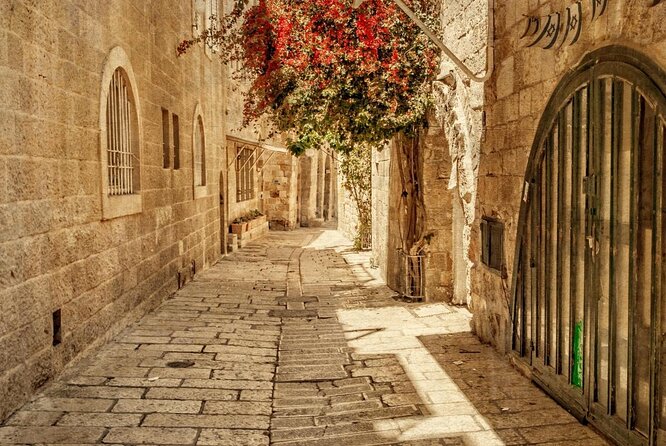
Next comes the Jewish Quarter, where you walk past the Roman Cardo and learn how the Israeli narrative links Jewish life today to earlier historical epochs. You also hear what lies beneath the visible stones, including the idea of excavation layers and what was removed to reach the current arrangement.
This is one of the most educational moments on the route because it forces you to think about physical evidence. Jerusalem is full of monuments, but it is also full of buried decisions: what gets uncovered, what gets left out, and what that means for how people argue about legitimacy.
If you are someone who loves archaeology and “how do we know” questions, this stop will feel like catnip. If you are more focused on spiritual atmosphere, you may still appreciate it, but you will likely want a quieter pace afterward.
St Mark’s Syriac Church rooftop view: borders you can see
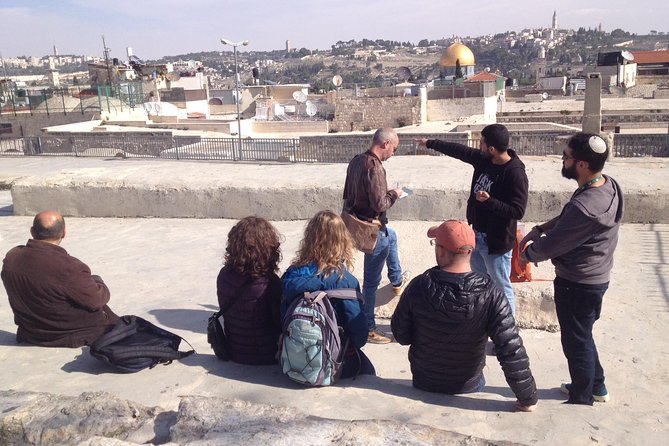
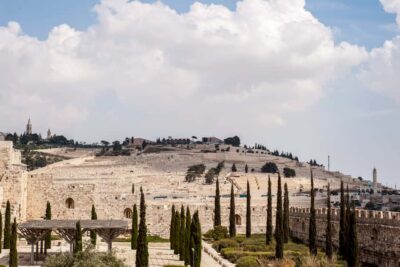
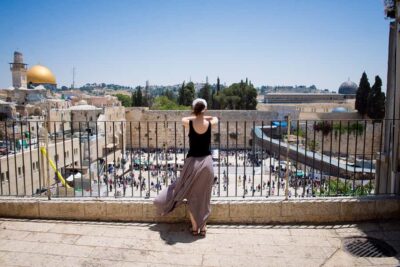
At St Mark’s Syriac Church, the tour includes a rooftop vantage point looking toward East Jerusalem. From there, you review Jerusalem’s borders and major landmarks in one glance.
This is where the tour turns from stories into spatial thinking. You start seeing how the city’s layout can shape everyday life and political debate. Even without getting a lecture, just understanding what lies where helps you follow the rest of the conversation around claims and control.
Tip: rooftop stops can be sunny or windy depending on the day. The tour advises bringing a hat and plenty of water, and that advice makes sense here.
Church of the Holy Sepulchre: the same site, different meanings
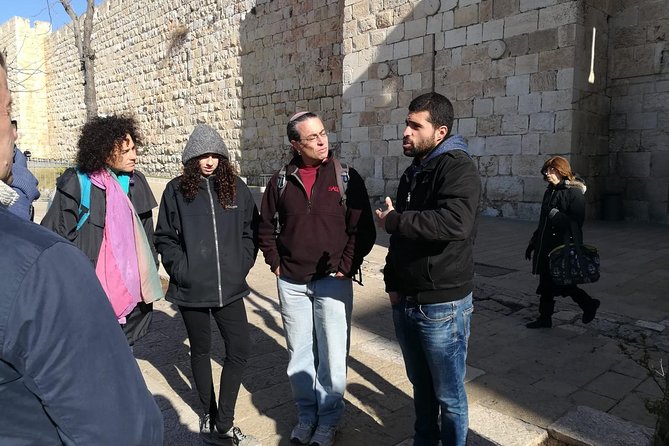
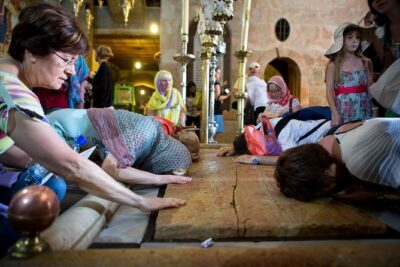
The Church of the Holy Sepulchre is a major Christian site, and the tour treats it as more than a single tradition. You learn why it matters in Christian practice, then you also hear how it appears inside Israeli and Palestinian narratives.
Inside the church, you visit the major points within the complex. The tour spends about 30 minutes here, which is enough to understand the significance, but not enough to slow-walk every corner like a dedicated pilgrim.
One practical note: this church area is famous for crowding. You will likely feel friction between the spiritual meaning of the place and the practical reality of visiting it. If you want maximum time for quiet prayer or detailed exploration, consider doing some parts separately after the tour.
Muslim Quarter and current tensions: communities, not slogans
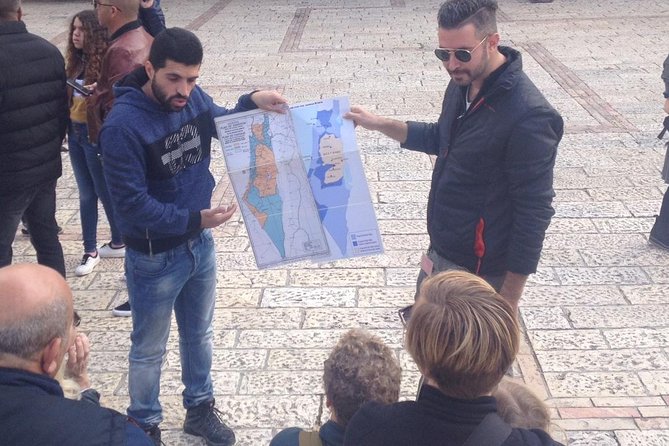
In the Muslim Quarter, you walk through neighborhoods and hear about the variety of communities in the Old City, connections to the wider Muslim world, and the way current tensions shape daily life.
This stop matters because it keeps the conversation human. Instead of presenting one monolithic viewpoint, you get a sense that the Old City contains multiple social worlds living side by side. That does not resolve conflict, but it can make the conflict feel less like a talking-head debate and more like a lived geography.
The time here is about 15 minutes, so again, you get a guided orientation. It is a good foundation, not a final answer.
Via Dolorosa ending near the 5th Station: walking the route with context
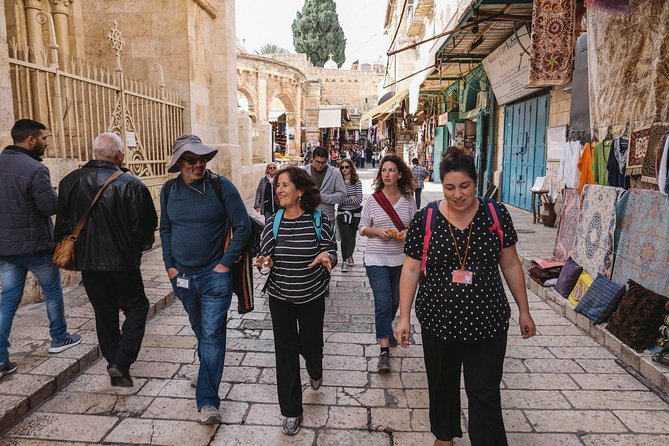
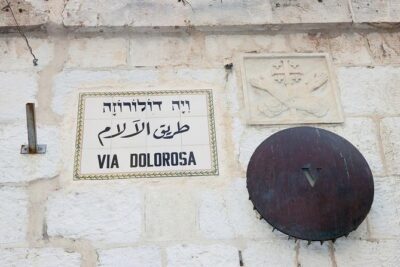
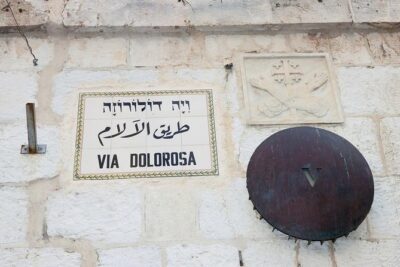
You then continue to the Way of the Cross on Via Dolorosa, concluding near the 5th Station of the Cross and the Austrian Hospice. This is where the tour shifts toward final reflections and Q and A time.
I like how the guides frame the Via Dolorosa not only as a pilgrimage path, but as a place where meaning is layered. The route is religious, but it is also a public stage where narratives collide and audiences change.
If you are planning to spend extra time walking the Via Dolorosa independently, you might feel tempted to “do everything perfectly” on this day. Don’t. The tour gives you the story and the flow. You can always return for slower wandering later.
Western Wall and Al Buraq Square: Second Temple tradition meets the Islamic story
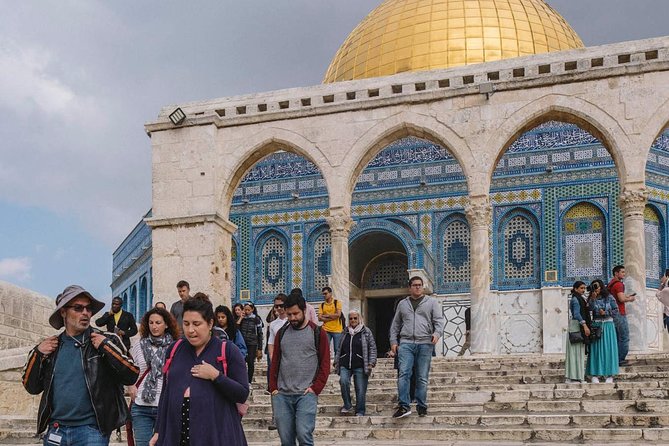
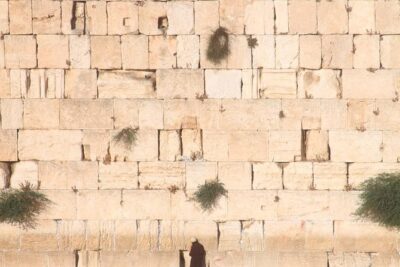
Next is the Western Wall / Al Buraq square. You enter after passing Wadi Road, and the guides connect the Second Temple in Jerusalem with the millennia-old tradition of Jewish pilgrimage to stand beside its remains. Then the tour introduces the Islamic story of Muhammad’s flight to Jerusalem through the meaning of Al Buraq.
What makes this stop powerful is that it treats competing claims as competing frameworks, not just opposing facts. The tour also discusses how the open area around the complex looked before and after it was captured by Israel more than 50 years ago.
This is a lightning-rod topic, but the structure of the stop keeps the focus on why people attach identity and memory to specific stones. For many people, this is the emotional peak of the walk, because you are moving from history into present-day symbolism.
Al Masjid Al Aqsa and the Temple Mount: why a tiled platform sparks conflict
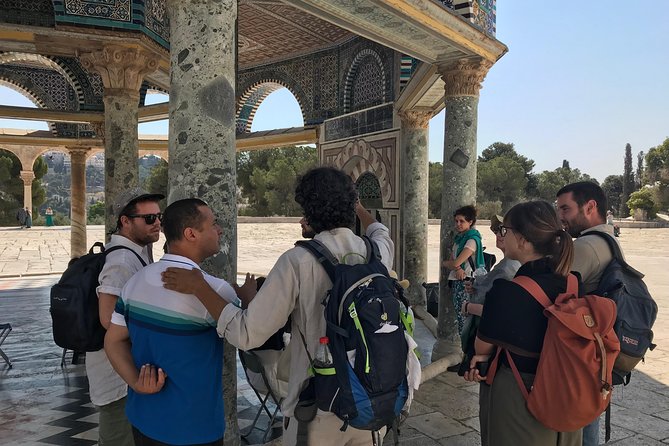
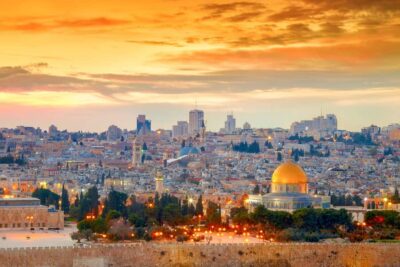
The largest single stop is Al Masjid Al Aqsa at the Temple Mount / Noble Sanctuary complex, with about 1 hour allocated. You see the tiled environment, including the Dome of the Rock shrine and the Al Aqsa mosque, and you learn why the complex is crucial for three religions.
Then you get to the conflict question directly: why is this platform such a flash point between Israelis and Palestinians? The guides explain the historic importance for each tradition, and they connect that importance to how modern claims get justified.
This is also where your preparation matters. The tour has a strict dress code for places of worship: no shorts and no sleeveless tops, and you must cover knees and shoulders for both men and women. If you show up unprepared, you can lose time fast.
Also, keep your expectations realistic. One hour can feel short when you want to absorb the scale and the emotion. Try to use the time to understand the guide’s framing, then decide later if you want extra independent time.
How to prepare so the day feels manageable (not miserable)
This is a thoughtful tour, but it is not effortless. A few practical things make it dramatically smoother:
- Bring plenty of water and a hat. The Old City sun can be intense, and the tour advises this for a reason.
- Wear the right clothes. The knees-and-shoulders rule is strict, and you should assume you will not be allowed to improvise.
- Moderate physical fitness helps. Expect walking and standing in busy places for long stretches.
- Keep electronics simple. The tour says do not bring large electronics. Smaller items are usually fine, but follow the guidance.
- Leave room for questions. The format depends on discussion, and that takes time.
Also, consider your “attention strategy.” This tour is built around two narratives. If you try to multitask or rush photos, you will miss the main point.
Who this tour is best for, and who should pick another plan
This experience is best for you if:
- you want a balanced, inter-faith conversation rather than a single “mainstream” storyline
- you like history tied to place, signage, and architecture, not just dates
- you enjoy asking questions and hearing how the same site can be understood differently
It may not be ideal if:
- you need lots of downtime, because the route is packed and food or drinks are not included
- you want extremely slow, detailed visits inside religious sites, because some stops are intentionally brief
- you prefer only spiritual atmosphere with minimal political context
As a final note, this tour has been led by different guide pairs in the past, including examples such as Betty and Ameer, Morgi and Amir, Nour and Alex, and Beni and Yousef. The key is the pairing, not the specific names, since the whole point is that you hear two perspectives in one walk.
Should you book the Jerusalem: Dual Narrative Tour?
Yes, book it if your top goal is to understand Jerusalem as a place where meaning is argued, shared, and contested, all at once. For $65 and a small group size, you get a rare format: major landmarks plus direct explanations from a Jewish and a Palestinian perspective, delivered as you walk through the actual quarters.
Skip or complement it if you want a lighter day with breaks and deep time inside each church or mosque. You can still do Jerusalem’s icons, but you might want to pair this tour with a separate, slower visit later.
If you go, go prepared: cover up, bring water, and treat the Q and A like the main attraction. The tour works best when you lean in.
FAQ
What is the duration of the Jerusalem: Dual Narrative Tour?
It is approximately 4 hours 30 minutes.
Where does the tour start and what is the meeting point?
The tour starts at Jaffa Gate in the Old City, Jerusalem. Look for a representative holding a Jerusalem: Dual Narrative Tour sign just outside Jaffa Gate.
Where does the tour end?
It ends near the Austrian Hospice on Via Dolorosa St 37, Jerusalem.
What is the required dress code?
For places of worship and selected museums, you must cover your knees and shoulders. That means no shorts and no sleeveless tops for both men and women.
Is food or drink included?
No. Food and drinks are not included, unless specified.
How big is the group?
The tour has a maximum of 20 travelers.
What is the cancellation policy?
You can cancel for a full refund up to 24 hours before the experience’s start time. If you cancel less than 24 hours before, the amount paid is not refunded.
Other Tours We Have Reviewed in Israel
- From Jerusalem: Masada & Dead Sea Full Day Tour with Pick Up
★ 4.5 · 815 reviews - From Jerusalem: Nazareth and Sea of Galilee Tour
★ 4.5 · 588 reviews - From Jerusalem: Masada&Dead Sea Tour INCLUDING ENTRANCE FEES
★ 4.3 · 392 reviews - Jerusalem: Guided Walking Tour of the Old City
★ 4.7 · 386 reviews
More Israel Tour Reviews
- From Jerusalem: Masada & Dead Sea Full Day Tour with Pick Up
★ 4.5 · 815 reviews - Masada and the Dead Sea Day Trip from Jerusalem
★ 4.5 · 757 reviews - From Jerusalem: Nazareth and Sea of Galilee Tour
★ 4.5 · 588 reviews - Nazareth and the Sea of Galilee Day Trip from Jerusalem
★ 4.5 · 446 reviews
Jerusalem, Other Days Out
- Full Day City Tour of Jerusalem
★ 4.1 · 367 reviews - Old and New Jerusalem Full-Day Tour
★ 4.0 · 273 reviews - Jerusalem and Bethlehem Day Tour from Jerusalem
★ 4.5 · 258 reviews - Jerusalem Half-Day Sightseeing Tour
★ 3.9 · 177 reviews
Recently Added Israel Tour Reviews
- jerusalem classic tour★ 5.0 · 3 reviews
- Private Walking Tour in Jerusalem’s Old City★ 5.0 · 3 reviews
- Private Tour Bethlehem and the Dead Sea★ 5.0 · 3 reviews
- Jerusalem Temple Mount & Dome of the Rock★ 4.5 · 3 reviews
- Jerusalem and the Dead Sea★ 5.0 · 3 reviews
Jerusalem City Tours, compared.
 ★ 4.3From Tel Aviv: Jerusalem and Bethlehem Guided Day TripFrom $1181,316 reviews
 ★ 4.0Tel Aviv: Jerusalem, Bethlehem & Dead SeaFrom $109881 reviews
 ★ 4.5Day Tour to Jerusalem and Bethlehem from Tel AvivFrom $121720 reviews
 ★ 4.1Full Day City Tour of JerusalemFrom $75367 reviews
 ★ 4.5Old and New Jerusalem Day Trip from Tel AvivFrom $95296 reviews
 ★ 4.0Old and New Jerusalem Full-Day TourFrom $75273 reviews
 ★ 4.5Jerusalem and Bethlehem Day Tour from JerusalemFrom $106258 reviews
 ★ 3.9Jerusalem Half-Day Sightseeing TourFrom $50177 reviews
Lists this tour appears in