
REVIEW · JERUSALEM OLD CITY
From Tel Aviv: City of David & Underground Jerusalem Tour
Jerusalem can feel like layers on layers, and this tour moves through them fast. You get the City of David and Jerusalem’s Old City highlights in one long day, starting with a high overlook and ending at ongoing excavations you can still see today. I especially like how the route lines up big views with the sites right after, instead of treating everything like a checklist.
I also love the way the walk through the Old City makes the past physical. You’ll pass the Zion Gate and see the Sephardi synagogues plus the excavated Byzantine Cardo street, then drop into areas with foundations, mosaics, and a mikveh that make the neighborhoods feel real. One thing to consider: this is a stair-heavy route, and the walking time is listed as 3 hours, but the uphill and downhill rhythm can feel longer.
If you’re okay with that pace, this is a strong value day. You get a professional English guide, air-conditioned coach from Tel Aviv, and a structured, guided path through the most in-demand archaeology and religious landmarks, with enough stops to ask questions.
In This Review
- Key highlights worth your time
- From Tel Aviv to the Old City, the route that actually makes sense
- Temple Mount viewpoint, Kidron Valley drive, and tombs near the Zion Gate
- Mount Zion and the approach through the Zion Gate
- Sephardi synagogues and the Cardo, where you walk on the street’s past
- Hezekiah’s wall foundations, homes with mosaics, and the mikveh
- A brief Kotel pause, notes between the stones
- Leaving the Old City via Dung Gate, then walking through the City of David excavations
- Pace, steps, and what 3 hours of walking really means
- Price and value at about $99, plus what to budget separately
- Who should book this tour, and who might want a different style
- Should you book this City of David and Underground Jerusalem tour?
- FAQ
- How long is the tour from Tel Aviv?
- Is there a lot of walking?
- Do you get picked up in Tel Aviv, and what about exact timing?
- What language is the guide?
- Are entry fees and meals included in the price?
- Is the tour wheelchair accessible?
Key highlights worth your time
- Temple Mount area viewpoint that sets the geography fast, before you start descending into the old streets
- Kidron Valley and cemetery area viewpoints near the Zion Gate, with tomb sites along the way
- Tomb of David on Mount Zion before you enter the Old City through the Zion Gate
- Byzantine Cardo main street and the restored Sephardi synagogues right inside the Old City route
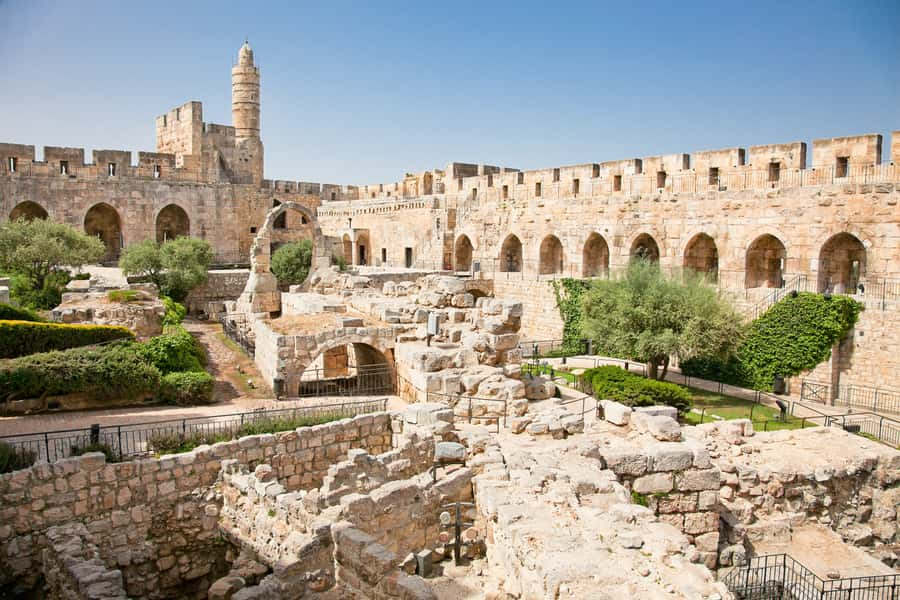
- Hezekiah wall foundations, mosaics, and a mikveh that turn “ancient Jerusalem” into something you can actually picture
- City of David excavations at the end, with the sense of a living archaeology site
Inside the walls: other Old City routes we have reviewed
From Tel Aviv to the Old City, the route that actually makes sense
This is a full-day Jerusalem outing that starts with hotel pickup from Tel Aviv and uses an air-conditioned coach for the driving portions. The timing is set for a long day, about 11 hours total, which matters because Jerusalem’s traffic can eat time if you’re traveling on your own. With a scheduled coach and a guide keeping the flow moving, you avoid the constant planning and re-planning that often happens once you’re already in the city.
The itinerary also does something smart: it doesn’t just drop you in the Old City and hope you can connect the dots. It builds the map for you. You start with an overlook near the Temple Mount area, then the route tracks along the Kidron Valley toward the Zion Gate. That geography is the backbone of the whole day. You’re not just looking at sites, you’re understanding where they sit relative to each other.
One practical point: entry fees and food are not included. So even if the tour price feels straightforward, you’ll want to keep extra spending room for the places where ticketing applies, plus a plan for meals and water. The good news is you’re not stuck figuring out logistics in the middle of a busy day.
Temple Mount viewpoint, Kidron Valley drive, and tombs near the Zion Gate
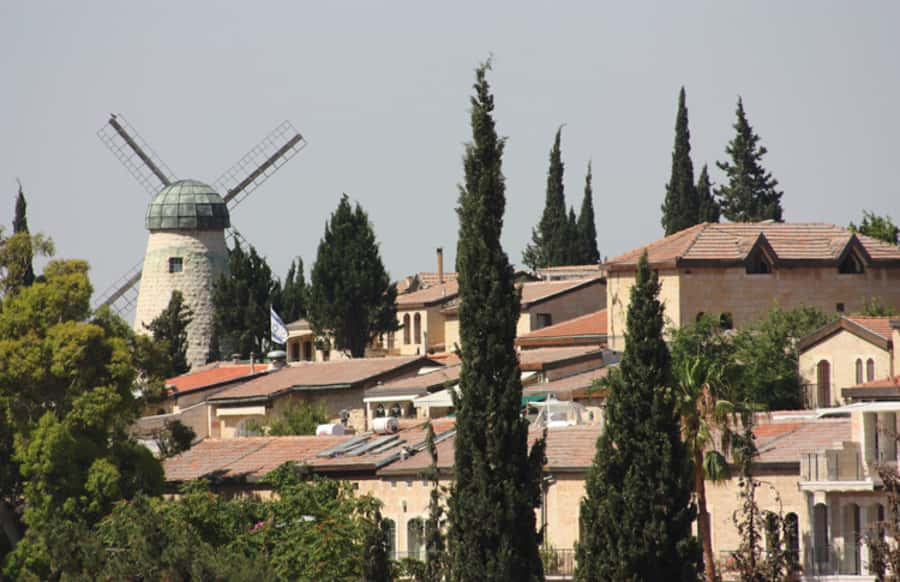
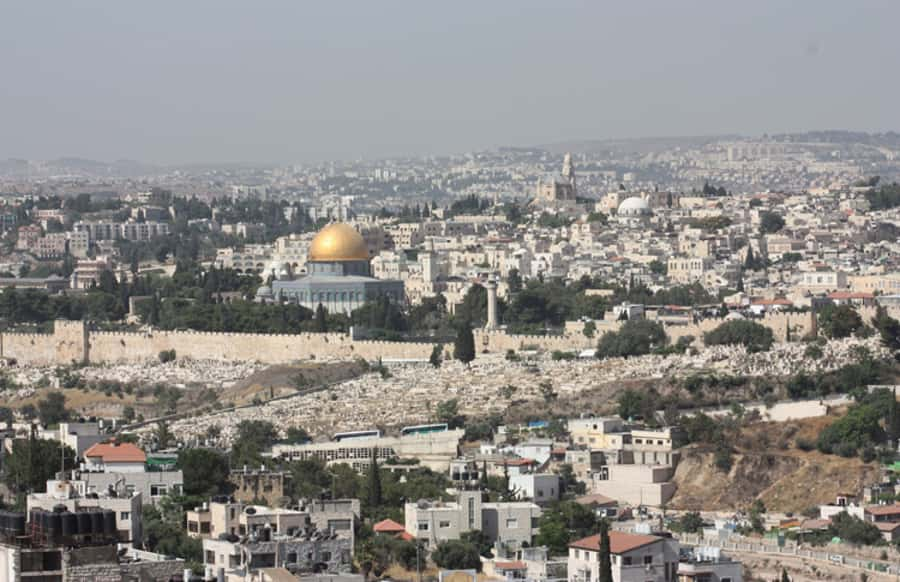
You begin with a scenic view of Jerusalem from the Temple Mount area. This is the moment where you get bearings fast. From up high, you can see how the city’s neighborhoods sit against valleys and slopes, and it makes later stops feel less random.
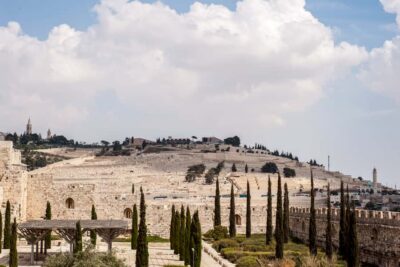
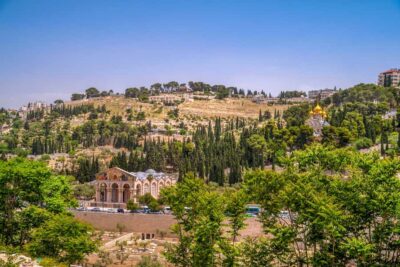
After that, you drive along the Kidron Valley toward the Zion Gate. You get excellent views of the Mount of Olives and the Jewish cemetery. This isn’t just a photo stop. It’s a reminder that Jerusalem is still a living city, with traditions tied to these exact ridgelines and burial areas.
At the base area near the tombs, you’ll see several named burial tomb sites, including Yad Avshalom and Beni Hazir, plus the tomb of Zechariah mentioned on the route. You also pass the Garden of Gethsemane and the Church of All Nations. These stops help explain why this part of Jerusalem has such deep overlap between geography and faith. A guide’s narration matters here, because without context, you may just feel like you’re looking at walls and doors. With context, you start noticing why each landmark is where it is.
If you like your photography early, this is a good time to pay attention, because later you’ll be moving on and down into more enclosed streets.
Mount Zion and the approach through the Zion Gate
Once the route climbs to Mount Zion, you stop at the Tomb of David. Even if you’re not trying to compare every tradition, it’s still a meaningful stop because it’s part of how Jerusalem’s story is told through sacred sites clustered on specific hills.
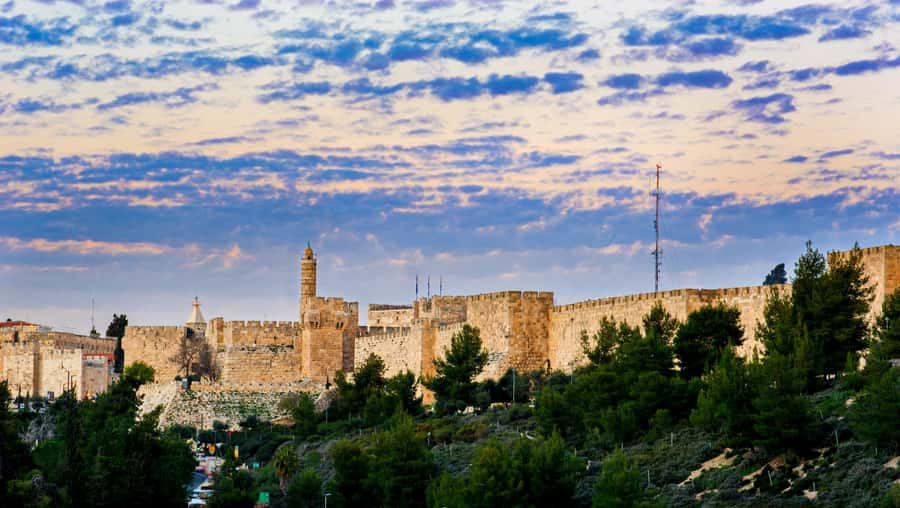
From there, you enter the Old City through the Zion Gate. This is a big transition point. Outside, you’re in driving distance and open viewpoints. Inside, you’re in narrow streets where your movement is slow and your senses get busy fast.
The guide’s job here is crucial. The Old City can feel like maze time. But once you hit the Cardo area and then move into the Jewish Quarter, the day starts to click. You’ll understand why certain streets are so important, not just as streets, but as routes people used centuries ago.
More of Jerusalem, beyond the Old City gates

Sephardi synagogues and the Cardo, where you walk on the street’s past
One of the most interesting Old City stops is the set of four restored Sephardi synagogues near the route. They’re described as seventeenth and early eighteenth century synagogues, and the detail that sticks is how they were used during the period when the Old City was under Jordanian rule, for about nineteen years, with animals housed there. That’s a stark historical reminder that places of worship can be repurposed under politics and conflict.
Then you continue to the excavated Byzantine Cardo, described as the main street from about fifteen hundred years ago. This is where the tour feels most like archaeology you can walk beside. Instead of only reading about ancient urban life, you see the exposed or reconstructed roadway and the way the city’s layers sit on top of each other.
The Cardo stop is also a good place to ask questions. If your group is large, you might not get long answers at each moment, so it helps to have one or two specific questions ready, like how the street relates to different periods, or how historians date layers in the area.
Hezekiah’s wall foundations, homes with mosaics, and the mikveh
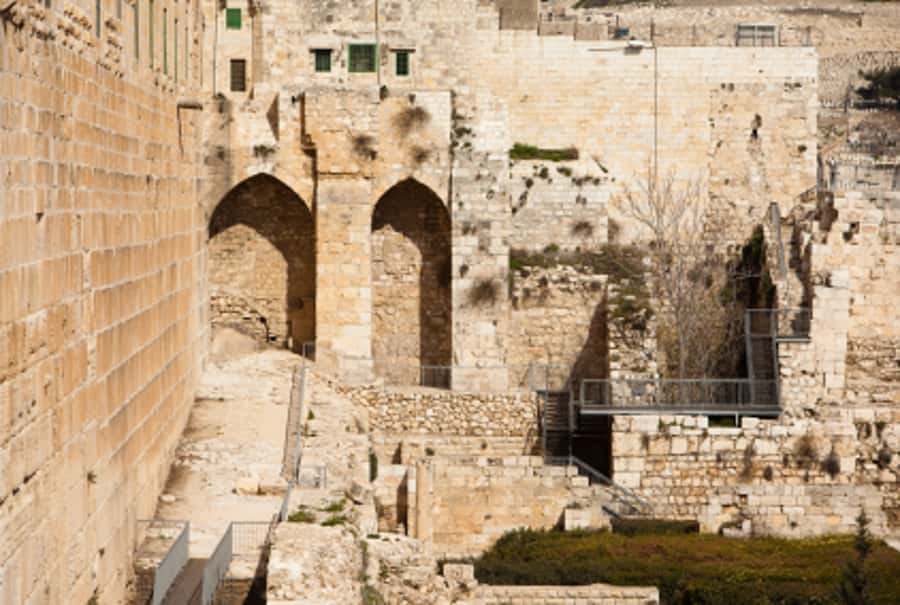
As you move into the Jewish Quarter, you’ll see the excavated and exposed foundation of a wall from biblical Jerusalem, built by King Hezekiah, described here as about 2700 years old. This is the kind of stop that can turn an abstract story into something concrete. You’re not just hearing a name. You’re looking at a boundary line that mattered for how people defended and lived in the city.
Then you descend a few meters into a complex of homes described as around two thousand years old, with original mosaic floors and a mikveh. For a lot of visitors, the mikveh is what makes this section memorable. It’s one of those details that adds texture to daily life. You start to picture how people moved, bathed, cleaned, and lived, not only where kings stood or where battles happened.
This is also a stop where comfort matters. Descending and moving around can be physically demanding, and you’ll likely want shoes with solid grip. If you’re traveling with older knees, plan to go slow and let the guide know you need a moment. The route is designed to keep moving, so you’ll have to advocate gently for your pace.
A brief Kotel pause, notes between the stones

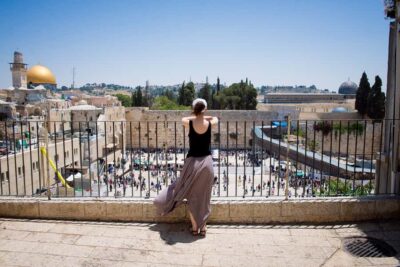
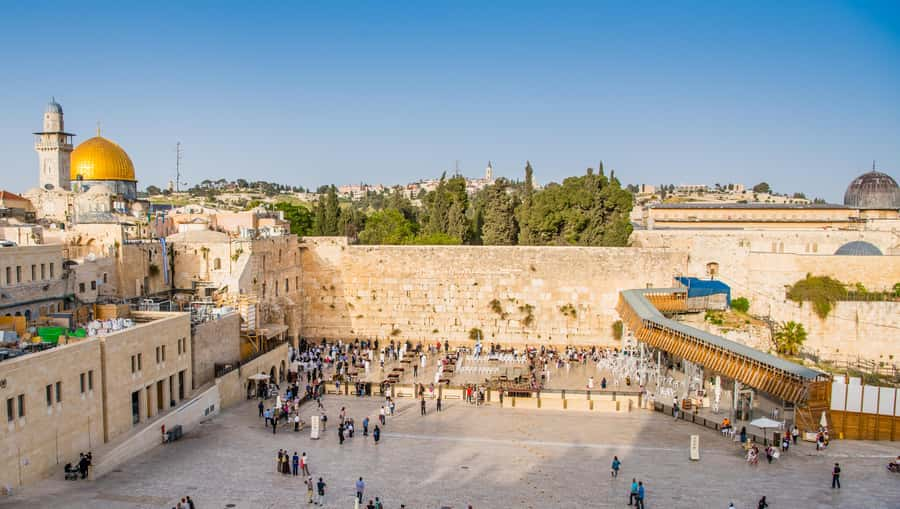
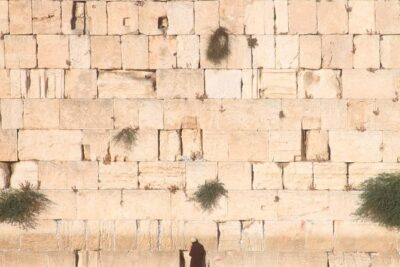
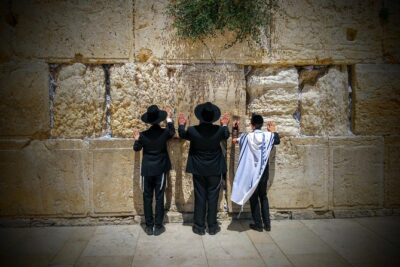
You get a brief stop at the Western Wall, also called the Kotel, where you can place a note between the stones. This is short on purpose. The day is packed, and the tour needs to keep everyone on schedule for the later City of David excavations.
Still, this stop is meaningful. For many people, it’s a quiet moment in the middle of a busy, crowded day. I like that the tour doesn’t try to turn this into a long ceremony. It gives you a chance to participate, then keeps moving so you still get the archaeology-focused payoff.
One tip for timing: if you want a calmer experience, try to keep your expectations realistic. This area can be crowded, and the tour visit is described as a brief stop, so you may need to work with the moment instead of waiting for a quiet window.
Leaving the Old City via Dung Gate, then walking through the City of David excavations
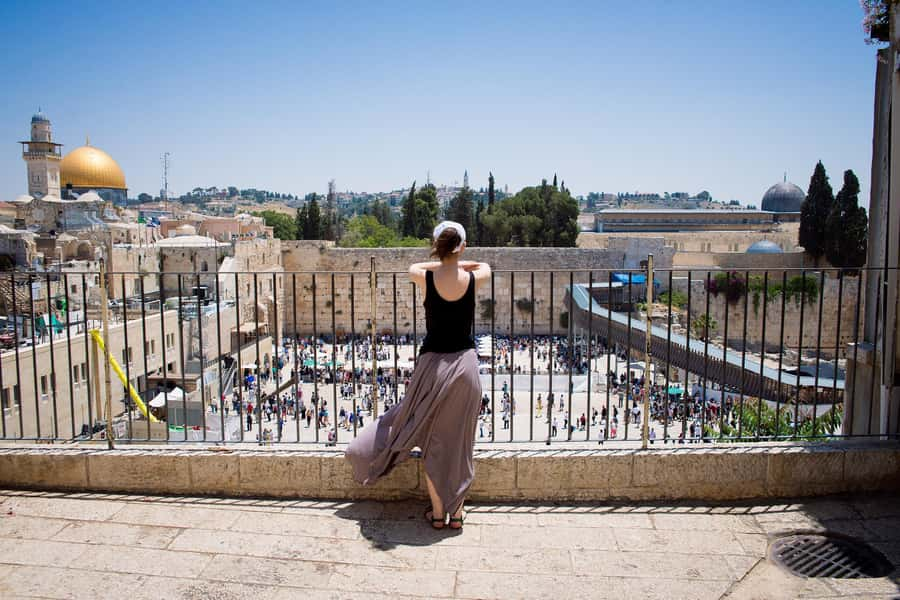
After the Old City sightseeing, you leave through the Dung Gate and head to the City of David excavations, described as about three thousand years old. This is the endpoint that makes the day feel complete. It’s the part where you can see ongoing archaeology, not only a reconstructed attraction.
This is also where the tour’s biggest promise comes to life. The City of David area is described as historically significant archaeological excavations that continue to this day. That matters because you’re not only consuming a finished exhibit. You’re watching research shaped by new finds over time, which gives the whole day a living, working-site feeling.
If you like archaeology, this is the moment you’ll want to pay attention, even if you’re tired. The guide’s narration here can help you connect what you saw earlier, the biblical-era walls and street lines, with the excavation area that’s focused on the city’s earlier layers.
Pace, steps, and what 3 hours of walking really means
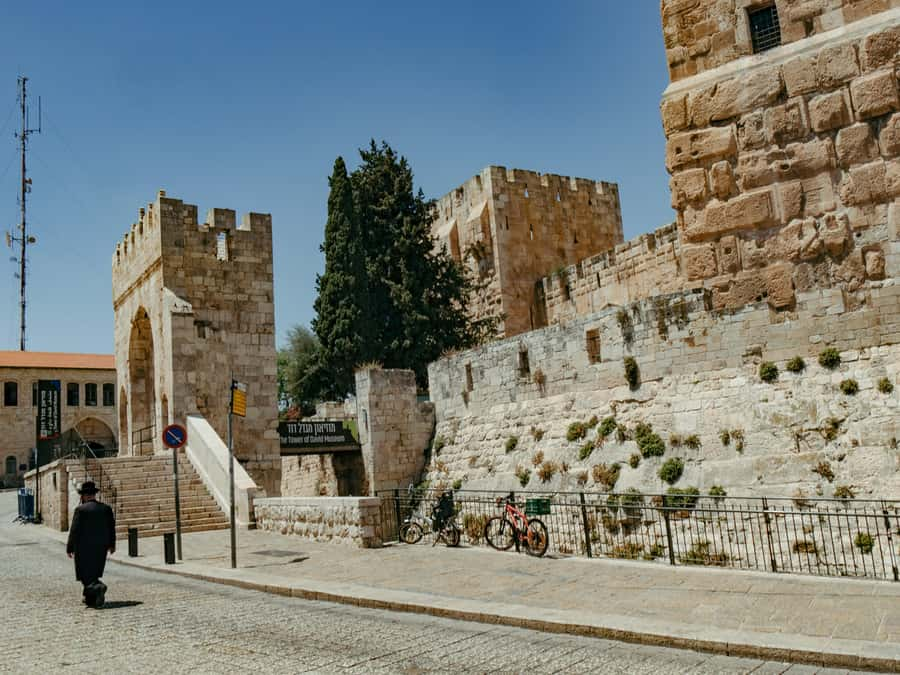
The tour is listed as including about 3 hours of walking, and it’s not suitable for children under age 4. It’s also not wheelchair friendly. What that doesn’t fully communicate is how stair-heavy this style of route can feel.
You’ll be moving through a sequence of viewpoints, gates, and descending stops, including a descent into areas with older floors and mosaics. In practice, this can mean more step counting than you expect and less time to stop for a breath. One person noted the guide moved fast and that the route had far too many steps for their comfort. Another mentioned that the actual walking seemed longer than advertised.
So here’s the practical advice I’d give you: wear comfortable shoes you trust on stone surfaces. Bring a small plan for pacing, like stopping for water when you can and asking for slower moments if needed. If you have serious knee, leg, or heart limitations, take the warning signs seriously. The route is simply not built for people who need frequent rest breaks.
Price and value at about $99, plus what to budget separately
At $99 per person, this tour prices itself as a single-ticket day with a guide and door-to-door coach service. That’s a big chunk of value in a city where public transport can be confusing and traffic can surprise you.
What’s included is clear: a professional guide, air-conditioned coach, and pickup and drop-off. Live English is part of the deal, and the guide is positioned as the glue holding the story together across many sites.
What’s not included is also important. Entry fees and food and drink are excluded. So your true spend for the day depends on the sites you’re required to pay for, and how you handle meals. If you’re the kind of traveler who prefers to buy snacks on the spot, plan for that. If you prefer bringing your own, you’ll still need to follow whatever rules the tour sets about eating during guided segments.
Also note one logistics snag: Jerusalem traffic can be real. A guide can only control so much. If you’re sensitive to time lost in traffic, understand that round-trip drives can affect how long you feel like you’re waiting. The upside is you’re not left to manage it alone.
Who should book this tour, and who might want a different style
This tour fits best if you want a structured day that blends major landmarks with archaeological sites, without having to plan each stop yourself. You’ll like it if you enjoy old streets, visible foundations, and walking through the layered city rather than just viewing monuments from a distance.
It’s less ideal if you need a very slow pace, wheelchair access, or very limited stairs. The day is described as 3 hours of walking, but the route involves up and down steps and frequent movement between different levels. It’s also not intended for very young kids.
If you like your guide to handle questions and bring clarity, you may be in luck. The English guides can be very effective at answering questions and keeping things moving. One guide’s name that stands out is Gabi, praised for being patient and knowledgeable and for meeting guests where they were.
Should you book this City of David and Underground Jerusalem tour?
Book it if you want a one-day plan that takes you from a Jerusalem overlook to the City of David excavations, with stops that explain why the geography matters. With pickup, coach transport, and a guide who connects the dots across the Old City, it’s a solid way to see a lot without feeling lost.
I would hesitate if stairs are a serious problem for you, or if you want lots of time lingering at each site. This is a packed day. You’ll get breadth, not a slow, lingering rhythm. And since entry fees and food aren’t included, budget for extra costs so the day stays enjoyable.
If you’re flexible, comfortable walking on stone, and ready to see Jerusalem through its visible layers, this tour is a strong choice.
FAQ
How long is the tour from Tel Aviv?
The tour duration is 11 hours.
Is there a lot of walking?
Yes. The itinerary includes 3 hours of walking.
Do you get picked up in Tel Aviv, and what about exact timing?
Pickup and drop-off are included. You’ll receive a confirmation email with your final pickup time and pickup hotel from the supplier (Bein Harim), so it’s important to read that message carefully.
What language is the guide?
The live tour guide provides the tour in English.
Are entry fees and meals included in the price?
No. Entry fees and food and drink are not included.
Is the tour wheelchair accessible?
No. The tour is not suitable for wheelchair users.
More Israel Tour Reviews
- From Jerusalem: Masada & Dead Sea Full Day Tour with Pick Up
★ 4.5 · 815 reviews - Masada and the Dead Sea Day Trip from Jerusalem
★ 4.5 · 757 reviews - From Jerusalem: Nazareth and Sea of Galilee Tour
★ 4.5 · 588 reviews - Nazareth and the Sea of Galilee Day Trip from Jerusalem
★ 4.5 · 446 reviews
Jerusalem, Other Days Out
- Full Day City Tour of Jerusalem
★ 4.1 · 367 reviews - Old and New Jerusalem Full-Day Tour
★ 4.0 · 273 reviews - Jerusalem and Bethlehem Day Tour from Jerusalem
★ 4.5 · 258 reviews - Jerusalem Half-Day Sightseeing Tour
★ 3.9 · 177 reviews
More Ways Through the Old City
- Jerusalem: Guided Walking Tour of the Old City
★ 4.7 · 386 reviews - Old and New Jerusalem Full-Day Tour
★ 4.0 · 273 reviews - From Jerusalem Small group tour Old&New City ENTRY FEES INCL
★ 4.0 · 135 reviews - Best seller! Jerusalem old city four quarters tour
★ 5.0 · 123 reviews
Recently Added Israel Tour Reviews
- jerusalem classic tour★ 5.0 · 3 reviews
- Private Walking Tour in Jerusalem’s Old City★ 5.0 · 3 reviews
- Private Tour Bethlehem and the Dead Sea★ 5.0 · 3 reviews
- Jerusalem Temple Mount & Dome of the Rock★ 4.5 · 3 reviews
- Jerusalem and the Dead Sea★ 5.0 · 3 reviews
Jerusalem Old City, compared.
 ★ 4.2From Tel Aviv: Jerusalem Old & New City Bus TourFrom $95824 reviews
 ★ 4.4From Tel Aviv: Jerusalem Old City & Dead Sea Guided Day TourFrom $133389 reviews
 ★ 4.7Jerusalem: Guided Walking Tour of the Old CityFrom $57386 reviews
 ★ 4.5Old and New Jerusalem Day Trip from Tel AvivFrom $95296 reviews
 ★ 4.0Old and New Jerusalem Full-Day TourFrom $75273 reviews
 ★ 4.0From Jerusalem Small group tour Old&New City ENTRY FEES INCLFrom $97135 reviews
 ★ 5.0Best seller! Jerusalem old city four quarters tourFrom $450123 reviews
 ★ 5.0Private Tour Jerusalem Old CityFrom $500118 reviews
Lists this tour appears in