
REVIEW · CAESAREA, ACRE & ROSH HANIKRA
From Jerusalem: Caesarea, Haifa, Acre & Rosh Hanikra Tour
Caves by the sea, ancient cities in one day. This packed Jerusalem-to-coast day trip strings together Roman Caesarea, UNESCO Haifa, sea caves at Rosh HaNikra, and the Crusader powerhouse of Acre. It is a lot to fit into a single day, but that is also the fun part, you get big visual payoffs in every stop.
I like two things most: the Roman amphitheater at Caesarea is so well preserved you can picture the crowds, and it is still used today for performances. I also love the view and feel of the Baha’i Gardens in Haifa, with terraced gardens stepping down Mount Carmel toward the city.
The main drawback is simple, you spend plenty of time on the road. If you hate long bus days, or you want slow, lingering museum time, this route may feel like a fast sprint.
In This Review
- Key points before you go
- Morning Pickup and the Coastal Drive North
- Caesarea: Roman Port Life, Amphitheater Views, and Why the City Faded
- Haifa on Mount Carmel: Baha’i Shrine, 19 Terraces, and UNESCO Views
- Rosh HaNikra: Cable Car Down to Limestone Sea Caves
- Acre (Akko): Crusader Walls, Markets That Still Live, and Heavy Memory
- Guide Style, Pace, and How to Get the Most Out of a 1-Day Loop
- Who This Tour Fits Best (and Who Should Skip It)
- Should You Book This Jerusalem-to-Coast Day Trip?
- FAQ
- What time does the tour pick me up in Jerusalem?
- How long is the tour?
- Is there a guide, and what language is it in?
- What’s included in the price?
- Are meals or drinks included?
- Do I need to pay for entrance tickets at each site?
- What should I bring?
Key points before you go
- Jerusalem pickup at 5:40 AM means an early start and a full day, not a lie-in kind of outing
- Caesarea’s amphitheater is still in use, so the ruins feel alive
- Haifa’s 19 terraces give you a classic Mount Carmel view you will not get from street level alone
- Rosh HaNikra sea caves are reached by cable car, with limestone grottoes formed by constant wave action
- Acre’s living old city pairs restored Crusader walls with markets and everyday life
- UNESCO sites in Haifa and Acre help you understand why these places matter
The northern coast: Caesarea, Acre and Rosh Hanikra
Morning Pickup and the Coastal Drive North
You start early, with hotel pickup in Jerusalem at 5:40 AM. Then you roll north in an air-conditioned coach, following the Mediterranean coast. Along the way you pass Herzliya and Netanya, so you get a quick sense of how the shoreline towns connect to the older, more historical stretch farther north.
This drive matters because it shapes the whole day. You are not hopping between places by short rides. The itinerary is designed as one long coastal loop: Caesarea first, then Haifa, then Rosh HaNikra, and finally Acre on the way back. That is why the tour feels efficient, but also why it can feel like a lot of seat time.
The tour includes a professional English speaking guide, so you are not just staring out a window. You will get guided context as the geography changes from modern coastal areas into layered ancient sites. Bring comfortable shoes and plan to move. Even when you are not walking long distances, you will stand for viewpoints and museum-style ruins.
If you like a clear, steady pace with short explanations, you are likely to enjoy the guided style. One booked experience specifically noted that the commentary felt succinct, which can be a plus if you do not want drawn-out lectures on a day like this.
Caesarea: Roman Port Life, Amphitheater Views, and Why the City Faded
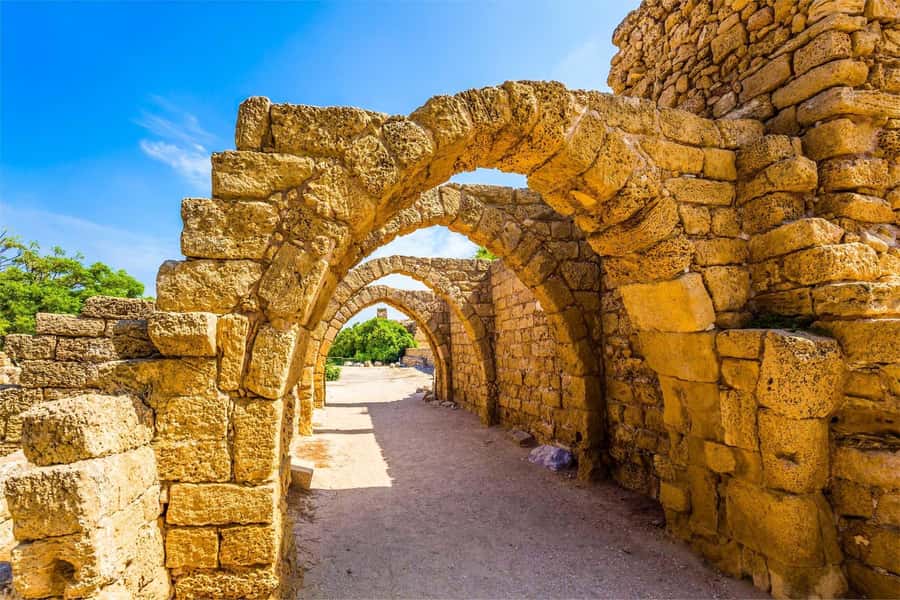
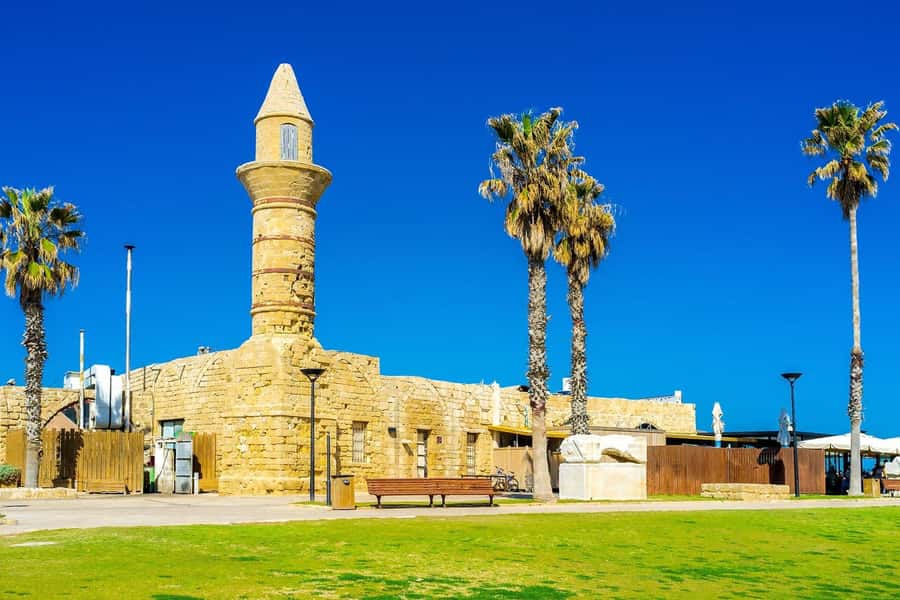
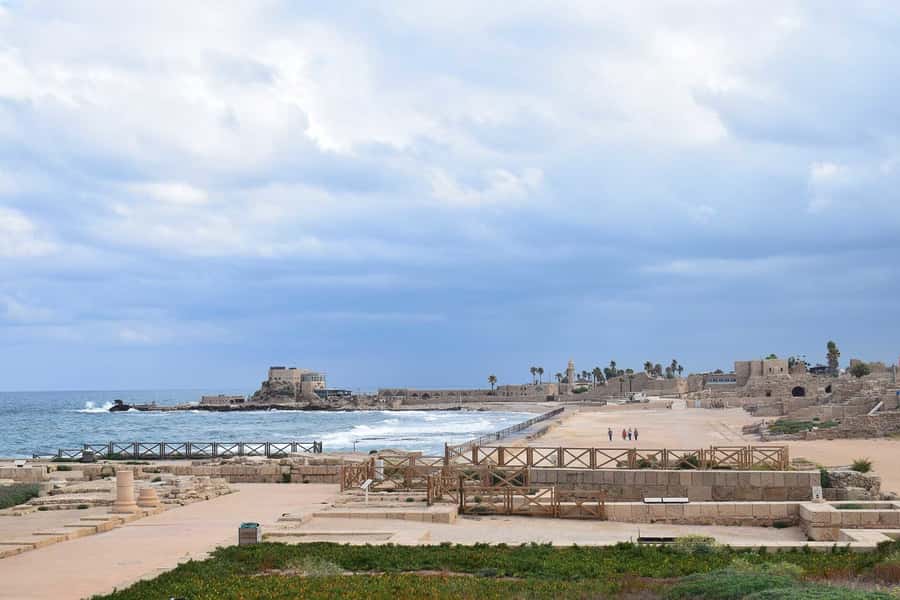
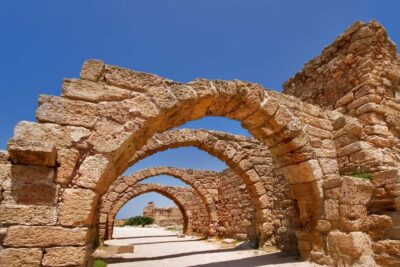
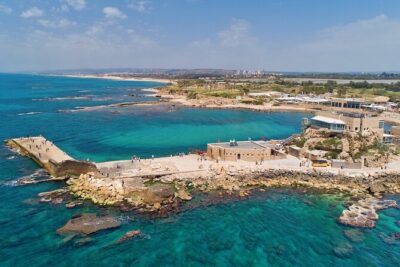
Caesarea starts with the big Roman idea: Herod built the city and it was named for the Roman emperor, Caesar. Standing in the archaeology, you can see how intentionally this place was engineered for power and prestige. You do not just get one highlight. You get a whole framework, gateways, a moat, and preserved walls and rooms that help you understand how the city worked.
One of the top sights is the amphitheater, described as perfectly preserved and still used today for performances by Israeli and international artists. Even if you are not there for a show, the fact that it still hosts events changes how you see it. It is not a dead shell. It feels like it was built for real public life, then kept in use.
Right next to the amphitheater are the remains of the Hippodrome and the Roman Temple. These spaces were part of the city’s spectacle and status. The guide’s stories connect the buildings to the port scene overhead, a reminder that Caesarea was tied to ships and trade.
You will also hear how the city sat above a busy commercial port. Ships carried treasures from the east, and Nabatean caravans moved along routes heading toward Rome. When you hear those connections out loud, the ruins stop being random stones. They become a map of movement: people, goods, and influence.
Then the tour makes sure you understand the downside of greatness. After the Crusades, Caesarea, once prosperous, sank into oblivion. That shift is part of the value here. You see what Rome built and you also learn how quickly fortunes can change.
Practical note: ruins mean uneven ground and lots of looking up and around. Wear shoes that can handle stone and some walking in open spaces.
Haifa on Mount Carmel: Baha’i Shrine, 19 Terraces, and UNESCO Views

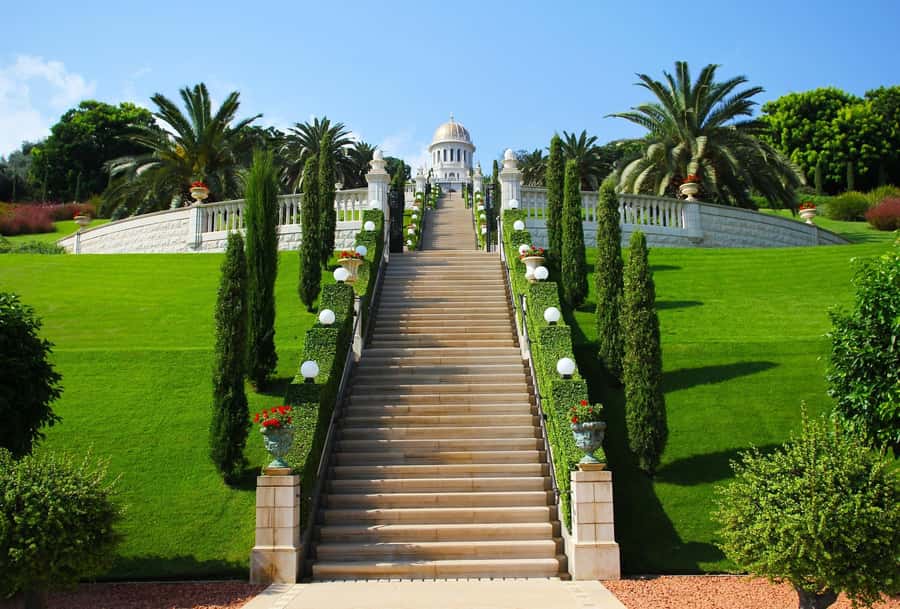
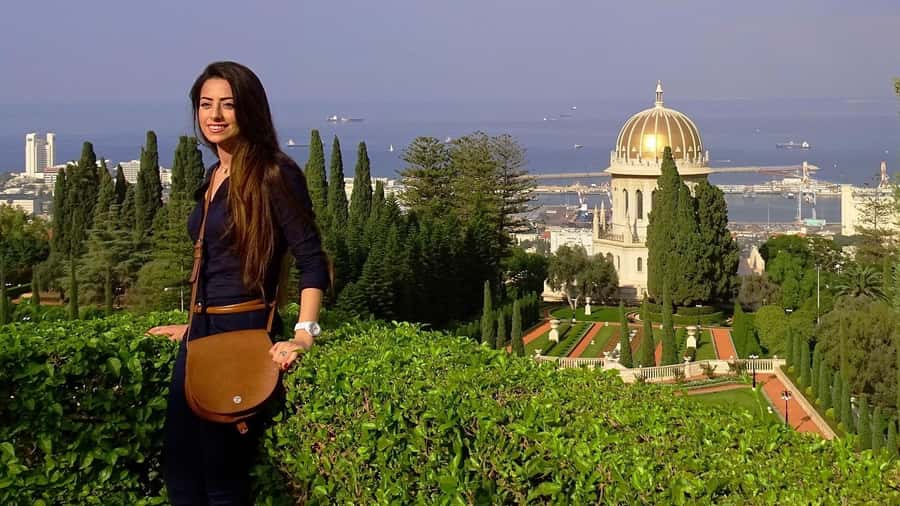
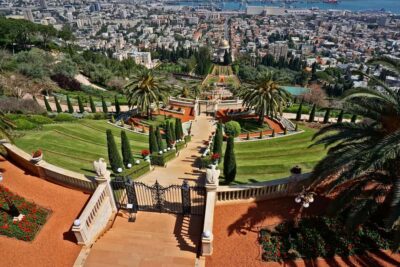
After Caesarea, the day turns scenic, up to Haifa and Mount Carmel. The tour focuses on one of the most famous sights in town, the Baha’i Shrine and gardens. The main feature is the terraced design. These gardens cascade down the mountain toward Haifa, forming 19 terraces filled with colorful flowers and landscaped patterns.
What I like about this stop is how it feels like a designed landscape that also functions as a viewpoint system. You see the terraces from different angles as you move. The slope does the work for you. It is not only pretty, it helps you understand the idea of order on a steep hillside, step by step down to the city.
The tour keeps the experience anchored in place. You are not rushing past it. You stop and look at the shrine and the gardens long enough for the terracing to register. That is important, because the gardens are easy to underappreciate if you treat them like a quick photo stop.
Also, Haifa is listed as a UNESCO World Heritage area on this route. That label is not just a stamp. It is a cue that the place is recognized for its cultural and architectural significance. Seeing it with a guide helps translate what UNESCO usually means in real life: why the design, the layout, and the setting matter.
If you are sensitive to heights, you might want to take your time at the viewpoints, especially where paths allow you to look over the city below. If you are comfortable with stairs and slopes, you will likely enjoy this segment a lot.
Rosh HaNikra: Cable Car Down to Limestone Sea Caves

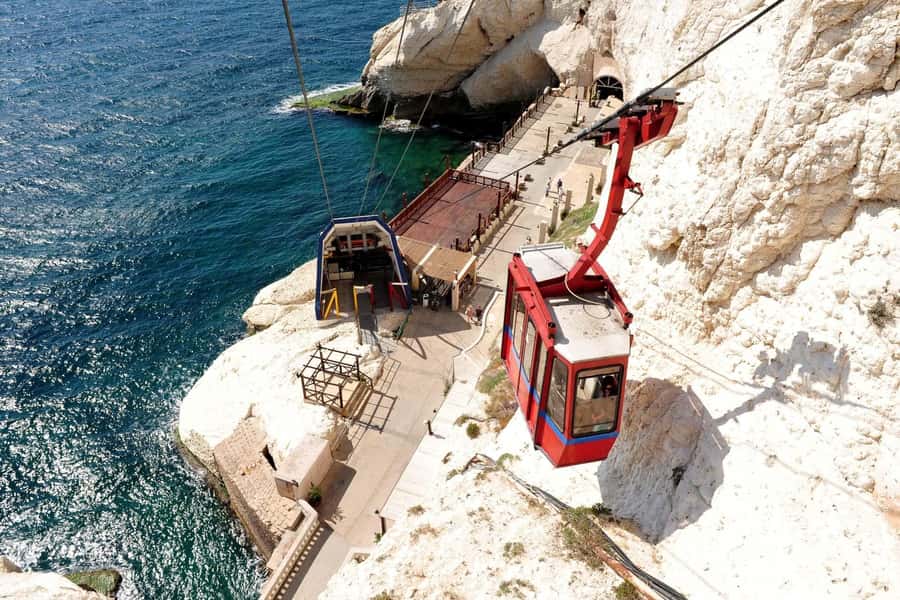
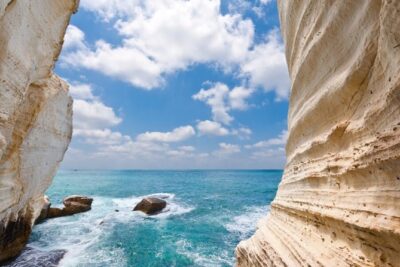
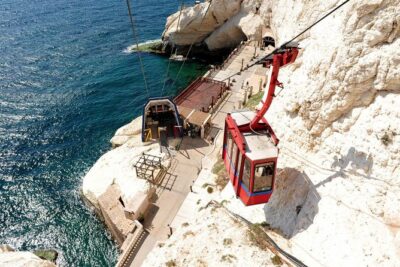
Rosh HaNikra is the dramatic break in the day. This is the most northerly point along Israel’s Mediterranean coast, and the entrance to the main show is the cable car. You ride down to a network of limestone grottoes that were created by constant bombardment of waves against the rocks.
This stop is where the tour shifts from “ancient cities” to “natural engineering.” The caves are not described as a random hole in the ground. They are the result of long-term wave action. Standing near the grotto views makes that idea click.
The cable car is part of the fun, and it also saves time. Without it, the descent would be a slower, more complex outing. With it, you get to spend your energy on the caves themselves rather than logistics.
Plan for a few things: you will likely need to be comfortable with stepping around cave surfaces and viewing points. The description of a network of grottoes suggests you will move between areas to see formations. Also, caves tend to create echoes, so if your guide is talking, you may want to stay close if you want to catch every detail.
If you want one moment of the day that feels more cinematic than archaeological, this is it.
Acre (Akko): Crusader Walls, Markets That Still Live, and Heavy Memory
On the return journey south, you stop at Acre (Akko), described as the largest Crusader city in the country. Acre is not just preserved in theory. A big part of the old city is still active, with markets and people living in ancient buildings.
That contrast is one reason this stop lands. You can stand in a restored wall corridor and then look out and see ordinary life continuing nearby. It makes the past feel less like a museum exhibit and more like a layer under the present.
The city’s architecture is described as extremely well preserved, and you will notice that the urban layout still supports walking through real streets. You also get the wall-and-moat picture. The walls and moat were reconstructed and repaired by El Jazzar toward the end of the 1900s, and the guide also covers the famous detail that the mighty walls prevented even Napoleon from conquering the city.
Acre also holds hard historical reminders. You visit Crusader remains, a prison used under Turkish rule, and gallows that were used under the British Mandate to hang Jews who broke the British law limiting Jewish immigration to Palestine following World War II. That last part is heavy, and it is the kind of history you should treat with respect and time. If you tend to rush through difficult subjects, you might want to slow down here.
Why this stop is valuable is that it does not stop at architecture. It pairs physical survival, like walls and ruins, with lived consequences, like imprisonment and punishment. When you understand that, you see the city as a crossroads of powers, not just a set of impressive stones.
Guide Style, Pace, and How to Get the Most Out of a 1-Day Loop
This tour is built for one-day coverage. That is the trade. You hit major sites, but you do not get the luxury of long, deep independent exploration at each stop. Instead, you get a structured route with included entrance fees and a professional live guide.
The guide approach can matter more than people expect. One booked experience specifically mentioned succinct commentary, and another praised an excellent guide named Omri. If your guide is the type who keeps it crisp, you will likely appreciate it. If you like every detail dragged out slowly, you may wish you had more time at each location, especially in ruins.
The value angle for you is practical: transportation, admissions, and guiding are handled. That reduces friction, which is a big deal when you are cramming four major stops into a single day. Instead of figuring out entrance tickets and figuring out how to explain the sights to yourself, you focus on seeing.
You do still need to manage your own energy and food. Food and drinks are not included, so I recommend planning for a snack or a drink purchase during breaks. It is also smart to keep a small buffer in your head for late pauses, since the day runs on site visits and transit.
And bring the right footwear. You are not just on flat sidewalks. You are on archaeological terrain, in and around terraces, and at cave viewing points. Comfortable shoes are not optional on a day like this.
Who This Tour Fits Best (and Who Should Skip It)

I would point you toward this tour if you want a first-time, big-picture coastal day. It is especially good if you like guided connections between sites. Caesarea’s Roman structures link to port trade. Haifa’s terraced gardens link to UNESCO setting and design. Rosh HaNikra links waves to limestone. Acre links walls and markets to Crusader and later rule.
You should also consider it if you want variety without planning. You get the Roman port world, a UNESCO religious-cultural landmark, a nature spectacle by cable car, and a major Crusader city with both preserved architecture and difficult historical sites.
But skip it if you want slow travel. The biggest complaint tied to the experience is that it is a lot of route. You start early, you sit in a coach for substantial stretches, and you move site to site. If you are the type who wants to read every plaque for an hour, you may feel rushed.
Also, if the idea of a heavy history stop at Acre does not fit your mood, you can still go, but go prepared. Have respect for the prison and gallows sites, and give yourself a minute before and after to reset your head.
Should You Book This Jerusalem-to-Coast Day Trip?
If your priority is maximum sightseeing in one day, this tour makes sense. You get Caesarea with an amphitheater still in use, Haifa with 19 terraced Baha’i Gardens, Rosh HaNikra sea caves by cable car, and Acre with UNESCO walls, restored Crusader architecture, and market life continuing in the old city.
My call: book it if you like structured days and you are okay with early pickup and transit time. Consider another pace if you crave long, quiet time at one or two places. This itinerary is for people who want the coast’s main stories told efficiently, with a guide and entrance fees handled, so you can focus on the sights.
FAQ
What time does the tour pick me up in Jerusalem?
Pickup is included from Jerusalem main hotels at 5:40 AM.
How long is the tour?
The tour duration is 1 day.
Is there a guide, and what language is it in?
Yes, it includes a live tour guide speaking English.
What’s included in the price?
The tour includes hotel pickup and drop-off from Jerusalem, air-conditioned coach transportation, all entrance fees, and a professional guide.
Are meals or drinks included?
No. Food and drinks are not included.
Do I need to pay for entrance tickets at each site?
Entrance fees are included, so you do not need to buy separate tickets for the stops covered.
What should I bring?
Wear comfortable shoes, since you will be walking at multiple sites, including ruins and cave viewing areas.
More Israel Tour Reviews
- From Jerusalem: Masada & Dead Sea Full Day Tour with Pick Up
★ 4.5 · 815 reviews - Masada and the Dead Sea Day Trip from Jerusalem
★ 4.5 · 757 reviews - From Jerusalem: Nazareth and Sea of Galilee Tour
★ 4.5 · 588 reviews - Nazareth and the Sea of Galilee Day Trip from Jerusalem
★ 4.5 · 446 reviews
Haifa and Mount Carmel, Continued
- Caesarea, Haifa & Akko Day Trip from Jerusalem
★ 4.3 · 96 reviews - Caesarea, Haifa, Rosh Hanikra, and Acre Tour from Jerusalem
★ 4.0 · 16 reviews - Caesarea, Haifa, Acre and Rosh Hanikra Tour from Jerusalem
★ 3.5 · 7 reviews
Further Along the Northern Coast
- Caesarea, Haifa & Akko Day Trip from Jerusalem
★ 4.3 · 96 reviews - Caesarea, Acre & Rosh Hanikra Day Trip from Jerusalem
★ 4.0 · 78 reviews - Caesarea, Haifa, Rosh Hanikra, and Acre Tour from Jerusalem
★ 4.0 · 16 reviews - Caesarea, Haifa, Acre and Rosh Hanikra Tour from Jerusalem
★ 3.5 · 7 reviews
Recently Added Israel Tour Reviews
- jerusalem classic tour★ 5.0 · 3 reviews
- Private Walking Tour in Jerusalem’s Old City★ 5.0 · 3 reviews
- Private Tour Bethlehem and the Dead Sea★ 5.0 · 3 reviews
- Jerusalem Temple Mount & Dome of the Rock★ 4.5 · 3 reviews
- Jerusalem and the Dead Sea★ 5.0 · 3 reviews
Caesarea, Acre & Rosh Hanikra, compared.
 ★ 4.4From Tel Aviv: Caesarea, Haifa and Akko Day TripFrom $120744 reviews
 ★ 4.5Caesarea, Rosh Hanikra and Acre Day Trip from Tel AvivFrom $120406 reviews
 ★ 4.3Caesarea, Haifa & Akko Day Trip from JerusalemFrom $10596 reviews
 ★ 5.0Walking Tour of Akko (Half-day)From $32184 reviews
 ★ 4.0Caesarea, Acre & Rosh Hanikra Day Trip from JerusalemFrom $13978 reviews
 ★ 4.0Unforgettable Tour to Caesarea, Haifa, Acre and Rosh HaNikra from Tel AvivFrom $15556 reviews
 ★ 4.5Tel Aviv/Jerusalem: Caesarea, Haifa & Akko Day TourFrom $9953 reviews
 ★ 4.0Caesarea, Haifa And Akko TourFrom $9936 reviews
Lists this tour appears in