
REVIEW · JERUSALEM OLD CITY
Explore Jerusalem’s Old City
Jerusalem’s Old City history hits fast. This private, half or full-day tour through the quarters and holy sites feels tailor-made to what you care about, and it is guided by Roni Peled with stories tied to what you are seeing. I especially like the way the route connects big landmarks to daily life, and the stop at City of David tunnels adds real “how did they live here?” context. One catch: you must choose how much ground you want to cover, because the full route can run long and includes a dark tunnel segment.
You meet at Jaffa Gate hostel at 8:00am, and you get a licensed private guide for just your group (up to 15). I also like that the tour can be adapted for wheelchair travelers, since accessibility in the Old City is not a given. If you want lunch included, plan ahead, because lunch at Lina (the hummus stop) is not part of the tour price.
In This Review
- Key things that make this Old City tour worth your time
- Why Jaffa Gate to the Holy Sepulchre works so well
- Entering at Jaffa Gate: inscriptions, towers, and a westward view
- Armenian Quarter: St. James Church and 1,500 years of community
- Mount Zion highlights: Last Supper room, King David, Dormition Church, and the view
- City of David National Park: the water tunnel story and the Hezekiah tunnels
- The Western Wall: the Temple connection and how the prayer note works
- Muslim Quarter bazaar time: cotton makers, Dome of the Rock views, and Islam 638 to today
- Via Dolorosa and Lina hummus: footsteps plus a real meal break
- Church of the Holy Sepulchre: crucifixion, anointing bed, and the tomb
- Price and logistics: what $579.49 per group really means
- Should you book it? Who it is best for
- FAQ
- Is this a private tour or a shared group?
- How long is the tour?
- Where do we meet, and when does it start?
- Does the tour include lunch?
- Are admission tickets included?
- Can the itinerary be customized?
- Is the tour wheelchair accessible?
- What is the cancellation rule?
Key things that make this Old City tour worth your time
- A truly bespoke route: you build a half-day or full-day plan based on your interests
- City of David tunnels with flashlights: you go underground and come out at the Shiloan Pool area
- Mount Zion viewpoints and key sites: Last Supper room, Tomb of King David, Dormition Church, plus panorama time
- Western Wall prayer moment: you are invited to write and place a note
- Old City quarters with living markets: Armenian Quarter and the Muslim Quarter bazaar, including the cotton makers market
- Church of the Holy Sepulchre with clear wayfinding: crucifixion area, anointing bed, and the tomb
Inside the walls: other Old City routes we have reviewed
Why Jaffa Gate to the Holy Sepulchre works so well
Jerusalem’s Old City can feel like a puzzle with too many edges. This tour reduces the noise by building a story in order, from gates to quarters to the sites that shape religious history for Jews, Christians, and Muslims. The big value is that you are not stuck with one fixed script, you choose a half-day or full-day style and your guide adjusts what gets more time.
I like that the day is structured for both first-timers and returning visitors. If you already know the famous places, the guide’s job becomes connecting details you might have missed, like the Ottoman-era everyday settings in markets or how the Jewish Quarter and surrounding areas changed after 1948 and again in 1967. If you are newer to Jerusalem, you get signposts that make the Old City feel navigable, not chaotic.
The tour also keeps practical expectations realistic. You will spend real time at major stops, and you will get guided explanations rather than a quick look and a photo. Just keep in mind that you are moving between areas with different religious spaces, so expect respectful pacing and sometimes slower navigation.
Entering at Jaffa Gate: inscriptions, towers, and a westward view
Most Old City tours start at the wall and sprint into it. Here, you begin at Jaffa Gate, which is a smart choice because it sets the tone. You learn about the gate itself, including inscriptions and history, then you get a look from the observation point associated with the Tower of David. From there, you naturally understand why this area has always been a crossroads, both for visitors and for people living their everyday lives.
You also get something more personal than the usual guide patter. The guide shares first-hand memories tied to growing up near the Israel-Jordanian border before 1967. That does not replace history, it sharpens it. Suddenly the twentieth century is not just dates in a textbook, it becomes part of the “why things look the way they do” explanation.
Practical note: this first stop is short, around 10 minutes, and it is a good moment to get your bearings before the walking ramps up. If you are sensitive to early starts, the 8:00am start time matters, but it also helps you get a head start on the Old City momentum.
Armenian Quarter: St. James Church and 1,500 years of community
The Armenian Quarter stop is designed to change your lens. After you enter from the main street, the tour moves into the courtyard of St. James Church, where you can understand how sacred sites overlap with community life. You spend time seeing the church setting and learning about its role as a burial site connected to James, identified as the brother of Jesus, and also as James one of the twelve disciples.
What I like about this stop is the balance between story and details you can actually see. The guide points out traditional Armenian ceramics displayed in and around the church, so you are not only hearing history, you are looking at cultural expression that has survived for centuries. The tour also places the Armenian community in Jerusalem into long time, including the fact that this community has been present for over 1500 years.
One consideration: this is a more contemplative segment, roughly 20 minutes. If your group tends to want fast, high-energy sightseeing, you may feel the pace here is slower. That is still worth it, because it breaks up the heavier emphasis on the most contested areas of the Old City later.
More of Jerusalem, beyond the Old City gates
Mount Zion highlights: Last Supper room, King David, Dormition Church, and the view
From Zion Gate, the tour builds up to Mount Zion with context. You learn about the last battle of the Jewish Quarter in 1948, when it fell to the Jordanians, and how it was liberated in 1967. That framing changes the way you look at what you see on the ground. It is not just “here is a holy place,” it is “this place survived conflict and regained meaning.”
On Mount Zion, you visit several key sites in a focused sequence:
- the Room of the Last Supper
- the Tomb of King David
- Dormition Church, connected with the tradition of Mary, the Mother of Jesus, falling into a coma before her death
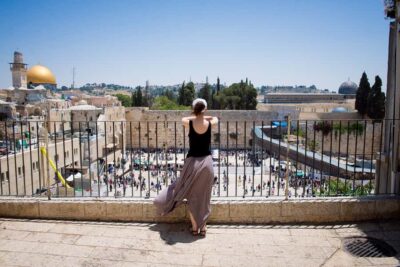
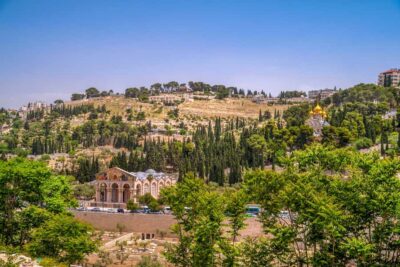
- an ascent to a lookout point with views toward the Hill of Evil Counsel and the Temple Mount
The highlight here is the combination of indoor religious spaces and outdoor panorama time. You get the “inside” explanations and then the “so this is what the city looks like from above” payoff, which makes everything you saw earlier start lining up visually.
A practical consideration: this stop runs about an hour, and it includes climbing and viewpoint time. If your group has mobility challenges, tell the guide early so they can adjust pacing. Wheelchair adaptation is possible, but the tour is still navigating historic terrain.
City of David National Park: the water tunnel story and the Hezekiah tunnels
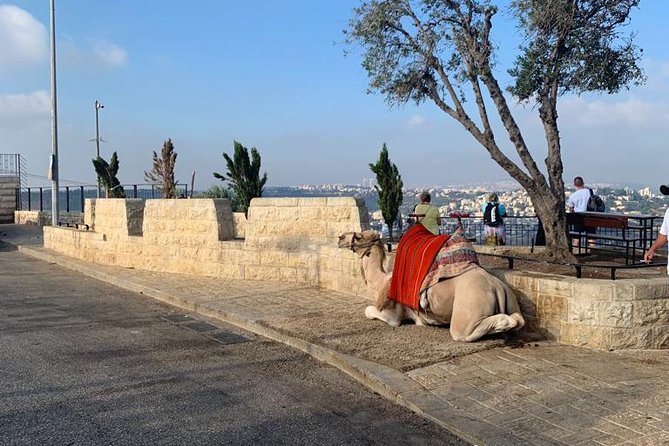
If one segment makes the day feel different from a standard Old City loop, it is City of David National Park. You start with the big timeline anchor, the idea that the City of David was established by King David about 3000 years ago. Then you move through foundations tied to King David’s palace and see ruins connected to homes and offices of officials who served Judean kings.
The tour then goes hands-on with ancient infrastructure. You explore a 3800-year-old tunnel that functioned as part of Jerusalem’s water supply, connected to the Gichon spring, described as the anointing site of Solomon, son of King David. That matters because it turns the story from “who built what” into “how did the city survive?”
Then comes the part people remember: the Hezekiah tunnels. You walk through in a darkened setting with flashlights guiding the way, then you emerge at the Second Temple era Shiloan pool area where pilgrims bringing sacrifices would gather. The guide’s storytelling often makes this feel like a living time line, not just a single era.
One drawback to plan around: admission is not included for this stop. If you hate surprise costs, you will want to factor that in before you go. Also, if you feel claustrophobic in tight, dark spaces, consider letting the guide know so they can guide you toward the least stressful route within the visit.
The Western Wall: the Temple connection and how the prayer note works
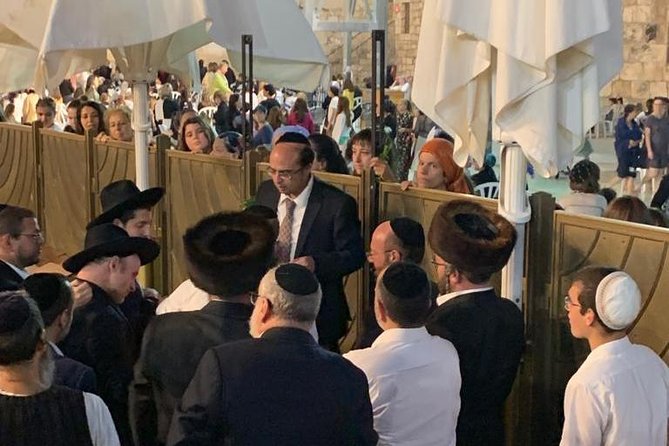
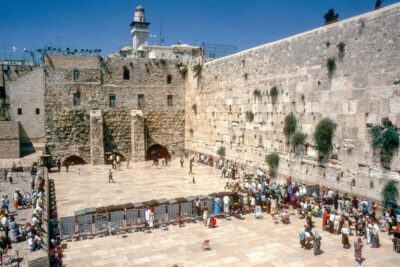
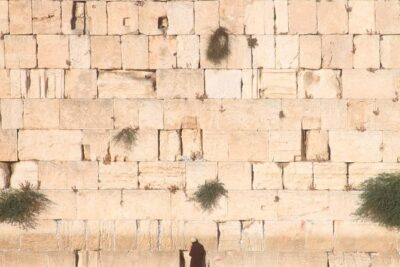
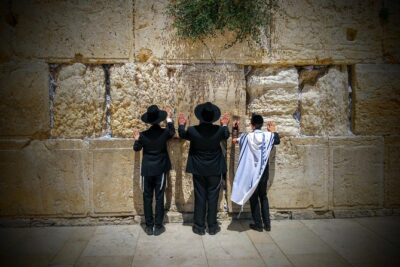
You arrive at the Western Wall with a clear explanation of why it matters. The guide describes it as the last remains of the Holy Temple, a place where Jews for centuries have prayed and wept for redemption and return to the Holy Land. You also connect it to the Temple Mount geography, since the Western Wall sits adjacent to the Holy of Holies from Temple times.
Here, the tour becomes active, not just observational. The guide explains how, by tradition, people write notes with prayers and insert them into the wall. You are invited to pray and place your own message in the wall.
I like this moment because it slows the whole day down without making it boring. It is short, about 15 minutes, but it creates a mental reset between the crowded quarters and the next set of holy spaces.
A practical tip for your day: treat this as your “quiet focus stop.” If your group likes photos, you can still take them, but plan to keep your attention on the prayer moment, especially if you want your group to feel the significance rather than just ticking a box.
Muslim Quarter bazaar time: cotton makers, Dome of the Rock views, and Islam 638 to today
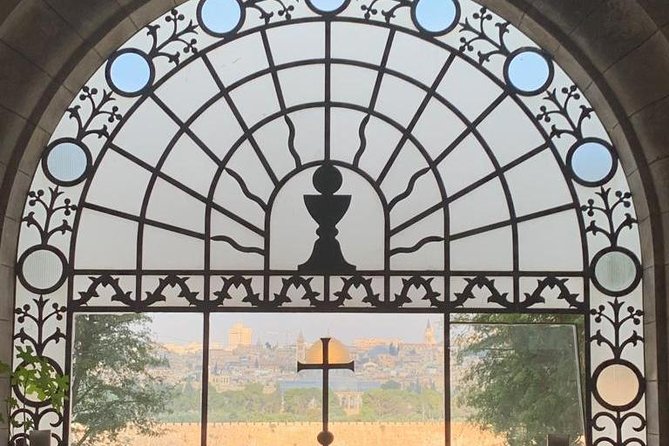
Next is the Muslim Quarter, and it changes the tone again. You explore the colorful bazaar, including the 600-year-old Market of cotton makers, described as still active today. This is where you feel Jerusalem as a living city rather than a museum set.
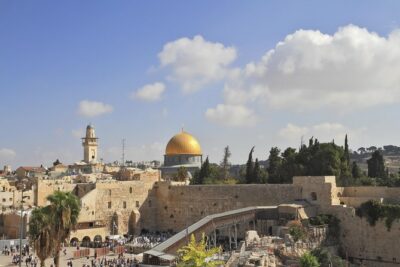
The guide also points your attention toward major visual landmarks, including observing the Dome of the Rock. You learn about the rise of Islam in the Land of Israel from 638 C.E. until today, which gives you a timeline you can connect to what you see around you.
This segment lasts about 30 minutes. That is enough time to get the “wow this is old and still working” effect without turning it into an endless shopping walk. If your group likes to buy small things, this is often the area where you might find crafts and traditional goods, but the tour is still mainly about historical context.
One consideration: bazaar areas can feel busy and tight. Even though this is a private tour, you still move through shared public space. If you need slower navigation, ask the guide to pace your group in a way that keeps you comfortable.
Via Dolorosa and Lina hummus: footsteps plus a real meal break
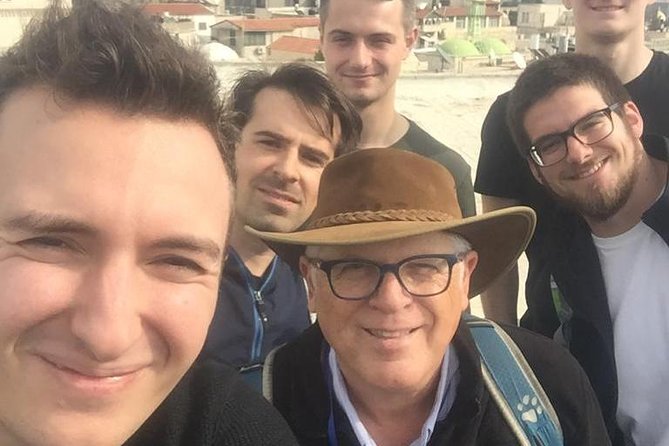
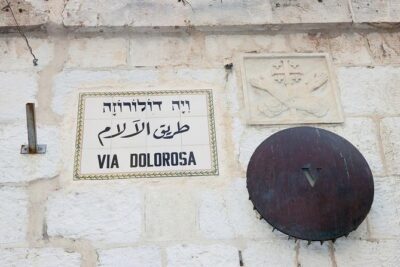
The tour then follows the Via Dolorosa, walking in the footsteps of Jesus and visiting sites along the way. This is one of the more emotionally charged segments for many people because it threads together sacred meaning and street-level movement.
About an hour is set aside here, and the schedule includes a lunch break at Lina, described as the best hummus restaurant in the city. Lunch is not included in the tour price, so this is where you decide how you want to fuel the rest of the day.
I like that the tour builds in a meal rather than treating lunch as optional chaos. You do not have to fight the Old City crowds with your own group navigation. You do, however, need to handle your own meal cost, so expect the tour to feel like a “guide price plus food” experience.
Practical advice: if you are picky about timing, eat promptly once your group is seated. This tour has more major stops after lunch, especially the Church of the Holy Sepulchre, which can take time in real life.
Church of the Holy Sepulchre: crucifixion, anointing bed, and the tomb
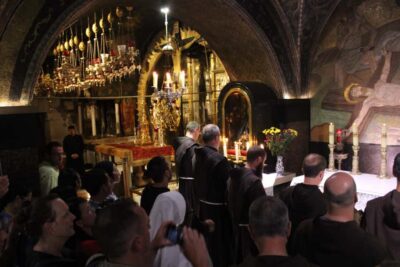
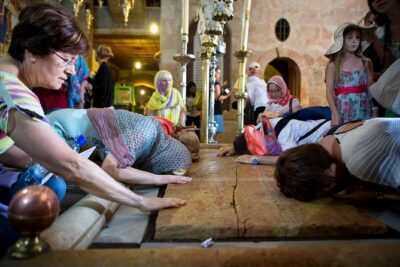
The final named stop is the Church of the Holy Sepulchre, one of the most important Christian sites in the world. The guide orients you to the site of the crucifixion, the anointing bed, and the tomb of Jesus.
I like this ending because it provides closure in a very direct way. You have moved through gates and quarters, seen how different communities shaped the city, and then you finish at the place that anchors so much Christian pilgrimage. The tour gives you a guided path through key points so you spend less time guessing and more time understanding.
This stop is about 1 hour. Depending on the day’s crowd level and how your guide paces the group, you might feel rushed or comfortably slow. The good news is that the guide focuses on explaining context, not just pointing at walls.
One consideration: for some visitors, this church can feel intense and crowded. If your group prefers quieter environments, you can ask the guide to manage the pace and help you find moments of focus inside the site.
Price and logistics: what $579.49 per group really means
The price is $579.49 per group, for groups of up to 15. That means the cost per person drops fast if you travel as a group, which is exactly what private tours are designed for. For example, if your group has 6 people, it can work out to roughly $96 per person; if you have 12, it is closer to $48 per person. Those are back-of-the-envelope math checks, but they show the core idea: this tour can be a strong value when you fill the group.
Duration can run from 4 to 8 hours, depending on whether you choose a half-day or full-day plan. Because your itinerary is customizable, you also avoid the frustration of paying for stops you do not care about.
You get a mobile ticket, and confirmation is received within 48 hours of booking, subject to availability. Tours are typically booked about 11 days in advance on average, so if you are visiting during a busy season, earlier booking gives you better odds of matching the time you want.
Should you book it? Who it is best for
This tour is best for you if you want:
- a private guide who can tailor the route to your interests
- clear explanations that connect religious and historical layers
- a structured Old City plan that still feels personal
- a mix of viewpoints, markets, and major sacred sites
It is also a good fit for families with older kids who can handle a longer day, since the guide’s storytelling includes both historic context and personal lived memories. The consistently high ratings point to the guide being energetic and practical with explanations, and the tour can be adapted for wheelchair travelers.
Skip this tour if your top goal is total freedom to wander without structure, or if your group strongly prefers minimal religious-site visits. The route is built around Jerusalem’s big sacred anchors, even when you customize the time spent.
FAQ
Is this a private tour or a shared group?
This is a private tour/activity. Only your group participates.
How long is the tour?
The duration is listed as 4 to 8 hours, depending on whether you choose a half-day or full-day plan.
Where do we meet, and when does it start?
The meeting point is Jaffa Gate hostel in Jerusalem, and the start time is 8:00am.
Does the tour include lunch?
No. Lunch at Lina, described as the best hummus in the city, is not included in the tour price.
Are admission tickets included?
Most admission is listed as free for stops like Jaffa Gate, St. James Church area, Mount Zion sites, Western Wall, Muslim Quarter, Via Dolorosa sites, and the Church of the Holy Sepulchre. City of David National Park is listed as admission not included.
Can the itinerary be customized?
Yes. The tour is described as customizable, and you design your own bespoke itinerary based on your interests, within the half or full-day structure.
Is the tour wheelchair accessible?
The tour can be adapted to be accessible to travelers with wheelchairs.
What is the cancellation rule?
Free cancellation is offered. You can cancel up to 24 hours in advance for a full refund, based on the experience’s local time.
More Israel Tour Reviews
- From Jerusalem: Masada & Dead Sea Full Day Tour with Pick Up
★ 4.5 · 815 reviews - Masada and the Dead Sea Day Trip from Jerusalem
★ 4.5 · 757 reviews - From Jerusalem: Nazareth and Sea of Galilee Tour
★ 4.5 · 588 reviews - Nazareth and the Sea of Galilee Day Trip from Jerusalem
★ 4.5 · 446 reviews
Jerusalem, Other Days Out
- Full Day City Tour of Jerusalem
★ 4.1 · 367 reviews - Old and New Jerusalem Full-Day Tour
★ 4.0 · 273 reviews - Jerusalem and Bethlehem Day Tour from Jerusalem
★ 4.5 · 258 reviews - Jerusalem Half-Day Sightseeing Tour
★ 3.9 · 177 reviews
More Ways Through the Old City
- Jerusalem: Guided Walking Tour of the Old City
★ 4.7 · 386 reviews - Old and New Jerusalem Full-Day Tour
★ 4.0 · 273 reviews - From Jerusalem Small group tour Old&New City ENTRY FEES INCL
★ 4.0 · 135 reviews - Best seller! Jerusalem old city four quarters tour
★ 5.0 · 123 reviews
Recently Added Israel Tour Reviews
- jerusalem classic tour★ 5.0 · 3 reviews
- Private Walking Tour in Jerusalem’s Old City★ 5.0 · 3 reviews
- Private Tour Bethlehem and the Dead Sea★ 5.0 · 3 reviews
- Jerusalem Temple Mount & Dome of the Rock★ 4.5 · 3 reviews
- Jerusalem and the Dead Sea★ 5.0 · 3 reviews
Jerusalem Old City, compared.
 ★ 4.2From Tel Aviv: Jerusalem Old & New City Bus TourFrom $95824 reviews
 ★ 4.4From Tel Aviv: Jerusalem Old City & Dead Sea Guided Day TourFrom $133389 reviews
 ★ 4.7Jerusalem: Guided Walking Tour of the Old CityFrom $57386 reviews
 ★ 4.5Old and New Jerusalem Day Trip from Tel AvivFrom $95296 reviews
 ★ 4.0Old and New Jerusalem Full-Day TourFrom $75273 reviews
 ★ 4.0From Jerusalem Small group tour Old&New City ENTRY FEES INCLFrom $97135 reviews
 ★ 5.0Best seller! Jerusalem old city four quarters tourFrom $450123 reviews
 ★ 5.0Private Tour Jerusalem Old CityFrom $500118 reviews
Lists this tour appears in