
REVIEW · EVENING EXPERIENCES
16-Night Israel Jordan and Egypt Tour
One route, three countries, and a lot of sacred sites. This Israel, Jordan and Egypt trip is interesting because it handles the big logistics, so you spend your energy on places like Petra and Mount Sinai instead of paperwork. I like that the day-by-day plan strings together famous stops with real local guides, not just a bus-and-bag carousel.
What I really love is the built-in transport and border assistance. You get airport-to-airport flight handling plus a climate-controlled van for long driving days, and help at crossings from drivers on both sides so you do not lose your whole day to logistics. I also like the overall value mix, with 15 nights accommodation and several meals included, plus tours that cover major highlights in each region.
The main drawback to consider is pacing and timing, especially the Jordan-to-Egypt handoff. There is at least one rough scenario where you can be pushed into a night climb for sunrise on Mount Sinai, which is not the kind of thing you want to treat as a casual hike. If you prefer slow travel and flexible mornings, this route may feel like it moves too fast.
In This Review
- Key things to know before you go
- How the Israel, Jordan and Egypt route actually works
- Tel Aviv first night: jet lag meets a simple start
- Nazareth and the Galilee: churches, baptism, and those mountain views
- Caesarea, Haifa, Rosh Hanikra, and Acre: Roman, Bahai, Crusader layers
- Jerusalem Old City plus Yad Vashem: the day is long, but the mix is right
- Bethlehem and the Church of the Nativity: mosaics and meaning
- Masada and the Dead Sea swim: spectacular, and very weather dependent
- Petra in Jordan: full-day walking, plus night option
- The Mount Sinai sunrise climb: the one place you cannot wing it
- Cairo and Giza: pyramids plus a second layer of ancient Egypt
- The Nile cruise from Aswan: temples, shows, and steady days on the water
- Luxor temples and the East Bank, then a Cairo reset
- Price and value: what you are paying for, and what you still must budget
- Who this tour fits best
- Should you book this Israel, Jordan and Egypt tour?
- FAQ
- Where does the tour start and end?
- What time does the tour start?
- How long is the tour?
- How many meals are included?
- Is there help at border crossings?
- Is Petra by night included?
- Are visas included?
- Is the Holocaust Museum always included?
- What extra costs should I budget for?
Key things to know before you go
- Border help on both sides keeps the Israel to Jordan and Jordan to Egypt transitions from becoming a DIY headache.
- Early pickup days start around 07:20 AM, so plan for long days and minimal sleeping-in.
- Petra is a full day, and Petra by Night exists as an add-on you can consider (fee not included).
- Mount Sinai is a night sunrise climb, so you need to be ready for cold, darkness, and a firm schedule.
- Your Egypt highlights are split between cruise and Cairo, so you get time on the Nile plus city visits.
- Max 50 travelers keeps the group size manageable compared with larger mass tours.
Longer runs through Israel, three days and up
How the Israel, Jordan and Egypt route actually works
This tour is built around one continuous route: Tel Aviv in Israel, then north and central Israel, down to the Dead Sea and Masada, across the border to Jordan for Petra, then on to Egypt for Mount Sinai and a Nile cruise that runs through Aswan, Kom Ombo, Edfu, and Luxor. You finish with Cairo, where you get a bit of breathing room before your flight home from Cairo International Airport.
What makes it feel “easy” is not that every day is light. It is that the important moving parts are covered: transportation, guided site time, and assistance during border formalities. You still should expect long days, but at least the schedule is designed so you do not have to stitch together separate bookings for flights, overland transfers, and the cruise.
The group size cap of 50 matters too. On a tour that moves across three countries, that size usually means fewer people for guides to wrangle and easier logistics at key stops.
Tel Aviv first night: jet lag meets a simple start
You begin in Tel Aviv with an airport transfer from Ben Gurion Airport to the city for an overnight. This is a smart setup. You do not start day one with a cross-country push. You land, get moved, sleep, and then begin your touring circuit.
If you arrive early, you might be able to get a short walk around Tel Aviv on your first evening, but the bigger win here is practical. You reduce the stress of day one because the tour is already moving you from the airport to your base.
Nazareth and the Galilee: churches, baptism, and those mountain views
Day two is a classic “life and ministry” route around northern Israel. You leave around 07:20 AM, drive through the Armageddon Plain with a viewpoint of Megiddo, then continue to Nazareth.
In Nazareth, you visit the Church of the Annunciation and the Church of St. Joseph. After that, the tour shifts toward the Sea of Galilee area. You pass Cana, see the setting for the water-into-wine story, then tour Capernaum at the bottom of Mount Beatitude. You also visit the Benedictine Church linked to the Multiplication of the Loaves and the Fish.
One detail I appreciate is the Jordan River baptism opportunity at Yardenit. Even if you do not participate, being at that specific spot helps you connect the geography to the stories you have seen in books.
You also pass Mount Tabor, the traditional site of the Transfiguration. If you like your religious sites connected to real terrain, this day delivers.
Watch-outs: This is a day where you will be in a van for hours. Comfortable shoes matter, and you may want a small layer even in shoulder seasons.
Israel after dark, other options
Caesarea, Haifa, Rosh Hanikra, and Acre: Roman, Bahai, Crusader layers
Day three is one of those days that feels like multiple eras in one sweep. You start with a coastal drive, passing Herzliya and Netanya, then arrive at Caesarea National Park.
You tour the Roman Theater and the hippodrome nearby. Those structures are huge, and they make you understand why this region mattered to empires. After that, you go to Haifa and visit the Bahai gardens and shrine.
Next is Rosh Hanikra, where you take a cable car down to grottoes. It is one of the most visually different stops on the whole route because it feels like a coastal geology day rather than strictly a history day.
Finally, you head to Acre, where you explore the Old City’s Turkish prison site area, tied to the British-era crackdown after World War II.
How to make this day work: Go in ready to walk more than you expect. The ruins and grotto access add up.
Jerusalem Old City plus Yad Vashem: the day is long, but the mix is right
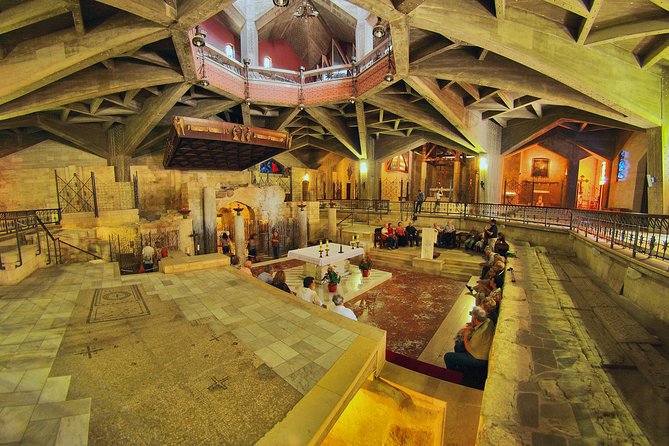
Jerusalem day is big. You start around 07:20 AM and cover the Mount of Olives overview, the Church of All Nations, and the Garden of Gethsemane. Then you enter through the Zion Gate and work your way through quarters toward the Western Wall.
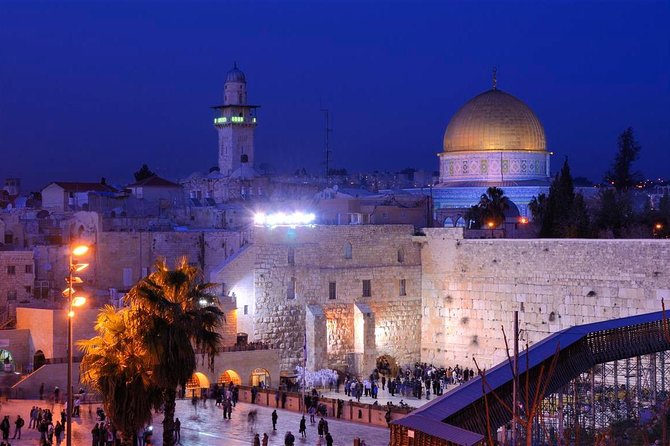
You visit the Armenian Quarter and the Byzantine Cardo, then continue into the Jewish Quarter. After the Western Wall stop, you join the pilgrims walking along the Via Dolorosa following the Stations of the Cross, ending at the Church of the Holy Sepulcher.
Then comes one of the tour’s heavier stops: Yad Vashem Holocaust Museum. The tour notes that on Fridays the museum is closed. Plan your expectations around that. If your dates land you in a Friday, you will want to know the day could shift.
My take: Jerusalem is not a place where you can sprint. This is a full-day immersion, so you should treat it like one main event, not like five side quests. Pace yourself, drink water, and take breaks when offered.
Bethlehem and the Church of the Nativity: mosaics and meaning

Day five moves you to the Dead Sea area and then into Bethlehem. You leave around 07:20 AM and pass the Inn of the Good Samaritan. You stop at the Sea Level marker for a brief explanation, then continue to Jericho.
Jericho is presented as the oldest continuously inhabited city in the world. Above it, you can see Mount Temptation. Then you continue to Bethlehem, cross Manger Square, and tour the Church of the Nativity.
The tour includes a look at the original 4th-century mosaic floor and the place of Jesus’ birth marked with a star commemorating its location. You also tour the Manger and the altar dedicated to the Three Wise Men. You then move to the Crusader Church dedicated to St. Catherine, including a grotto visit, plus stops for the Milk Grotto and Shepherd’s Fields.
Consideration: This day is packed with walking in sacred spaces. Even when your agenda is organized, you will feel the physical effort.
Masada and the Dead Sea swim: spectacular, and very weather dependent
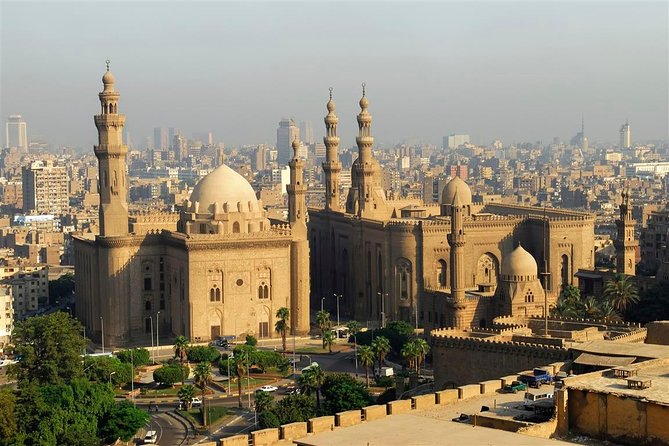
Day six is one of the most dramatic days on the whole route. You depart around 07:20 AM for Masada National Park, driving through the Judean Desert along the way to the Dead Sea.
At Masada, you go up by cable car, then tour the palaces, the well-preserved bath house, the synagogue, Roman barracks, and more. You also see the snake path used over 2000 years ago when King Herod built his palaces.
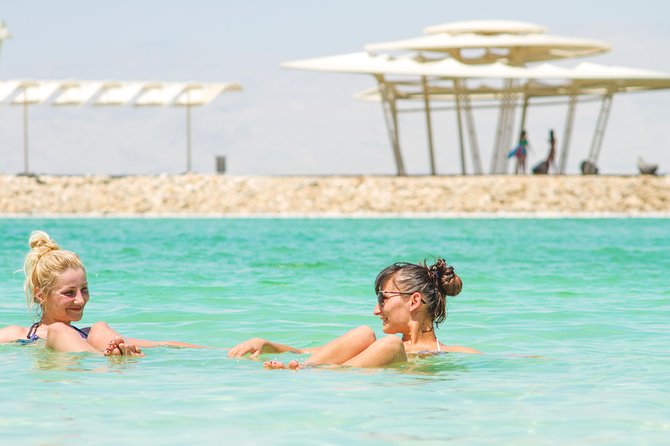
After Masada, you pass Ein Gedi and the Qumran caves tied to the Dead Sea Scrolls. Then you continue to the Dead Sea for a swim or float in the therapeutic waters.
Then the plan shifts quickly: you drop off at Ben Gurion for your flight to Ramon Airport in Eilat. A note in the tour information says there are no domestic flights on Friday, so you may stay overnight in Tel Aviv and fly to Eilat the next day.
Why this matters: Masada plus a Dead Sea swim can be a long day, and then you immediately transition toward the next border and Egypt portion. If you get sea or motion sick, consider bringing what you use for that kind of travel, since you are doing multiple transport segments.
Petra in Jordan: full-day walking, plus night option
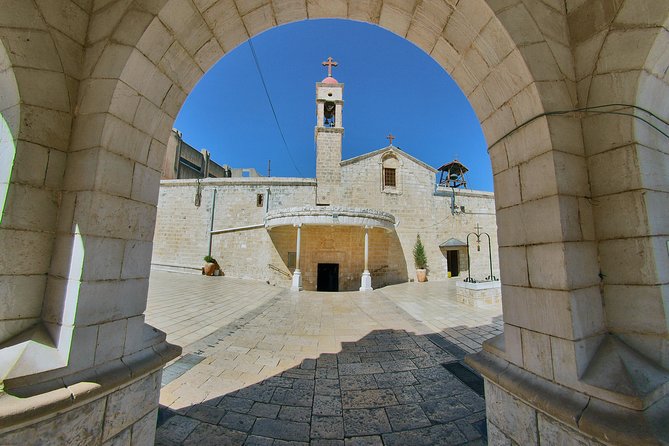
Petra arrives on day seven, but it is not a simple arrival. You are picked up between 08:30 and 08:45 AM, driven to the Arava border, assisted through proceedings, and then picked up by a Jordanian driver for the drive to Petra.
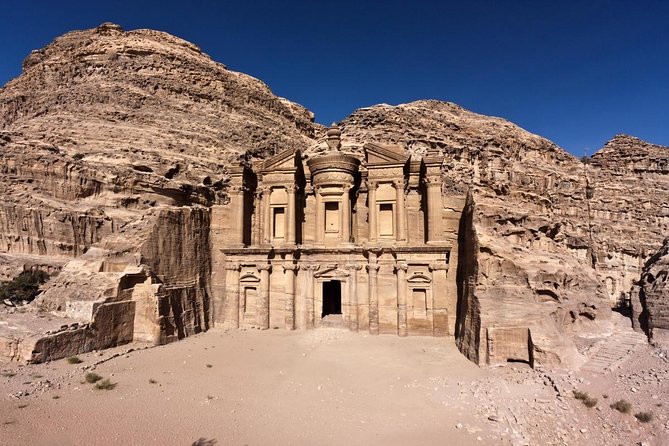
Once in Petra, you tour the Treasury, then move into temples, caves, tombs, and a Roman theater. In the evening, the tour offers the option to see Petra by night, with the entrance fee listed as about $15, not included.
Petra is one of those sites where the scale hits you only after you walk into it. You can look at photos all day, but the experience is about the time you spend inside the rock-cut spaces. The tour’s focus on multiple sections helps you avoid the most common “one-stop wonder” feeling.
Pacing tip: Petra by night can add fatigue. If you are already doing a long full day, you might decide it is better to rest unless you are excited specifically for night lighting and atmosphere.
The Mount Sinai sunrise climb: the one place you cannot wing it
Days eight and nine center on Mount Sinai. On day eight, you have a flexible morning, then return to the border and Eilat for the pick up around 21:00. You drive via the Taba border, assisted on the Egyptian side, and then you go to Mount Sinai and climb the mountain to see the sunrise.
Day nine continues with early morning touring around St. Catherine’s. You visit the Church dated back to the 6th century and never destroyed since then, see the Burning Bush, and visit Jethro’s Well. The tour notes St. Catherine’s as one of the oldest working monasteries in the world and mentions the world’s oldest library. After the tour you drive to Cairo for an overnight.
This is also where you should pay attention to a practical warning from real-world experience: the night climb timing can be challenging if you are not prepared. You may be expected to hike up in the dark to make the sunrise. If you are prone to cold, have balance issues, or simply hate night climbing, you should reconsider or at least plan carefully with layers and proper footwear.
What you get if it goes well: the sunrise viewpoint experience is the kind of “you will remember this forever” moment that makes the rest of the itinerary feel worth it.
Cairo and Giza: pyramids plus a second layer of ancient Egypt
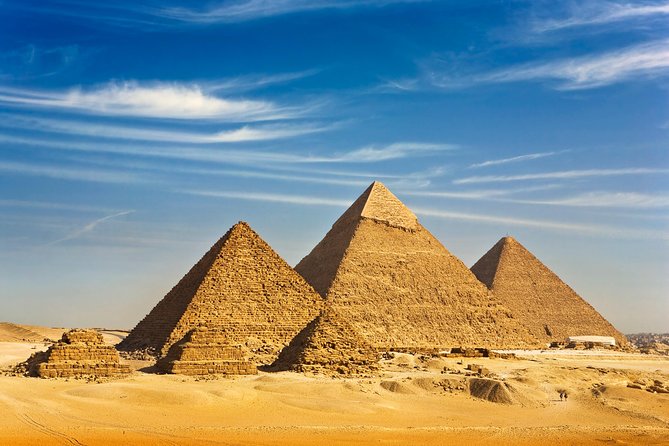
After Mount Sinai, you reach Cairo, and day ten focuses on the Giza Plateau. A guide meets you to see the pyramids of Cheops, Chephren, Mycrenos, and the Sphinx. There is also a short camel ride in the area.
You then continue to see the Step Pyramid of Djoser and the pyramids of King Titi and Sakkara. Lunch is included at a local restaurant, then you tour Memphis, including the Open Air Museum and the statue of King Ramses II.
Back to your hotel for overnight.
A detail worth noting: entrance to Mummy’s room is not included. You might see it as a reason to buy only the specific add-ons you care about, rather than paying for everything.
How to handle the crowds and heat: this is open-air walking over ancient ground. Bring water, shade options, and sunscreen. If you do not love long sun exposure, plan your breaks.
The Nile cruise from Aswan: temples, shows, and steady days on the water
Days eleven through fourteen are cruise-focused. You fly from Cairo to Aswan, then transfer to your ship and check in. You eat lunch onboard, then tour the High Dam and the temple of Philae. Dinner follows on the ship, with a Nubian show noted.
Day twelve includes Kom Ombo with the Sobek and Harores temple, then sailing to Edfu to tour the Temple of Hours. You sail to Luxor for overnight.
Day thirteen covers the West Bank. You visit Thebes Necropolis and the Valley of the Kings, and you enter three royal tombs in the area. You return to the ship for lunch and get a free afternoon, plus night entertainment on board.
This is one of the best parts of the whole trip if you like a mix of guided time and downtime. You are on water, you are not changing hotels every day, and meals and evening entertainment are handled.
Cruise reality check: the temples and tombs involve walking, steps, and heat or cold depending on the season. Still, you get the psychological comfort of having your base move with you.
Luxor temples and the East Bank, then a Cairo reset
Day fourteen begins with breakfast and cruise check-out procedures. Then you tour the East Bank with Karnak and Luxor temples. Lunch is included at a local restaurant, then you transfer to the Luxor airport for a flight to Cairo. You arrive in Cairo and transfer to your hotel.
That brings you to day fifteen, which focuses on Cairo’s history and viewpoints. You tour the Egyptian Museum, then do a city center walk including churches. You visit the Citadel of Salah El Dien and the Mosque of Mohamed Ali, then return to your hotel. Day sixteen is leisure time to relax and walk around by yourself.
Day seventeen is airport transfer for your flight home from Cairo.
If you like Cairo, this ending works well. You get a structured day, then some freedom to choose what you want next, without a schedule that keeps you trapped on someone else’s clock.
Price and value: what you are paying for, and what you still must budget
At $3,478 per person, you are not just buying hotel rooms. You are paying for a package that includes 15 nights accommodation, airport-to-airport transport handling, a climate-controlled van on driving days, and multiple guided tours across Israel, Jordan, and Egypt. You also get many meals included: breakfast is listed 15 times, lunch six times, and dinner three times.
That meal distribution matters because it reduces how much cash you need for every day’s food. Still, it does not mean every meal is included, so you should budget for breakfasts or dinners on days that fall outside the included count.
Also budget the items explicitly not included:
- $130 per person departure tax for the trip
- Egypt visa $60 per person
- Jordan visa $75 per person
A few tour extras are not included either:
- Petra by night fee about $15 (not included)
- Entrance to Mummy’s room is not included
When you compare this against a DIY version, the biggest value is time saved. You also reduce friction points like border crossings that otherwise eat your day.
Who this tour fits best
This works best if you want a “greatest hits” path across three countries and you trust that someone else is holding the schedule together. It is ideal for first-time visitors who want to see Jerusalem, Petra, and Egypt’s core monuments without learning how each border process works.
It is less ideal if you hate early mornings and long travel days. You are often on the move, and some days start around 07:20 AM. If you want a slower tempo, you might prefer smaller trips centered on one country.
Your physical fitness should be moderate. You will climb, walk, and handle temple stairs, and the Sinai sunrise climb is the big test.
Should you book this Israel, Jordan and Egypt tour?
If your dream is Petra, the holy sites around Israel’s north and Jerusalem, and then a real Nile cruise, this package makes sense. The included transport, guided touring, and the cruise portion are the main reasons it feels like value rather than just a set of expensive admissions.
I would book it if:
- you want a structured route and hate planning borders and transfers
- you are okay with early starts
- you are comfortable with at least one big climb at night for sunrise
I would pause or choose another option if:
- you are sensitive to night hikes or cold conditions
- you strongly prefer unscheduled days from the start
- you want more flexibility between countries, especially around the Jordan to Egypt transition
FAQ
Where does the tour start and end?
It starts at Ben Gurion Airport in Israel and ends at Cairo International Airport in Egypt.
What time does the tour start?
The start time is listed as 7:30 AM.
How long is the tour?
The tour is described as 16 nights and approximately 17 days.
How many meals are included?
Breakfast is included 15 times, lunch is included 6 times, and dinner is included 3 times.
Is there help at border crossings?
Yes. The tour includes assistance at border crossings from local drivers.
Is Petra by night included?
Petra by night is optional, and the entrance fee is about $15 and is not included.
Are visas included?
No. The tour lists Egypt visa as $60 per person and Jordan visa as $75 per person.
Is the Holocaust Museum always included?
The plan includes Yad Vashem, but the tour notes that on Fridays it is closed.
What extra costs should I budget for?
The listed price does not include a $130 per person departure tax, plus the visa costs above. Entrance to Mummy’s room is also not included.
Other Tours We Have Reviewed in Israel
- From Tel Aviv: Masada & Dead Sea Full Day Tour with Pick Up
★ 4.5 · 1,496 reviews - From Tel Aviv: Jerusalem Old & New City Bus Tour
★ 4.2 · 824 reviews - Day Tour to Jerusalem and Bethlehem from Tel Aviv
★ 4.5 · 720 reviews - From Tel Aviv: Masada, Ein Gedi & Dead Sea Tour
★ 4.2 · 705 reviews
More Israel Tour Reviews
- From Tel Aviv: Masada & Dead Sea Full Day Tour with Pick Up
★ 4.5 · 1,496 reviews - From Tel Aviv: Jerusalem and Bethlehem Guided Day Trip
★ 4.3 · 1,316 reviews - Masada and the Dead Sea Day Trip from Tel Aviv
★ 4.5 · 1,014 reviews - Tel Aviv: Jerusalem, Bethlehem & Dead Sea
★ 4.0 · 881 reviews
Longer Israel Itineraries
- 2-Day Best of Israel Tour from Tel Aviv: Jerusalem, Bethlehem and Masada Tour
★ 4.5 · 38 reviews - Fully Inclusive Private Customized Israel Tour
★ 5.0 · 34 reviews - 5-Day Best of Israel Tour from Tel Aviv: Jerusalem, Dead Sea, Nazareth, and Masada
★ 3.5 · 32 reviews - 7-Night Israel Highlights and Bibleland Tour
★ 4.5 · 25 reviews
Recently Added Israel Tour Reviews
- private Full-day Tour to Jericho + the Dead Sea★ 5.0 · 3 reviews
- Package VIP Skip Line Services in BGN Airport with Transfer to Tel aviv Hotels★ 5.0 · 3 reviews
- Food & Drink Private Guided Tour in Tel Aviv★ 5.0 · 3 reviews
- Tel Aviv Like a Local: Customized Guided Tour by Lokafy★ 5.0 · 3 reviews
- Private Tour from Tel Aviv to Jerusalem★ 5.0 · 3 reviews
Evening Experiences, compared.
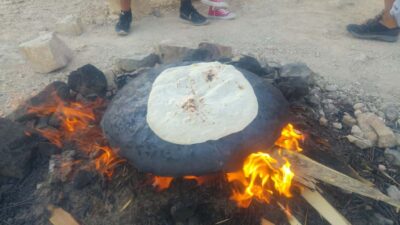 ★ 4.7Eilat Mountains: Sunset Jeep Adventure to Mount JoashFrom $67143 reviews
 ★ 5.0Guided Pub Crawl Night Tour at Tel AvivFrom $2385 reviews
 ★ 4.57-Night Israel Highlights and Bibleland TourFrom $1,71225 reviews
 ★ 4.58-Night Israel Tour from Tel Aviv: Jerusalem, Dead Sea, Bethlehem, Nazareth, Northern Israel and PetraFrom $2,46211 reviews
 ★ 5.0Sunset time Ramon Crater Jeep tour, bonfire and stargazingFrom $5224 reviews
Lists this tour appears in