
REVIEW · THE DEAD SEA
5-Day Best of Israel Tour from Tel Aviv: Jerusalem, Dead Sea, Nazareth, and Masada
Some routes in Israel feel like a checklist. This one feels like a sprint with payoff.
You get a local expert guide, hotel pickup and drop-off, and a tight circuit through the big-name sites, with real variety day to day. I especially like how the plan pairs Jerusalem’s layered streets with quieter stops like Rosh Hanikra’s grottoes and a long Dead Sea break.
The best moments can hinge on your guide. Reviews highlight guides such as Amir, and others named like Eyal and Rami, for clear history and staying flexible on the ground. One drawback to consider: the trip can feel fragmented because you are moving cities constantly, and some parts can include extra stops that do not add much to your sightseeing time.
In This Review
- Key Things to Know Before You Go
- Price and Logistics: Is $1,080 Worth It?
- Day 1 in the North: Katzrin, Golan Antiquities, and Mount Bental
- Day 2: Nazareth, Church Stops, Capernaum, and Yardenit
- Day 3: Caesarea, Haifa’s Baha’i Gardens, Rosh Hanikra, and Acre
- Day 4: Masada by Cable Car, Herodium, Qumran Area, and the Dead Sea
- Day 5: Mount Scopus Views, Jerusalem Old City Quarters, Western Wall, and Holy Sepulchre
- Why the Two Jerusalem Tours and City of David Matter
- Where the Tour’s Best Value Shows Up
- Timing Tradeoffs and the Most Common Friction Points
- Who This Trip Is For (and Who Should Skip It)
- Practical Packing and Dress Code That Actually Helps
- Should You Book This 5-Day Israel Tour?
Key Things to Know Before You Go
- Jerusalem has two different angles, plus City of David, so you do not just see the Old City and rush out.
- Masada is reached by cable car, which saves energy for the climb and viewpoints once you are up there.
- The Dead Sea stop is time-boxed for floating and mud, so pack a bathing suit early in your thinking.
- Nazareth and Capernaum are paired in one sweep, mixing modern holy sites with Gospel-era locations.
- You travel a lot by bus, and your day will depend on pickup efficiency and timing on busy roads.
- Hotel style is mixed, with three nights in a Jerusalem hotel plus one night in a traditional kibbutz.
Still choosing a Dead Sea day? Here are the alternatives
Price and Logistics: Is $1,080 Worth It?
At $1,080 per person for about 5 days, the value depends on what you want most: maximum site coverage with a guided format. You are paying for the guide, air-conditioned vehicle, hotel pickup and drop-off, and four nights of lodging. Food and drinks are not included unless specified, so you should plan to spend extra on lunches and snacks, especially on heavier sightseeing days.
The tour runs on a 7:15 am start time, and that early rhythm matters. When you are moving between regions like the Galilee, Haifa coast, Judean Hills, and Jerusalem, you will feel the schedule in your legs. The flip side is that you will see a lot without having to coordinate transport and timed entries yourself.
Group size is capped at 40. That is large enough to feel like a group experience, but not so huge that you can never find your guide. Still, big groups create slow moments, especially at entry lines and in Jerusalem’s narrow areas.
Day 1 in the North: Katzrin, Golan Antiquities, and Mount Bental
Day 1 keeps you moving through the Galilee region and the Jordan Valley, then slows down at a few history-focused stops. Even if your main goal is Jerusalem and holy sites, this first day gives you the geographical context. You see how water, valleys, and hills shape where people built communities.
You start with a travel segment along the shore of the Sea of Galilee, plus views of the surrounding region. The plan then takes you to Ancient Katzrin Village and Synagogue, where you can walk amid remains that help explain life in this area long before modern Israel. There is a synagogue site here, and the visit time is short, so focus on your pace and comfort.
Next is the Golan Antiquities Museum. This is one of those stops that can be worth it if you like explanations, maps, and organized artifacts rather than only outdoor ruins. It is also a good place to sit for a bit, which matters on a day that already includes multiple moving segments.
Mount Bental is your final highlight of the day, with access to remaining Syrian bunkers. It is a sobering stop, and the value is in understanding the modern layers of the region, not just the ancient ones. If you get winded easily, wear sturdy shoes and expect some walking over uneven ground.
Day 2: Nazareth, Church Stops, Capernaum, and Yardenit
Day 2 is built around Nazareth and the Gospel setting of Capernaum, then it ends at Yardenit, the baptism site on the Jordan River. That combination makes sense because you are not only visiting places, you are also seeing how different sites connect to stories people tell.
Nazareth includes time to explore the city, plus two church visits: the Church of the Annunciation and St. Joseph’s Church. Expect these stops to be more about atmosphere and meaning than space for long wandering. Modest dress is required for holy sites, so keep your outfit simple and avoid last-minute solutions.
Then the tour heads to Capernaum, described as the town of Jesus. The visit also includes the Church of the Multiplication, a quick stop that works well if you want a guided link between location and tradition. You will likely leave with a better mental map of how the Sea of Galilee towns connect.
The day concludes at Yardenit, with about 50 minutes on site. There is a note that the operator does not arrange priest-led baptisms, but you can coordinate with the Yardenit site in advance. Even if you are not doing a ceremony, Yardenit can be a nice pause. It is one of the few places on this route where the vibe is specifically about the water and ritual.
Masada and Ein Gedi, sunrise starts and the later ones
Day 3: Caesarea, Haifa’s Baha’i Gardens, Rosh Hanikra, and Acre
Day 3 shifts you from inland and Galilee to the Mediterranean coast. This is where the tour feels most varied. You get Roman-era ruins, a UNESCO-listed viewpoint experience, an underground grotto ride, and then a medieval-style city walk.
You begin at Caesarea National Park, including the ancient port and the theatre at Caesarea. The value here is scale. Even with limited time, it helps you picture Roman coastal life and why this area mattered strategically. The stops are organized to give you a sense of the main features without eating up the whole day.
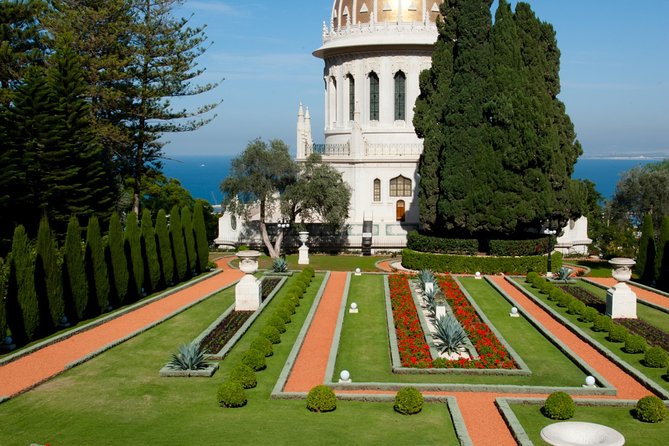
Next are the Baha’i Gardens in Haifa. You get time at the top, with Haifa and the surroundings as your reward. You are not just looking at gardens, you are learning how a carefully arranged site can act like a viewpoint and a cultural marker at the same time.
Then comes Rosh Hanikra, reached by cable car. The cable car ride is a smart move because you are not spending the day doing steep access on foot. At the grottoes, you explore the underground area for about 30 minutes. It is a rare type of attraction on a Jerusalem-focused itinerary, and it breaks up the heavy holy-site days.
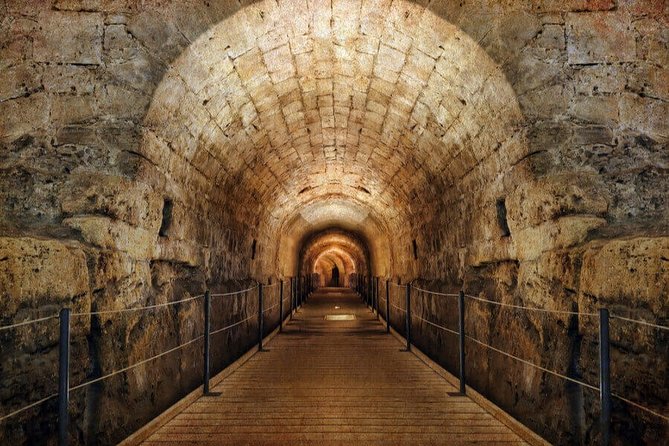
The day ends in Acre, including the Citadel of Acre and its Underground Crusader City. Acre’s strength is that it feels like a Mediterranean city shaped by layers of empire. Even if you have seen similar fortifications elsewhere, the location and underground rooms add a different mood.
If you dislike long city transitions, Day 3 can feel like “too much, too fast.” But if you want coastal variety, it is one of the best-balanced days.
Day 4: Masada by Cable Car, Herodium, Qumran Area, and the Dead Sea
Day 4 is the day with the biggest visual moments. You start with Harei Yehuda travel through the Judean Hills, then focus on Masada and the Dead Sea. This day is where comfortable shoes pay off, because the scenery is famous for a reason.
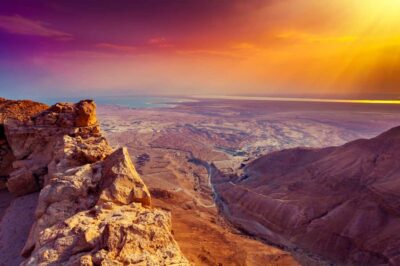
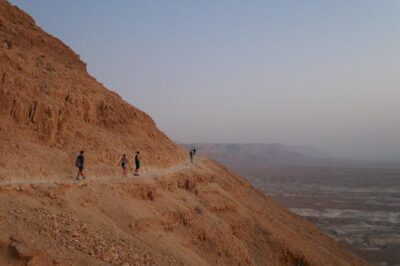
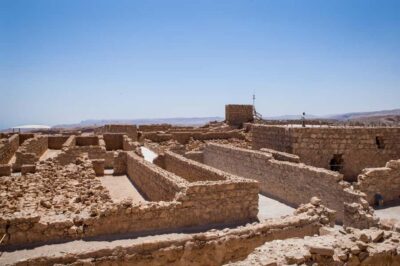
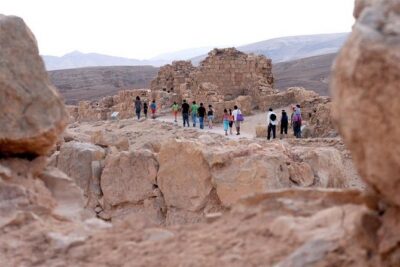
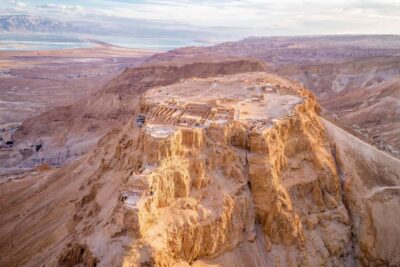
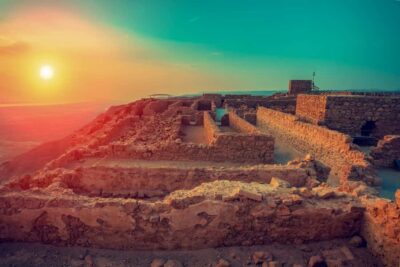
Masada is reached by cable car, then you explore the park. You get about 1 hour 30 minutes, and that is enough to see the main viewpoints and ruins without trying to do everything at a marathon pace. If you come in expecting a quick stop, plan to slow down once you arrive because the setting makes people pause.
After Masada, there is a stop for Herod’s Palace (Herodium). The visit time is short, about 30 minutes, so treat it as an orientation stop, not a long museum day. Then you pass Ein Gedi Natural Reserve and Qumran, described as where the Dead Sea Scrolls were found. You are not getting deep time in each of those areas, but passing by is useful if you want a sense of where the key discoveries happened.
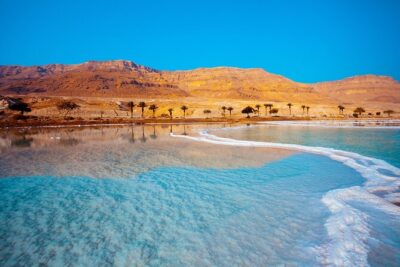
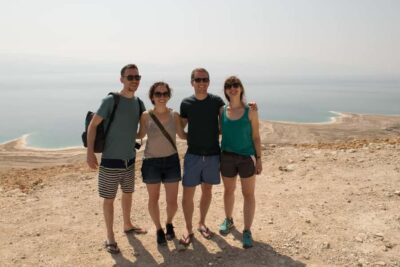
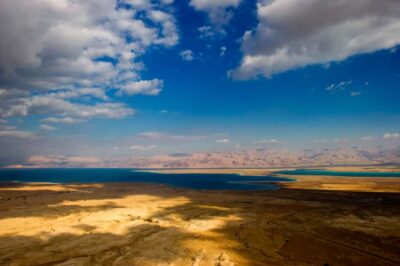
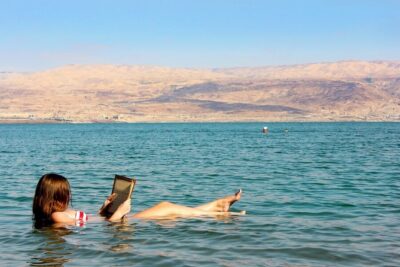
Then comes the payoff: the Dead Sea float and mud. You get about 1 hour 30 minutes here, and it is more than a quick photo stop. You should bring, or be ready to buy at the site, the items that the tour recommends: a bathing suit, towels, and sun protection. The “mud yourself” part is basically part of the experience, so plan to keep it simple and expect a mess.
One practical note, do not treat the Dead Sea like a casual swim. It is a floating, slick, salty environment. If you are sensitive to dryness, bring water for rinsing and be mindful of how your skin feels after.
Day 5: Mount Scopus Views, Jerusalem Old City Quarters, Western Wall, and Holy Sepulchre
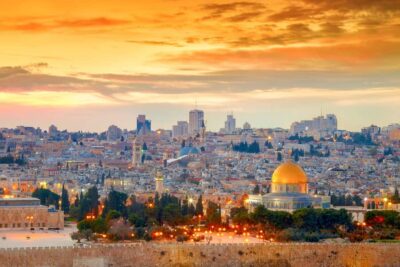
Day 5 is Jerusalem, full throttle. You start at Mount Scopus National Botanical Garden for views of the Old City, then continue to Garden of Gethsemane and nearby Church of All Nations pass-by moments. This is a good opening because those viewpoints help you orient yourself before you walk streets you might otherwise find confusing.
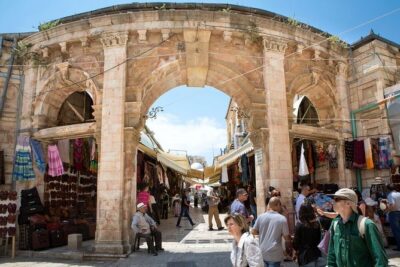
Then you drop into the Old City of Jerusalem, with about 2 hours of exploring. The tour breaks the Old City into key quarters: the Jewish Quarter and the Byzantine Cardo, the Western Wall, the Christian Quarter, and the Muslim Quarter with its lively bazaar time. You also walk part of the Via Dolorosa and visit the Church of the Holy Sepulchre.
These stops can feel intense because there are so many meaning-packed places packed into one day. The Western Wall visit is short, and the Church of the Holy Sepulchre visit is also about 30 minutes, so your best strategy is to arrive mentally ready to prioritize what matters to you. If you are the type who loves detailed reading and quiet, you may wish you had more time. If you want the big highlights with a guide keeping things organized, this structure works.
The tour also includes Yad Vashem, the World Holocaust Remembrance Center, with entry included and about 30 minutes. On a day like this, Yad Vashem is not a small add-on. It is a moment that gives the whole trip context beyond religious landmarks.
Why the Two Jerusalem Tours and City of David Matter
This tour does something important for your understanding of Jerusalem: it does not treat it like one single place. Instead, you get time that focuses on major holy sites and then also includes the City of David element in the plan.
That matters because Jerusalem’s story is not only about today. It is also about ancient layers, archaeological zones, and how people used space. When you add City of David into a day that also includes Old City quarters, you get more than a list of places. You get a sense of how the city evolved.
The practical benefit is that you can better follow what your guide says. With two different angles, you are less likely to feel like you are watching a slideshow. You have something to compare. Even if your attention is tired by Day 5, the variety helps your brain keep working.
Where the Tour’s Best Value Shows Up
The strongest value is in three places.
First, the guide. The best history moments come when the guide explains origins, connections, and what you are looking at. Reviews specifically praise guides like Amir for being up to date and versatile, including how he talked about origins of words. If you end up with a guide who does that well, your tour experience changes from sightseeing to understanding.
Second, the “big anchors” are handled. Masada by cable car removes a lot of the friction. The Dead Sea includes the float and mud time, so you actually get the signature experience.
Third, you cover both religious and cultural geography. The route is not only churches and walls. You also see the Roman theatre at Caesarea, Baha’i Gardens in Haifa, Rosh Hanikra grottoes, and the Citadel and underground Crusader City in Acre. That mix makes the trip feel less one-note.
Timing Tradeoffs and the Most Common Friction Points
The main downside is not the sites. It is the pace and the time buffers.
This itinerary is packed with short visits. That can be fine if you like moving and want maximum coverage. It can be frustrating if you want deep time inside each place or you hate shopping stops.
Some participants reported that part of the day can include time at sales stops like jewelry, and they also flagged that pickup can be disorganized at times, including people ending up on the wrong buses or incorrect hotel arrangements. I cannot promise your experience will be smooth, but it is worth preparing for small chaos.
If you book, you will feel safer if you do two things. First, build extra time into your day mentally, especially around Jerusalem. Second, use your guide as your anchor for timing and meeting points. When plans are moving quickly, clarity from the front of the group matters.
Also note the lodging note: the tour summary says three nights in a 3-star Jerusalem hotel and one night in a traditional kibbutz. That hotel mix is part of the value, but hotel quality can vary by room assignment. If you are sensitive to bed comfort or location, it is smart to ask about the specific hotel at check-in time once you have your room.
Who This Trip Is For (and Who Should Skip It)
This tour is a strong fit if you want a guided, high-coverage “best of” route that hits Jerusalem, Masada, the Dead Sea, Nazareth, and the northern coast. It works well for first-timers who do not want to plan transportation between regions and who are okay with a busy schedule.
It might not suit you if you want continuity every day with the same guide and driver, or if you dislike shop stops and short time allocations. Some people felt it functioned like separate day chunks. Even if you do not mind that structure, it helps to know that the experience can feel more like a series of stops than one flowing story.
Kids under age 4 are not suitable for the tour. For anyone with mobility limitations, the tour involves walking and access points like cable cars and uneven terrain. Comfortable walking shoes are a must.
Practical Packing and Dress Code That Actually Helps
This tour is realistic about what you need.
For holy sites, modest dress is obligatory, with covered knees and shoulders. I recommend wearing layers you can adjust quickly rather than relying on carrying extra fabric.
For the Dead Sea, bring a bathing suit, towels, and sun protection. The tour recommendation is specific for a reason. The salt and sun can be intense, and you do not want to improvise once you are already committed to the float.
For everything else, bring a hat and water. Days are long, and the route includes multiple open-air viewpoints and coastal stops.
Should You Book This 5-Day Israel Tour?
Book it if you want guided access to the headline sites and you prefer a structured route with hotel pickup, a local guide, and lodging already handled. At this price, the value is strongest if your guide is strong, your schedule can handle early mornings, and you like fast-paced sightseeing.
Skip it or consider a smaller, slower alternative if you hate time pressure, shopping detours, or you want long, quiet stays at fewer places. If you can tolerate bus time and short visits, this route can feel like a satisfying highlight reel. If you need space to linger, you might find it a bit too tight.
If you do book, your best move is simple: wear comfortable shoes, respect the dress code, and arrive ready to prioritize what you want to see most inside each place.
Longer Israel Itineraries
- 2-Day Best of Israel Tour from Tel Aviv: Jerusalem, Bethlehem and Masada Tour
★ 4.5 · 38 reviews - Fully Inclusive Private Customized Israel Tour
★ 5.0 · 34 reviews - 7-Night Israel Highlights and Bibleland Tour
★ 4.5 · 25 reviews - 2-Day Northern Israel Tour from Tel Aviv: Golan Heights, Nazareth and the Sea of Galilee
★ 4.5 · 6 reviews
Masada and Ein Gedi, Other Starts
- From Tel Aviv: Masada & Dead Sea Full Day Tour with Pick Up
★ 4.5 · 1,496 reviews - Masada and the Dead Sea Day Trip from Tel Aviv
★ 4.5 · 1,014 reviews - From Tel Aviv: Masada, Ein Gedi & Dead Sea Tour
★ 4.2 · 705 reviews - Masada, Ein Gedi, and The Dead Sea from Tel Aviv
★ 4.0 · 285 reviews
More Days Down at the Dead Sea
- From Tel Aviv: Masada & Dead Sea Full Day Tour with Pick Up
★ 4.5 · 1,496 reviews - Masada and the Dead Sea Day Trip from Tel Aviv
★ 4.5 · 1,014 reviews - Tel Aviv: Jerusalem, Bethlehem & Dead Sea
★ 4.0 · 881 reviews - From Tel Aviv: Masada, Ein Gedi & Dead Sea Tour
★ 4.2 · 705 reviews
Recently Added Israel Tour Reviews
- private Full-day Tour to Jericho + the Dead Sea★ 5.0 · 3 reviews
- Package VIP Skip Line Services in BGN Airport with Transfer to Tel aviv Hotels★ 5.0 · 3 reviews
- Food & Drink Private Guided Tour in Tel Aviv★ 5.0 · 3 reviews
- Tel Aviv Like a Local: Customized Guided Tour by Lokafy★ 5.0 · 3 reviews
- Private Tour from Tel Aviv to Jerusalem★ 5.0 · 3 reviews
The Dead Sea, compared.
 ★ 4.5From Tel Aviv: Masada & Dead Sea Full Day Tour with Pick UpFrom $1171,496 reviews
 ★ 4.5Masada and the Dead Sea Day Trip from Tel AvivFrom $1201,014 reviews
 ★ 4.0Tel Aviv: Jerusalem, Bethlehem & Dead SeaFrom $109881 reviews
 ★ 4.5From Jerusalem: Masada & Dead Sea Full Day Tour with Pick UpFrom $111815 reviews
 ★ 4.5Masada and the Dead Sea Day Trip from JerusalemFrom $111757 reviews
 ★ 4.2From Tel Aviv: Masada, Ein Gedi & Dead Sea TourFrom $99705 reviews
 ★ 4.5Jerusalem and the Dead Sea from Tel AvivFrom $133444 reviews
 ★ 4.3From Jerusalem: Masada&Dead Sea Tour INCLUDING ENTRANCE FEESFrom $111392 reviews
Lists this tour appears in