
REVIEW · THE DEAD SEA
8-Night Israel Tour from Tel Aviv: Jerusalem, Dead Sea, Bethlehem, Nazareth, Northern Israel and Petra
Israel is dramatic, day after day. This trip strings together big-ticket sites across Jerusalem, the Sea of Galilee, and Petra, with a professional guide and included flights to Eilat. I like the way it mixes headline archaeology with real everyday Israel time, including a stop at Mahane Yehuda Market, plus the chance to float in the Dead Sea and ride up to Masada by cable car.
Two things I really like are the balance of old sacred sites and modern life, and the solid geographic routing that actually gets you from one region to the next. One thing to consider upfront: this is a fast-paced itinerary with many stops that last under two hours, so if you want slow worship-time, long museum time, or lots of free beach time, you may feel rushed.
In This Review
- Key things to know before you go
- Big Israel and Petra in One Go: what this 8-night route feels like
- Tel Aviv arrival, hotel transfer, and setting your expectations
- Masada by cable car, then the Dead Sea float: two stops that run the show
- Jerusalem essentials: Shrine of the Book, Yad Vashem, Ein Kerem, and Bethlehem
- Old City on foot: Western Wall area, Via Dolorosa, Holy Sepulchre, and Mount of Olives
- Nazareth and the Sea of Galilee: Capernaum, Tabgha, and the Sermon sites
- Northern Israel by coast and hill: Akko, Haifa, and Caesarea’s Roman theater
- Golan Heights, wine tasting, and Tiberias: a day with variety
- Eilat, then Petra across the border: the long day you’ll remember
- Aqaba and the Red Sea dip: a reset after Petra
- Cost, inclusions, and what’s not covered (and why it matters)
- Who should book this tour, and who should slow down instead
- Should you book this 8-night Israel tour with Petra?
- FAQ
- FAQ
- What time does the tour start?
- Where do I meet and where does the tour end?
- How long is the trip and how many nights are included?
- What’s included in the cost?
- Are entrance tickets included?
- Do I need a visa for Petra?
- Are Petra border and visa fees included?
- How large are the groups?
- Is there a luggage restriction?
- Can I cancel, and what’s the latest refund timeline?
Key things to know before you go
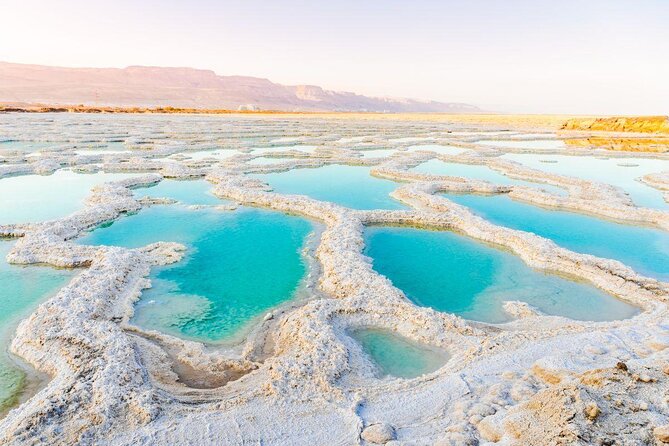
- Cable car Masada plus Dead Sea floating, two headline stops that are worth prioritizing
- Jerusalem highlights on foot, including the Western Wall area, Via Dolorosa, and Holy Sepulchre time
- A full day in the Galilee region, with Capernaum ruins, Tabgha, and the Mount of Beatitudes
- Haifa, Akko, and Caesarea, Roman and Crusader-era sights on the Mediterranean side
- Petra from Eilat with a Jordan border crossing, plus a Red Sea stop in Aqaba
- Small-ish groups up to 40, with air-conditioned coach travel and a professional guide
Still shortlisting? These are the Israel tours readers compared most often against this one.
Big Israel and Petra in One Go: what this 8-night route feels like
This is the kind of tour where you trade “free time” for “covered ground.” You’ll be on the move most days, hopping between Jerusalem, the north, and eventually down to Eilat and across to Jordan for Petra. It’s efficient, but it’s not lazy travel.
You get coach travel that’s air-conditioned, plus a professional guide coordinating the day. In some departures, the guide name Avi gets mentioned for keeping things organized, which matters a lot on routes like this. With a maximum group size of 40, you’re not swallowed by a huge herd, but you should still expect a busy schedule.
If you like your trips to feel structured and you enjoy seeing multiple major sites in one swing, this route can feel satisfying. If you prefer to linger, take extra photos, or stretch a visit into half a day, plan to be happy with shorter on-site windows.
Tel Aviv arrival, hotel transfer, and setting your expectations
Day 1 is built for arrival flexibility. You can land any time into Ben Gurion Airport, and you’ll get met by a representative holding your name and then be transferred to your hotel in Tel Aviv. Evening is at leisure, so you can recover from jet lag or do an easy first taste of the city.
This matters because it helps you start the next day ready to go. Tel Aviv is also a good landing pad: it’s modern, straightforward, and easy to navigate compared to many older cities. Even if your main focus is holy sites and archaeology, it’s a pleasant buffer before the more intense days.
You’ll stay in Tel Aviv for your first night, then the tour structure kicks in the next morning with a start time of 8:00 am at Ben Gurion Airport. Also, you’ll use mobile tickets, so keep your booking details handy on your phone.
Masada by cable car, then the Dead Sea float: two stops that run the show
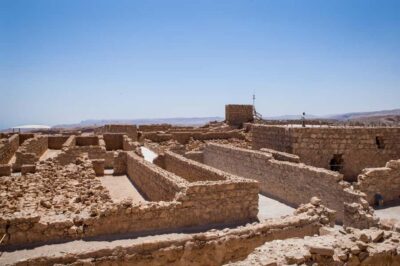
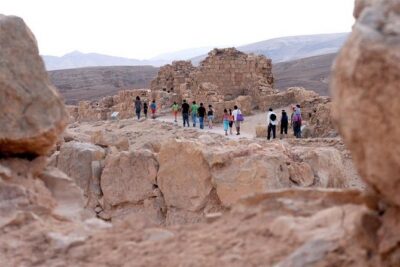
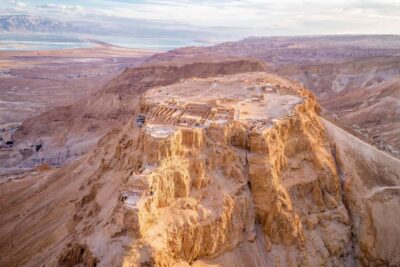
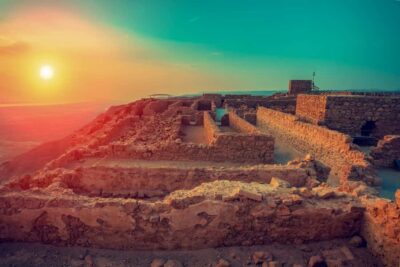
Masada is one of those places that feels bigger than the photos. You go up by cable car, which is a smart time-saver on a sightseeing day, and then you explore the fortress area and excavations. You’ll see remains connected to Herod’s palaces, plus a synagogue, bathhouse, and cisterns, and you’ll get wide views toward the Roman camps and the Dead Sea.
The value here is that Masada isn’t just a viewpoint. It’s a whole story in stone, tied to political struggle and the desert setting, and the guide helps you connect what you’re seeing to what happened there. If you love history you can point to, this stop is a win.
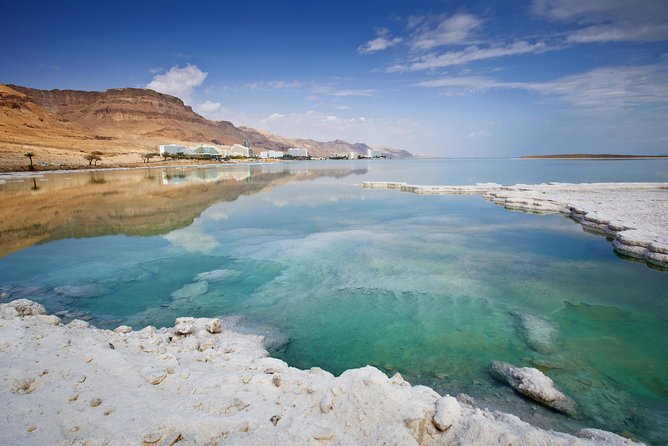
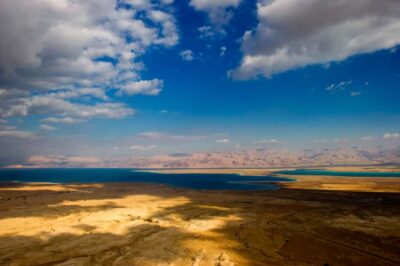
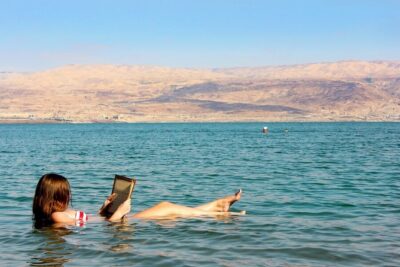
Then comes the Dead Sea. You descend to the lowest place on earth and experience the mineral-rich black mud and then float in the salty water. This is one of the few “everybody remembers it” activities on the route, because you can’t really recreate it at home.
Practical note: plan for extra time to rinse after, and be careful with wind and splashes. Your skin will thank you, and your eyes will too.
Jerusalem essentials: Shrine of the Book, Yad Vashem, Ein Kerem, and Bethlehem
Jerusalem is the heart of the trip, and the itinerary hits several layers of meaning in a single day. You start at the Israel Museum’s Shrine of the Book, where the Dead Sea Scrolls are the headline. Next you visit a renovated model of the Herodian city of Jerusalem from the Second Temple period, which is a great way to get your bearings before you walk the Old City.
Then you go to Yad Vashem, the official Holocaust memorial center. This is a sobering, important stop, and it gives the whole trip a wider historical context beyond religious landmarks. Plan to keep your phone away for a bit and just take it in.
From there you head to Ein Kerem, a picturesque village in the outskirts of Jerusalem tied to Christian tradition and the birth of John the Baptist. It’s a refreshing contrast to the big monument feel, and it breaks up the day nicely.
Next is Bethlehem, including the Church of the Nativity and Manger Square. This is where you’ll see major Christian sites tied to the birthplace of Jesus. The practical benefit of pairing Bethlehem with Jerusalem on the same stretch is that you’re already in the right headspace and already dealing with the Old City scale.
If you’re sensitive to long days of walking and concentrated religious sites, take it slower inside the church spaces. Give yourself a moment outside to reset, then go back in.
Old City on foot: Western Wall area, Via Dolorosa, Holy Sepulchre, and Mount of Olives
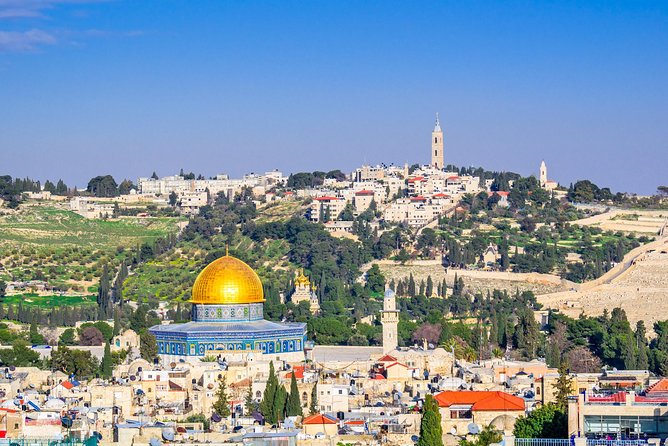
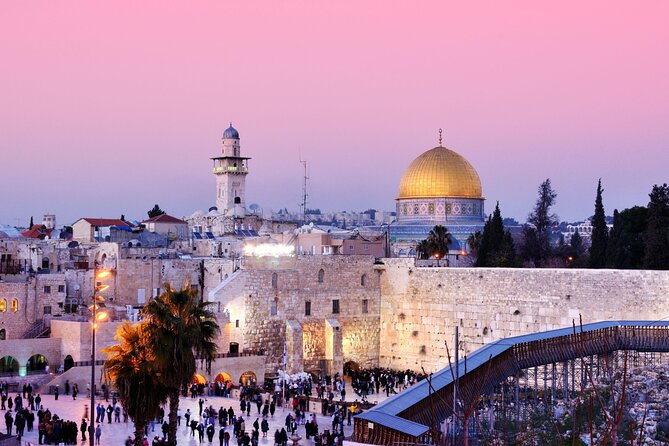
One of the best parts of the tour is how much Jerusalem you get on foot across several stops. You enter the Old City and see the Western Wall and the Temple Mount area. You then walk along the Via Dolorosa, also called the Way of the Cross, continuing toward Calvary and the Church of the Holy Sepulchre, which includes the traditional site of Crucifixion and the Tomb of the Resurrection.
This is emotionally intense terrain. Even if you’re not deeply religious, it helps to approach it like a living museum where multiple traditions overlap. The guide context makes it easier to understand why each spot is significant and what people have argued over for centuries.
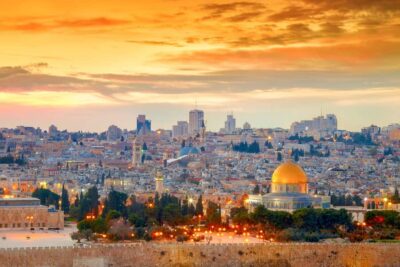
After that, you move to Mount Zion, including the traditional tomb of King David and the Room of the Last Supper. Then you head to the Mount of Olives for the panoramic view, which is one of the most useful things you’ll do on the trip. Views are a map for the mind, and they help you connect the places you just visited.
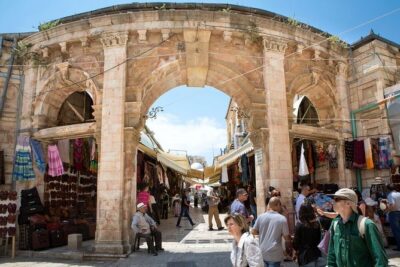
You also visit the Garden of Gethsemane, associated in tradition with Judas’s betrayal. And to balance the heavy sites, you finish with Mahane Yehuda Market, Jerusalem’s huge open-air market where you can experience the flavors and street energy of modern Israel.
If you want to get the most out of this day, focus on sensory details at the market, then let the Old City sites be about slowing your pace and noticing architecture and crowd flow.
Nazareth and the Sea of Galilee: Capernaum, Tabgha, and the Sermon sites
Northern Israel is where the trip broadens. It’s less about one dense cluster of monuments and more about a region, the Sea of Galilee, and the traditions attached to it.
At Kfar Nahum (Capernaum) you visit the ruins of the ancient synagogue. Even when you’re not sure where every stone sits, you can feel why this place mattered in early Christian tradition and Jewish life. From there you go to Tabgha in the Mount of Beatitudes area, tied to the miracle of loaves and the fish.
Then you visit the Mount of Beatitudes, another traditional site connected to the Sermon on the Mount. These stops are often short on the clock, but they’re connected in meaning and set in a landscape that makes the traditions easy to picture.
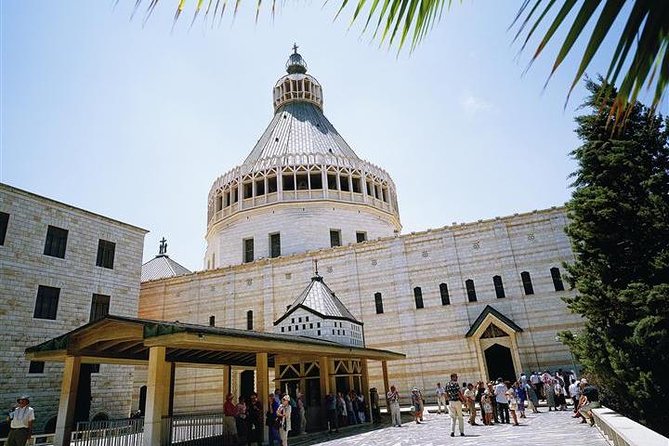
Next is Nazareth, where you visit the Church of the Annunciation and other Christian holy sites. This is one of the clearest “birthplace and childhood” stops on the route, and it gives you a grounded sense of where the stories are placed geographically.
The practical best move: wear comfortable shoes and keep a water bottle handy. This part of the trip rewards you, but it does not treat feet gently.
Northern Israel by coast and hill: Akko, Haifa, and Caesarea’s Roman theater
Another standout day shifts you west and toward the Mediterranean. You start with Akko (Acre) Old Town, including Crusader stronghold elements and medieval fortifications. It’s historically layered, and the walls and street layout give you a real sense of past military importance.
Then you go to Haifa, ascending Mount Carmel for panoramic views. You’ll see the Baha’i Shrine, the Persian Garden, and views over Haifa Bay. This is a different kind of sacred tourism than Jerusalem, and it helps diversify the trip’s tone.
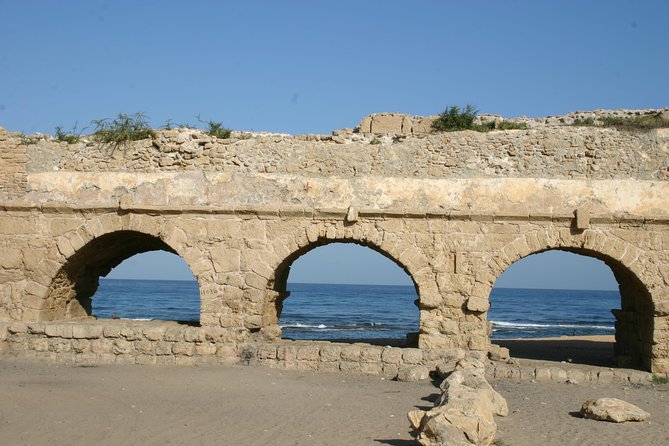
After that is Caesarea National Park, with the Roman Theater and the Crusader fortress, tied to what’s known as a major Herod-era legacy. When you stand where Romans once staged spectacles, it’s easier to connect Israel to the broader Mediterranean world.
This set of stops is also valuable because it’s not all about one faith narrative. You’re seeing multiple historical eras side by side, and you’re also getting different scenery and city textures.
Golan Heights, wine tasting, and Tiberias: a day with variety
Not every day is just temples and ruins. The trip includes a day that blends scenery with a structured activity.
You leave Jerusalem and travel north via the Jordan Valley area, with Jericho on the way, then continue to Beit She’an. The Roman city excavations there are preserved and visual, so this is a good break from Jerusalem’s dense layers.
Then you reach the Golan Heights, where the tour includes an Israeli wine country experience with a tour and wine tasting, plus context for how wine is produced. Along the drive you pass Druze villages and former Syrian fortifications and look toward Mount Hermon and beyond into Syria.
After that, you continue to Tiberias on the shores of the Sea of Galilee. It’s tied to Jewish tradition, including mention of the Talmud being compiled, and you’ll see the city’s rabbis’ tomb sites scattered around.
If you drink alcohol, remember you’re still traveling on the same day. Pace yourself at the winery so you don’t feel sluggish later. If you don’t drink, you can still benefit from the stop’s cultural and landscape context.
Eilat, then Petra across the border: the long day you’ll remember
By the time you reach Eilat, you’re shifting the trip’s tone to desert adventure. You fly from Tel Aviv to the Ramon Airport area and then transfer to Eilat, the Red Sea resort city.
The next day is the big one. You leave Eilat in the morning and cross into Jordan at the Arava border. You then drive through the desert region, including the Wadi Rum area, and arrive for Petra.
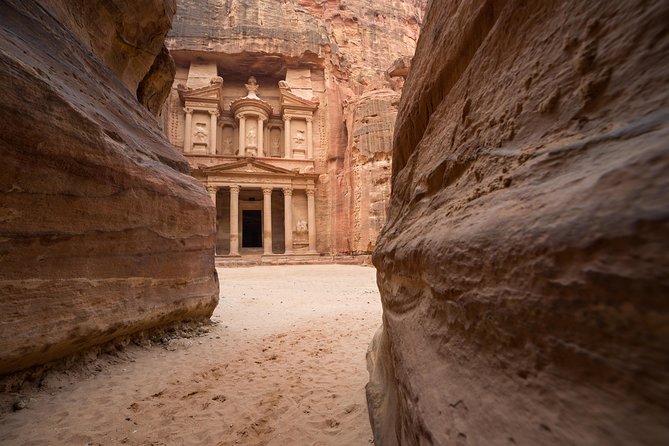
Petra is approached through the Siq, a narrow passage that feels like a slow reveal. Then you reach the Treasury, which suddenly appears at the end of the gorge, and it’s famous for a reason. From there you walk into the “rose city” carved into the mountains, seeing hundreds of tombs and monuments and the amphitheater that once held around 3,000 spectators.
You stop for lunch in Wadi Musa, visit Moses Spring, and then head toward Aqaba for a city tour and the chance to dip into the Red Sea.
One key planning point: Petra day involves a Jordan border crossing, and the border and visa fees are not included. Also, the tour notes that passengers traveling to Petra from Eilat on a one-day tour require a visa to enter Jordan. So check your passport situation and visa rules early.
Aqaba and the Red Sea dip: a reset after Petra
Petra days can fry your legs, even when you’re in decent shape. That’s why the Aqaba stop works well. You’ll get a short city tour, and then you have time for a Red Sea dip, which breaks up all the rock and dust with water and a change of pace.
This is also a practical win if you like balancing “big sights” with one or two body-friendly moments. Even a short swim or float can help you feel human again before the trip wraps up.
Don’t overplan your evenings on this part of the tour day. You’ll likely want an easy meal and early rest.
Cost, inclusions, and what’s not covered (and why it matters)
At about $2,462 per person, this is priced as a full-coverage, guided circuit rather than a DIY routing. What you get is a professional guide, 8 nights accommodation, included coach travel in air-conditioned vehicles, and return flights between Tel Aviv and Eilat. You also get airport transfers in Tel Aviv on arrival and departure days.
Meals are also partially included: breakfast is provided for 8 days, and there are two dinners included. For many people, that helps keep daily costs stable once you’re in the country.
The big “not included” item is border and visa fees on Petra day. That’s not a small detail, and it’s the main financial variable you should anticipate. If you’re budgeting tightly, put the Jordan visa and border costs aside now so they don’t become a surprise.
Also note: entrance tickets are included for several major sites, including Masada National Park and the Dead Sea on the itinerary, plus Israel Museum, Yad Vashem, and many northern stops. Some stops are listed as free in the itinerary, but your guide and included timing handle that.
Value tip: the price is strongest for people who want the structure and don’t want to spend time building transport schedules across multiple regions. If you’re already planning to drive and manage internal flights yourself, the savings may be less obvious.
Who should book this tour, and who should slow down instead
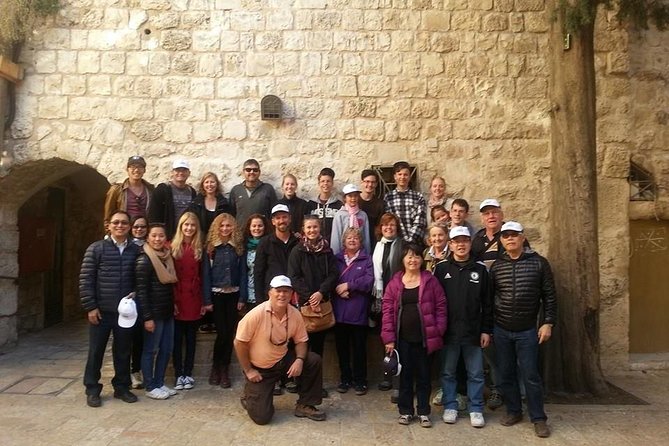
Book this if you want an organized “greatest hits” route that still includes meaningful context. It’s a good fit for travelers who like history, sacred sites, and a steady rhythm with a guide doing the hard parts. The maximum group size of 40 also helps, especially compared to huge tour buses.
This is also a strong choice if you want both viewpoints and “hands-on” experiences: floating in the Dead Sea, the cable car at Masada, and the Petra walk-through. Those are the moments that feel difficult to replicate without time and planning.
Consider a slower approach if any of these sound like you: you hate tight schedules, you want long free time in major cities, or you feel anxious about border crossings and visa requirements. Petra day is long and active, and the rest of the trip is similarly time-packed.
If you can be flexible and you like to stay moving, you’ll probably love the momentum. If your travel style is “one neighborhood per day,” you may end up wishing for more quiet.
Should you book this 8-night Israel tour with Petra?
I’d book it if you want a guided, high-coverage itinerary that trades free time for unforgettable variety: Jerusalem’s clustered landmarks, the Galilee sites, and Petra plus a Red Sea reset. The included flights to Eilat and the guided logistics make it efficient, and the mix of monumental and everyday stops like Mahane Yehuda Market adds balance.
Don’t book it if you’re expecting a relaxed pace or if you’re not ready for Petra logistics and visa planning. If you do book, your best move is to go in with the right mindset: comfortable shoes, a flexible schedule, and a willingness to see a lot in limited time.
FAQ
FAQ
What time does the tour start?
The tour starts at 8:00 am, with meeting at Ben Gurion Airport.
Where do I meet and where does the tour end?
You start at Ben Gurion Airport and the tour ends back at the same meeting point.
How long is the trip and how many nights are included?
It’s listed as approximately 9 days, with 8 nights of accommodation included.
What’s included in the cost?
Included features are a professional guide, airport transfers from Tel Aviv Airport, an air-conditioned vehicle, 8 nights accommodation, return flights between Tel Aviv and Eilat, and breakfast for 8 days plus dinner for 2 days.
Are entrance tickets included?
Some major admission tickets are included, including Masada National Park and the Dead Sea. Other listed stops show free admission in the itinerary, while many additional sites have admission tickets included.
Do I need a visa for Petra?
Yes. The tour information states that passengers traveling to Petra from Eilat on a one-day tour require a visa to enter Jordan.
Are Petra border and visa fees included?
No. Border and visa fees on the Petra day tour are not included.
How large are the groups?
The tour lists a maximum of 40 travelers.
Is there a luggage restriction?
No luggage restriction is listed for this tour.
Can I cancel, and what’s the latest refund timeline?
You can cancel up to 6 days in advance for a full refund, with reduced refunds available when canceling 2 to 6 days before the experience start time.
Recently Added Israel Tour Reviews
The Dead Sea, compared.
 ★ 4.5From Tel Aviv: Masada & Dead Sea Full Day Tour with Pick UpFrom $1171,496 reviews
 ★ 4.5Masada and the Dead Sea Day Trip from Tel AvivFrom $1201,014 reviews
 ★ 4.0Tel Aviv: Jerusalem, Bethlehem & Dead SeaFrom $109881 reviews
 ★ 4.5From Jerusalem: Masada & Dead Sea Full Day Tour with Pick UpFrom $111815 reviews
 ★ 4.5Masada and the Dead Sea Day Trip from JerusalemFrom $111757 reviews
 ★ 4.2From Tel Aviv: Masada, Ein Gedi & Dead Sea TourFrom $99705 reviews
 ★ 4.5Jerusalem and the Dead Sea from Tel AvivFrom $133444 reviews
 ★ 4.3From Jerusalem: Masada&Dead Sea Tour INCLUDING ENTRANCE FEESFrom $111392 reviews