
REVIEW · THE DEAD SEA
Masada and the Dead Sea Trip from Jerusalem
Masada and the Dead Sea in one long morning. I like how this trip bundles Masada and the Dead Sea with expert guidance and practical extras like hotel pickup and the cable car up. You get the big wow moments without juggling transport on your own. The main drawback to plan for is that it is a full day with limited time at each stop, so you need to move with the group when things are hot and busy.
I also like the way the drive tells a story. As the coach heads down from Jerusalem into the Judean Desert toward the lowest place on Earth, you’ll pass recognizable biblical landmarks like the area of the Inn of the Good Samaritan and a sea-level marker. If you hate tight schedules, this is still doable, but you will feel the pace.
In This Review
- Key highlights to know before you go
- From Jerusalem to the Judean Desert: getting below sea level fast
- Masada National Park by cable car: what you actually get time for
- Herodium (Herod’s Palace): a shortcut lesson in King Herod
- Qumran caves and the Dead Sea Scrolls: seeing the setting, not just the fact
- Ein Gedi and Jericho views: the biblical wilderness break
- Dead Sea time: floating, mud bath, and how to not turn it into a mess
- Price and logistics: is $80 actually good value?
- The guide matters: what good guiding looks like here
- Who should book this Masada and Dead Sea trip?
- Should you book this trip?
- FAQ
- What time does the tour start?
- Where is the meeting point in Jerusalem?
- About how long is the trip?
- What is included in the price?
- Is the cable car to Masada included?
- Will I have time to float in the Dead Sea and do a mud bath?
- Is food included?
- What should I bring?
- What is the maximum group size?
Key highlights to know before you go
- Cable car up Masada so you spend more time on the plateau ruins than on the climb
- Herod’s Palace at Herodium for a fast, meaningful stop tied to King Herod
- Dead Sea floating plus mud bath designed for easy buoyancy, even if you are not a swimmer
- Qumran caves glimpse linked to where the Dead Sea Scrolls were discovered
- Ein Gedi pass-by for a quick oasis-and-waterfalls visual, plus the David connection
- Small group feel with a maximum of 40 travelers and an air-conditioned coach
Still choosing a Dead Sea day? Here are the alternatives
From Jerusalem to the Judean Desert: getting below sea level fast
This day trip is built for one thing: getting you out of Jerusalem and down into the Judean Desert without stress. You start at 7:15 am and the meeting point is the David Citadel Hotel. From there, the coach picks up from hotels and delivers you back to the same meeting point at the end, so you do not have to figure out parking or transfers.
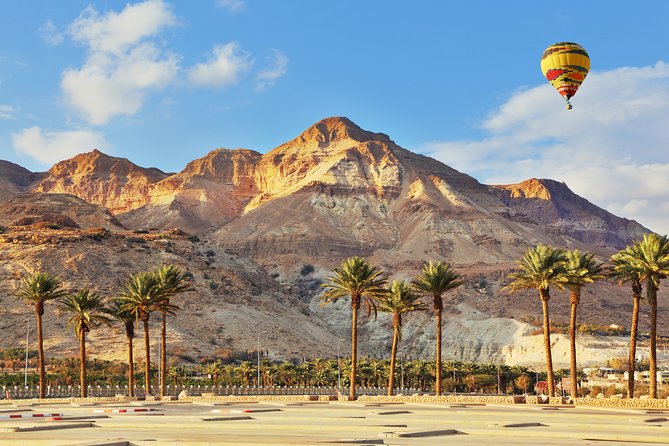
Once you’re on the road, pay attention to the scenery as you drop below sea level. Part of the fun here is the change in atmosphere, going from city life to dry wilderness. You’ll pass through an area associated with the Inn of the Good Samaritan, and you’ll also stop to look out across the desert as you pass the point marking sea level. It’s a small moment, but it helps you understand why the Dead Sea experience feels so different from everywhere else.
Practical tip: if you get carsick, ask for a window seat early. Also bring sunglasses and water, since the route moves through open, sun-heavy terrain.
Masada National Park by cable car: what you actually get time for
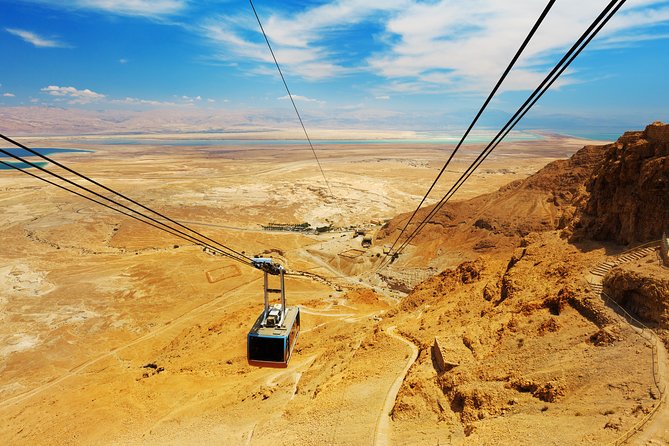
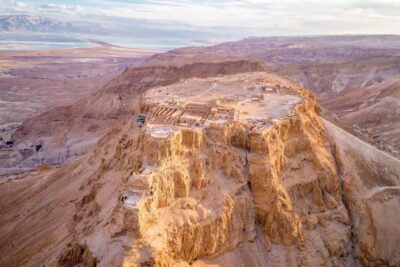
Masada is the headline, and this tour handles it in a smart way. You reach the shores of the Dead Sea encrusted with white salt, then follow the shoreline toward the fortress. Yes, you can climb the old Snake Path route that Romans used. But you do not. You take the cable car up to the top plateau, which is a huge help if the day is already warm.
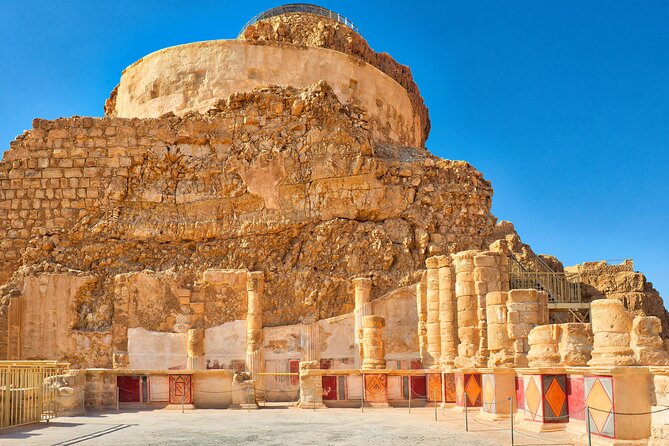
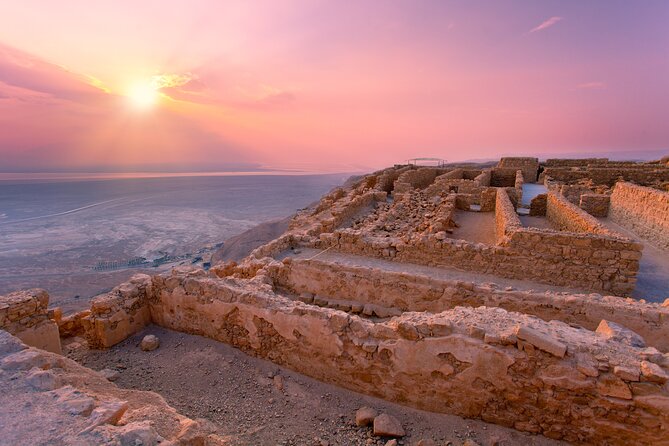
At Masada National Park, you get about 1 hour 30 minutes with the admission included. That timing matters. It gives you enough time to see the major remains and still take a breath, look outward, and get your photos without feeling like you are running laps. The key is using that time well:
- Walk at a steady pace, then pause often at viewpoints.
- Look for the fortress remains that show how the site worked as a defensive position.
- Let your guide connect what you see to the fortress story, since the ruins can look like “stones” unless someone gives you the map in your head.
Also, expect the top to be exposed. Even if the coach ride starts cool, once you’re up there, you’ll feel sun on your shoulders. A hat and sunscreen are not optional here. Comfortable walking shoes also matter because you’re on uneven ground.
Herodium (Herod’s Palace): a shortcut lesson in King Herod
After Masada, the tour makes a quick but worthwhile cultural stop at Herodium, also tied to Herod’s Palace. The schedule gives you about 1 hour, and the admission is listed as free.
This is the kind of stop that can get skipped on other itineraries, but it adds depth. Instead of only focusing on the fortress on a mountain top, you get a look at how Herod used architecture and fortification as a statement of power and comfort. The key idea is simple: you’re seeing a fortified palace complex with practical infrastructure.
From the tour description, you can expect references to things like:
- a swimming pool
- water cisterns for storage and reliability
- palaces and store rooms
- even a synagogue
It’s a quick hour, so don’t expect a long museum-style visit. Think of Herodium as a guided snapshot that helps you understand the mindset behind the bigger sites like Masada.
Masada and Ein Gedi, sunrise starts and the later ones


Qumran caves and the Dead Sea Scrolls: seeing the setting, not just the fact
On the way back, you’ll pass by Qumran, where the Dead Sea Scrolls were discovered in hillside caves. This is one of those moments where a simple “look there” can still land emotionally, because the story is so famous. The tour gives you a glimpse rather than extended time inside a specific site, which keeps the day moving.
What to do with your time here:
- Mentally connect the caves you imagine with the dry, quiet hillside environment.
- Listen for the guide’s explanation of why this location mattered for the scrolls.
- Use it as context while you’re on your way to the Dead Sea, since the region’s history and geography are braided together.
If you are the type who wants hours inside archaeological spaces, you might feel you are seeing Qumran mostly from the road. But for many people, that’s still the right trade-off. You are spending more time on Masada and the Dead Sea, which are the two experiences most people came for.
Ein Gedi and Jericho views: the biblical wilderness break
You also pass Ein Gedi, an oasis area described as lush with foliage and waterfalls, with the David hiding from King Saul connection. In the itinerary format you were given, it reads more like a pass-by sighting than a guaranteed long stop.
That means you’re not necessarily planning a full nature walk here. Still, it’s a welcome contrast to the surrounding desert. Ein Gedi is the kind of place where you can instantly understand why people wrote stories about it, because seeing greenery in this terrain feels out of place in the best way.
The overview also mentions Jericho. While the detailed schedule does not spell out a dedicated Jericho stop time, you can expect you may see Jericho from a distance at some point during the day. If Jericho is the one place you dream about, treat this as a bonus view, not the main event.
Dead Sea time: floating, mud bath, and how to not turn it into a mess

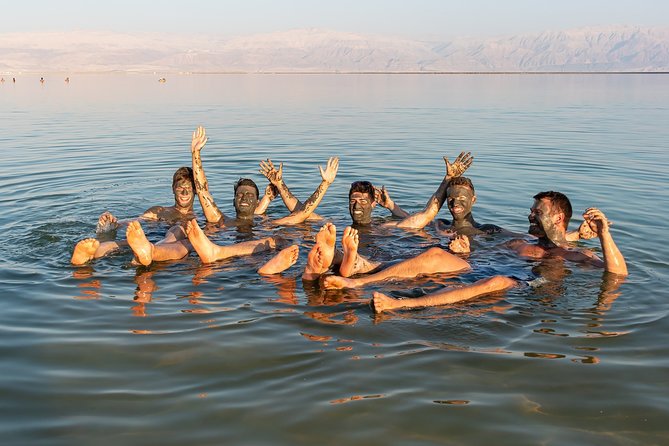
Now for the payoff. The tour ends with a stop at the Dead Sea, about 1 hour 30 minutes, with admission included. This is the lowest point on Earth, and the water is loaded with minerals and salt.
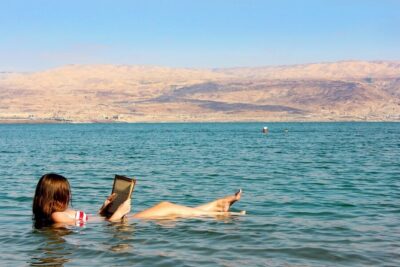
The good news: you do not need to be a strong swimmer. The high salt content helps you float. This is one of the rare travel experiences where the body is basically doing the work for you.
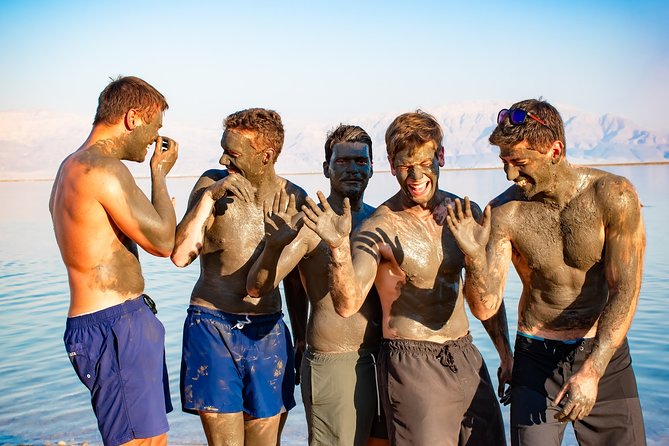
The other big part is the mud bath. The idea is that you try the mud treatment experience, then you go into the water. What makes this worthwhile is not “beauty treatment fantasy.” It’s that the Dead Sea feels like a physical science demo: thick mud, heavy water, and the weird buoyancy that makes you grin before you even try it.
A few reality-based tips:
- Bring a plan for rinsing. Saltwater and mud will cling, and you’ll want to wash off before you get back in the coach.
- Wear sandals or water shoes if you have them. The surface can be tricky.
- Do not assume cosmetics will be a bargain. One practical warning I’d take seriously from past experience on this route: avoid impulse buys of Dead Sea products, since the shop options can be pricey compared with what you may find back in Jerusalem.
Finally, remember the heat factor. Some people find the Dead Sea time a bit too short for how intense summer temperatures can be. If you’re visiting in peak hot weather, keep expectations flexible and focus on doing the floating and mud bath well, then getting out before you feel cooked.
Price and logistics: is $80 actually good value?
For $80 and about 9 hours total time, you are paying for convenience and curated time management. The biggest value items are hotel pickup and drop-off, a professional guide, an air-conditioned vehicle, the cable car up to Masada, and entrance fees for the stops that are listed as included.
What is not included is also clear: food and drinks and insurance. That means you should budget for a meal or snacks on your own. Since your time is limited at the Dead Sea and on the plateau, you do not want to spend your best energy hunting for lunch.
So here’s how I’d judge value:
- If you would otherwise spend money on transport and tickets just to get down there, this becomes a bargain.
- If you are trying to do it fully independently with multiple stops, the coach saves your time and reduces friction.
- If you want long, slow exploration at every site, this price might still be good, but the fixed schedule might feel tight.
Also worth knowing: the group maximum is 40 travelers. It’s not huge, but it is also not private. You’re going to follow the rhythm of your guide and the cable car flow.
The guide matters: what good guiding looks like here
Masada and the Dead Sea can feel “wow” on sight alone. But the difference between a good and a great day is the guide’s explanation and pacing. Based on past guide names associated with this route, you might meet people like Udi, Dan, Aviva, Juval, or Eric, along with a careful driver such as Mohammed who is described as safe.
What you want from your guide on this itinerary is simple:
- Clear context at Masada so the ruins make sense fast.
- Practical tips at the Dead Sea so you spend your limited time doing the mud bath and floating, not figuring out where to stand and what to rinse.
- Efficient storytelling during drive-by moments like Qumran and Ein Gedi, so you do not feel like you’re just staring out the window.
If you speak the tour’s language, listen closely in the first 20 minutes. That’s when your mental map gets built, and then you enjoy everything more.
Who should book this Masada and Dead Sea trip?
This is a strong match for you if:
- You want a one-day plan from Jerusalem that covers the headline sites without planning headaches.
- You like guided history, not just scenery.
- You can handle a day that moves at a steady pace.
It might not be the best fit if:
- You want long time at Qumran or Jericho. The schedule as given suggests glimpses and pass-by views, not extended exploration.
- You are extremely sensitive to heat and dislike tight windows. The Dead Sea stop is designed to be enough for the core experience, but it can feel short in intense weather.
In plain terms: this tour is built for people who want the highlights packed into one day, and who are okay with trade-offs like “quick look” over “hours inside.”
Should you book this trip?
If Masada and the Dead Sea are on your Jerusalem must-do list, I’d book this. The value math is straightforward because the cable car and entrance fees are included, and you get hotel pickup plus a guide who can turn ruins and salt into a real story. At $80, it’s also the kind of day where paying for someone else’s organization often beats spending your energy on logistics.
My only caution is time. You will not be doing this at a relaxed glacier-walk pace. Bring the right gear, plan for quick food decisions since food and drinks are not included, and focus on nailing the core experiences: Masada plateau, mud bath, then a proper float while you’re still fresh and not wiped out by the heat.
If you want a single day that hits the region’s biggest symbols, this is a good way to do it.
FAQ
What time does the tour start?
The tour start time is 7:15 am.
Where is the meeting point in Jerusalem?
The meeting point is the David Citadel Hotel on King David St 7, Jerusalem.
About how long is the trip?
It runs for approximately 9 hours.
What is included in the price?
Hotel pickup and drop-off, a professional guide, an air-conditioned vehicle, the cable car up to Masada, and included entrance fees.
Is the cable car to Masada included?
Yes. The tour includes the cable car up to Masada.
Will I have time to float in the Dead Sea and do a mud bath?
Yes. The Dead Sea stop includes time for the Dead Sea experience, including a mud bath and a dip, and the salt content helps you float even if you do not know how to swim.
Is food included?
No. Food and drinks are not included.
What should I bring?
Comfortable walking shoes, a hat, sunscreen, a bathing suit, and a towel are recommended.
What is the maximum group size?
The tour has a maximum of 40 travelers.
More Israel Tour Reviews
- From Jerusalem: Masada & Dead Sea Full Day Tour with Pick Up
★ 4.5 · 815 reviews - Masada and the Dead Sea Day Trip from Jerusalem
★ 4.5 · 757 reviews - From Jerusalem: Nazareth and Sea of Galilee Tour
★ 4.5 · 588 reviews - Nazareth and the Sea of Galilee Day Trip from Jerusalem
★ 4.5 · 446 reviews
Masada and Ein Gedi, Other Starts
- From Jerusalem: Masada & Dead Sea Full Day Tour with Pick Up
★ 4.5 · 815 reviews - Masada and the Dead Sea Day Trip from Jerusalem
★ 4.5 · 757 reviews - From Jerusalem: Masada&Dead Sea Tour INCLUDING ENTRANCE FEES
★ 4.3 · 392 reviews - Masada, Ein Gedi and The Dead Sea from Jerusalem
★ 4.0 · 267 reviews
More Days Down at the Dead Sea
- From Jerusalem: Masada & Dead Sea Full Day Tour with Pick Up
★ 4.5 · 815 reviews - Masada and the Dead Sea Day Trip from Jerusalem
★ 4.5 · 757 reviews - From Jerusalem: Masada&Dead Sea Tour INCLUDING ENTRANCE FEES
★ 4.3 · 392 reviews - Masada, Ein Gedi and The Dead Sea from Jerusalem
★ 4.0 · 267 reviews
Recently Added Israel Tour Reviews
- jerusalem classic tour★ 5.0 · 3 reviews
- Private Walking Tour in Jerusalem’s Old City★ 5.0 · 3 reviews
- Private Tour Bethlehem and the Dead Sea★ 5.0 · 3 reviews
- Jerusalem Temple Mount & Dome of the Rock★ 4.5 · 3 reviews
- Jerusalem and the Dead Sea★ 5.0 · 3 reviews
The Dead Sea, compared.
 ★ 4.5From Tel Aviv: Masada & Dead Sea Full Day Tour with Pick UpFrom $1171,496 reviews
 ★ 4.5Masada and the Dead Sea Day Trip from Tel AvivFrom $1201,014 reviews
 ★ 4.0Tel Aviv: Jerusalem, Bethlehem & Dead SeaFrom $109881 reviews
 ★ 4.5From Jerusalem: Masada & Dead Sea Full Day Tour with Pick UpFrom $111815 reviews
 ★ 4.5Masada and the Dead Sea Day Trip from JerusalemFrom $111757 reviews
 ★ 4.2From Tel Aviv: Masada, Ein Gedi & Dead Sea TourFrom $99705 reviews
 ★ 4.5Jerusalem and the Dead Sea from Tel AvivFrom $133444 reviews
 ★ 4.3From Jerusalem: Masada&Dead Sea Tour INCLUDING ENTRANCE FEESFrom $111392 reviews
Lists this tour appears in