
REVIEW · JERUSALEM CITY TOURS
Jerusalem and Bethlehem: In the Steps of Christianity Private Day Tour
Two cities, one day, and a lot of walking. What makes this tour special is the way it strings together key Christian sites in Jerusalem and Bethlehem in a clear, guided story. I like the private format for up to six people because you can set your own pace while still hitting the big stops. I also appreciate that entrance fees are included, so the day does not turn into a surprise-ticket scavenger hunt.
The only real drawback is the walking. You will be moving through steep slopes, stone courtyards, and crowded lanes in the Old City, so you need good shoes and a calm attitude toward tight spaces.
In This Review
- Key Things I’d Highlight Before You Go
- A Private Day That Follows Jesus, From Bethlehem to the Cross
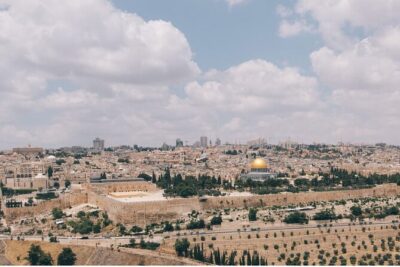
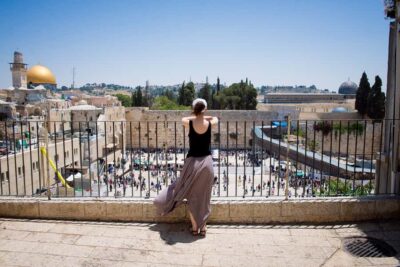
- Getting Oriented at Ha’as Promenade Before You Enter the Old City
- Bethlehem’s Birthplace Stop and the Shift in Atmosphere
- Mount of Olives: Where Views and Traditions Meet
- Mount Zion: Last Supper, Dormition, and King David’s Tomb
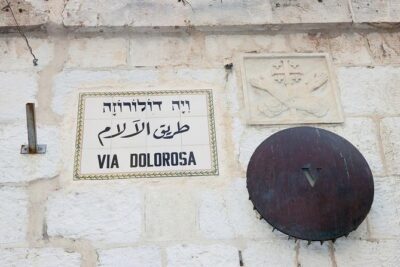
- Entering the Old City Through Lion’s Gate and Finding Via Dolorosa
- Church of the Holy Sepulchre: The World’s Most Important Christian Stop
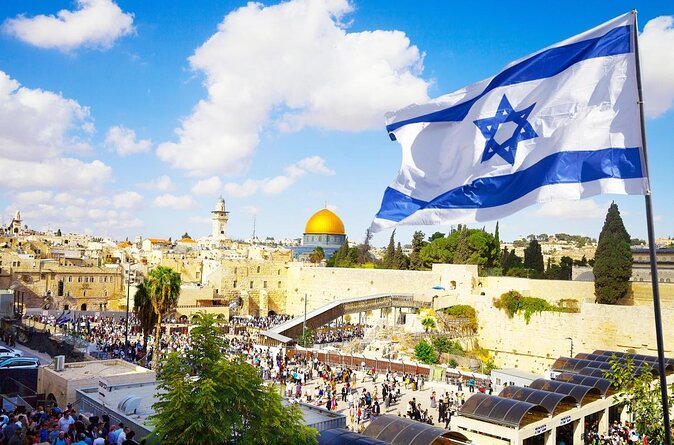
- Western Wall and the Jewish Quarter Walk: Respectful Crossroads
- Rooftop Ramparts: A Break From Crowds and a View of Four Quarters
- Cardo, Byzantine Jerusalem, and a Different Kind of Walk
- Arab Market Stroll: Local Sights, Sounds, and Smells
- Price and What You Actually Get for $1,600 Per Group
- The Day’s Practical Reality: Walking, Timing, and What to Pack
- Who This Tour Fits Best (And Who Might Want Something Different)
- Booking or Skipping: My Simple Recommendation
- FAQ
- How long is the Jerusalem and Bethlehem day tour?
- What is the tour price and group size?
- Is hotel pickup and drop-off included?
- What time does the tour start?
- Where does the day start?
- Are entrance fees included?
- Are food and drinks included?
- Is this a private tour?
- Is confirmation available after booking?
- What is the cancellation policy?
Key Things I’d Highlight Before You Go
- Hotel pickup and drop-off keeps the day simple and stress-free.
- Ha’as Promenade intro gets you oriented fast, with a wide-angle view that helps everything make sense later.
- Via Dolorosa and Holy Sepulchre are handled with a guide who can explain what you are seeing, not just name it.
- Old City rooftops and Cardo add variety beyond the ground-level crowds.
- Water and practical pacing help when the day runs long on your feet.
- Guides like Shachar and David Ringler bring solid explanations across religions, and they pay attention to details.
More of Jerusalem, beyond the Old City gates
A Private Day That Follows Jesus, From Bethlehem to the Cross
This is the kind of day trip that works best when you want structure. You are not just visiting famous churches. You are following a timeline, with stops chosen to match what the gospels describe, from birth to the final days in Jerusalem. If that is your thing, you will like how the route is built like a guided walk from one turning point to the next.
You also get a private group size of up to six. That matters. In a city like Jerusalem, where people pack into holy spaces, having a guide who can slow you down when you need a breather, and adjust when you hit bottlenecks, makes the experience feel smoother.
And yes, you will walk. There is no way to do these places without shoes that can take a beating. Still, the payoff is that you see more than the postcard version of religion. You see settings, views, and city geography that help the stories land in your mind.
Getting Oriented at Ha’as Promenade Before You Enter the Old City
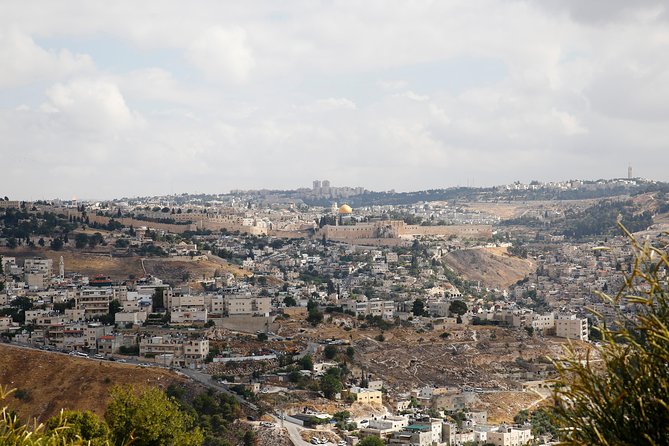
The day begins with pickup and then an intro at Ha’as Promenade, at the southern observation point. The tour mentions a wide-angle view that helps you cover 3,500 years in about 15 minutes. That sounds like a quick lecture, but it is really about getting your bearings.
When you first look out over Jerusalem, the city starts to feel less like a random collection of holy addresses and more like one connected place. Later, when you walk into the Old City and start moving between Mount of Olives, Mount Zion, and the holy sites inside the walls, the geography clicks.
One practical tip from the day-to-day reality: after the intro, you will be transitioning from viewpoints into street-level walking. Plan for a steady pace, and expect the temperature and light to shift as you move.
Bethlehem’s Birthplace Stop and the Shift in Atmosphere
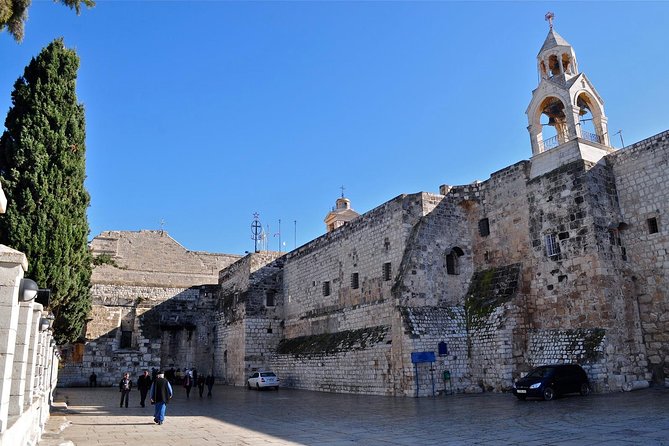
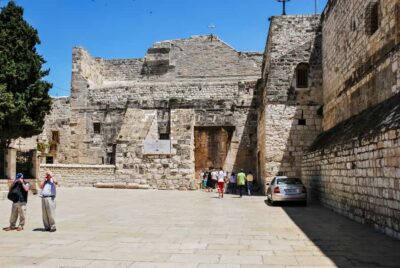
After Jerusalem, you head toward Bethlehem. The tour frames this as the birthplace of Jesus, and even if you have read about it before, it hits different when you are there and the day is still unfolding.
Bethlehem gives you a change of mood. You are leaving Jerusalem’s “city-of-views” feeling and moving into a place that is more intimate and mission-driven in how it’s experienced. A guide helps here, because the goal is not only to point at a site, but to explain why Christians connect this area to that early chapter of Jesus’ life.
Since your day is private, you can spend a bit more time where you care most. If you like quiet reflection, you can do that. If you prefer details and context, you will get it from the guide as well.
Other pilgrimage routes through Israel we have written up

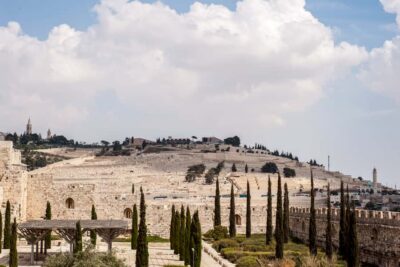
Mount of Olives: Where Views and Traditions Meet
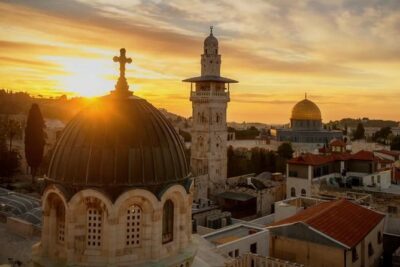
Next up is the Mount of Olives, described as a place both Jews and Christians connect to redemption and the Holy city. The tour also points to events in Jesus’ life connected to this area, including where he ascended into heaven, as described in the gospels.
What I love about this part is the combination of open air and meaning. From elevated ground, Jerusalem looks different. You can see why certain locations mattered in movement, visibility, and pilgrimage. Even if you already know the names, your eyes start doing extra work because the views help explain the logic of the stories.
Then you walk down toward the Churches of Dominus Flavit and the Gethsemane area. This is where history becomes physical. You are standing on a holy patch of land, but you are also walking a known path people follow for generations. If you want your faith sites to feel grounded in place, this stretch does that.
Mount Zion: Last Supper, Dormition, and King David’s Tomb
Mount Zion is another big swing in the route. You visit the Room of Last Supper, the Church of the Dormition, and King David’s Tomb.
These stops work well back-to-back because the tour keeps them moving within one broader theme: the final days and the post-crucifixion context in Christian tradition. And even if you are not memorizing every detail, you will sense that the area is treated as a cluster of meaning rather than separate attractions.
A good guide matters here. These sites can feel like a blur if you only rush. With a knowledgeable local guide, you get help sorting out what each place represents and how visitors historically understood the setting.
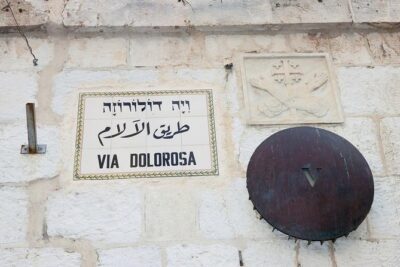
Entering the Old City Through Lion’s Gate and Finding Via Dolorosa
Once you reach the Old City, the tour enters through the Lion’s Gate. From there, you continue onto the Via Dolorosa, the road of agony leading to the Church of the Holy Sepulchre.
This is one of the busiest stretches of the day. So here is what makes this tour feel worth it: you are not left to self-navigate while trying to understand why these streets matter. You are walking with a guide who can connect the route to the overall story you are following.
There is also a useful sensory component. Old City streets shift constantly, and your guide’s commentary helps you notice what you otherwise might miss. You will pass ancient lanes, churches, and nooks that you would probably treat like background if you were rushing through alone.
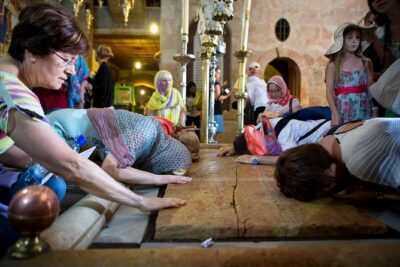
Church of the Holy Sepulchre: The World’s Most Important Christian Stop
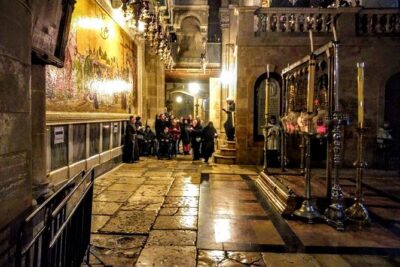
The Church of the Holy Sepulchre is described as the most important church in Jerusalem and maybe the world. Even if you are not trying to rank religious sites, the energy here is unmistakable.
This place can feel overwhelming on your own. With a guide, you get context and direction. You understand what you are looking at while you are standing in it, which changes the experience from checklist mode to meaning mode.
Take your time. If you feel rushed, stop and reset. This is the kind of stop where a calm moment does more for you than squeezing in one more photo.
Western Wall and the Jewish Quarter Walk: Respectful Crossroads
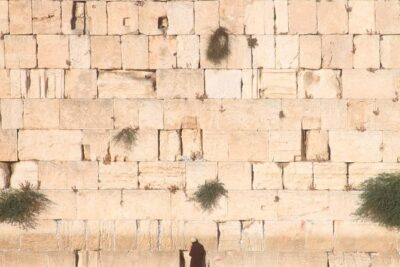
After Holy Sepulchre, the tour moves through the Old City’s Jewish Quarter toward the Western Wall, one of the holiest sites in Judaism.
This part is important for balance. The Christian story dominates the early half of the route, but the tour does not forget that Jerusalem is also a living Jewish city. Walking through the Jewish Quarter means you get a different rhythm than around the most central Christian churches.
A guide also helps with tone. You are moving through sacred space, so it is not the time to treat everything like a sightseeing bus stop. If you keep your posture respectful and quiet, the experience feels more real.
Rooftop Ramparts: A Break From Crowds and a View of Four Quarters
One of the most interesting additions is the rooftop ramparts tour. The tour describes it as using rooftops to see the four quarters of the Old City.
This is a smart pacing move. When the ground gets crowded, rooftops let you breathe. You see the Old City as a connected whole rather than separate neighborhoods you only walk through on foot.
If you like photography, rooftops will give you angles you simply cannot get at street level. If you do not, it still helps you understand how Jerusalem fits together above the noise.
Cardo, Byzantine Jerusalem, and a Different Kind of Walk
Next is the Cardo, described as the main thoroughfare of Byzantine Jerusalem. This stop changes the texture of your day. You shift from religious landmarks to the idea of a historic street that once carried daily life.
This matters because it widens the story. You are still on a faith route, but you are also seeing how old cities worked, how people moved, and how Jerusalem functioned beyond major churches.
If you tend to get “church fatigue” after a long sequence of sacred stops, the Cardo stretch can feel like a useful reset. It gives you a break from the constant religious architecture while keeping you in the same historical envelope.
Arab Market Stroll: Local Sights, Sounds, and Smells
Near the end, you stroll along the Arab market. The tour frames it as local food, music, and different smells.
This is the part of the day that feels like Jerusalem is more than a set of holy landmarks. You get to experience daily life and the sensory texture that makes the city memorable.
You should come with a mindset of casual browsing. Food is not included in the tour, so you will decide what you want to buy. Since the day is long, it helps if you already know what kind of snack you like, or you are ready to grab something small when hunger hits.
Price and What You Actually Get for $1,600 Per Group
At $1,600 per group for up to six people, this is not a budget tour. But it can be excellent value depending on how you travel.
Here is the math that matters: if you fill the group, your per-person cost drops a lot. You are paying for a private local driver and guide, hotel pickup and drop-off, and included entrance fees. You are also getting a planned route that reduces the mental overhead of figuring out transport between sites, dealing with entry timing, and assembling a coherent day.
For families or couples traveling with friends, private groups like this can be cheaper than you might expect, especially when you factor in entry fees that would otherwise be separate. For solo travelers, it may be pricier, because you are essentially buying the whole private service for yourself.
My advice: if you are traveling with at least two other people, this pricing often starts to look fair. If you are alone or a duo, compare the cost to the price of smaller guided options, and ask yourself if you truly want a full private day.
The Day’s Practical Reality: Walking, Timing, and What to Pack
This is an 8-hour day, starting at 8:00 am. That early start helps, because you are fitting multiple major locations into one day without rushing too violently.
From the real-life tips included with the experience, I’d plan like this:
- Wear comfortable shoes, because there is lots of walking and uneven stone.
- Bring a small snack. A pack of snack crackers is specifically suggested as an easy pocket solution.
- Expect water. The guide provides plenty of water, which is a lifesaver when you are moving for hours.
Also, remember that you are in religious sites where entrances, prayers, and crowds can affect how long you wait. A private guide helps you handle that without you standing around wondering what to do next.
Who This Tour Fits Best (And Who Might Want Something Different)
This tour fits you if you want a guided, faith-focused route that covers both Christianity and the Jewish heart of Jerusalem. It is also a strong choice if you like learning from a guide who can connect locations to meaning, and who keeps the day organized.
You will also like it if you travel as a small group. Up to six people means you can stay together and still feel like this day is yours.
Who might reconsider? If you hate walking, or you want a super relaxed day with long stops and minimal movement, this itinerary may feel too structured and active. The upside is that the private guide can tailor pacing to your comfort, but the core route is still a walking day.
Booking or Skipping: My Simple Recommendation
If your goal is to see Jerusalem and Bethlehem through a guided storyline, this private day tour is a strong bet. The combination of pickup, included entrance fees, and a guide like Shachar, with David Ringler as another example of a knowledgeable guide, is exactly what you want when you are trying to make sense of sacred places without feeling lost.
I would book it if:
- you are traveling with 3 to 6 people and want the group price to work for you
- you want help understanding what each place represents
- you prefer a structured route with flexibility on pace
I would hold off if:
- you are dealing with mobility issues that make long walking hard
- you want a mostly self-guided day where you can wander without an itinerary
FAQ
How long is the Jerusalem and Bethlehem day tour?
It runs for about 8 hours.
What is the tour price and group size?
It is $1,600 per group, with up to 6 people.
Is hotel pickup and drop-off included?
Yes. You get hotel pickup and drop-off.
What time does the tour start?
The start time is 8:00 am.
Where does the day start?
The tour includes an intro at Ha’as Promenade with the southern observation point wide-angle view.
Are entrance fees included?
Yes. Entrance fees are included, with no hidden tour costs.
Are food and drinks included?
No. Food and drinks are not included.
Is this a private tour?
Yes. It is private, and only your group participates.
Is confirmation available after booking?
Confirmation is received within 48 hours of booking, subject to availability.
What is the cancellation policy?
You can cancel for a full refund up to 24 hours in advance of the experience start time.
Bethlehem, Other Departures
- Jerusalem and Bethlehem Day Tour from Jerusalem
★ 4.5 · 258 reviews - Travel to Bethlehem Half Day Guided Tour from Jerusalem & TelAviv
★ 5.0 · 239 reviews - Ashdod Shore Excursion: Jerusalem and Bethlehem – for cruise ship guests only
★ 4.5 · 149 reviews - Travel From Jerusalem To Bethlehem and Dead Sea – Daily Group West Bank Tour
★ 5.0 · 129 reviews
Further Holy Land Itineraries
- Jerusalem Walking Tour: In the Footsteps of Jesus
★ 4.5 · 67 reviews - Full Day Private Christian Tour in Jerusalem with Tour Guide
★ 5.0 · 28 reviews - Full Day Jerusalem Tour: In Jesus’ Steps
★ 5.0 · 22 reviews - Christian Gems Around the Sea of Galilee from Jerusalem
★ 4.5 · 16 reviews
Jerusalem, Other Days Out
- Full Day City Tour of Jerusalem
★ 4.1 · 367 reviews - Old and New Jerusalem Full-Day Tour
★ 4.0 · 273 reviews - Jerusalem and Bethlehem Day Tour from Jerusalem
★ 4.5 · 258 reviews - Jerusalem Half-Day Sightseeing Tour
★ 3.9 · 177 reviews
Recently Added Israel Tour Reviews
- jerusalem classic tour★ 5.0 · 3 reviews
- Private Walking Tour in Jerusalem’s Old City★ 5.0 · 3 reviews
- Private Tour Bethlehem and the Dead Sea★ 5.0 · 3 reviews
- Jerusalem Temple Mount & Dome of the Rock★ 4.5 · 3 reviews
- Jerusalem and the Dead Sea★ 5.0 · 3 reviews
Jerusalem City Tours, compared.
 ★ 4.3From Tel Aviv: Jerusalem and Bethlehem Guided Day TripFrom $1181,316 reviews
 ★ 4.0Tel Aviv: Jerusalem, Bethlehem & Dead SeaFrom $109881 reviews
 ★ 4.5Day Tour to Jerusalem and Bethlehem from Tel AvivFrom $121720 reviews
 ★ 4.1Full Day City Tour of JerusalemFrom $75367 reviews
 ★ 4.5Old and New Jerusalem Day Trip from Tel AvivFrom $95296 reviews
 ★ 4.0Old and New Jerusalem Full-Day TourFrom $75273 reviews
 ★ 4.5Jerusalem and Bethlehem Day Tour from JerusalemFrom $106258 reviews
 ★ 3.9Jerusalem Half-Day Sightseeing TourFrom $50177 reviews
Lists this tour appears in