
REVIEW · JERUSALEM CITY TOURS
Israel Museum Must See High-Lights
One museum, four smart stops. This private Israel Museum highlights tour helps you move through a huge, artifact-filled place without wasting time, and it puts the Dead Sea Scrolls within reach. I especially like the private guided tour format because it turns the museum from a maze into a storyline, with your guide connecting what you see to Jewish tradition and biblical-era history.
One thing to plan around: the main Archaeological wing entry is not included, so your final cost may be a bit higher than you expect. The upside is front door pickup in Jerusalem, plus air conditioned transport, which makes a late afternoon museum visit feel easy.
In This Review
- What Makes This Israel Museum Tour Worth Your Time
- A Private Israel Museum Route That Keeps You From Getting Lost
- Stop 1: Second Temple Jerusalem Model, a 1 to 50 Scale Reality Check
- Stop 2: Shrine of the Book and the Dead Sea Scrolls You Can See Up Close
- Stop 3: Archaeological Wing, Where Biblical Narratives Get Context
- Stop 4: Jewish Culture and Life-Cycle Wing, Traditions That Continue
- Pickup, Timing, and How to Plan Your 2 to 4 Hour Window in Jerusalem
- Value for Money When You Split the Group Cost
- Who This Israel Museum Tour Suits Best
- Should You Book This Israel Museum Highlights Tour?
- FAQ
- How long is the Israel Museum highlights tour?
- Is this tour private, and how many people are in a group?
- Do you get pickup and drop off in Jerusalem?
- Which parts include admission tickets, and which do not?
- Where does the tour start, and where do you redeem tickets?
- When does this activity run?
- Is free cancellation available?
What Makes This Israel Museum Tour Worth Your Time
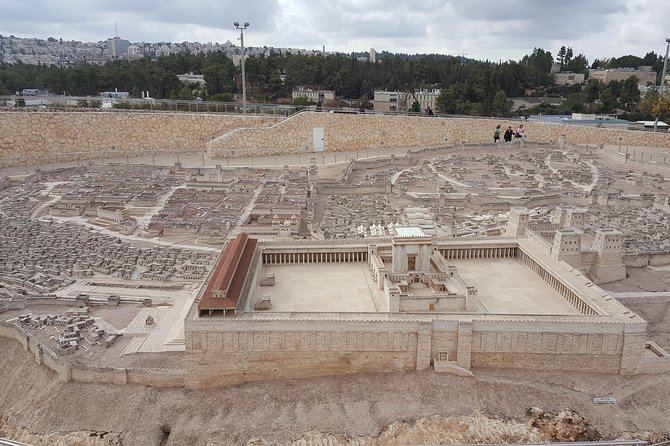
- Second Temple Jerusalem Model (1 to 50 scale): a fast way to understand ancient Jerusalem’s layout during the era of Jesus.
- Shrine of the Book focus: you get time at the Dead Sea Scrolls display, including a facsimile of Isaiah.
- Two museum areas, two different goals: archaeology for biblical context, then Jewish culture and life-cycle for lived tradition.
- Private group size up to 6: a calmer pace and room to ask questions without competing with a crowd.
- Pickup on request plus round-trip drop off: you avoid the hassle of figuring out logistics inside Jerusalem.
More of Jerusalem, beyond the Old City gates
A Private Israel Museum Route That Keeps You From Getting Lost
The Israel Museum in Jerusalem is not a quick, casual stop. It is sprawling, packed, and easy to feel like you are wandering even when you have a plan. This tour is built to solve that exact problem by sending you through a highlights path, not a random walk.
I like the way the experience is structured around understanding, not just sightseeing. You spend your time where the story is strongest, and your guide gives context across thousands of years of tradition and archaeology. That matters because the museum can show you objects in vitrines, but without connections those objects can blur together. With a guide, you leave with a clearer sense of how themes like scripture, settlement history, and Jewish practice link across time.
It is also a private setup, for only your group. With a maximum of six people, you get something that group bus tours often struggle to offer, a sense that your questions and interests can fit the flow of the day.
Stop 1: Second Temple Jerusalem Model, a 1 to 50 Scale Reality Check
Your first stop is the Second Temple Jerusalem Model, also known as the Holy-land Model. This is a 1 to 50 scale model of Jerusalem, designed to show the ancient city’s geography at the time of Jesus.
Why this stop works so well is simple: it helps you picture where things were, and how the city’s shape mattered. When you look at Jerusalem in map form, it is easy to treat biblical places like floating ideas. A physical model makes the geography feel real, so later exhibits in the museum connect more clearly to a place and not just a concept. Even if you have visited Jerusalem before, this kind of orientation can sharpen how you read the city.
You get about 45 minutes here, and admission is included. It is also a good early tempo-setter. You are not starting with dense scrolls or archaeology first. You start with the big picture, which makes the rest of the visit easier to follow.
Potential drawback: if you already feel very comfortable with Second Temple geography, you might wish for a longer look elsewhere. The model is important, but it is still only one stop in a highlights plan.
Stop 2: Shrine of the Book and the Dead Sea Scrolls You Can See Up Close
Next comes the Shrine of the Book, one of the Israel Museum’s headline reasons to visit. This is where the Dead Sea Scrolls are displayed, housed in a distinctive architectural setting.
What you are aiming to see here is not just the scrolls behind glass. The tour focuses on the story around the discovery, plus the material objects found in excavations, then the scrolls themselves. You are also shown that the scrolls include copies of biblical scripture that are described as about 2000 and 2200 years old, along with a facsimile of the entire book of Isaiah.
I like how this stop balances wonder with specifics. The Dead Sea Scrolls can feel like a single famous headline, but time spent on the discovery story, the surrounding artifacts, and the text itself gives you a better sense of what makes the documents historically powerful.
This stop runs about 45 minutes, and admission is included. If you only have a limited amount of time at the museum, this is the part you do not want to miss. It sets a high emotional and intellectual note before you move into the archaeology galleries.
One practical consideration: because this display is the centerpiece, you will want your guide’s context to help you read what you are looking at. A highlight route is the right approach here, since it keeps you from losing time to guesswork.
Israeli museums and collections we have reviewed

Stop 3: Archaeological Wing, Where Biblical Narratives Get Context
After you have the scrolls and the Second Temple geography in mind, you move into the Israel Museum’s Archaeological wing. This is where the tour leans into the long conversation between scripture, history, and what excavation can actually show.
The experience here is guided and narrative-led. You follow along a biblical storyline through archaeological findings, with the guide connecting the exhibits to the broader historical development of the region. The intent is not to replace scripture with archaeology, but to put biblical-era history into context using evidence from millennia-old artifacts.
You spend about 1 hour 30 minutes here. This is also the one stop where admission is not included. That is the main cost gotcha in the whole tour, so I suggest planning on paying for this portion separately.
Why this matters for your decision: if you are expecting the tour price to cover everything, you should know that the Archaeological wing entry is an extra step. If you are flexible and want the stronger historical context section, it is usually worth building that budget into your day.
Potential drawback: the time is fixed. If you love archaeology enough to want to linger in multiple galleries, a highlights plan might feel a little tight. The tradeoff is that you get coherence, not endless wandering.
Stop 4: Jewish Culture and Life-Cycle Wing, Traditions That Continue
The final museum segment is the Jewish Culture and Life-Cycle wing. This part is different in tone from the archaeological galleries. Instead of focusing on ancient artifacts and texts, you shift toward how Jewish communities have lived, celebrated, and marked time.
Here the tour addresses what Jews living in different continents have in common, using thousands of years of traditions through weekly, seasonal, and annual events. This is also connected to life-cycle moments, which helps you understand that culture is not only scripture and archaeology. It is practice, routine, and community rhythms that carry meaning across generations.
This stop is about 45 minutes, and admission is included. I like closing the tour this way because it changes the question from What happened in the past? to How did people live with these traditions? Once you have seen scrolls and historical context, this wing helps you see continuity.
Potential drawback: if you came only for the Dead Sea Scrolls and archaeology, you might feel this section is less dramatic. But if your interest is broader, this is often the most grounding part of the visit.
Pickup, Timing, and How to Plan Your 2 to 4 Hour Window in Jerusalem
This tour includes air conditioned vehicle transport, and pickup is offered. Hotel transfers are provided on request. The experience also includes front door pickup and drop off from any location in Jerusalem, which is a big deal in a city where getting from one place to another can eat into your museum energy.
The activity runs for about 2 to 4 hours. That range is helpful because museum time can stretch based on how fast you move and how much your guide answers. It is long enough to hit every highlight stop, but short enough that you still have time to keep your Jerusalem day flexible.
A specific timing detail you should note: the listed opening hours for the activity are Tuesday, from 4:00 PM to 9:00 PM. If your trip schedule is built around other days, you will need to align your plans with Tuesday availability.
You also have a defined ticket redemption point at Israel Museum/Ruppin, Jerusalem, Israel. The tour start is listed at חנויות המוזיאון71117, Jerusalem, Israel, and the activity ends back at the meeting point. If you like to map out your day in advance, these points help you get organized.
Value for Money When You Split the Group Cost
The price is $512.83 per group, up to 6 people. For a private guided museum visit in Jerusalem, that can be solid value when you split it among family or friends. The real question is not just the price tag. It is what you get that you would struggle to replicate on your own in the same time.
Here, you get several value drivers:
- A highlights route that prevents time loss in a large museum.
- Expert guidance that connects what you see to history and tradition across millennia.
- Included admissions for the Second Temple Jerusalem Model, the Shrine of the Book, and the Jewish Culture and Life-Cycle wing.
- Transport and pickup, which saves hassle.
Also, the guide matters. In accounts connected to this tour, Uri Goldflam comes up again and again for being warm, engaging, and deeply informed about Israeli history and culture. People describe him as proud of his Jewish heritage while also being deeply respectful of Christianity, and they say the group felt safe with him leading. That combination, history plus respect plus an easy speaking style, is exactly what you want for a museum where faith, archaeology, and identity often sit side by side.
The main value adjustment is that the Archaeological wing admission ticket is not included. If you plan for that extra entry from the start, the tour price becomes easier to judge as a package.
Who This Israel Museum Tour Suits Best
This is a great fit if you want to leave the Israel Museum with a coherent storyline. It is especially useful if you know you will feel overwhelmed by the scale of the museum and you prefer guidance that tells you where to go and what to pay attention to.
You might also like this tour if your group has mixed interests. One person might care about the Dead Sea Scrolls display. Another might care more about archaeology. Another might be looking for culture and tradition. The structure covers all three.
The tour also tends to work well for families. In the feedback tied to Uri Goldflam, people mention bringing teenagers and getting the content to land in a way that kept kids engaged.
Where it may not be the best choice: if you want a fully self-paced visit where you can spend long hours in any wing you choose, a highlights plan can feel structured. The tradeoff is that you get less wandering and more clarity.
Should You Book This Israel Museum Highlights Tour?
If you are short on time in Jerusalem and you want the Israel Museum to make sense, I would book it. The combination of private guidance, smart pacing through the biggest exhibits, and pickup from wherever you are in the city is exactly the sort of setup that turns a potentially exhausting museum into a satisfying learning experience.
You should also book if you care about how biblical-era history connects to what archaeology can show, because the Archaeological wing section is built for that narrative context. Just budget for the fact that the Archaeological wing admission is not included.
If you are comfortable paying separately for that wing and you want a guided, explained route through the museum, this tour is a strong choice. If not, you might prefer a self-guided approach.
And if plans change, the experience offers free cancellation up to 24 hours in advance for a full refund.
FAQ
How long is the Israel Museum highlights tour?
The tour runs about 2 to 4 hours.
Is this tour private, and how many people are in a group?
Yes, it is private. The group size is up to 6 people.
Do you get pickup and drop off in Jerusalem?
Pickup is offered, and front door pickup and drop off from any location in Jerusalem is included. Hotel transfers are available on request.
Which parts include admission tickets, and which do not?
Admission tickets are included for the Second Temple Jerusalem Model and the Shrine of the Book, and admission is included for the Jewish Culture and Life-Cycle wing. Admission is not included for the Archaeological wing.
Where does the tour start, and where do you redeem tickets?
The tour starts at חנויות המוזיאון71117, Jerusalem, Israel. The ticket redemption point is Israel Museum/Ruppin, Jerusalem, Israel.
When does this activity run?
The listed opening hours are Tuesdays from 4:00 PM to 9:00 PM.
Is free cancellation available?
Yes. Free cancellation is available, and you can cancel up to 24 hours in advance for a full refund.
More Israeli Museums
- Jerusalem Yad Vashem Holocaust History Museum Tour
★ 5.0 · 98 reviews
More Israel Tour Reviews
- From Jerusalem: Masada & Dead Sea Full Day Tour with Pick Up
★ 4.5 · 815 reviews - Masada and the Dead Sea Day Trip from Jerusalem
★ 4.5 · 757 reviews - From Jerusalem: Nazareth and Sea of Galilee Tour
★ 4.5 · 588 reviews - Nazareth and the Sea of Galilee Day Trip from Jerusalem
★ 4.5 · 446 reviews
Jerusalem, Other Days Out
- Full Day City Tour of Jerusalem
★ 4.1 · 367 reviews - Old and New Jerusalem Full-Day Tour
★ 4.0 · 273 reviews - Jerusalem and Bethlehem Day Tour from Jerusalem
★ 4.5 · 258 reviews - Jerusalem Half-Day Sightseeing Tour
★ 3.9 · 177 reviews
Recently Added Israel Tour Reviews
- jerusalem classic tour★ 5.0 · 3 reviews
- Private Walking Tour in Jerusalem’s Old City★ 5.0 · 3 reviews
- Private Tour Bethlehem and the Dead Sea★ 5.0 · 3 reviews
- Jerusalem Temple Mount & Dome of the Rock★ 4.5 · 3 reviews
- Jerusalem and the Dead Sea★ 5.0 · 3 reviews
Jerusalem City Tours, compared.
 ★ 4.3From Tel Aviv: Jerusalem and Bethlehem Guided Day TripFrom $1181,316 reviews
 ★ 4.0Tel Aviv: Jerusalem, Bethlehem & Dead SeaFrom $109881 reviews
 ★ 4.5Day Tour to Jerusalem and Bethlehem from Tel AvivFrom $121720 reviews
 ★ 4.1Full Day City Tour of JerusalemFrom $75367 reviews
 ★ 4.5Old and New Jerusalem Day Trip from Tel AvivFrom $95296 reviews
 ★ 4.0Old and New Jerusalem Full-Day TourFrom $75273 reviews
 ★ 4.5Jerusalem and Bethlehem Day Tour from JerusalemFrom $106258 reviews
 ★ 3.9Jerusalem Half-Day Sightseeing TourFrom $50177 reviews
Lists this tour appears in