
REVIEW · JERUSALEM CITY TOURS
Day Tour of Jerusalem and Bethlehem from Jerusalem
Jerusalem and Bethlehem in one day saves big time. You start up high for Mount Scopus views, then move straight into the Old City with a guide who helps you connect the dots across faiths and centuries. I like the mix of city panoramas and close-up walking stops, plus the practical flow that uses a coach to cut down on backtracking.
Two things I particularly like: you get real focus on major landmarks rather than quick photo stops, and the itinerary includes both the Western Wall and the Holy Sepulchre area so the story stays continuous. One watch-out: Bethlehem logistics can be slower than Jerusalem, and cave access at the Nativity site may be limited due to visitor numbers.
In This Review
- Key things to know before you go
- Jerusalem and Bethlehem in one day: what this tour does well
- Starting at Mount Scopus: skyline views and the Temple Mount angle
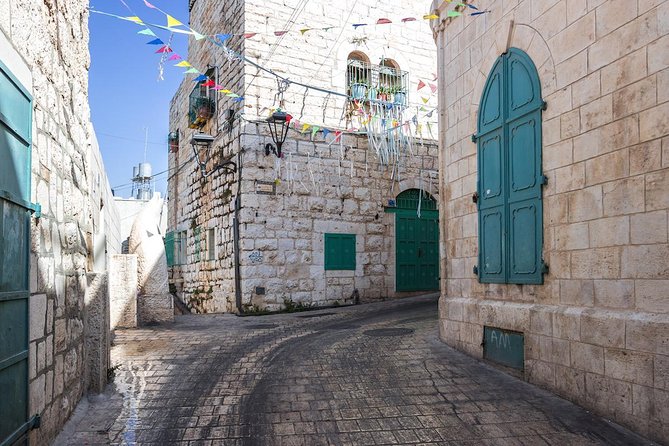
- Zion Gate, the Old City, and the lanes between faiths
- The Cardo and the quiet power of ancient Jerusalem streets
- Western Wall, prayer notes, and the emotional center of Judaism
- Via Dolorosa to the Holy Sepulchre: why timing matters
- Bethlehem transition: the move from Jerusalem’s streets to Christ’s birthplace
- Church of the Nativity and Manger Square: the oldest still in use
- Church of St. Catherine of Alexandria: the cave moment and carol time
- Comfort, timing, and what to bring for a smooth day
- The value question: is $80 fair for this itinerary?
- Who should book, and who might want a different option
- Should you book this Jerusalem and Bethlehem day tour?
- FAQ
- What is the duration of the Jerusalem and Bethlehem day tour?
- What time does the tour start, and do you pick up from hotels in Jerusalem?
- How much does the tour cost?
- What is included in the price?
- What tickets or delivery method do I receive?
- Do I need a passport for this tour?
- Is Bethlehem entrance guaranteed for the Nativity Cave?
- Is food or drink included?
- What is the maximum group size and the minimum age?
Key things to know before you go
- Old City entry and quarter hopping: You enter through Zion Gate and walk through the Armenian, Jewish, and Christian areas.
- Byzantine Cardo stop: You pause at the 1500-year-old Cardo for a sense of what ancient Jerusalem felt like.
- Kotel prayer moment: You stop at the Western Wall, with time to place a note between the stones.
- Via Dolorosa to the Holy Sepulchre: You move from the Way of the Cross route area into the crucifixion and burial-tomb complex.
- Church of the Nativity plus time on the ground: You start at Manger Square and then go inside the 4th-century church and grotto.
- Bethlehem cave access may be limited: Entry to the Nativity Cave can be restricted when crowds are heavy.
More of Jerusalem, beyond the Old City gates
Jerusalem and Bethlehem in one day: what this tour does well
If you only have a single day and you want the big spiritual hits, this tour is built for that. It connects Jerusalem and Bethlehem in one smooth push, using an air-conditioned vehicle to handle the transfers so you are not spending your day stuck in transit and rerouting.
The best part is the pacing philosophy. Instead of treating Jerusalem and Bethlehem like two separate checklist tours, the schedule keeps you moving through a storyline, from views and sacred sites up on the Mount of Olives side, down into the Old City lanes, then straight onward to Bethlehem. That structure helps you keep context, especially when you are seeing places that mean different things to different people.
Another value point is the inclusion of entrance fees. At $80 for a full day, that matters. Many tours advertise sightseeing, then add separate ticket costs for major sites. Here, entrance fees are included, so you can plan your budget without surprise line items.
Starting at Mount Scopus: skyline views and the Temple Mount angle
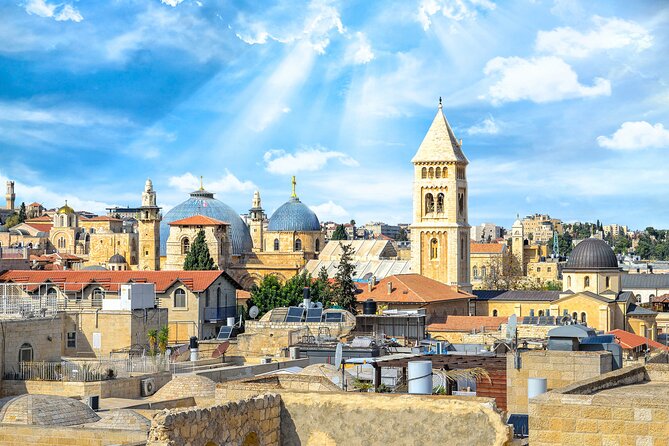
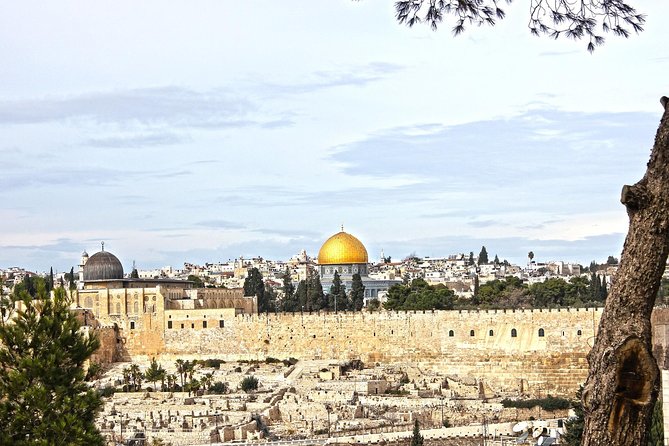
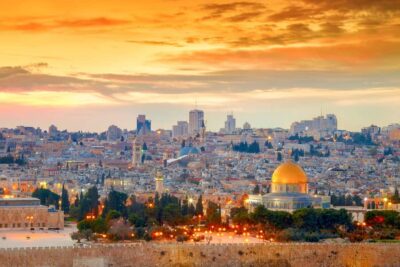
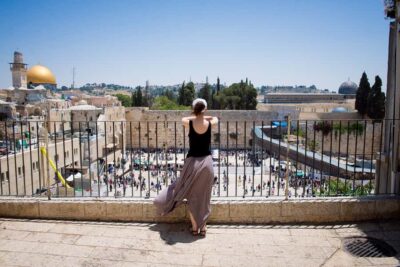
The day begins with a panoramic overview from Mount Scopus National Botanical Garden. Even if you think you know Jerusalem, a skyline view helps your brain lock in the geography. It is the kind of moment that makes the rest of the walking make more sense, because you can start placing neighborhoods, hills, and sacred sites in your mental map.
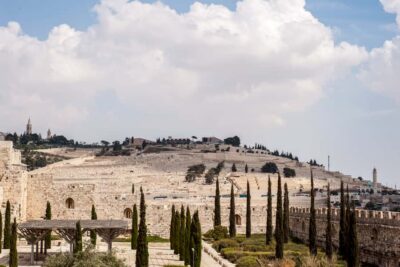
From there, the tour lines you up for the iconic look toward the Old City and the Temple Mount area. You get the chance to view the Dome of the Rock, described as golden and a great photo opportunity. Looking down also connects you to the depth of time in the region, including mention of a 3,000-year-old Jewish cemetery you can see from the overlook.
On the way, you also pass by key religious landmarks and valleys. You go by the Garden of Gethsemane, the Church of All Nations, and the Kidron Valley. These are often the places people imagine when they picture the Bible landscape. Since you are not expected to do long hikes here, the stops feel like guided orientation, not extra effort.
Practical tip: since it is a long day and you start early, I like treating the morning as your “energy bank.” Use that first segment to soak in the views and photos quickly, then save your stamina for the Old City walking later.
Zion Gate, the Old City, and the lanes between faiths
Next comes the heart of the day: entering the Old City via the Zion Gate. You get a good chunk of time here, about two hours, which is enough to feel like you are actually in the maze instead of rushing through it like a drive-by.
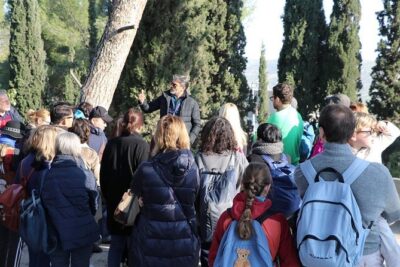
The tour then guides you past major quarters, including the Armenian Quarter. You also get a structured route that hits the Jewish and Christian areas as the day unfolds. This is where a good guide can make all the difference, because the Old City can feel confusing if you are just looking at walls and street signs. A guide helps you understand what you are seeing, and why those neighborhoods developed where they did.
You will also pass by the lively bazaar areas in the Christian Quarter section, so you get a sense of everyday life alongside the sacred stops. That matters because Jerusalem is not only a museum of holy places. It is still a working city.
A possible consideration here: Old City walking is real walking, with uneven surfaces and tight spaces. The tour gives you time blocks, but you should still plan for a lot of feet on day-one streets.
Bethlehem, compared across operators



The Cardo and the quiet power of ancient Jerusalem streets

One of the most satisfying pauses in the schedule is the stop at the Cardo, specifically the 1500-year-old Byzantine Cardo. This is a chance to see what a major city street looked like at a turning point in Jerusalem’s long story.
It is easy to get fixated on the famous holy sites and forget that daily life happened on streets too. The Cardo stop helps you remember that. You get a compact moment that adds texture, especially if you like history that feels physical under your feet.
The time here is brief, about 30 minutes. I like that, because it does not drag, and it stays connected to the larger walk. Think of it as a “grounding stop” that resets your attention before you move on to the most crowded devotional zones.
Western Wall, prayer notes, and the emotional center of Judaism
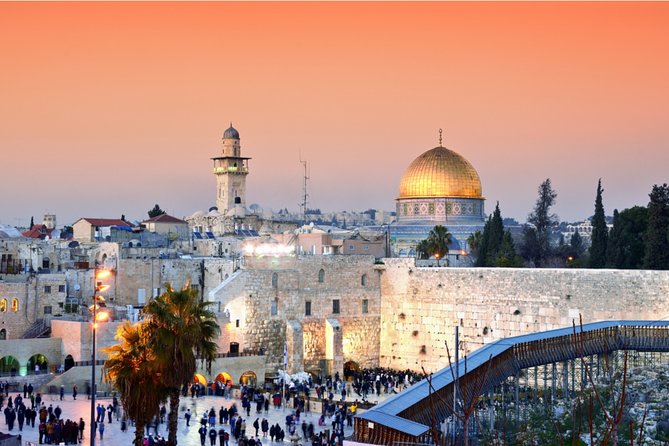
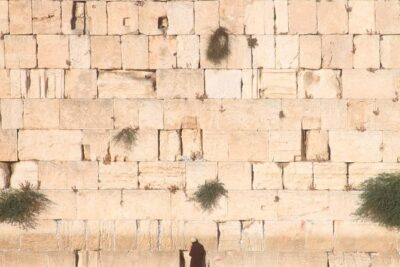
Then you move to the Western Wall, also called the Kotel. The schedule includes a stop with about 20 minutes, which is just enough time to pause, observe, and decide how you want to take part.
The Western Wall is described as where Jews have prayed since the destruction of the Temple in 70 CE, and the tour notes King Herod’s role in building the supporting wall that enclosed the Temple Mount area. That context matters because it turns the stones into a timeline, not just a photo backdrop.
You also get time where you can join others from around the world and place a prayer note between the stones. It is a simple, meaningful action that many people enjoy because it gives them a way to participate without needing special instructions.
If you are the type who likes rituals, this is one of the most rewarding moments on the schedule. If you are more hands-on than contemplative, the shared space and steady flow of visitors can still feel powerful, even if you keep it observational.
Via Dolorosa to the Holy Sepulchre: why timing matters
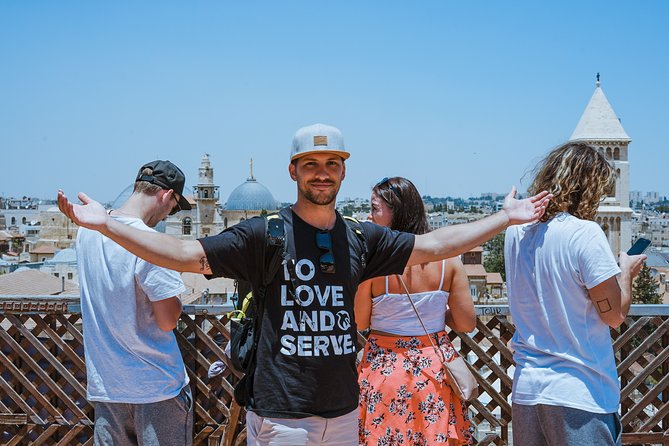
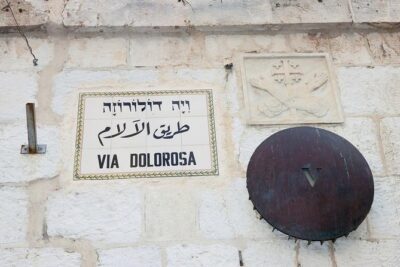
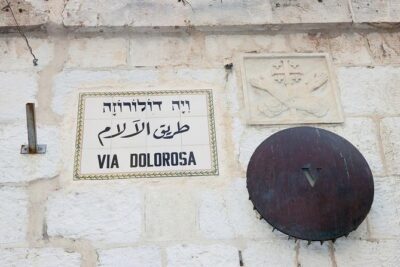
After the Western Wall, you head into the area known for the Way of the Cross, or Via Dolorosa, and then into the Church of the Holy Sepulchre complex.
The schedule includes about 30 minutes for the Via Dolorosa segment, described as part of the Way of the Cross route leading to the Church of the Holy Sepulcher area. Then you have another about 30 minutes for the Church of the Holy Sepulchre.
Here is the key practical reality: these sites are often crowded. Even with scheduled time blocks, you can end up moving slower in tight sections. So I treat this part as a “presence” section, not a “see everything” section.
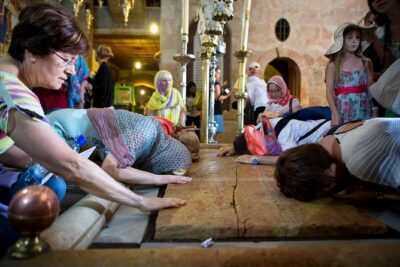
What you will likely focus on is what the tour specifically frames: the Church of the Holy Sepulchre is described as built on the site of Jesus’ crucifixion and burial tomb. That is the core theme, and it is what makes this stop more than architecture. It is one of the most important anchors in Christian tradition.
You also pass by the Muslim Quarter and the bazaar between these stops, which helps break up the intensity of the devotional zones and gives you visual variety.
Bethlehem transition: the move from Jerusalem’s streets to Christ’s birthplace
Later, you continue to Bethlehem, arriving for about two hours in Bethlehem itself. The tour frames Bethlehem as the city of Christ’s birth and also mentions it as the city of Jesse and King David’s father.
This is a meaningful shift. In Jerusalem, you are moving through places tied to multiple faiths and long historical layers. In Bethlehem, the emphasis becomes more concentrated. That change in focus is exactly why it is worth doing both cities in one day, even if the day feels full.
One important consideration: visiting Bethlehem is subject to Palestinian authority regulations. The tour notes that a change of vehicle may be required for entry into Palestinian Authority territory. That does not mean the day will derail, but it does mean you should expect some added process and be patient if there are pauses.
You will also be required to have a valid passport on the day of travel.
Church of the Nativity and Manger Square: the oldest still in use
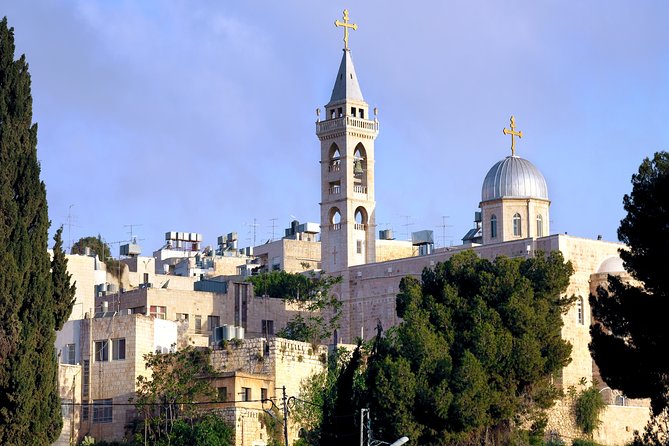
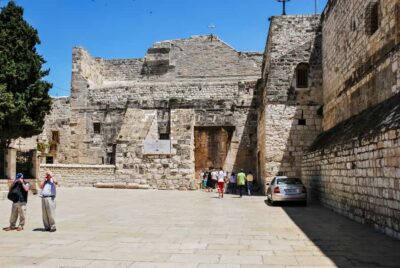
At Bethlehem, you start at Manger Square and then enter the Church of the Nativity, described as a 4th-century church and the oldest church in Israel still in use. The schedule gives about 40 minutes here, which is a solid chunk of time for a site that can feel packed and echoey and intense all at once.
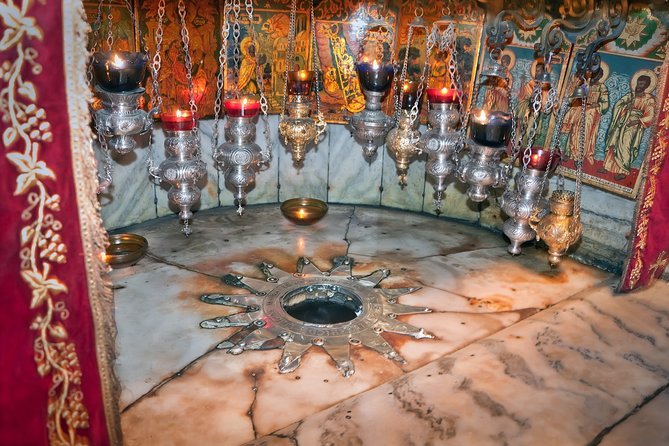
Under the church, you go to the Grotto of the Nativity. The tour notes that a star indicates the place where Jesus was born. This is one of those details that helps you orient in a space that can otherwise blur together. Having a clear reference point makes your visit feel grounded.
One warning from the tour info that I think you should take seriously: due to the high number of visitors, entrance to the Nativity Cave may be limited. If that happens on your day, you will still get the core church experience, but your time in the lower grotto may be restricted. Plan mentally for a visit that can vary slightly based on crowd control.
Church of St. Catherine of Alexandria: the cave moment and carol time
The tour’s Bethlehem section can include a visit to the Church of St. Catherine of Alexandria, if possible. When you go there, you are also taken down into a two-room cave that connects with the Grotto of the Nativity.
The schedule specifically describes it as a good moment to take a breath and sing Christmas carols. Even if your voice is more of a polite whisper than a choir note, this part can be memorable because it is brief and human. It turns the visit from sightseeing into something like a shared pause.
Time here is about 20 minutes, so it stays manageable in an already full day.
Comfort, timing, and what to bring for a smooth day
A day tour like this can feel like it is nonstop, and in fairness, it pretty much is. Still, the structure helps. You get vehicle time between clusters of walking, and the stops include time estimates that keep you from getting stuck too long in any one spot.
Since food and drinks are not included, you will want to think ahead about snacks and hydration on your own. You can also help yourself by wearing shoes that handle uneven, crowded stone and street surfaces.
Also, bring your passport. The tour explicitly says passports are compulsory, and that Bethlehem entry depends on passport validity.
Group size is capped at a maximum of 40 travelers. That is not a tiny group, but it is manageable enough that you typically can stay together and still have a guide who can keep you oriented.
The value question: is $80 fair for this itinerary?
For $80, this tour packs in a lot: hotel pickup in Jerusalem, an air-conditioned vehicle, a professional guide, included entrance fees, and a full-day arc from Mount Scopus viewpoints through the Old City to Bethlehem’s most major Christian sites.
The value is strongest if you are the kind of traveler who wants to avoid ticket chasing and route planning. When entrance fees are included and transportation is handled, you can spend your energy on the sites themselves.
I also like the fact that the tour leans into the key monuments rather than trying to squeeze in dozens of lesser-known stops. If you have only one day, depth matters more than volume.
One more note on guiding: one name that stood out in positive feedback was Ammy, praised for being both fun and knowledgeable and for keeping things on time. You cannot guarantee every group gets the same guide, but you can use that as a signal of what good guiding looks like on this type of route.
Who should book, and who might want a different option
This tour makes the most sense if:
- You want a first-timer friendly Jerusalem and Bethlehem day without complicated logistics.
- You prefer a guided route that connects sites across Judaism and Christianity.
- You want to see the Western Wall, Via Dolorosa area, and Holy Sepulchre without trying to organize it yourself.
- You are okay with a full schedule and real walking in the Old City.
It may not be ideal if:
- You hate crowds and want long quiet time in holy sites.
- You need more flexibility to linger on your own, because the schedule is structured.
- You are sensitive to possible slowdowns around Bethlehem entry or Nativity Cave access limits.
Still, even with those trade-offs, this tour is built for people who value efficiency and clear guidance over wandering.
Should you book this Jerusalem and Bethlehem day tour?
Yes, if you want one organized day that connects the big Jerusalem highlights with Bethlehem’s core Christian landmarks, this tour is a strong choice. The price is reasonable for a full-day itinerary with hotel pickup, transport, a professional guide, and included entrance fees.
Book it if you are traveling with limited time and you want your visit to feel cohesive, not like two half days that never quite connect. Just go in with the right mindset for crowding and the possibility of Bethlehem cave access limits.
If you want, tell me your travel dates and whether you are visiting with kids, and I can help you plan what to focus on first once you arrive in each city.
FAQ
What is the duration of the Jerusalem and Bethlehem day tour?
The tour runs for approximately 9 hours.
What time does the tour start, and do you pick up from hotels in Jerusalem?
The meeting time is 7:50 am, and hotel pickup in Jerusalem is included at 08:30 AM.
How much does the tour cost?
The price is listed as $80.
What is included in the price?
Included are hotel pickup and drop-off in Jerusalem, a professional guide, an air-conditioned vehicle, and entrance fees.
What tickets or delivery method do I receive?
The tour uses a mobile ticket.
Do I need a passport for this tour?
Yes. Passports are compulsory, and a valid passport is required on the day of travel for the Bethlehem visit.
Is Bethlehem entrance guaranteed for the Nativity Cave?
No. Due to high visitor numbers, entrance to the Nativity Cave may be limited.
Is food or drink included?
No. Food and drinks are not included.
What is the maximum group size and the minimum age?
The tour has a maximum of 40 travelers, and the minimum starting age is 4 years old.
More Israel Tour Reviews
- From Jerusalem: Masada & Dead Sea Full Day Tour with Pick Up
★ 4.5 · 815 reviews - Masada and the Dead Sea Day Trip from Jerusalem
★ 4.5 · 757 reviews - From Jerusalem: Nazareth and Sea of Galilee Tour
★ 4.5 · 588 reviews - Nazareth and the Sea of Galilee Day Trip from Jerusalem
★ 4.5 · 446 reviews
Bethlehem, Other Departures
- Jerusalem and Bethlehem Day Tour from Jerusalem
★ 4.5 · 258 reviews - Travel to Bethlehem Half Day Guided Tour from Jerusalem & TelAviv
★ 5.0 · 239 reviews - Ashdod Shore Excursion: Jerusalem and Bethlehem – for cruise ship guests only
★ 4.5 · 149 reviews - Travel From Jerusalem To Bethlehem and Dead Sea – Daily Group West Bank Tour
★ 5.0 · 129 reviews
Jerusalem, Other Days Out
- Full Day City Tour of Jerusalem
★ 4.1 · 367 reviews - Old and New Jerusalem Full-Day Tour
★ 4.0 · 273 reviews - Jerusalem and Bethlehem Day Tour from Jerusalem
★ 4.5 · 258 reviews - Jerusalem Half-Day Sightseeing Tour
★ 3.9 · 177 reviews
Recently Added Israel Tour Reviews
- jerusalem classic tour★ 5.0 · 3 reviews
- Private Walking Tour in Jerusalem’s Old City★ 5.0 · 3 reviews
- Private Tour Bethlehem and the Dead Sea★ 5.0 · 3 reviews
- Jerusalem Temple Mount & Dome of the Rock★ 4.5 · 3 reviews
- Jerusalem and the Dead Sea★ 5.0 · 3 reviews
Jerusalem City Tours, compared.
 ★ 4.3From Tel Aviv: Jerusalem and Bethlehem Guided Day TripFrom $1181,316 reviews
 ★ 4.0Tel Aviv: Jerusalem, Bethlehem & Dead SeaFrom $109881 reviews
 ★ 4.5Day Tour to Jerusalem and Bethlehem from Tel AvivFrom $121720 reviews
 ★ 4.1Full Day City Tour of JerusalemFrom $75367 reviews
 ★ 4.5Old and New Jerusalem Day Trip from Tel AvivFrom $95296 reviews
 ★ 4.0Old and New Jerusalem Full-Day TourFrom $75273 reviews
 ★ 4.5Jerusalem and Bethlehem Day Tour from JerusalemFrom $106258 reviews
 ★ 3.9Jerusalem Half-Day Sightseeing TourFrom $50177 reviews
Lists this tour appears in