
REVIEW · CAESAREA, ACRE & ROSH HANIKRA
Private tour: Caesarea, Haifa, and Mt. Carmel
If you want ancient ports and holy-site scenery in one long day, this route fits. It strings together Caesarea, Haifa, and Mt. Carmel with a private guide who can shift the pace to your group. You start in Tel Aviv and spend the day moving from Roman monuments to UNESCO gardens, then up to a monastery with big mountain views.
Two things I especially like about this tour are the personalized itinerary and the guide’s strong archaeology focus. The private format also matters here, because it lets you ask questions and spend more time where your group cares most, not where a big bus schedule forces you.
One possible drawback is that entrance fees and lunch are not included, and most sites require paid entry. Also, the stops include holy sites and religious spaces, so plan for modest clothing and some walking over uneven ground.
In This Review
- Key highlights worth your attention
- Why this private coastline day works so well
- Caesarea National Park: Roman theater, Herod’s coast, and the harbor story
- Stop 2: Harbor area plus the newly opened museum
- Getting the most from Haifa’s Bahai Gardens (and saving on tickets)
- Timing note: 40 minutes goes fast
- Daliat El Carmel weekend market: where food and local pace meet
- Mt. Carmel and Muhraqa Monastery: Jezreel Valley views with a faith anchor
- Plan for a respectful, slower pace inside
- Optional add-ons: Megiddo and Akko if you want more northern depth
- Price and value: $475 per group for up to 15, with a key catch
- Who this tour suits best
- Practical tips before you go
- FAQ
- FAQ
- How long is the Caesarea, Haifa, and Mt. Carmel private tour?
- What is included in the price?
- Are entrance fees included?
- Is lunch included?
- Where do we meet, and when does it start?
- Is this tour only for my group?
- What should we wear for this tour?
- Should you book this tour?
Key highlights worth your attention
- Private, customizable pacing across Caesarea, Haifa, and Mt. Carmel, so the day feels tailored instead of rushed
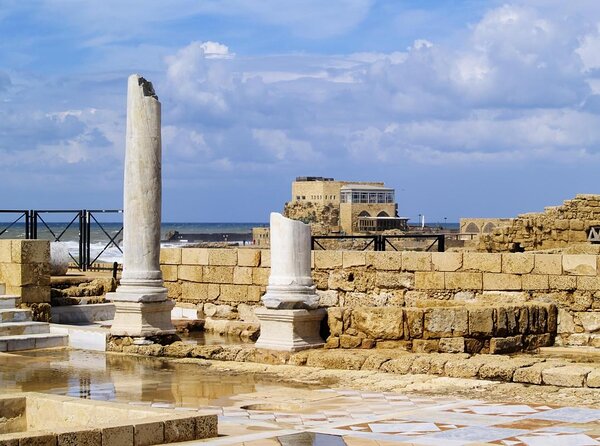
- Caesarea National Park’s Roman theater, harbor, and palace viewpoints, with lots of visual payoff from the coast
- Bahai Gardens in Haifa are free to enter, saving money for a UNESCO World Heritage highlight
- Daliat El Carmel weekend market stop for Druze village atmosphere and traditional food options
- Muhraqa Monastery on Mt. Carmel, tied to the Elijah story, plus a chance to look over Jezreel Valley
- PhD-level historical context from your guide, which turns the sites from photos into a real timeline
The northern coast: Caesarea, Acre and Rosh Hanikra
Why this private coastline day works so well
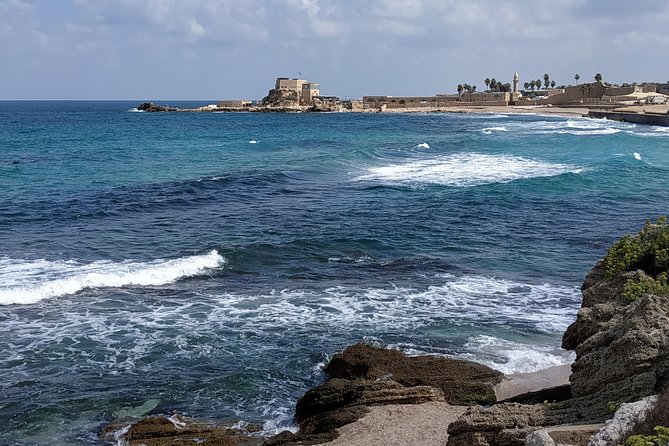
This is the kind of itinerary that makes sense if you like variety, but you do not want to sacrifice meaning. You are not just collecting landmarks. You move through a Roman coastal city, then a modern city horizon dominated by faith and terraces, then up to a ridge tied to biblical tradition.
Because it is a private group tour (up to 15 people), you get flexibility in how long you linger at each stop. If your group loves architecture, you can give more time to Caesarea’s major structures. If your group prefers viewpoints and religion, the plan can lean toward Haifa’s gardens and Mt. Carmel.
You also get options if you want to extend the scope. The tour can include add-ons like Megiddo (an archaeological site) and Akko (an ancient city). That is valuable if you are already thinking, one day in the north is not enough.
The main logistics point: guiding is included, but entrance fees are not, and private transportation is listed as not included. That means you should confirm exactly how you will travel between stops on the day, since pickup is offered but you still may have to cover some transportation elements depending on your booking setup.
Caesarea National Park: Roman theater, Herod’s coast, and the harbor story
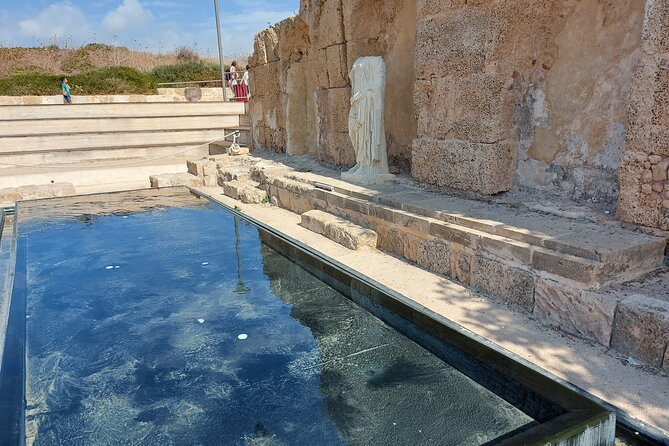
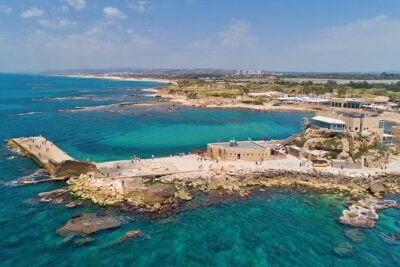
Caesarea is the anchor of the day, and it is built for people who enjoy both ruins and views. The plan includes a drive of about 40 minutes north from Tel Aviv, then roughly two hours to explore the Roman-era core of Caesarea National Park.
The big ticket item is the Roman theater, and how your guide frames it. You are not just seeing seating and stones. You learn how the theater fit into a functioning Roman port city, where politics, power, and public life blended in stone and spectacle.
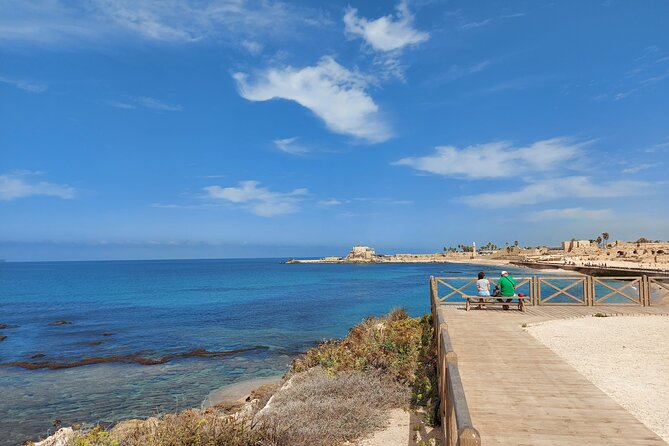
Next comes Herod’s coastal palace viewpoints. Even if you are not a “ruins person,” the coast angle helps. You get perspective on why this location mattered, because you can actually see the Mediterranean setting that made Caesarea more than a random archaeological stop.
Then you shift to the hippodrome. It is a different flavor of ancient structure than the theater, and it helps you understand what “Roman city life” meant beyond ceremonies and architecture. Think horse races and public entertainment, not just monuments.
Finally, the visit ends at the ancient port area. That finish is smart, because it ties the story together. A port city is where goods, people, and influence met. When you can stand in the area where ships came and went, the ruins feel like they belong to a working world rather than a museum display.
Stop 2: Harbor area plus the newly opened museum
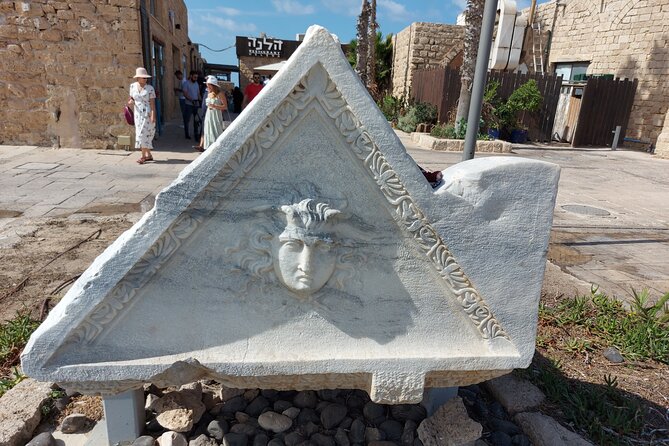
The itinerary also includes a second segment at the same park, about 30 minutes, focused on the ancient harbor and the newly opened museum. This is the part that often helps people when they want a clearer explanation.
If your group includes teens or adults who hate vague site tours, the museum time can give you something concrete: context you can carry back to what you just saw outside. The tradeoff is time. This stop is short, so if you want a slower, deeper museum session, you may want to ask your guide if there is any flexibility.
Admission tickets are not included for these Caesarea segments, so plan to pay on-site or as required during the visit. You will save money later if you already know what your group needs for entry, since the tour price covers guiding but not entry fees.
Haifa and the Carmel ridge, compared
Getting the most from Haifa’s Bahai Gardens (and saving on tickets)
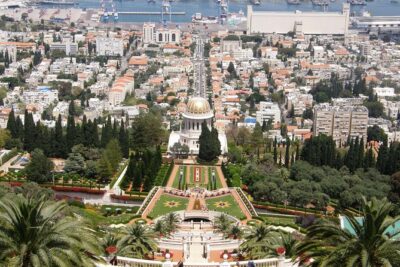
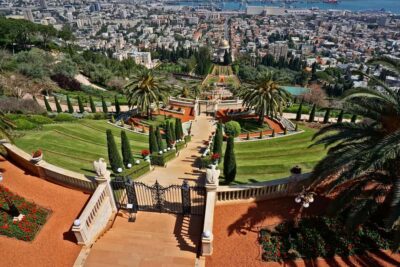
After Caesarea, you head to Haifa to visit the Bahai Gardens, a UNESCO World Heritage site. The stop is about 40 minutes, and the best part for your budget is that admission ticket is free.
This matters because Haifa is often a “viewpoint day” for many visitors, and you end up paying for one more thing. Here, the biggest cost is just your time and your comfort walking around terraces.
The gardens are also the kind of place where a good guide changes your experience. With a strong historical lens, you can connect what you are seeing to how the Bahai faith organizes community space, gardens, and sacred geography. Even if you are not religious, the way the site is arranged can feel like a lesson in intentional design.
Timing note: 40 minutes goes fast
Forty minutes sounds long, but terraces and stair angles add up quickly. If your group includes older adults, start early in the visit so you can see the key garden viewpoints without rushing. If your group includes kids, this is one of the stops where you can point out “how it is built” rather than only “what it means.”
Daliat El Carmel weekend market: where food and local pace meet
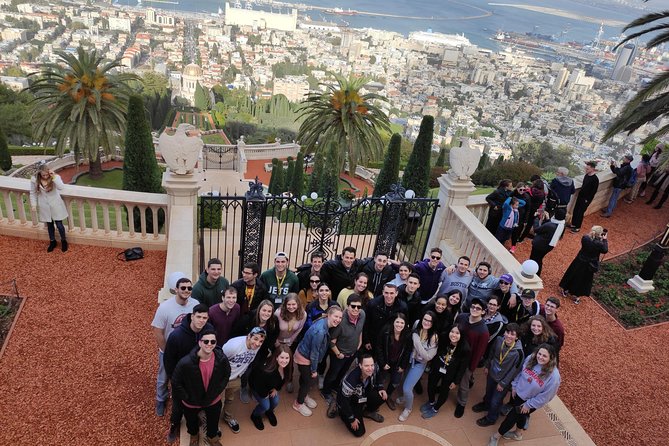
You then head to Daliat El Carmel Weekend Market for about one hour, paired with eating traditional Middle Eastern cuisine in a Druze village setting.
This is the palate cleanser after Roman stone and religious terraces. Markets do not automatically mean tourist traps, but you have to stay present. The time window here is short, so it helps to go in with a plan: pick a couple of bites, then sit for a moment and let the atmosphere do its job.
Because this stop sits between major sights, it is also your best chance to manage energy. Use it to reset, hydrate, and grab snacks for the ride up to Mt. Carmel. If you like local food that is simple and meant for sharing, this is the place to do it without turning your day into a strict meal schedule.
No admission fee is listed for this segment, but entrance is not the same as cost. You will still spend money on whatever you eat. The upside is that the market stop is where you can actually slow the pace without calling it sightseeing.
Mt. Carmel and Muhraqa Monastery: Jezreel Valley views with a faith anchor
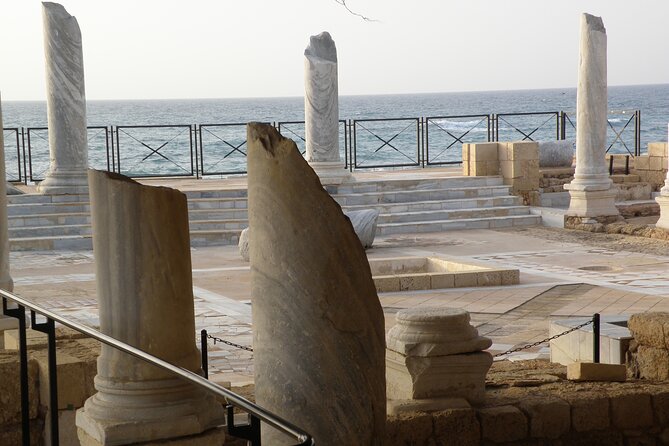
The final major stop is on Mt. Carmel, with a viewpoint over Jezreel Valley and a visit to the Discalced Carmelite Order Muhraqa Monastery. You get about one hour total.
The viewpoint component is useful even if you have seen lots of Mediterranean scenery. Jezreel Valley is big. From the ridge, it is easier to understand why the Bible connected this region to stories, journeys, and survival. Mountains are not just “pretty backgrounds,” they are part of how people moved and where they built.
Then you visit the monastery tied to the Elijah tradition. This matters because it is not just a photo stop. It is a place with religious meaning, so the tour includes a reminder to dress modestly for holy sites.
Plan for a respectful, slower pace inside
Even if you are not religious, treat the monastery portion as a quiet transition. The timing is short, so keep your questions focused, listen, and avoid rushing your group. If you have older family members or anyone who gets tired on walks, this is still doable because the itinerary only assigns about one hour here.
Entrance fees are listed as not included, so budget for on-site costs where applicable.
Optional add-ons: Megiddo and Akko if you want more northern depth
This tour can be customized with optional sites such as Megiddo and Akko. This is a big deal if you already know you want more than one theme.
- Megiddo can appeal if you love archaeology and layered ancient civilizations.
- Akko can appeal if you want an older city feel, more street life, and a different vibe than Caesarea’s Roman focus.
The downside of add-ons is obvious: a day stretches. Adding one or both options can compress the time at your original must-sees. If you are unsure, I suggest picking one add-on only, and using the private setup to keep the rest of the day paced.
Price and value: $475 per group for up to 15, with a key catch
The price is $475 per group, up to 15 people, for 8 to 9 hours. That structure can feel great value if you are traveling as a family group, or if you have several people who want a guided day rather than splitting into multiple tours.
What makes it “value,” though, is not only the number. It is the guide format. This is not a scripted bus day. It is private guiding, and the guide’s education and passion for archaeology can add a lot of meaning to sites that otherwise feel like scattered ruins.
Now the catch: entrance fees and lunch are not included, and private transportation is not included. So your real total depends on how much your group pays for entry and food.
If you are the type who hates surprise costs, do a quick plan before you go:
- Figure out which sites in your schedule require tickets and how your group will pay.
- Decide what lunch style you want, sit-down or market-style.
- Confirm transport details so you do not end up paying twice for travel between stops.
If you do that math, this tour can be a very efficient way to see three high-impact areas without losing half your day to logistics.
Who this tour suits best
This is a strong fit for mixed-age groups. One of the best things about the setup is that it works across wide ages, including kids and older adults, because the guiding is structured and the focus stays on understanding, not just reciting facts.
It is also a great match for anyone who wants historical context without feeling talked down to. If your group likes questions, you will probably get a lot out of a guide who can explain how ruins connect to big political and cultural shifts.
If you only want quick sightseeing photos, it may feel more than you asked for. This tour gives you depth and interpretation, especially at Caesarea, so you will get best value if your group is willing to slow down and listen for a while.
Practical tips before you go
A few things will make the day run smoother.
First, wear comfortable shoes. You will be walking through ancient sites, including areas with uneven ground. Even if the route is well paced, Roman parks and monastery areas are not flat sidewalks.
Second, bring a layer. You are in the Mediterranean region, and weather can shift as you move from sea level to the mountain ridge.
Third, plan your modest clothing. Holy sites are part of the plan, so you will be glad you packed something that covers appropriately.
Fourth, eat smarter in the market stop. You have about an hour there, so do not treat it like a long sit-down lunch unless your group is okay with sacrificing time at later stops.
FAQ
FAQ
How long is the Caesarea, Haifa, and Mt. Carmel private tour?
It runs about 8 to 9 hours.
What is included in the price?
Guiding is included. Pickup is offered, and you’ll receive a mobile ticket.
Are entrance fees included?
No. Entrance fees are not included for the tour. The Bahai Gardens admission is listed as free, but other stops note admission tickets not included.
Is lunch included?
No, lunch is not included.
Where do we meet, and when does it start?
The start is at Tel Aviv Savidor Train Station at 8:00 am. The tour ends back at the meeting point.
Is this tour only for my group?
Yes. It is a private tour/activity, so only your group participates.
What should we wear for this tour?
Dress in modest clothing for visiting holy sites.
Should you book this tour?
If your priority is a guided, meaningful day across Caesarea, Haifa, and Mt. Carmel, I think this booking makes sense. The private format, the flexible pacing, and the strong archaeology focus are exactly what turn these sites into more than a checklist.
Book it if you value explanation, enjoy history at a human pace, and want to keep control of how long you spend at each stop. It is also a solid choice if you are traveling with a group of mixed ages.
Skip or reconsider if you want a quick photo sprint, if you hate paying on-site for entry fees, or if you do not want any religious-site etiquette. In that case, you might prefer a more generic sightseeing plan.
If you do book, I suggest you confirm transport expectations and decide in advance whether you want optional stops like Megiddo or Akko, so the day stays comfortable rather than rushed.
More Israel Tour Reviews
- From Tel Aviv: Masada & Dead Sea Full Day Tour with Pick Up
★ 4.5 · 1,496 reviews - From Tel Aviv: Jerusalem and Bethlehem Guided Day Trip
★ 4.3 · 1,316 reviews - Masada and the Dead Sea Day Trip from Tel Aviv
★ 4.5 · 1,014 reviews - Tel Aviv: Jerusalem, Bethlehem & Dead Sea
★ 4.0 · 881 reviews
Haifa and Mount Carmel, Continued
- From Tel Aviv: Caesarea, Haifa and Akko Day Trip
★ 4.4 · 744 reviews - Unforgettable Tour to Caesarea, Haifa, Acre and Rosh HaNikra from Tel Aviv
★ 4.0 · 56 reviews - Tel Aviv/Jerusalem: Caesarea, Haifa & Akko Day Tour
★ 4.5 · 53 reviews - Caesarea, Haifa And Akko Tour
★ 4.0 · 36 reviews
Further Along the Northern Coast
- From Tel Aviv: Caesarea, Haifa and Akko Day Trip
★ 4.4 · 744 reviews - Caesarea, Rosh Hanikra and Acre Day Trip from Tel Aviv
★ 4.5 · 406 reviews - Walking Tour of Akko (Half-day)
★ 5.0 · 84 reviews - Unforgettable Tour to Caesarea, Haifa, Acre and Rosh HaNikra from Tel Aviv
★ 4.0 · 56 reviews
Recently Added Israel Tour Reviews
- private Full-day Tour to Jericho + the Dead Sea★ 5.0 · 3 reviews
- Package VIP Skip Line Services in BGN Airport with Transfer to Tel aviv Hotels★ 5.0 · 3 reviews
- Food & Drink Private Guided Tour in Tel Aviv★ 5.0 · 3 reviews
- Tel Aviv Like a Local: Customized Guided Tour by Lokafy★ 5.0 · 3 reviews
- Private Tour from Tel Aviv to Jerusalem★ 5.0 · 3 reviews
Caesarea, Acre & Rosh Hanikra, compared.
 ★ 4.4From Tel Aviv: Caesarea, Haifa and Akko Day TripFrom $120744 reviews
 ★ 4.5Caesarea, Rosh Hanikra and Acre Day Trip from Tel AvivFrom $120406 reviews
 ★ 4.3Caesarea, Haifa & Akko Day Trip from JerusalemFrom $10596 reviews
 ★ 5.0Walking Tour of Akko (Half-day)From $32184 reviews
 ★ 4.0Caesarea, Acre & Rosh Hanikra Day Trip from JerusalemFrom $13978 reviews
 ★ 4.0Unforgettable Tour to Caesarea, Haifa, Acre and Rosh HaNikra from Tel AvivFrom $15556 reviews
 ★ 4.5Tel Aviv/Jerusalem: Caesarea, Haifa & Akko Day TourFrom $9953 reviews
 ★ 4.0Caesarea, Haifa And Akko TourFrom $9936 reviews
Lists this tour appears in