
REVIEW · JERUSALEM OLD CITY
Jerusalem Old City Private Tour, from Tel Aviv
A single day in Jerusalem can feel huge. This Tel Aviv private tour strings together Mount Scopus views, the Old City quarters, and the big faith sites like the Western Wall and the Church of the Holy Sepulcher.
I love the built-in context before you start walking, especially the viewpoint stops around Mount Scopus and the Mount of Olives area. I also love how the route connects Jewish, Muslim, and Christian Quarters in one logical loop. The main catch is simple: it is a long day with real Old City walking on uneven ground, so if anyone in your group has limited mobility, you will want to be honest about pace.
In This Review
- Key things that make this tour worth your time
- A Day Plan That Actually Gets You Oriented
- From Tel Aviv to Jerusalem, and Why the Drive Matters
- Mount Scopus Views First, Then the Mount of Olives Story
- Western Wall, Broad Wall, and a Temple-Era Twist
- Via Dolorosa: Stations of the Cross, With Time to See
- Jewish Quarter Walking: Cardo, Roof Lines, and Big-Place Views
- Muslim Quarter Bazaar Time That Does Not Feel Like a Detour
- Christian Quarter and the Church of the Holy Sepulcher
- Old City Restaurant Lunch, What It Means for Your Day
- Political Jerusalem: Knesset and Government Landmarks From the Road
- Price and Value, Especially for a Group of Up to Four
- About the Guide, and Why the Human Part Shows Up
- What to Expect Physically, and How to Prepare
- Who This Tour Fits Best
- Should You Book It?
- FAQ
- How long is the Jerusalem Old City tour?
- Does the tour include hotel pickup and drop-off in Tel Aviv?
- What is the price for this tour?
- Is this a private tour for my group?
- What’s included, and what’s not included?
- What are you visiting inside the Old City?
Key things that make this tour worth your time
- Hotel pickup and drop-off in Tel Aviv makes the day feel effortless from the start.
- Mount Scopus and Mount of Olives context before the Old City helps the sights click faster.
- Western Wall plus Broad Wall ties together First Temple era history with today’s devotion.
- Via Dolorosa route planning covers the Stations of the Cross without you trying to map it on your own.
- Old City quarters walking plus bazaar time means you see both sacred sites and everyday street life.
- Stops include political Jerusalem (Knesset and more), so the day is not only religious landmarks.
Inside the walls: other Old City routes we have reviewed
A Day Plan That Actually Gets You Oriented
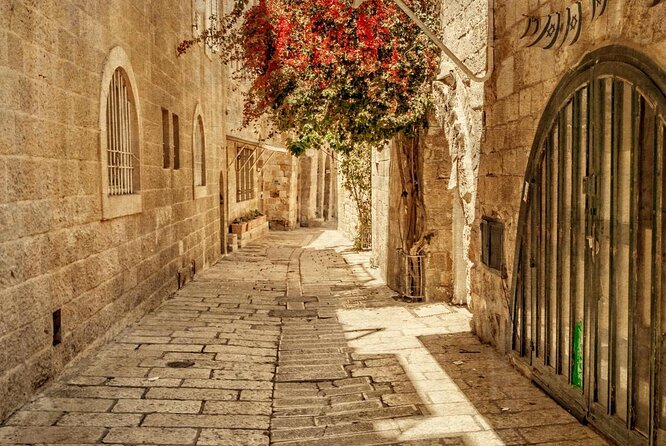
Jerusalem can overwhelm fast. Even if you have guidebooks, the Old City is a maze, and each corner looks like it belongs to a different century. This tour works because it gives you a clear, guided route from Tel Aviv, then builds understanding step-by-step as you move closer to the Old City core.
The strongest part is the sequencing. You start with major viewpoint stops outside the walls. Then you descend into the Old City and move through the Jewish, Muslim, and Christian Quarters in a way that helps you connect what you are seeing, not just check off names. That makes it easier to remember later, when the streets blur together.
Also, you are not stuck guessing logistics. You meet the group and guide in Jerusalem, follow a timed plan, and finish back at your Tel Aviv hotel. For a one-day visit, that is real value.
From Tel Aviv to Jerusalem, and Why the Drive Matters
This is a full-day outing, about 9 hours on the clock, starting at 9:00 am. You get hotel pickup and drop-off in Tel Aviv, and you ride to Jerusalem by private car with a driver. The structure matters because it saves you from the hardest part of a day trip, which is coordinating transport, timing, and entry into the Old City.
On the practical side, the tour uses a mobile ticket. That is helpful if you do not want paper confirmations or phone-photo printouts. And since it is a private tour/activity with only your group participating, you are not sharing your day with strangers who move at a totally different pace.
One more reason the drive is worth mentioning: Jerusalem traffic and entry timing can shift. Having a driver who does this route regularly can reduce stress, even if it never completely removes the day’s unpredictability.
Mount Scopus Views First, Then the Mount of Olives Story
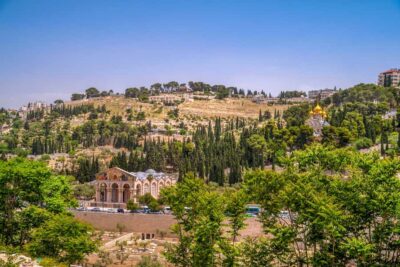
Before you hit the Old City streets, you get two key viewpoint beats. The day begins with a stop at Mount Scopus for sweeping views toward the Judea Desert. After that, you continue to the Mount of Olives area to understand why Jerusalem is central to the world’s three major monotheistic faith traditions.
This is not just scenic sightseeing. It is orientation. From high ground, you start to understand the city’s layout and why certain areas became focal points. When you later descend into the Old City, it feels less like wandering and more like moving through a map that finally makes sense.
It also helps explain how different communities shaped the city over time. On my kind of trip, I love any guide who can explain the why behind the location, not just the what. Here, the emphasis is on context, so the later stops feel connected instead of random.
More Israeli cities, walked end to end


Western Wall, Broad Wall, and a Temple-Era Twist
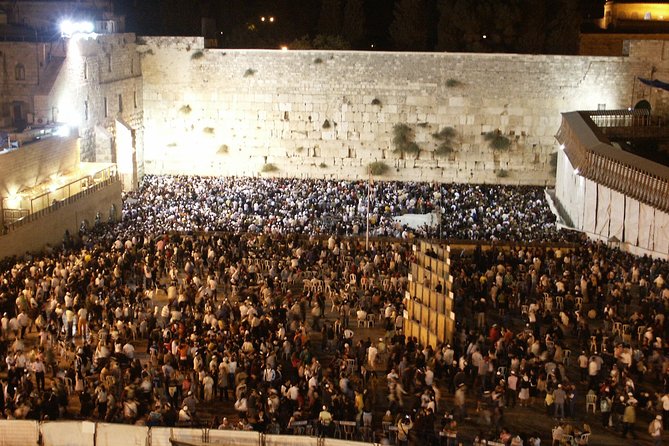
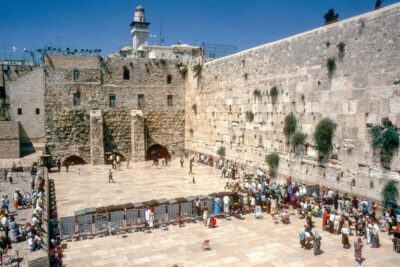
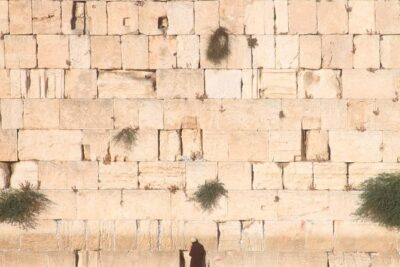
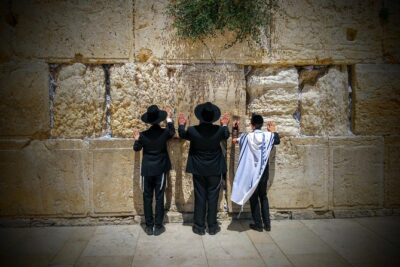
Once you get into the Old City, the first major stop is the Western Wall. The tour frames it as the last remaining section of Herodian-era walkways tied to the First Temple period. That detail matters because it anchors the site in a longer story, not only present-day devotion.
You also get the chance to see how visitors engage with the Wall. The tour includes the tradition of leaving folded prayers between the stones. Even if you are not part of the practice, it helps you notice how the Wall operates as a living place, not a museum prop.
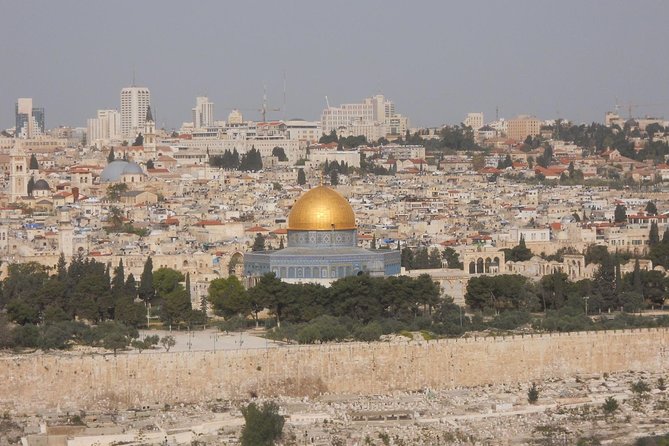
Right after that, you have a brief look at the Dome of the Rock. Importantly, the plan is to view it from outside and not enter. For many people, that works well. You get the visual impact and the symbolism without losing time on an entrance you may not even need.
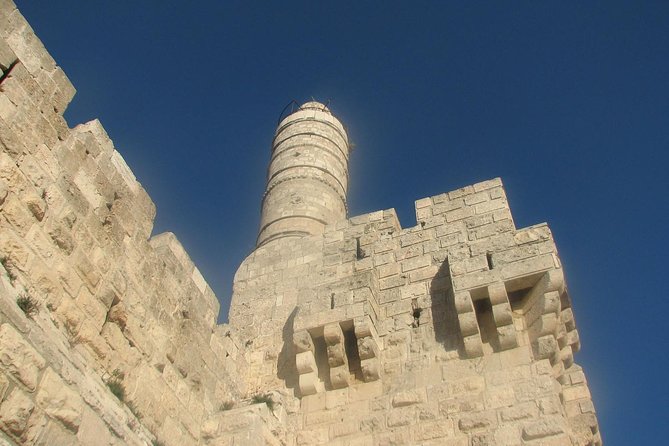
Then you hit another standout: the Broad Wall. The tour connects it to the walking structure of the old city dating back to the first Temple period. In plain terms, this is where the day starts to feel layered. You are moving from today’s prayers to stonework that points back to major ancient eras.
Expect it to be a mix of quick stops and short walks. That can feel intense, but it keeps momentum and avoids the trap of spending the entire day in one tiny spot.
Via Dolorosa: Stations of the Cross, With Time to See
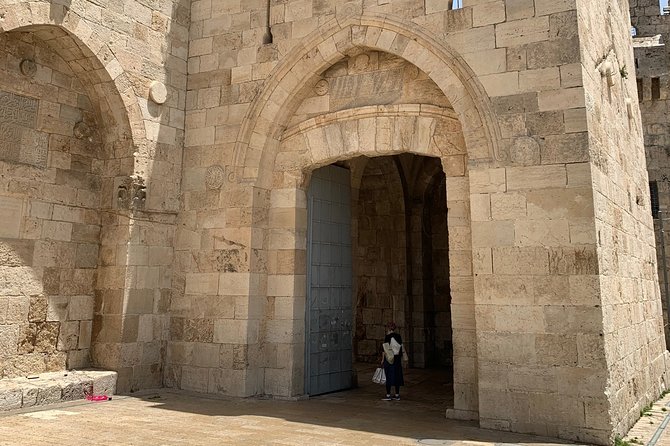
Next comes the Way of the Cross, also known as the Via Dolorosa. The tour description focuses on the final walk associated with the story from Golgotha, and it includes time for the Stations of the Cross along the route.
In practical terms, this is where pacing becomes important. The Via Dolorosa is crowded at times, and the lanes are narrow. The good news is that the tour keeps the timing structured. You get set durations at stops, so you are not stuck trying to decide when to push forward.
You also visit the Christian Quarter later with more time, including part of the Via Dolorosa and the Church of the Holy Sepulcher. That makes Via Dolorosa more than a single photo stop. It becomes a corridor that you experience as a real route through the quarter, not just a line on a map.
Jewish Quarter Walking: Cardo, Roof Lines, and Big-Place Views
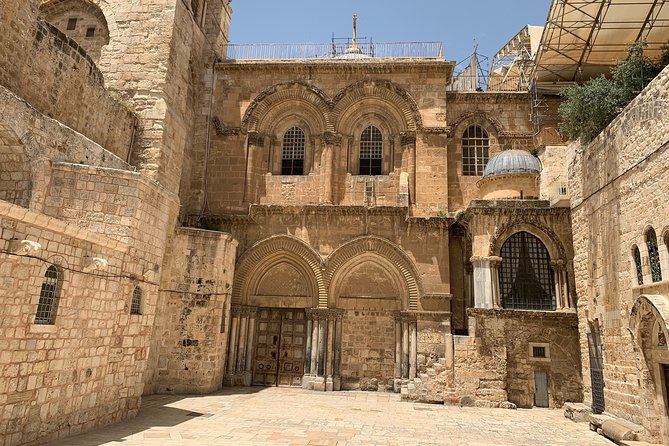
The itinerary then moves you into the Jewish Quarter. This part is built for walking and visual cues. You see the Byzantine Cardo, the Broad Wall, and roof lines that make the quarter feel packed with layers. You also get views connected back toward the Western Wall area.
The Byzantine Cardo is a great example of why guided walking is better than solo wandering. If you are just strolling, you might notice stones and signs but miss the bigger layout. With a guide, the same street becomes a clue.
This section lasts about 45 minutes, so it is enough time to get orientation and a sense of textures. It is not so long that you are exhausted before the day’s biggest spiritual sites.
Muslim Quarter Bazaar Time That Does Not Feel Like a Detour
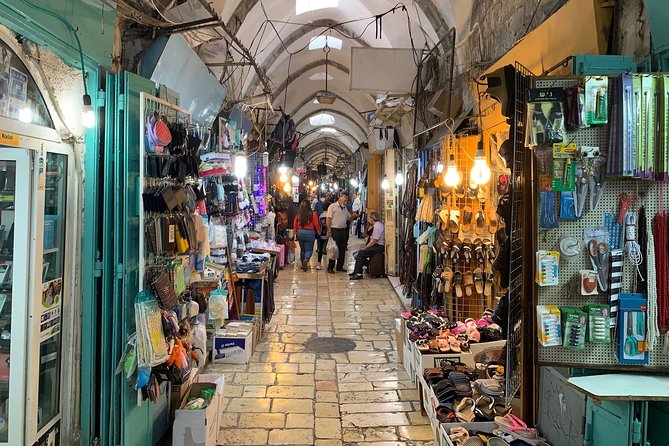
Then you shift to the Muslim Quarter, with time to walk through the bazaar area. This stop is not just shopping time. It is your chance to experience the Old City as a neighborhood, not only as a set of monuments.
The tour plan includes about 1.5 hours here. That is a solid block because you can browse, pause, and decide what you actually care about. It is also when people often refuel mentally, because you move away from the most solemn stops and toward everyday street life.
You also do lunch around this general time frame at an Old City restaurant, but it is own expense. So you should plan your budget for food. The upside is flexibility. You can choose what fits your preferences without having the entire group tied to one lunch spot.
Christian Quarter and the Church of the Holy Sepulcher
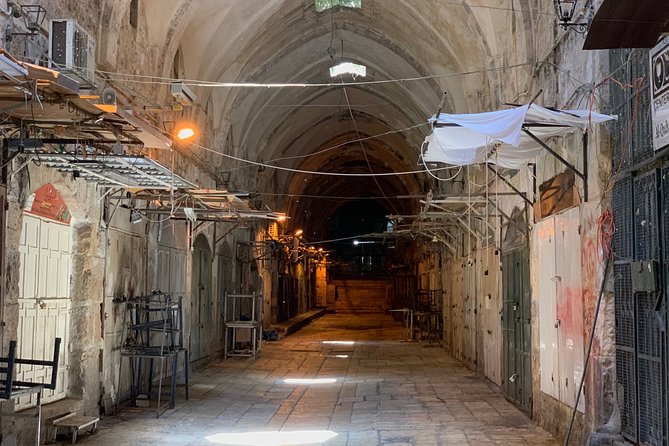
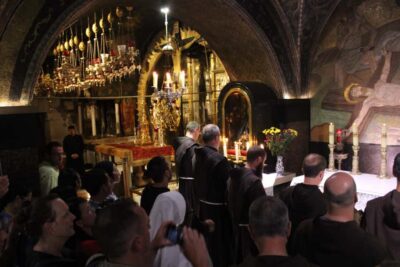
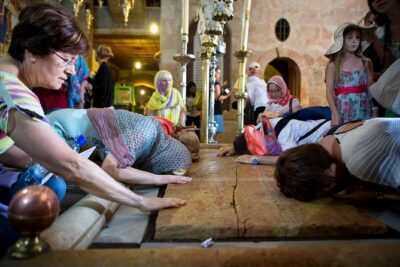
The last major Old City faith stop is the Church of the Holy Sepulcher in the Christian Quarter, with time for part of the Via Dolorosa route and then the church itself. The tour allocates about 1.5 hours total for this quarter segment.
This church area is one of those places where time can feel strange. It is busy, it is packed with meaning for multiple communities, and it is easy to rush if you are not careful. A guided visit helps because you can get your bearings quickly once you enter.
In my experience, churches like this are where good guiding makes the difference between seeing a building and understanding why people keep returning. The tour’s approach is to keep the day connected, so the church stop feels like part of the full route, not a standalone rush.
Old City Restaurant Lunch, What It Means for Your Day
Lunch is on the itinerary as an Old City restaurant visit, with the cost not included. That is common on private tours, but it affects your budgeting.
What I like about this setup is that it gives you structure without forcing one exact menu. Also, since you are in the Old City, your lunch choice can feel tied to the place rather than something you grabbed near your hotel after the tour. You just need to account for the fact that your food bill is now part of the day’s real cost.
Political Jerusalem: Knesset and Government Landmarks From the Road
After the Old City walking, you get a different perspective: modern Jerusalem’s political landmarks. The tour drives past the Kneset, the Government Offices, and the Supreme Court.
This segment matters more than it sounds, especially for first-time visitors. Jerusalem is not only about holy sites. It is also about governance, laws, and the present-day reality of the city. Seeing these buildings from the road helps you shift gears without turning the day into a pure lecture.
It is also a practical timing tool. After lots of walking, driving past major points lets you reset your legs while still getting the sense of how Jerusalem functions now.
Price and Value, Especially for a Group of Up to Four
The price is $925 per group for up to 4 people. That can sound steep if you are comparing it to big bus tours, but this is a private, hotel-to-hotel day with a driver and a guide in Jerusalem.
Here is how I think about the value:
- If you travel as two or four people, the effective cost per person drops quickly compared with paying for separate private guides.
- You get full-day structure: transport, timing, and a route through multiple quarters where getting lost would waste hours.
- You are also getting the benefit of someone managing the flow between sites, which is huge in a city where crowds and narrow streets can slow you down.
The one part not included is food and drinks. So your true trip cost depends on your lunch choice. Still, for many couples and families, the included transport plus guided routing is what makes the day feel worth the money.
Also, the strong track record matters. The reviews are consistently about the guide’s ability to explain and adapt, and that is what you are paying for when the itinerary is dense.
About the Guide, and Why the Human Part Shows Up
The reviews repeatedly mention one person in particular: Avraham (often listed as Avraham Tuval). The praise is consistent on a few themes that matter on a day like this.
First, Avraham’s style is described as starting with big-picture context from high viewpoints, like the Mount of Olives area, so the Old City feels understandable once you walk in. Second, people mention patience, including time for questions about history, geography, and practical details. Third, there is mention of flexibility, including willingness to adjust the itinerary when asked.
That last part is quietly important. Even with a set plan, you might need a pace change. Or you might want more time on one quarter and less on another. A guide who can adapt without making it feel awkward turns a good tour into a memorable one.
If you are choosing between a standard tour and a private one, this is often the deciding factor: the relationship, not just the route.
What to Expect Physically, and How to Prepare
The tour notes moderate physical fitness. You should take that seriously because the day includes walking through multiple Old City quarters and moving through narrow areas.
So my practical advice is simple:
- Wear comfortable shoes with good grip.
- Plan for short stops, then longer walks in dense lanes.
- If someone in your group has mobility limitations, talk about pace expectations at the start.
Also, keep your timing mindset flexible. This is a full-day tour with several stops that are time-boxed. That structure is good, but it means you will be moving often.
Who This Tour Fits Best
This tour is a strong choice if you want:
- A full-day Jerusalem Old City experience without figuring out logistics from scratch.
- A single route that connects Western Wall, Via Dolorosa, and all three quarters.
- Hotel pickup from Tel Aviv, plus a driver handling the travel.
- A guide who can explain the bigger picture, not just point at stones.
It is also a good fit if your group includes mixed ages and interests, because the itinerary gives you different textures: sacred sites, neighborhood bazaar time, and modern political landmarks.
If you only want one or two sites and a slow stroll, you might feel rushed. But if you want the whole map in one day, this plan is built for that.
Should You Book It?
I think you should book this tour if you want a guided day that keeps Jerusalem from turning into random wandering. The biggest reasons to say yes are the hotel pickup, the sequence of viewpoint context into Old City quarters, and the strong reputation for a guide who can explain and adapt.
Skip it or reconsider if your group prefers a slow, sit-down style day, or if mobility is a major concern. The tour hits multiple quarters and major sites, so it is not designed for minimal walking.
If you are going to Jerusalem from Tel Aviv and you only have one full day, this is the kind of tour that lets you see a lot while still understanding what you are looking at.
FAQ
How long is the Jerusalem Old City tour?
It runs for approximately 9 hours, starting at 9:00 am.
Does the tour include hotel pickup and drop-off in Tel Aviv?
Yes. The tour includes pickup and drop-off at your hotel in Tel Aviv.
What is the price for this tour?
It is $925.00 per group, up to 4 people.
Is this a private tour for my group?
Yes. It is listed as a private tour/activity, and only your group participates.
What’s included, and what’s not included?
Included are the driver and professional guide, plus hotel pickup and drop-off. Food and drinks are not included.
What are you visiting inside the Old City?
The plan includes the Western Wall, a look over the Dome of the Rock (without visiting), the Via Dolorosa/Stations of the Cross area, Broad Wall, the Jewish Quarter, the Muslim Quarter bazaar area, the Christian Quarter, and the Church of the Holy Sepulcher. You also drive past political landmarks such as the Kneset and Supreme Court.
Other Tours We Have Reviewed in Israel
- From Tel Aviv: Masada & Dead Sea Full Day Tour with Pick Up
★ 4.5 · 1,496 reviews - From Tel Aviv: Jerusalem Old & New City Bus Tour
★ 4.2 · 824 reviews - Day Tour to Jerusalem and Bethlehem from Tel Aviv
★ 4.5 · 720 reviews - From Tel Aviv: Masada, Ein Gedi & Dead Sea Tour
★ 4.2 · 705 reviews
More Israel Tour Reviews
- From Tel Aviv: Masada & Dead Sea Full Day Tour with Pick Up
★ 4.5 · 1,496 reviews - From Tel Aviv: Jerusalem and Bethlehem Guided Day Trip
★ 4.3 · 1,316 reviews - Masada and the Dead Sea Day Trip from Tel Aviv
★ 4.5 · 1,014 reviews - Tel Aviv: Jerusalem, Bethlehem & Dead Sea
★ 4.0 · 881 reviews
More Ways Through the Old City
- From Tel Aviv: Jerusalem Old & New City Bus Tour
★ 4.2 · 824 reviews - From Tel Aviv: Jerusalem Old City & Dead Sea Guided Day Tour
★ 4.4 · 389 reviews - Old and New Jerusalem Day Trip from Tel Aviv
★ 4.5 · 296 reviews - From TLV- Jerusalem Old & New tour INCL. ENTRANCE FEES & P/U
★ 4.2 · 65 reviews
Recently Added Israel Tour Reviews
- private Full-day Tour to Jericho + the Dead Sea★ 5.0 · 3 reviews
- Package VIP Skip Line Services in BGN Airport with Transfer to Tel aviv Hotels★ 5.0 · 3 reviews
- Food & Drink Private Guided Tour in Tel Aviv★ 5.0 · 3 reviews
- Tel Aviv Like a Local: Customized Guided Tour by Lokafy★ 5.0 · 3 reviews
- Private Tour from Tel Aviv to Jerusalem★ 5.0 · 3 reviews
Jerusalem Old City, compared.
 ★ 4.2From Tel Aviv: Jerusalem Old & New City Bus TourFrom $95824 reviews
 ★ 4.4From Tel Aviv: Jerusalem Old City & Dead Sea Guided Day TourFrom $133389 reviews
 ★ 4.7Jerusalem: Guided Walking Tour of the Old CityFrom $57386 reviews
 ★ 4.5Old and New Jerusalem Day Trip from Tel AvivFrom $95296 reviews
 ★ 4.0Old and New Jerusalem Full-Day TourFrom $75273 reviews
 ★ 4.0From Jerusalem Small group tour Old&New City ENTRY FEES INCLFrom $97135 reviews
 ★ 5.0Best seller! Jerusalem old city four quarters tourFrom $450123 reviews
 ★ 5.0Private Tour Jerusalem Old CityFrom $500118 reviews
Lists this tour appears in