
REVIEW · PETRA & WADI RUM TRIPS
2-Day Petra Tour from Tel Aviv
Petra in one tight weekend? Yes. This tour packs Petra and Jerash into a guided, two-day plan from Tel Aviv, plus it includes meals, entrances, and an overnight Bedouin-style campsite with dinner by the campfire. You also get air-conditioned van transport to help keep long drives from feeling like a punishment.
I especially like that the itinerary is built around pre-arranged travel, so you are not trying to figure out the border day on your own. The big win is the included sightseeing time at UNESCO sites, with guided explanations that make the sites easier to read as you walk.
The main thing to watch is the pace. You get about 6 hours in Petra on Day 2, so it is not a slow, linger-all-day kind of visit.
In This Review
- Key things that matter most on this Petra trip
- From Tel Aviv to the Jordan border, with time to set your expectations
- King Hussein Bridge: where the day can feel long
- Mount Nebo, Madaba mosaics, and Shobak Castle: the story-building day
- Mount Nebo: the view and the spiritual context
- Madaba: mosaics that turn history into something you can see
- Shobak Castle: crusader-era stone on a hilltop
- Jerash and the Amman drive tour: Roman ruins plus a hilltop perspective
- Wadi Musa: your staging point for Petra
- Petra Day 2: Siq to the Treasury, then the High Place of Sacrifice
- Entering Petra: the Siq and that first Treasury glimpse
- Key Petra stops: Royal Tombs, Monastery, Great Temple
- High Place of Sacrifice: worth the effort, time permitting
- The Bedouin camp night: dinner by the fire and desert-country basics
- What to pack for camp comfort
- Solo travelers and room sharing
- Air-conditioned van plus meals and entrances: the value equation
- What is not included: border taxes and food outside the plan
- Guides and group size: why 47 people can still work
- Practical tips that will save you time and frustration
- Who should book the Petra and Jerash 2-day tour?
- Should you book this 2-Day Petra Tour from Tel Aviv?
- FAQ
- What is the duration of the 2-Day Petra Tour from Tel Aviv?
- Where does the tour start and when?
- What is included in the price?
- What is not included?
- Do I need a visa before traveling?
- Can Israeli passport holders join this tour?
- What currency should I bring for border taxes?
- What should I pack for the tour?
- Are there items forbidden in Jordan?
- What is the fitness level required?
Key things that matter most on this Petra trip
- Petra plus Jerash are the core UNESCO stops
- Bedouin-style camp dinner with a campfire cultural moment
- Air-conditioned van for comfort during long road segments
- Mobile ticket and a custom travel app to keep you on track
- Border taxes are separate (Jordan requires JOD cash)
- Guides Mahdi and Abdullah earn strong praise for clarity and care
Crossing to Petra and Wadi Rum: the other departures
From Tel Aviv to the Jordan border, with time to set your expectations
The tour starts at 6:30 am in Tel Aviv, at Abraham Tel Aviv HaRakevet St 8. That early departure matters more than it sounds. When you are crossing international borders, the real schedule killer is waiting, not driving. Getting an early start gives you more flexibility if you hit lines or paperwork checks.
From the get-go, you are also traveling with a plan. You are not just handed a map and wished luck. The experience includes a guided tour and travel in an air-conditioned vehicle, which is a big deal on hot days or when the border process stretches longer than you want. A van also keeps everyone together, so you are less likely to lose time matching trains, shuttles, or taxis.
King Hussein Bridge: where the day can feel long
The trip includes a crossing at King Hussein Bridge twice: on the way to Jordan and again on the way back to Israel. In practice, this is the part of the trip you should mentally budget for. Some people rate the border experience as smooth and professionally handled, while others call it tedious with delays at checkpoints. Either way, it is smart to go in patient.
Here is what you can control:
- Keep your passport ready and your documents organized
- Plan to handle border taxes on the spot (more on money below)
- Wear comfortable shoes and bring a scarf or shawl, since border rules related to religious items can cause issues for some travelers
Also, note the tour is not available to Israeli passport holders, even with an additional passport. That is worth double-checking before you pay.
Mount Nebo, Madaba mosaics, and Shobak Castle: the story-building day
Day 1 is your “get oriented” day in Jordan. You start with Mount Nebo, then move to Madaba, and then to Shobak Castle before arriving in Wadi Musa near Petra.
Two days out in Israel
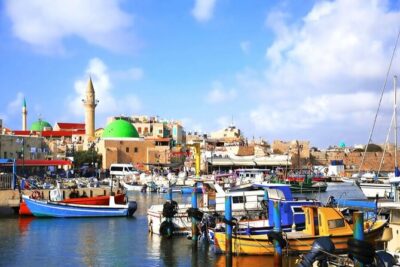
Mount Nebo: the view and the spiritual context
Mount Nebo is known for panoramic views across the Jordan Valley and the Dead Sea area, and it is also tied to the tradition of Moses seeing the Promised Land. The value here is not that you will spend hours hiking. It is that the stop gives you a sense of the region’s geography and the way ancient texts connect to specific points on the map.
You get about 1 hour, and that is enough for the main viewpoint and a respectful walk. Since the tour includes guiding, you will likely understand what you are looking at rather than just taking photos and moving on.
Madaba: mosaics that turn history into something you can see
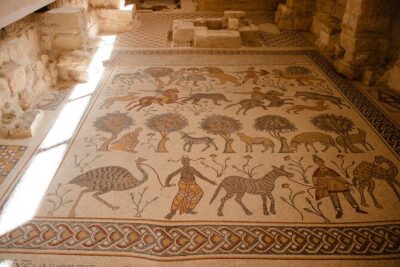
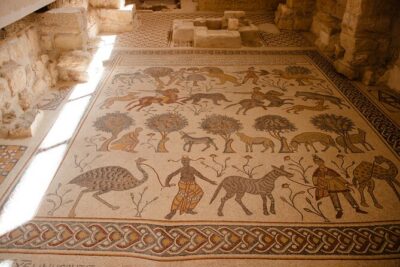
Madaba is a short, focused stop with big payoff. You get about 1 hour to explore famous mosaic artwork, including the well-known Madaba Map, described as dating back to the 6th century. If you love details, mosaics can be slow in a good way. If you do not, guiding helps you know what you are looking at and why it matters.
This is also a good stop for the kind of travel brain that wants to keep clicking scenes together. The mosaics make the idea of Holy Land storytelling feel tangible rather than abstract.
Shobak Castle: crusader-era stone on a hilltop
Next is Shobak Castle, included for entry. The castle sits on a rugged hilltop, and the stop is another “read the region” moment. Expect a 1 hour visit where you can see fortress walls, towers, and views over nearby valleys.
One drawback to know: castles always depend on heat, wind, and how much of the climb you prefer. If you like photo angles and wide views, you will enjoy it. If you prefer quieter ruins at ground level, you might wish you had a bit more time to move at your pace.
Jerash and the Amman drive tour: Roman ruins plus a hilltop perspective
Your tour description includes Jerash and a driving tour of Amman, and it also references seeing Roman ruins, a hilltop citadel, and a stone city. Even if you do not spend hours inside every structure, this component is key because it sets Petra into a wider Jordanian context.
This is how I’d think about it:
- Jerash helps you understand the Roman side of Jordan, including the kind of monumental city planning that people built when trade and empire money were flowing.
- The Amman side, tied to a citadel viewpoint, gives you a modern way to read the ancient city layer-cake. You see how people keep building, reusing, and adapting geography.
In other words, Petra becomes more than one famous photo at the end of the walk. You start noticing the same skills and planning across different sites.
Wadi Musa: your staging point for Petra
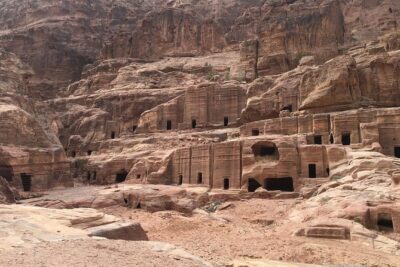
After Day 1’s stops, you reach Wadi Musa, the base area for Petra. The itinerary frames the arrival as your first proper look at the sandstone cliffs that hide Petra until you are right up on them. That matters. Petra’s drama is partly about timing, not just architecture.
This is also where your trip shifts from “sightseeing day” into “camp day.” You are heading toward a Bedouin-style campsite for the night, with the cultural dinner experience tied to the campfire.
Petra Day 2: Siq to the Treasury, then the High Place of Sacrifice
Day 2 is where the headline happens. You get about 6 hours in Petra, which is both a blessing and a constraint. It is enough time to experience the main highlights, but you need to move with purpose if you want the big viewpoint.
Entering Petra: the Siq and that first Treasury glimpse
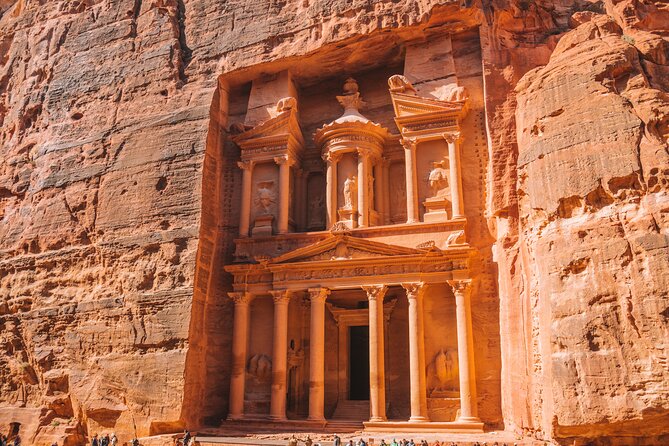
You start walking through the Siq, the narrow gorge that channels you toward the Treasury. This part works like a slow reveal. The architecture and the canyon walls do a lot of the storytelling for you, and the guidance helps you understand what you are seeing as you go.
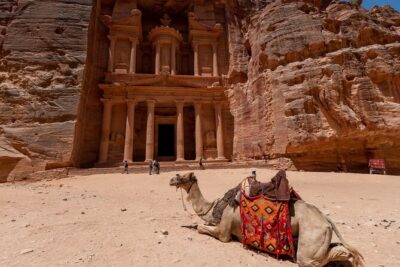
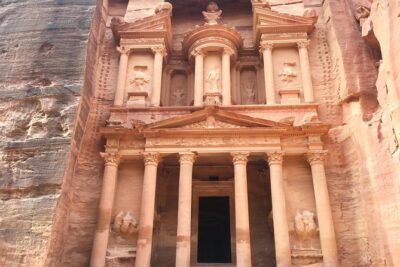
The tour description emphasizes the Treasury and the vibrant Nabatean carvings and colors. The practical tip: treat your first minutes as “camera plus orientation.” Stop to take one or two photos, but keep walking so you do not burn time early.
Key Petra stops: Royal Tombs, Monastery, Great Temple
From there, you are guided through several major areas, including the Royal Tombs, the Monastery, and the Great Temple. This is the part where a guided plan saves time. Petra is not a single straight line. It is a network. With guidance, you avoid wandering into dead ends or spending your energy on routes you can skip.
You also get a sense of how Nabateans used the rock, the way water management and city layout shaped what visitors see now.
High Place of Sacrifice: worth the effort, time permitting
You finish with the High Place of Sacrifice viewpoint. This is the part that rewards effort. The tour notes panoramic views after the climb, and if you can handle steady uphill walking, you will feel the difference immediately once you reach the viewpoint.
Because you only have 6 hours total in Petra, I’d treat the climb as a priority, not an optional side mission. If you skip it, you might feel like you missed the best reward.
The Bedouin camp night: dinner by the fire and desert-country basics
One reason this tour gets so much praise is the night at a Bedouin-style campsite in the Jordanian desert. The highlight mentions dinner around a Bedouin campfire, which is the kind of experience you cannot recreate as easily on your own from Tel Aviv.
The dinner itself is part of what people call out as a major win. In the reviews you provided, the camp gets described as cool, with beautiful views of surrounding rock formations, and the food gets strong praise. That matches what I’d expect when a tour includes the whole package, not just a bed and a shrug.
What to pack for camp comfort
The tour’s packing advice is practical, and you should follow it:
- Warm clothes for the night at the campsite
- A hat and sunscreen
- Scarfs or shawls
- Drinking water
- Comfortable shoes (you’ll need them for Petra)
Even if you plan to dress light for the day, desert nights can cool off fast. Bring layers you can actually wear comfortably.
Solo travelers and room sharing
If you travel alone, the tour notes you will likely share a room with someone of the same gender, depending on group size. If you are okay with that, you can make peace with it quickly. If you need your own space, you should factor that into your booking decision.
Air-conditioned van plus meals and entrances: the value equation
At $430 per person for a 2-day trip, the price is not just about moving you between points. It is about removing the annoying friction points that add hidden costs and stress.
Here is what is included, according to the tour details:
- Breakfast
- Dinner
- Lunch for two days
- Guided tour
- Air-conditioned vehicle
- Entrance fees
- Accommodation in a Bedouin-style campsite
- Custom travel app for smartphones and tablets
- Mobile ticket
That is a lot of logistical weight covered. If you were to plan it yourself, border crossings, group entry fees, and finding a camp arrangement that matches the Petra schedule would probably cost time and money. The included entrance fees matter too, because UNESCO sites do not show up for free.
What is not included: border taxes and food outside the plan
The tour clearly separates the costs:
- Israeli border taxes: 196 ILS
- Jordanian border taxes: 50 JOD, payable only in cash
- Personal travel insurance
- Other food and drinks
- Gratuities
If you only remember one money tip, make it this: bring Jordanian cash (JOD). Jordanian border taxes are cash-only. One review you shared also warns about a bad exchange rate if you change money at the border and notes the group handled JOD cash later with help from the guide. I’d treat that as a reason to plan ahead for cash rather than assuming the easiest exchange spot is the best rate.
Guides and group size: why 47 people can still work
This tour runs with a maximum group size of 47 travelers. That sounds large, but it is often manageable when you use headcounts, scheduled entry, and clear pacing for sites like Petra.
You should also care about the guide. In your reviews, Mahdi and Abdullah are named and praised. The repeated theme is clear explanations and strong organization, especially around the border process. That is not fluff. In Petra, good guidance turns a long walk into an intelligible route. At the border, it can reduce confusion and wasted time.
Practical tips that will save you time and frustration
These are the small things that make the big difference on a two-day Petra sprint:
- Start with shoes you can walk in for Petra, plus any extra climb toward viewpoints
- Pack a scarf or shawl. It can help with border and religious-site expectations
- Bring warm layers for the desert camp night
- Keep your passport original and accessible, not packed away deep in a bag
- If you need JOD, plan for it. Jordan taxes are cash-only
- Bring a hat, sunscreen, and water. The itinerary assumes you can handle daytime walking in hot conditions
Also remember the operational reality: some sites may have shortened visits during Muslim holidays, especially Ramadan. If you are traveling in that period, keep expectations flexible.
Who should book the Petra and Jerash 2-day tour?
This is a strong fit if you:
- Want to hit Petra and Jerash without building a complex multi-day itinerary
- Like guided structure, especially for sites that are easy to get lost in
- Are comfortable with a moderate fitness level, plus uphill walking for the viewpoint
- Value included meals and entrance fees more than DIY freedom
It might not be ideal if you:
- Want a slow, unhurried Petra day with lots of free time
- Need very flexible departure times, since borders and site schedules shape the day
- Are very sensitive to border delays, even when the process is handled professionally
Should you book this 2-Day Petra Tour from Tel Aviv?
If Petra is your priority, I think this tour is worth serious consideration. The biggest reason is balance: you get guided UNESCO time, an overnight Bedouin camp experience, and a logistics-heavy package that covers meals, entrances, and transport. The guides named in the feedback, like Mahdi and Abdullah, seem to make the difference between just seeing things and actually understanding them.
My main caution is the pace, especially the 6 hours in Petra. If you dream about wandering at your own speed, this may feel tight. But if you want the highlights, plus the desert night, plus Jerash context, you will likely feel like the trip hits the right buttons for a two-day window.
One last planning note: this experience requires good weather. If conditions are poor, you should expect a different date or a refund option, not a perfect schedule regardless of nature.
FAQ
What is the duration of the 2-Day Petra Tour from Tel Aviv?
It is listed as 2 days (approx.).
Where does the tour start and when?
The start point is Abraham Tel Aviv HaRakevet St 8, Tel Aviv-Yafo, Israel, and the start time is 6:30 am. It ends back at the meeting point.
What is included in the price?
The tour includes breakfast, dinner, guided tour, air-conditioned vehicle, entrance fees, Bedouin-style campsite accommodation, a custom made travel app, and lunch for two days. It also includes a mobile ticket.
What is not included?
Not included: other food and drinks, Israeli border taxes (196 ILS), Jordanian border taxes (50 JOD payable only in cash), personal travel insurance, and gratuities.
Do I need a visa before traveling?
For some nationalities, no pre-arranged visa is required, and it will be issued at the border crossing. You should check your eligibility and re-entry requirements to Israel.
Can Israeli passport holders join this tour?
No. The tour notes it is not available to Israeli passport holders, even if you have an additional passport.
What currency should I bring for border taxes?
Israeli border taxes can be paid in ILS, Euro, or USD (credit card or cash). Jordanian border taxes must be paid only in JOD in cash.
What should I pack for the tour?
Bring a valid original passport, hats, sunscreen, comfortable shoes, scarfs or shawls, warm clothes for the night, and drinking water.
Are there items forbidden in Jordan?
Yes. Drones (any size), telescopes, and telephoto cameras with zoom lenses higher than 1000mm are forbidden.
What is the fitness level required?
The tour asks for a moderate physical fitness level. This is important for walking inside Petra and getting to the viewpoint areas.
Other Tours We Have Reviewed in Israel
- From Tel Aviv: Masada & Dead Sea Full Day Tour with Pick Up
★ 4.5 · 1,496 reviews - From Tel Aviv: Jerusalem Old & New City Bus Tour
★ 4.2 · 824 reviews - Day Tour to Jerusalem and Bethlehem from Tel Aviv
★ 4.5 · 720 reviews - From Tel Aviv: Masada, Ein Gedi & Dead Sea Tour
★ 4.2 · 705 reviews
More Israel Tour Reviews
- From Tel Aviv: Masada & Dead Sea Full Day Tour with Pick Up
★ 4.5 · 1,496 reviews - From Tel Aviv: Jerusalem and Bethlehem Guided Day Trip
★ 4.3 · 1,316 reviews - Masada and the Dead Sea Day Trip from Tel Aviv
★ 4.5 · 1,014 reviews - Tel Aviv: Jerusalem, Bethlehem & Dead Sea
★ 4.0 · 881 reviews
Other Crossings to Petra and Wadi Rum
- 2 Day Tour to Petra and Wadi Rum from Tel Aviv
★ 4.0 · 154 reviews - Day Tour to Petra by Bus from Tel Aviv
★ 3.5 · 149 reviews - 3-Day Petra and Wadi Rum Tour from Tel Aviv
★ 4.5 · 72 reviews - Petra 2 Day Tour from Tel Aviv
★ 4.0 · 14 reviews
Recently Added Israel Tour Reviews
- private Full-day Tour to Jericho + the Dead Sea★ 5.0 · 3 reviews
- Package VIP Skip Line Services in BGN Airport with Transfer to Tel aviv Hotels★ 5.0 · 3 reviews
- Food & Drink Private Guided Tour in Tel Aviv★ 5.0 · 3 reviews
- Tel Aviv Like a Local: Customized Guided Tour by Lokafy★ 5.0 · 3 reviews
- Private Tour from Tel Aviv to Jerusalem★ 5.0 · 3 reviews
Petra & Wadi Rum Trips, compared.
 ★ 4.0Day Tour to Petra from EilatFrom $219237 reviews
 ★ 4.52-Day Petra Tour from JerusalemFrom $420212 reviews
 ★ 4.02 Day Tour to Petra and Wadi Rum from Tel AvivFrom $399154 reviews
 ★ 3.5Day Tour to Petra by Bus from Tel AvivFrom $299149 reviews
 ★ 4.53-Day Petra and Wadi Rum Tour from JerusalemFrom $670143 reviews
 ★ 4.53-Day Petra and Wadi Rum Tour from Tel AvivFrom $67072 reviews
 ★ 3.5Day tour to Petra from JerusalemFrom $29960 reviews
★ 3.52 Day Petra Tour from JerusalemFrom $37928 reviews
★ 3.5Day tour to Petra from JerusalemFrom $29960 reviews
★ 3.52 Day Petra Tour from JerusalemFrom $37928 reviews
Lists this tour appears in