
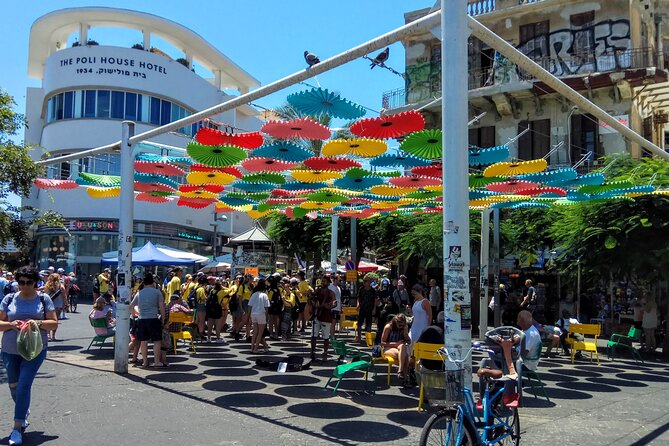
REVIEW · TEL AVIV & JAFFA
Urban Walking & Food Tour in Tel Aviv
This walk starts in the best kind of place, in motion. You’ll spend about five hours getting your bearings on Tel Aviv’s most important streets and neighborhoods, from the Bauhaus-era “White City” vibe to the market lanes where people actually eat and shop. I love how the route connects architecture to immigration and city-making, so the tour feels like more than sightseeing.
Two things I especially like: the focus on small-group pacing (you’re not stuck in a crowd), and the way the guide ties specific spots to the bigger story of Tel Aviv’s growth. One thing to consider is that the tour is weather-dependent and involves a lot of walking, so plan for heat and wear shoes you trust.
In This Review
- What to Expect on This Tel Aviv Walking + Food Tour
- Key Highlights Worth Marking on Your Map
- From Habimah Square, You Start With Israel’s Hebrew Theatre Roots
- Rothschild Boulevard and the White City Bauhaus Walk
- King Albert Square Area: Norman Hotel, Pagoda House, and Street-Level Styles
- Beit Levin and the Story Behind the KGB House Name
- A Quick Lesson on the Light Rail, Then a Pass by the Great Synagogue
- Founders Monument and Meir Dizengoff, Two Ways to Understand City-Making
- Migdal Shalom Tower: Tel Aviv’s First Skyscraper and a School Connection
- Herzl Street and a Dreyfus Story That Connects Justice to Zionism
- Neve Tzedek: From Old Tiny Neighborhood to Design and Food Lanes
- Park HaMesila: The Ottoman Railway Route Under a Modern Walk
- Aharon Chelouche House and the Mizrahi Aliya Story
- Suzanne Dellal Centre: Dance History Built on Older School Ruins
- Carmel Market: The Food and Everyday Shopping Part of the Day
- Kerem HaTeimanim: Yemenite Immigrant Streets That Flow Into the Market
- Lunch, Tea, Coffee, and the $40 Per Person Question
- How This Tour Feels in Real Life, Not Just on Paper
- Who Should Book, and Who Might Not Love It
- Should You Book This Tel Aviv Walking + Food Tour?
- FAQ
- How long is the Urban Walking & Food Tour in Tel Aviv?
- What does it cost?
- Is this a small-group tour?
- Where does the tour start and end?
- What time does it begin?
- Is lunch included?
- What kind of ticket do you get?
- How many stops are there?
- What weather conditions are required?
- What is the cancellation timeframe?
What to Expect on This Tel Aviv Walking + Food Tour
This is a half-day urban walk with a food component built in, designed for people who want both street-level atmosphere and clear historical context. The tour runs from Habimah Theatre (Tarsat Ave 2) at 10:00 am, and it ends at Coffee at the market, HaCarmel St 33, near Carmel Market.
The format matters for your experience. This is priced at $500 per group (up to 6), and the tour is capped at only 10 participants, which keeps the storytelling from feeling rushed. You also get a mobile ticket, and the route is near public transportation.
You should also know there is some ambiguity around lunch. The tour description says lunch plus tea or coffee are included, but the pricing note lists lunch and drinks as about $40 per person. Before you go, confirm what your group includes for the meal budget so you don’t get surprised mid-walk.
Tel Aviv and Jaffa on foot, on wheels and at the table
Key Highlights Worth Marking on Your Map
- White City Bauhaus streets along Rothschild Boulevard, with detours that explain why Tel Aviv looks the way it does
- Neve Tzedek’s small lanes and 19th-century roots, now home to design shops and local restaurants
- Carmel Market at the center of the day, where food stalls and everyday shopping do the heavy lifting
- Kerem HaTeimanim, the Yemenite immigrant neighborhood that shaped the market area’s character
- Architecture you can read, from Migdal Shalom Tower to the Great Synagogue and “KGB House” style stops
From Habimah Square, You Start With Israel’s Hebrew Theatre Roots
Your tour begins at Habimah Theatre, right where major city streets meet. This part of the walk is useful because it gives you a sense of how Tel Aviv organizes space: squares, corridors, and cultural anchors that pull neighborhoods together.
You’ll also learn how Habimah relates to the story of Hebrew theatre. Even if you don’t plan to see a show, it’s a great starting point because it ties language and identity to place. Expect a short stop, about 10 minutes, so treat this as the opening orientation, not a full museum session.
Rothschild Boulevard and the White City Bauhaus Walk
Rothschild Boulevard is Tel Aviv’s headline street. You’ll spend about 30 minutes here, and you’ll also make short detours before returning to the boulevard. The point is not just to admire buildings, it’s to understand why this area became known as part of the White City, tied to Bauhaus and International style architecture.
Here’s why that matters for you: Tel Aviv can feel trendy and modern, but this walk helps you see the blueprint underneath. The architecture is not only pretty, it’s part of how the city chose to rebuild and define itself. You’ll learn how the boulevard fits into Tel Aviv’s early development, ending this stretch near Ahuzat Bayit, described as the first neighborhood of Tel Aviv.
As you walk, watch for the small details the guide points out, because that’s where the “White City” idea clicks. If you like cities where design tells a story, this segment is a strong reason to book.
Still hungry? More market and tasting walks in Israel



King Albert Square Area: Norman Hotel, Pagoda House, and Street-Level Styles
A quick stop at Nachmani St 23 puts you around the King Albert Square area. The walk-by mentions the Norman Hotel and the eclectic Pagoda House, which is a good reminder that Tel Aviv’s architectural personality includes more than Bauhaus. Even in a short 5-minute moment, you get a sense of how the city layers styles over time.
This stop is brief, so it’s best seen as a visual palate cleanser. If you want photos, take them here. If you hate standing around, keep moving and rely on the guide’s context so the time feels worth it.
Beit Levin and the Story Behind the KGB House Name
Next up is Beit Levin, described as the Castle and the KGB House. This is another short stop, about 5 minutes, but it’s one of those locations that makes you look twice because of its unusual feel.
What’s valuable for you is the way these stops build a theme: Tel Aviv’s neighborhoods aren’t just residential or commercial, they also carry political and institutional history, sometimes in unexpected building names. You’re not expected to remember every title, just notice how the city’s identity shows up in the built environment.
A Quick Lesson on the Light Rail, Then a Pass by the Great Synagogue
The route includes a pass by Yehuda ha-Levi Street, where you can see the location of a station of the new Tel Aviv light rail. It’s only about 5 minutes, but it signals something important: you’re walking a city that is still changing. Tel Aviv is not frozen in past eras, even when you’re focused on early neighborhoods.
Then you get a short look at the Tel Aviv Great Synagogue. The guide’s note is practical: it’s easy to miss unless someone tells you what you’re looking for. You’ll spend about 5 minutes here, and the stop adds context about who planned it and when it was built relative to the neighborhood’s founding.
Founders Monument and Meir Dizengoff, Two Ways to Understand City-Making
Back along the Rothschild area, you’ll pause at the Founders Monument and Fountain. This moment commemorates Jewish families who chipped in money to build a new modern neighborhood that became known as Tel Aviv. It’s a compact stop, about 5 minutes, but it helps you understand why Tel Aviv’s origin story is tied to funding, collective effort, and the idea of starting fresh.
Then you’ll see Meir Dizengoff Statue, the first mayor of Tel Aviv, on horseback, outside his house. The tour ties this to a big political milestone: it was in his house that David Ben Gurion declared a new Jewish state in 1948. Expect another 5-minute stop.
For me, that combination is powerful. Monument and statue could be just photo ops, but here they become shortcuts to understanding how leaders, planning, and identity were physically anchored in public space.
Migdal Shalom Tower: Tel Aviv’s First Skyscraper and a School Connection
You’ll visit Migdal Shalom Tower, described as the first skyscraper in the Middle East, built on the location of the first Hebrew high school, HaGymnasia. You get about 15 minutes for this area, so it’s one of the longer context stops.
This works well if you like cities where education, commerce, and construction overlap. Tel Aviv’s early ambition shows up in the idea that a high school and a major vertical building share the same ground. Even if you don’t know the full architectural story, the guide’s connection helps you feel how the city’s priorities shaped its skyline.
Herzl Street and a Dreyfus Story That Connects Justice to Zionism
At Herzl St 2, you’ll see a couple of elements tied to Tel Aviv’s initiators and a famous historical reference. The tour mentions the house of Akiva Weiss, described as a key initiator to build Tel Aviv, and it also references a statue of Alfred Dreyfus, a Jewish captain in the French Army.
The explanation focuses on the Dreyfus affair as an example of injustice and antisemitism, and notes that it had an impact on Theodor Herzl. The goal of this stop is not to teach French legal history. It’s to show you how European events pushed key thinkers toward the idea of a Jewish state. You’ll likely spend about 5 minutes here.
Neve Tzedek: From Old Tiny Neighborhood to Design and Food Lanes
Now the tour pivots from early city-building to neighborhood texture. You’ll spend around 20 minutes in Neve Tzedek, described as the first small Jewish neighborhood outside the walls of Jaffa in the 19th century, followed by many other small neighborhoods for different social and ethnic Jewish groups.
What I like about this stop for practical travel purposes is that it doesn’t treat the past like a theme park. The description says many older houses and synagogues remain from the 100+ year period, but today the area is known for avant-garde design stores, fashion boutiques, handicraft shops, and some good restaurants. That mix is why people wander here even when they are not on a tour.
If you want to shop lightly or grab a coffee after, this is a smart section to pay attention to. Keep your eyes open for side streets that feel quiet and shaded compared with the main boulevard.
Park HaMesila: The Ottoman Railway Route Under a Modern Walk
A short stop brings you to Park HaMesila, described as a new urban park that connects the beach with downtown Tel Aviv along the route of the old Ottoman railway. The tour notes that the Tel Aviv light rail runs under the park.
Even though you’ll be there briefly, about 5 minutes, this is worth noting because it shows how Tel Aviv uses old infrastructure paths in a modern way. If you’re planning your own routes later, this is a useful mental shortcut. You can picture a green corridor that links neighborhoods without requiring a car or major detours.
Aharon Chelouche House and the Mizrahi Aliya Story
At Aharon Chelouche House, the tour highlights a specific immigration wave. Aharon is described as arriving about 50 years before other Jews started giving numbers to their Ashkenazi Aliyot, in a Mizrahi Aliya. The tour also says he paid for the plot of land called Neve Tzedek and built the first house with a private synagogue.
This stop is short, about 5 minutes, but it gives you a needed correction to any overly Ashkenazi-centered origin stories you might hear elsewhere. It’s a reminder that Tel Aviv’s neighborhood fabric was built by multiple groups, arriving at different times, bringing different cultural patterns, and reshaping the city on the ground.
Suzanne Dellal Centre: Dance History Built on Older School Ruins
The stop at Suzanne Dellal Centre lasts about 5 minutes and centers on modern dance. It’s home to the Batsheva Dance Company and Inbal Dance Theater. The guide also notes the building sits on the ruins of the Alliance School for Boys and the Yechiely Girls School (1908), now restored with a picturesque piazza.
If you like places where art and history overlap, this is a good one. Even if you do not attend a performance, the context helps you understand why the center feels both current and layered. It also makes the neighborhood feel alive, not just historical.
Carmel Market: The Food and Everyday Shopping Part of the Day
Then you reach Carmel Market (Shuk Ha’Carmel), where the tour shifts from “learn” to “taste.” You’ll spend about 1 hour 45 minutes here, and it’s described as a place where traders sell everything from clothing to spices, plus vegetables and electronics.
What makes this segment genuinely useful is that it’s not only food stalls. You see how a market works as an ecosystem. The description also says there are now trendy spots for bars, restaurants, coffee shops, and chef-owned food stalls. So if you came expecting purely old-world shopping, you’ll see the present tense too.
This is also where the tour’s food component becomes concrete. Expect multiple tastings and a lunch rhythm that builds toward a satisfying end. From the heat-management comments you’ll read in the tour feedback, the guide’s pacing often includes shaded moments and breaks, which matters when you’re out for almost five hours.
Kerem HaTeimanim: Yemenite Immigrant Streets That Flow Into the Market
The last neighborhood stop is Kerem HaTeimanim, described as an early 19th-century poor neighborhood for Jewish immigrants from Yemen. The tour says these immigrants started a market that became the largest one in Tel Aviv, and that while the tin shacks and wooden houses are gone, narrow streets and ground-level houses remain.
This is where the tour earns its “food tour” label without turning it into a lecture. You end by understanding why the market is the way it is, and why the streets feel the way they do. Expect a short 10-minute stop, then you’ll finish at Coffee at the market.
Lunch, Tea, Coffee, and the $40 Per Person Question
Here’s the practical part you should plan for: the tour description says lunch and complimentary tea or coffee are part of the experience. But the pricing note says lunch and food and drinks will be about $40 per person.
So what should you do? Treat lunch as potentially partly included, and budget for extra if you want the full meal spread. If you’re traveling with an appetite, plan to eat at least one solid sit-down item at Carmel after your tastings, or confirm in advance how the lunch is handled for your exact departure.
The value equation is still strong. For $500 per group (up to 6), you’re getting a guided route across multiple neighborhoods that normally takes a full day of self-planning. When lunch is included, your per-person cost drops fast. If lunch is not fully included, the added food budget is still realistic for a market day.
How This Tour Feels in Real Life, Not Just on Paper
The best compliment you can give a walking tour is that it helps you move better through the city. This route does that in a few ways:
- You learn street logic. Rothschild Boulevard, then side streets toward Neve Tzedek, then the market loop gives you a map in your head.
- The stops are short and varied. Most are about 5 to 10 minutes, so you’re not stuck in one spot too long.
- The pacing accounts for comfort. In past experiences tied to this tour, guides have been praised for finding shaded areas, bathrooms, and benches when the heat hit.
If it’s hot when you visit, take this seriously. Start early with the 10:00 am time, carry water, and wear something breathable. A tour like this is not about endurance, but you do need to keep your body on board.
Who Should Book, and Who Might Not Love It
This tour is a great match if you:
- Want architecture plus city-making stories, not just a food-only crawl
- Prefer a small-group approach where you can ask questions
- Like mixing neighborhoods, from early Tel Aviv origins to market-day energy
It might be less ideal if you:
- Want a slow sit-down day with long museum-style stops
- Have limited mobility or get worn out quickly by walking, since the format is built around moving between many points
Still, the tour is marked as suitable for most travelers, and service animals are allowed, so it’s likely to feel workable for a wide audience.
Should You Book This Tel Aviv Walking + Food Tour?
If you want a fast, smart start to a Tel Aviv stay, I’d book it. The route gives you three core layers of the city in one outing: early identity (Hebrew theatre and founders), built form (Rothschild and White City Bauhaus), and daily life (Carmel Market plus Kerem HaTeimanim). That combination saves you time and helps you choose what to revisit later.
Book it especially if you’re the type who likes to connect what you see with why it exists. The stops are designed to make Tel Aviv’s look, its people, and its neighborhoods feel linked rather than random.
If you’re only interested in one narrow theme, like strictly food or strictly modern nightlife, you might feel this tour covers a lot at once. But if you want the city’s big picture with market-grade atmosphere, it’s a strong use of a morning.
FAQ
How long is the Urban Walking & Food Tour in Tel Aviv?
The tour lasts about 5 hours (approx.).
What does it cost?
It is priced at $500.00 per group, up to 6 people.
Is this a small-group tour?
Yes. It is described as a small-group tour and the group is capped at only 10 participants.
Where does the tour start and end?
It starts at Habimah Theatre, Tarsat Ave 2, Tel Aviv-Yafo, and it ends at Coffee at the market, HaCarmel St 33, Tel Aviv-Yafo.
What time does it begin?
The start time is 10:00 am.
Is lunch included?
The tour highlights say lunch is included, and also tea or coffee. However, the pricing note lists lunch and food and drinks as about $40 per person, so you should confirm what your specific departure includes.
What kind of ticket do you get?
You receive a mobile ticket.
How many stops are there?
The itinerary includes stops at Habimah Square, Rothschild Boulevard, multiple named landmarks across Tel Aviv, and ends in the Carmel Market area, including Kerem HaTeimanim.
What weather conditions are required?
The experience requires good weather. If it is canceled due to poor weather, you are offered a different date or a full refund.
What is the cancellation timeframe?
You can cancel for a full refund up to 24 hours before the experience starts. If you cancel less than 24 hours before, the amount paid is not refunded.
More Israel Tour Reviews
- From Tel Aviv: Masada & Dead Sea Full Day Tour with Pick Up
★ 4.5 · 1,496 reviews - From Tel Aviv: Jerusalem and Bethlehem Guided Day Trip
★ 4.3 · 1,316 reviews - Masada and the Dead Sea Day Trip from Tel Aviv
★ 4.5 · 1,014 reviews - Tel Aviv: Jerusalem, Bethlehem & Dead Sea
★ 4.0 · 881 reviews
More Market Tables Around Israel
- Carmel Market Tasting Tour – LocaLocal
★ 5.0 · 140 reviews - Tel Aviv: Jaffa & Carmel Market Walking Tour
★ 4.7 · 60 reviews - Tel Aviv: Carmel Market & Tel Aviv Tour with Tastings
★ 3.8 · 36 reviews - Tel Aviv Food Tour of the Carmel Market
★ 4.0 · 29 reviews
Tel Aviv and Jaffa, More on Foot
- Tel Aviv Jaffa Guided Bike Tour
★ 4.5 · 178 reviews - Guided Pub Crawl Night Tour at Tel Aviv
★ 5.0 · 85 reviews - Tel Aviv 3-Hour Easy Bike Tour
★ 4.8 · 81 reviews - Tel Aviv Street Art & Graffiti Tour
★ 5.0 · 76 reviews
Recently Added Israel Tour Reviews
- private Full-day Tour to Jericho + the Dead Sea★ 5.0 · 3 reviews
- Package VIP Skip Line Services in BGN Airport with Transfer to Tel aviv Hotels★ 5.0 · 3 reviews
- Food & Drink Private Guided Tour in Tel Aviv★ 5.0 · 3 reviews
- Tel Aviv Like a Local: Customized Guided Tour by Lokafy★ 5.0 · 3 reviews
- Private Tour from Tel Aviv to Jerusalem★ 5.0 · 3 reviews
Tel Aviv & Jaffa, compared.
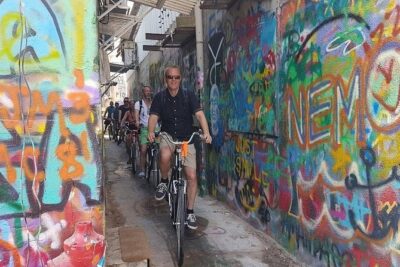 ★ 4.5Tel Aviv Jaffa Guided Bike TourFrom $62178 reviews
 ★ 5.0Guided Pub Crawl Night Tour at Tel AvivFrom $2385 reviews
 ★ 4.8Tel Aviv 3-Hour Easy Bike TourFrom $5581 reviews
 ★ 5.0Tel Aviv Street Art & Graffiti TourFrom $7876 reviews
 ★ 4.5Tel Aviv: Jaffa Half-Day Walking TourFrom $4970 reviews
 ★ 4.4Tel Aviv: Pub Crawl with 4 Stops and Free ShotsFrom $2866 reviews
 ★ 3.5Tel Aviv: Florentin Saturday Walking TourFrom $6965 reviews
 ★ 5.0Exclusive Private Tour in The Israel Diamond ExchangeFrom $4060 reviews
Lists this tour appears in