
REVIEW · TEL AVIV & JAFFA
The full walk of Tel Aviv! – The city,Jaffa and the German colony
Tel Aviv makes sense on foot. This private, English-speaking walk links Sarona to the Bauhaus streets of the White City and finishes in HaTachana, the old train station by the beach. I love the way the route gives you an instant city orientation without turning into a checklist tour, and I also love the focus on architecture and neighborhood character as you move block by block.
You should expect steady walking for around 5 hours, and it depends on good weather. If your plan is built around lots of stops for long sit-down meals, you will likely need to pace yourself, especially in the heat or sun.
In This Review
- Key highlights you will actually feel
- A full Tel Aviv walk that connects neighborhoods, not just landmarks
- Starting in Sarona, where German Templers still show up in the streets
- Rothschild Boulevard and the Bauhaus White City story
- Neve Tzedek: old district bones with a fashionable pulse
- The Suzanne Dellal Center, where contemporary dance meets neighborhood streets
- HaTachana: the old Jaffa train station reworked into a modern hangout
- Jaffa Old City: alleys, market energy, and an artist colony feel
- Sarona, White City, Neve Tzedek, Jaffa, HaTachana: why the pacing works
- Price and value: what $130 buys you in real terms
- The guide quality that makes or breaks a walking tour
- Getting ready: shoes, weather, and how to customize your day
- Who this tour suits best
- Should you book this full Tel Aviv walk?
- FAQ
- What is the duration of the Tel Aviv walking tour?
- How much does the private walking tour cost?
- Is the tour private or shared?
- Who will guide me, and what language is it in?
- Where does the tour start and end?
- What should I wear or bring for the tour?
- Do I need a passport name and details to book?
Key highlights you will actually feel
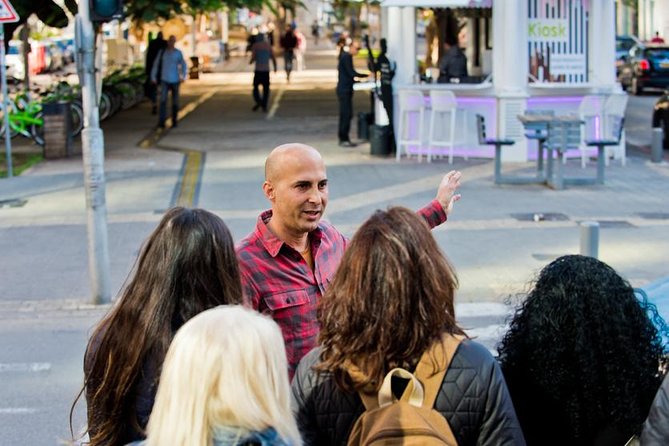
- A private, licensed English-speaking guide (ask for Oded Yavin if you can)
- UNESCO-listed Bauhaus architecture along Rothschild Boulevard
- German Templar Sarona with restored buildings and an active food scene
- Neve Tzedek’s gallery-and-café streets with old-meets-new energy
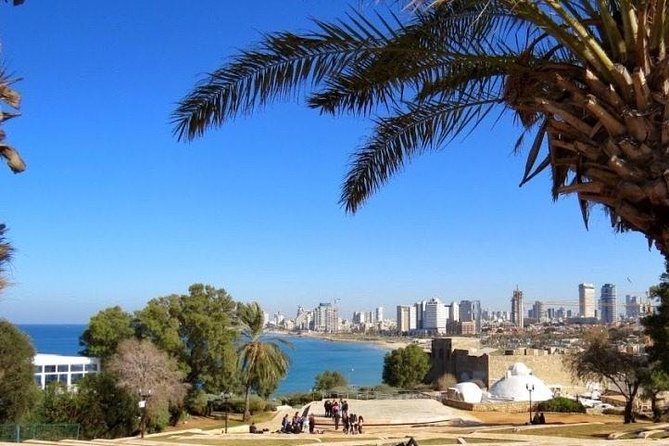
- HaTachana: an Ottoman-era station area turned into shops, dining, and art by the water
- Free entry stops for the listed sights, with food and drinks on your own
Tel Aviv and Jaffa on foot, on wheels and at the table
A full Tel Aviv walk that connects neighborhoods, not just landmarks
A lot of city tours look good on paper and still feel choppy in real life. This one works better because it moves through Tel Aviv’s layers in the order your eyes naturally want to see them.
The day is built around neighborhood mood. You start with Sarona, where you see how 19th-century German-speaking settlers shaped the city. Then you walk down Rothschild Boulevard to get the Bauhaus architecture story that earned Tel Aviv the nickname The White City. After that, you pivot into Neve Tzedek, and then cross to Old Jaffa for the market lanes and the artist colony vibe. The finish at HaTachana ties it all together, with a train-station setting now packed with shops, dining, and art near the beach.
If you like your travel grounded in streets, this is your style.
Starting in Sarona, where German Templers still show up in the streets
Your morning begins in Sarona (sometimes spelled Sarona), a neighborhood founded in 1871 by German-speaking Templers. They farmed the land, growing grapes, oranges, and vegetables, until the Second World War changed everything.
What I like about Sarona is how easily it becomes more than a history lesson. You can see the restored complex of Templar buildings, and today those buildings house boutique stores, artist galleries, trendy cafés, restaurants, and bars. The timing also makes sense because Sarona has plenty of places where you can pause, people-watch, and get a first taste of Tel Aviv’s modern dining scene.
Sarona has a “daytime street” feel that is different from both the high-energy boulevards and the older lanes of Jaffa. It is a good way to ease into the city.
Practical note: if your group includes kids, Sarona is an easier start than older, maze-like streets. Still, it is a walking tour, so comfortable shoes matter from minute one.
Rothschild Boulevard and the Bauhaus White City story
After Sarona, you head to Rothschild Boulevard, Tel Aviv’s iconic, long stretch that acts like a spine for the city. This is where you see the UNESCO-listed Bauhaus architecture that made Tel Aviv famous in architectural circles.
The key idea for me is that Bauhaus here is not stuck behind museum glass. You are walking past the real buildings that gave Tel Aviv its look. As you move along the boulevard, you get a feel for why people call it The White City. It is a visual theme you can track while you stroll, which is much easier than trying to memorize architecture dates from a pamphlet.
Rothschild Boulevard is also packed with practical city life. You pass major cultural venues and some top restaurant areas, and the boulevard is a common hangout zone for bikers and lovers, with coffee kiosks in the middle of the street. Translation: even if you do not want to commit to a sit-down meal, you can still take breaks in a very Tel Aviv way.
This stop is a classic “get your bearings fast” moment. If you want a day that helps you understand what makes Tel Aviv feel different from other Mediterranean cities, this is where you start noticing it.
More Israel taken at walking pace

Neve Tzedek: old district bones with a fashionable pulse
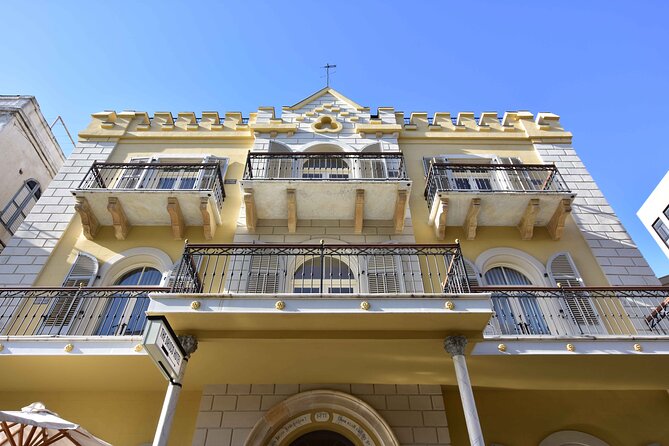
Next comes Neve Tzedek, a neighborhood often described as one of Tel Aviv’s oldest districts, built in 1867. It is still young at heart, mainly because restoration work has brought back more of the original character and energy.
This is the stretch I recommend if you like to slow down and look at doors, signage, and small street details. Neve Tzedek is known for galleries and boutiques, so you get that “browse without pressure” feeling. And if you need a break, you can stop for lunch or a café pause in local spots rather than chasing a single famous landmark.
One thing to keep in mind: Neve Tzedek is not all wide boulevards. You will feel the neighborhood’s texture, and that means a little more uneven footing and more turning corners. It is not extreme, but it is a good reason to keep your shoes on the practical side.
If your group includes art lovers, this is a smart place for them to shine.
The Suzanne Dellal Center, where contemporary dance meets neighborhood streets
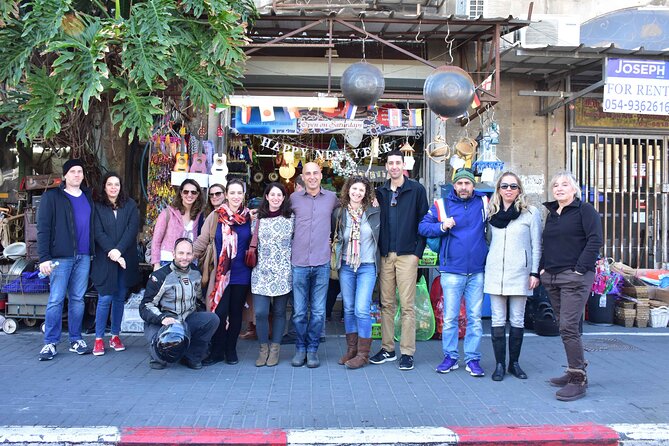
You also visit the Suzanne Dellal Center for Dance and Theatre, located right in Neve Tzedek. This is described as Israel’s premier presenter of Israeli and international contemporary dance companies.
Even if you do not catch a performance, the center is still worth your time because it connects Tel Aviv’s modern cultural scene to the neighborhood around it. The setting includes ancient orchards and winding alleyways, so it feels like contemporary art sitting within older, lived-in space.
This stop adds a different flavor to the day. Your earlier parts lean architectural and historical. Here, you are thinking about the arts as a living part of daily city life, not just something that happens at night.
HaTachana: the old Jaffa train station reworked into a modern hangout
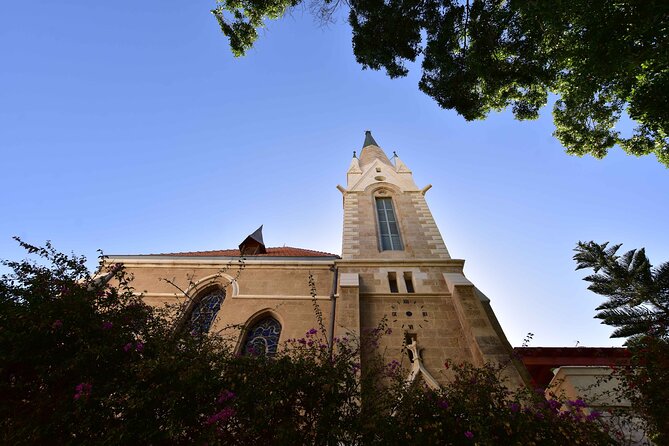
The finale is HaTachana, the old Jaffa railway station and terminus of the Jaffa to Jerusalem train line. The area includes 22 Ottoman-era buildings, and those buildings have been transformed into shops, galleries, and dining spots.
This is a great finish for two reasons.
First, it is a visual payoff. After Neve Tzedek and Old Jaffa, you end your walk somewhere that still feels connected to movement and travel, just with a new purpose.
Second, it puts you near one of Tel Aviv’s most appealing stretches of beach. That means you can extend the day on your own terms, whether you want a post-walk snack, a slow wander along the water, or a relaxed last hour without feeling like you are rushing to the next “thing.”
HaTachana is also where it is easiest to make the day your own. If your group wants shopping, it is there. If you want art, it is there. If you want food, it is there. You end with options.
Jaffa Old City: alleys, market energy, and an artist colony feel
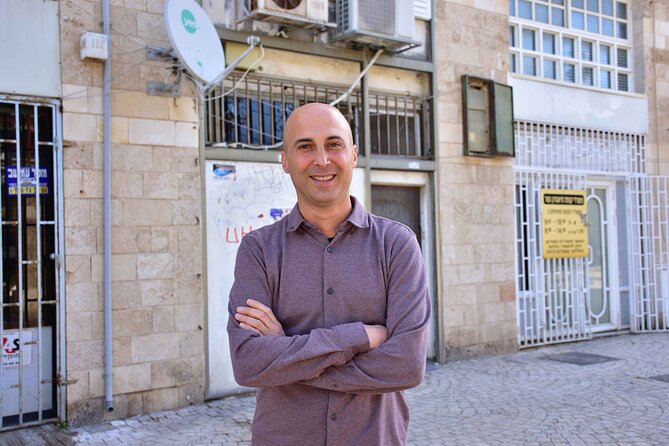
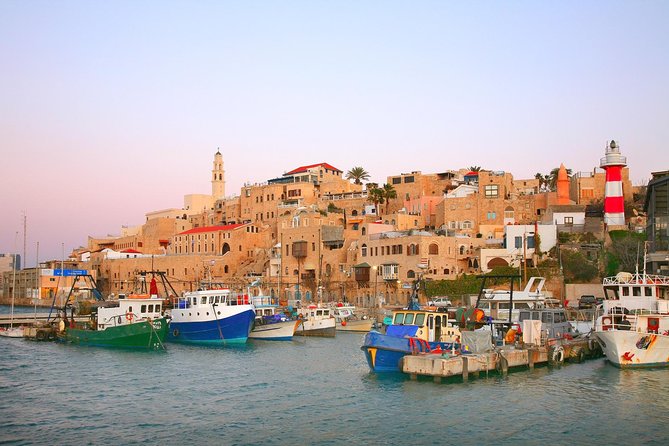
You will then step into Jaffa Old City, with beautiful alleys and streets, a market area, and an artist colony atmosphere. This is the part of the day that tends to feel more sensory, because you are in tighter streets where shops and people shape what you see.
If Sarona and Rothschild help you understand Tel Aviv’s modern planning, Jaffa adds depth. It gives you that older port-city atmosphere that makes Tel Aviv feel layered rather than one-note.
A practical tip: markets and old lanes often mean more stop-and-go. If you have someone in the group who moves slowly, plan for extra time and do not treat this section as a quick photo run.
Sarona, White City, Neve Tzedek, Jaffa, HaTachana: why the pacing works
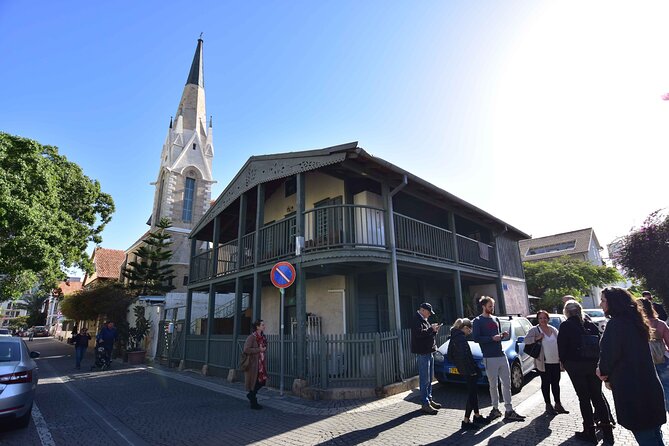
The route is built to give you variety without long transit breaks. You start in Sarona, move to the boulevard, then shift into quieter neighborhood streets, and then end with a station-to-beach area.
There is also a smart balance between “look at buildings” and “walk through neighborhoods.” You are not only seeing big-name architecture. You are also feeling the city through its cafés, galleries, and street layouts.
Another plus is that the tour is private, so you can adapt the day to your group. If you want more time browsing boutiques in Neve Tzedek, that tends to be easier with a private format. If your group wants to focus on architectural details along Rothschild Boulevard, the guide can put more weight on that.
This is also family-friendly, with the only clear rule being that children must be accompanied by an adult.
Price and value: what $130 buys you in real terms
At $130 per person for a private tour lasting about 5 hours, you are paying for one thing above all: a guide who can connect the dots as you walk.
Because the tour is private, you are not splitting attention with strangers. That matters when you want explanations that fit your interests, or when someone in your group has a question and you do not want to lose it in the group shuffle.
What is included is a professional licensed English-speaking Israeli guide, and the stops on the route have admission free notes in the itinerary for the listed sights. Food and drinks are not included, so you will still want to budget for your own lunch and snacks. There is also no hotel pickup or drop-off, so you will meet at the start location and end at HaTachana.
If you want an overview of Tel Aviv that feels practical, not scripted, this price can be fair. If you only want a couple of photo stops, you might find a self-guided walk is cheaper. But if you want someone to narrate what you are seeing while you walk, $130 is not crazy.
The guide quality that makes or breaks a walking tour
Walking tours rise or fall on the guide. This one is especially strong because it is explicitly built around an experienced, licensed guide who can read the city with you.
The standout detail from past experiences is the recommendation to look for Oded Yavin if you have the option. The praise centers on how he takes you back into history through the streets, and how he is strong on both architecture and local context. Another practical strength is that he points out places you can follow up on yourself later, including restaurant and cultural activity suggestions.
That last part matters more than people think. A tour that ends with a list of suggestions gives your day a second life, which is where the value shows up.
Getting ready: shoes, weather, and how to customize your day
This tour is built for walking, so comfortable walking shoes are not optional. Dress code is casual, so you do not need fancy clothes, but you do want footwear that can handle neighborhood streets and uneven spots.
Weather matters. The experience requires good weather, so it may shift dates if conditions are poor. If you live by umbrellas, bring a small one, but also plan for sun protection if the forecast looks bright.
The itinerary includes multiple stops with free admission notes, and you can treat the day like a choose-your-own-city adventure. The tour also says you can customize the day to your interests. If your group loves architecture, lean into Rothschild and the Bauhaus focus. If you want arts, spend more time around Neve Tzedek and the Suzanne Dellal Center area.
If food is your priority, plan your own lunch stop during Neve Tzedek. Sarona also has a big food-market vibe, so you can mix a quick bite into your wandering rather than waiting until the end.
Who this tour suits best
This tour is a good fit if you want a walkable overview of Tel Aviv with a guide who connects neighborhoods to real stories. It is also a strong choice if you care about architecture and city design, because Rothschild Boulevard and the Bauhaus focus are central.
It is also family-friendly. That does not mean it is stroller-only. It means it is structured enough that kids with an adult can enjoy the walk.
If you are a solo traveler, a private format can still be a win because you get personal attention rather than feeling like you are waiting for the slowest person in the group.
Should you book this full Tel Aviv walk?
Book it if you want one day that ties together Tel Aviv’s layers: German Templar Sarona, UNESCO-linked Bauhaus architecture on Rothschild Boulevard, the boutique lanes of Neve Tzedek, the older port streets of Jaffa, and the station-to-beach feel of HaTachana.
Skip it or keep expectations in check if you mostly want a short highlights loop or you hate walking in a structured schedule. You will walk. You will stop. You will move.
If your goal is to leave Tel Aviv understanding it a little better, and knowing where to go next on your own, this is a smart use of a morning and early afternoon.
FAQ
What is the duration of the Tel Aviv walking tour?
The tour lasts about 5 hours.
How much does the private walking tour cost?
The price is $130 per person.
Is the tour private or shared?
It is a private tour, so only your group participates.
Who will guide me, and what language is it in?
You’ll have a professional licensed English-speaking Israeli guide.
Where does the tour start and end?
It starts at Eliezer Kaplan St 26, Tel Aviv-Yafo, and ends at Park HaTachana Kaufmann St, Tel Aviv-Yafo.
What should I wear or bring for the tour?
Wear casual clothes and bring comfortable walking shoes since it is a walking tour.
Do I need a passport name and details to book?
Yes. Passport name, number, expiry, and country are required at the time of booking for all participants.
More Israel on Foot
- Walking Tour of Akko (Half-day)
★ 5.0 · 84 reviews - Tel Aviv: Jaffa Half-Day Walking Tour
★ 4.5 · 70 reviews - Tel Aviv: Florentin Saturday Walking Tour
★ 3.5 · 65 reviews - Tel Aviv: Jaffa & Carmel Market Walking Tour
★ 4.7 · 60 reviews
More Israel Tour Reviews
- From Tel Aviv: Masada & Dead Sea Full Day Tour with Pick Up
★ 4.5 · 1,496 reviews - From Tel Aviv: Jerusalem and Bethlehem Guided Day Trip
★ 4.3 · 1,316 reviews - Masada and the Dead Sea Day Trip from Tel Aviv
★ 4.5 · 1,014 reviews - Tel Aviv: Jerusalem, Bethlehem & Dead Sea
★ 4.0 · 881 reviews
Tel Aviv and Jaffa, More on Foot
- Tel Aviv Jaffa Guided Bike Tour
★ 4.5 · 178 reviews - Guided Pub Crawl Night Tour at Tel Aviv
★ 5.0 · 85 reviews - Tel Aviv 3-Hour Easy Bike Tour
★ 4.8 · 81 reviews - Tel Aviv Street Art & Graffiti Tour
★ 5.0 · 76 reviews
Recently Added Israel Tour Reviews
- private Full-day Tour to Jericho + the Dead Sea★ 5.0 · 3 reviews
- Package VIP Skip Line Services in BGN Airport with Transfer to Tel aviv Hotels★ 5.0 · 3 reviews
- Food & Drink Private Guided Tour in Tel Aviv★ 5.0 · 3 reviews
- Tel Aviv Like a Local: Customized Guided Tour by Lokafy★ 5.0 · 3 reviews
- Private Tour from Tel Aviv to Jerusalem★ 5.0 · 3 reviews
Tel Aviv & Jaffa, compared.
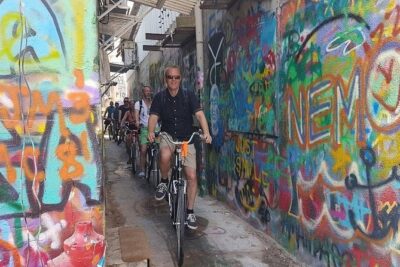 ★ 4.5Tel Aviv Jaffa Guided Bike TourFrom $62178 reviews
 ★ 5.0Guided Pub Crawl Night Tour at Tel AvivFrom $2385 reviews
 ★ 4.8Tel Aviv 3-Hour Easy Bike TourFrom $5581 reviews
 ★ 5.0Tel Aviv Street Art & Graffiti TourFrom $7876 reviews
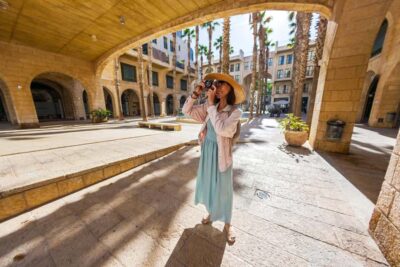 ★ 4.5Tel Aviv: Jaffa Half-Day Walking TourFrom $4970 reviews
 ★ 4.4Tel Aviv: Pub Crawl with 4 Stops and Free ShotsFrom $2866 reviews
 ★ 3.5Tel Aviv: Florentin Saturday Walking TourFrom $6965 reviews
 ★ 4.7Tel Aviv: Jaffa & Carmel Market Walking TourFrom $8960 reviews
Lists this tour appears in