
REVIEW · TEL AVIV & JAFFA
Tel Aviv: Carmel Market & Neighborhood Guided Walking Tour
Carmel Market smells like the Middle East. This 90-minute guided walking tour turns Tel Aviv’s biggest open-air market into a story of food, migration, and neighborhood life, with a Yemenite flavor angle. You also get the bonus of wandering cobblestone streets lined with pastel buildings, plus Bauhaus-era details that help you see the city as more than just a beach stop.
I especially like two things. First, the expert local guide keeps the market grounded in real day-to-day food culture, from spice aromas to what people eat and buy. Second, you walk with purpose, so you notice architecture and neighborhood texture instead of just snapping photos and moving on.
One thing to plan for: it runs rain or shine, and much of the time is on uneven stones. Bring comfortable shoes, and if it is hot, make sure you have water and sunscreen.
In This Review
- Quick hits
- Carmel Market and the Yemenite angle: what makes this tour different
- Starting at Poli House on Allenby Street, then moving on foot
- Shuk HaCarmel stalls: spices, produce, and the real aroma lesson
- Immigrants shaped Tel Aviv meals, from Yemen to everyday street food
- Cobblestone streets and market texture: what to watch for
- Bauhaus architecture cues you can actually spot while walking
- Nachalat Binyamin street art and local crafts stop
- Optional food tastings upgrade: lunch-size, not snack-size
- Pace, group size, and how to use the free shopping time
- Price and value check for a 90-minute market walk
- Who should book this Carmel Market walking tour
- Should you book it?
- FAQ
- How long is the Carmel Market and neighborhood walking tour?
- Where is the meeting point?
- What is included in the price?
- Are food tastings included by default?
- Does the tour run in bad weather?
- What should I bring?
- What are the cancellation and payment options?
Quick hits
- Carmel Market plus Yemenite food context, using market life as the lesson
- Malawach and sabich history, tied to immigrant influence on what Tel Aviv eats
- Bauhaus architecture cues as you walk through the historic district
- Nachalat Binyamin stop for street art and local crafts
- Small group size up to 15, with time for shopping questions
- Optional lunch-sized tastings, if you upgrade
Tel Aviv and Jaffa on foot, on wheels and at the table
Carmel Market and the Yemenite angle: what makes this tour different
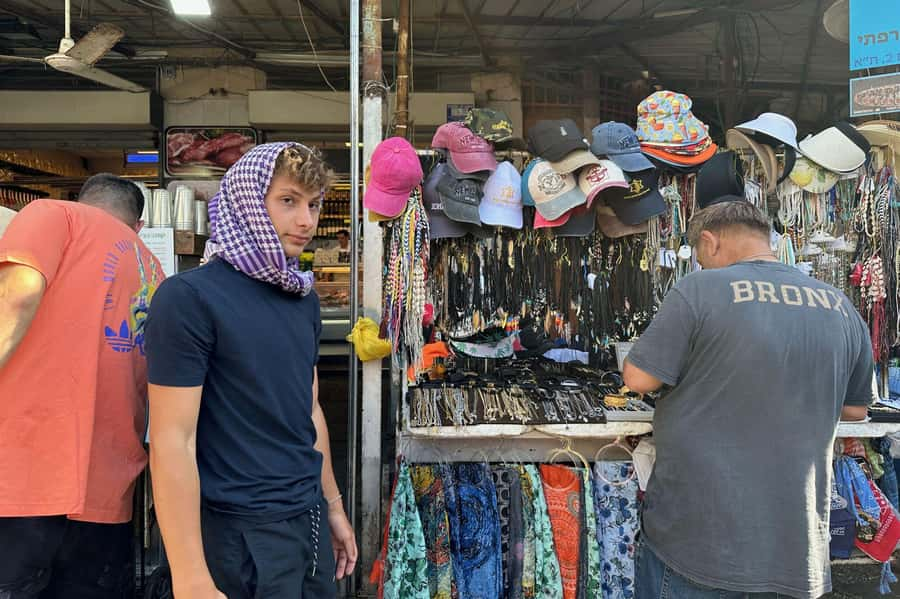
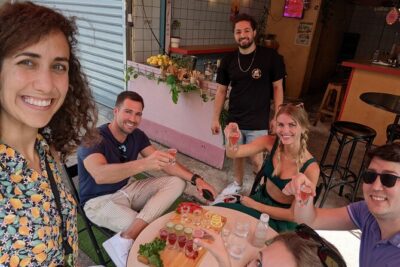
Carmel Market (Shuk HaCarmel) is the kind of place you can wander for hours on your own. But a guided walk matters because it gives you a framework, so the sensory overload becomes useful information. You learn how different communities shaped the food scene, and you see why Tel Aviv’s modern vibe still runs on older roots.
This tour leans into that with a Yemenite twist, which is a practical way to understand why certain foods and styles show up where they do. You also get the market’s scale, it is described as Tel Aviv’s largest open-space market in the center, with street vendors, shops, and bakeries all in the same visual field. That makes it easier to understand the “melting pot” idea in a way you can taste and recognize.
The best part is that you are not just looking at items on display. You are learning how immigrants influenced daily meals and what people carried with them. If you care about food history but do not want a classroom tone, this is the right format.
Starting at Poli House on Allenby Street, then moving on foot
Your meeting point is simple: meet on the corner outside the hotel Poli House at the junction of Carmel Market and Allenby St. From there, you stay in the center of Tel Aviv and focus on a compact walking route.
The walk covers about 1 km (0.6 miles), and the total time is 90 minutes. That is a good pace for first-time visitors who want orientation without turning the day into a marathon. It also means you can pay attention to small details like how the stalls are arranged, how shoppers move, and how the neighborhood looks at street level.
You should also expect some stops where your guide helps with language and purchasing. There is time to buy local products, and your guide can help with translations if needed. I like this because it makes the market less intimidating, especially if you are nervous about asking what something is or choosing between similar items.
Shuk HaCarmel stalls: spices, produce, and the real aroma lesson
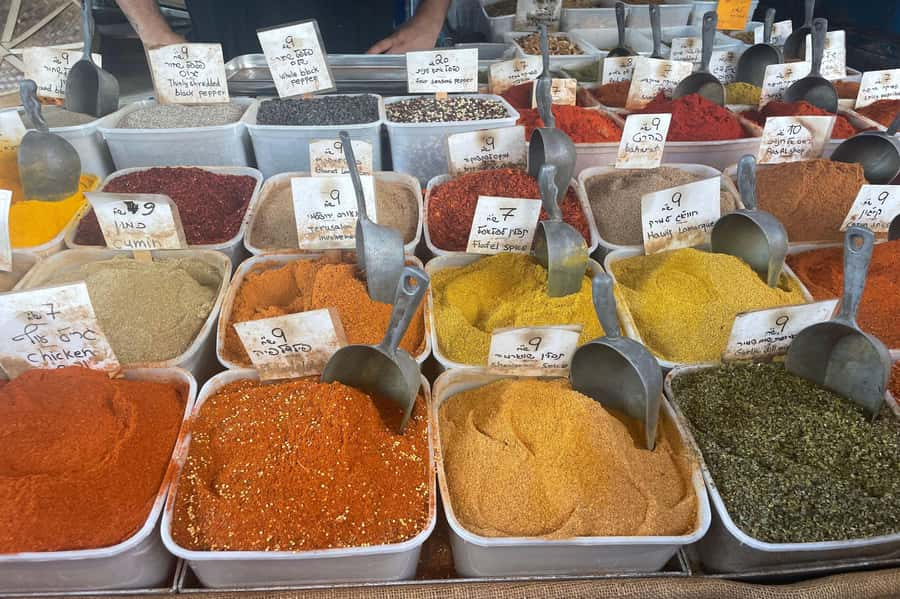
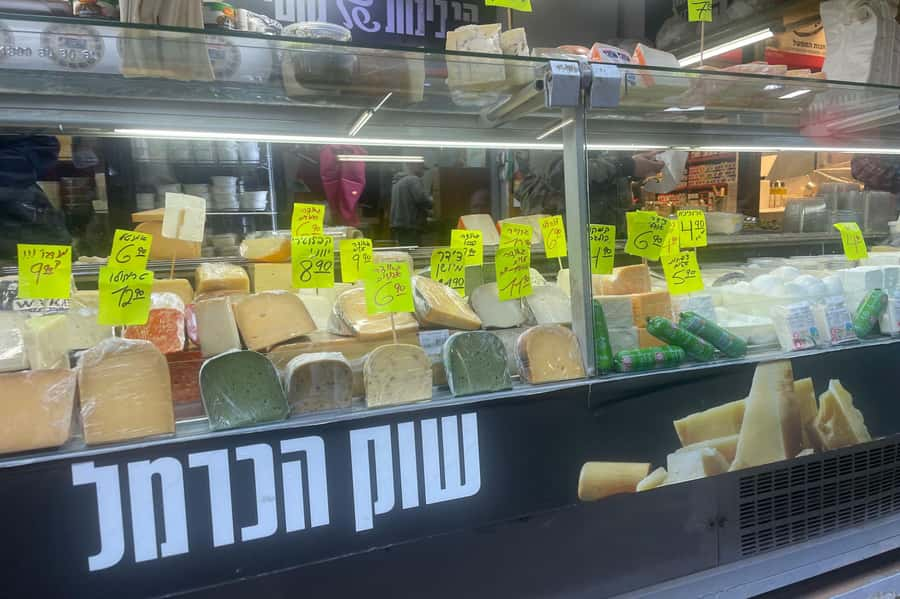
Carmel Market is famous for a reason. You see fresh produce, stacked spice mounds, and dishes that look like they are made for instant decision-making. Your guide walks you through the open-air lanes so you understand what you are looking at, not just what it smells like.
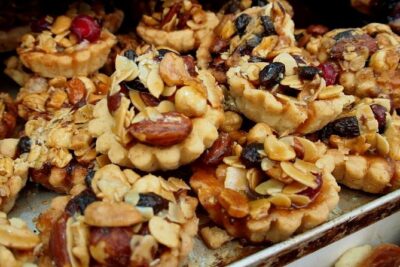
The tour highlights the sheer variety of spices, dishes, and produce. That variety can be hard to interpret if you do not know what to compare. Here, you get context for why certain ingredients show up together and how they reflect the different culinary traditions that landed in Tel Aviv over time.
A fun, practical way to use this portion: pick one spice or one ingredient that you recognize and ask your guide what it is used for. Even if you do not buy it, the answer helps you connect the market to meals you might cook later. The guide also helps you spot what looks fresh right now, which is more useful than generic “this is good” advice.
Also, there is time for you to purchase local products. That matters because market value is not only about tasting. It is also about taking something home that actually reflects the place you visited.
Still hungry? More market and tasting walks in Israel
Immigrants shaped Tel Aviv meals, from Yemen to everyday street food
The most memorable part of this tour is how it frames food as a story of movement. Tel Aviv did not invent everything it eats. Immigrants changed what people cook, how they shop, and what “comfort food” looks like.
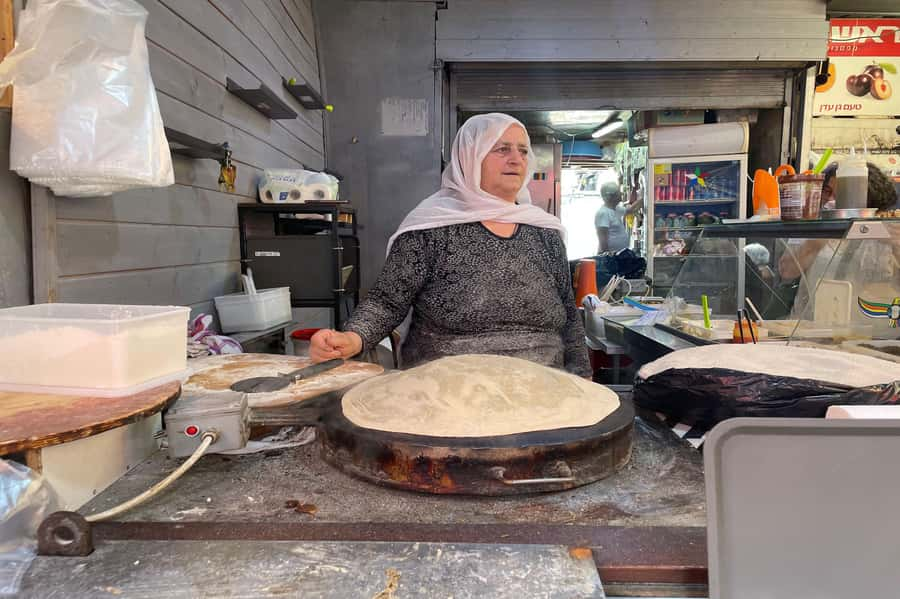
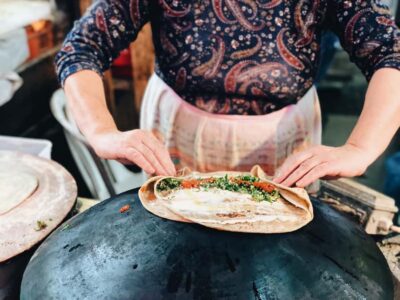
You will hear how Jewish immigrants influenced the food culture around the market. You also learn about specific dishes that came to the region with immigrants, including malawach and sabich. Even if you already know these names, hearing how they connect to daily life gives them more meaning than a menu description.
Malawach and sabich are great examples because they are both tied to street food culture and everyday hunger. The tour does a smart thing by using them as anchor points for the bigger idea: migration brings ingredients and techniques, then local life reshapes them. That is why Tel Aviv’s modern identity and older food traditions can exist side by side in the same streets.
And because this is guided, you do not just hear names. You get a sense of why these foods fit the city’s rhythms. That makes the market feel like a living system, not a static photo spot.
Cobblestone streets and market texture: what to watch for
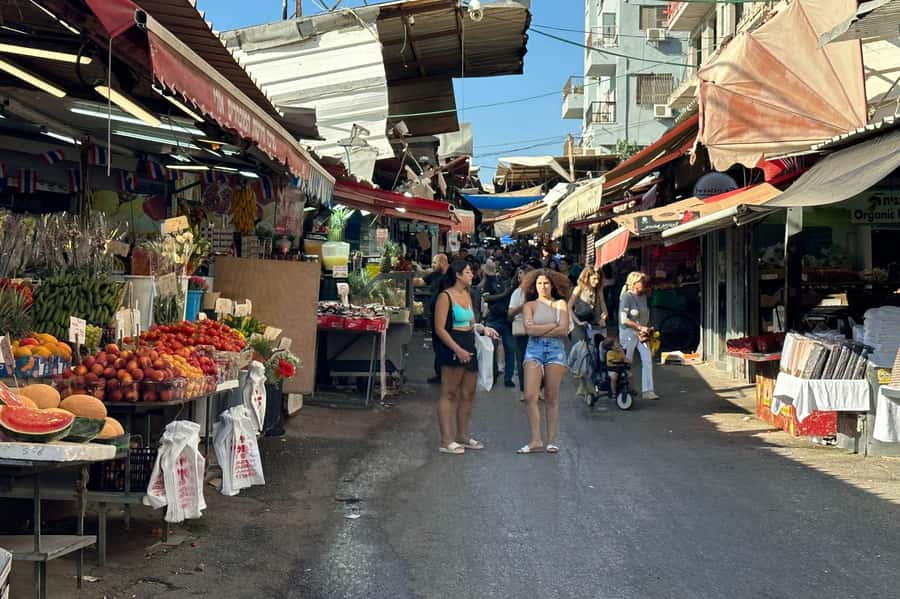
Part of what makes Carmel Market special is how it looks and feels while you walk. The highlights call out cobblestone streets and pastel-colored buildings, and you will notice that the market zone blends into the surrounding neighborhood instead of feeling walled off.
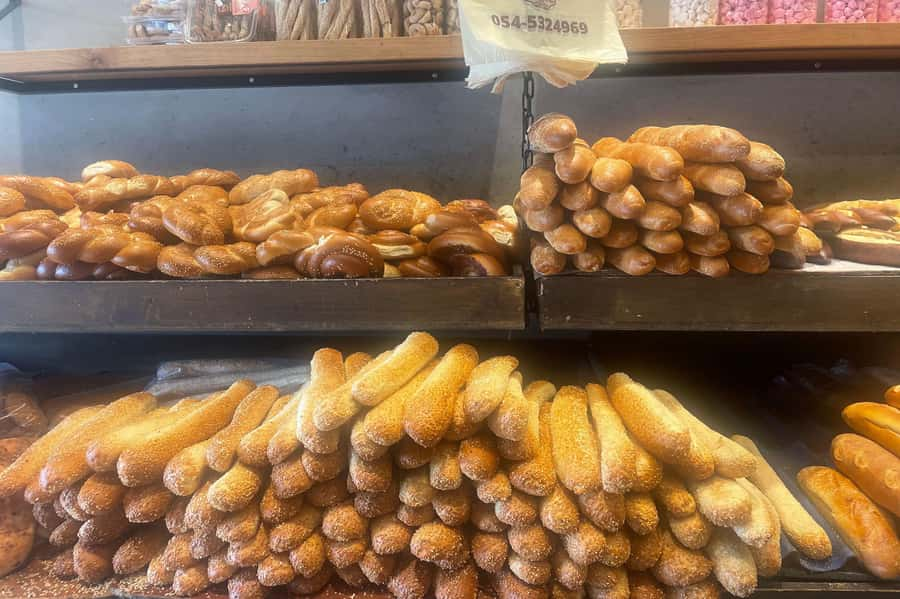
As you move from stall to stall, watch for the “micro choices” people make. Where do shoppers pause longest? Which items get handled more, bread-like goods or spices? Which counters look busy in a steady way, not just at a peak moment? Those small observations help you understand the market like a local.
Your guide also points out hidden gems around the historic district. That is not a vague promise either. You are taken through areas where the architecture and the food culture reinforce each other, so you can connect what you see to the history you are learning.
One practical drawback: the market is not a smooth walkway. It is real street terrain. Plan on slowing your steps, especially if you have sensitive feet. This is why comfortable shoes matter more than style.
Bauhaus architecture cues you can actually spot while walking
Tel Aviv is known for Bauhaus architecture, and this tour uses that fact in a smart way. You learn about the distinctive Bauhaus architecture while you are already in the right streets, so it stops being a trivia line and becomes something you can see.
The tour weaves architecture into your overall understanding of the neighborhood. That matters because Tel Aviv’s identity is often discussed in broad strokes, modern city versus old influences. Here, the architecture is not separate from the food story. It helps you see the layers at street level.
If you are the type who usually only photographs buildings from a distance, this tour nudges you to look closer. Try focusing on façades and window patterns as you pass between market lanes and nearby streets. Then, tie it back to what you hear about immigrant life and how people built their everyday world.
It is the kind of learning that makes a city feel more legible fast. You get bearings quickly, because you understand the “why” behind what you are seeing.
Nachalat Binyamin street art and local crafts stop
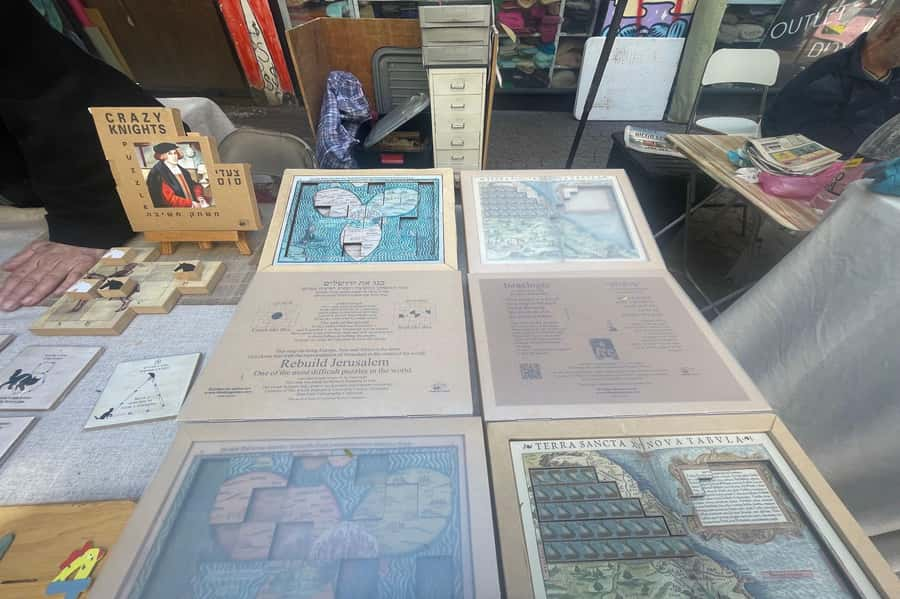
The tour does not confine you to one narrow view of Tel Aviv. You also head toward the Nachalat Binyamin district, which is known for street art and local crafts. That shift is a nice break from only thinking in terms of food.
Street art and crafts give you another lens on identity. If the market is where people eat and buy, this area helps you see how people create and express. It also helps explain how Tel Aviv stays modern without losing its roots, because culture keeps moving and changing.
Practically, this portion helps you feel like you covered more than a single street corner. The walking route stays compact, but you get variety in what you see: stalls and spices first, then art and handmade goods. If you like to take home a small souvenir that feels connected to real local makers, this stop is the kind that can deliver.
Optional food tastings upgrade: lunch-size, not snack-size
If you upgrade for food tastings, you get food that is equivalent to a lunch portion. That is an important detail for value. With just the base tour, you are paying mostly for guidance, context, and time to shop. With the upgrade, you are also paying for actual meal value built into the experience.
Because the tastings are lunch-sized, this is the option I would choose if you do not want to spend extra time hunting for a meal later. It also suits people who learn best by eating along the way, not just listening.
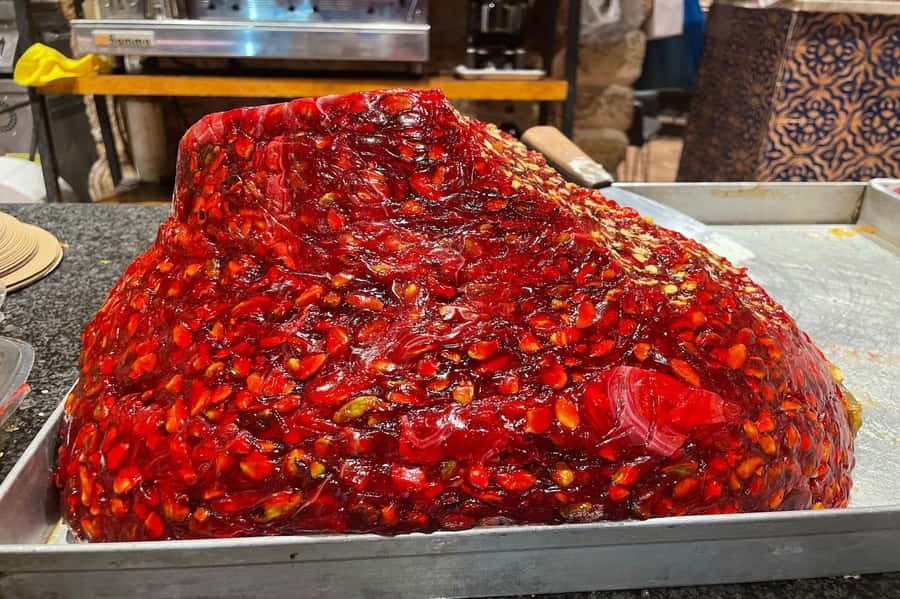
Your tour still includes time to purchase products either way. So even with tastings, you can still pick up spices or snacks you want to enjoy later. Just plan your budget with the understanding that the upgrade is doing more than adding a few bites.
Pace, group size, and how to use the free shopping time
This is a small-group tour, with a maximum group size of 15 people. That matters because you get a better chance to ask questions without feeling rushed. You also get more realistic attention during tastings and market stops.
The route is about 1 km, so you can expect frequent stops rather than long walking stretches. It is designed for a 90-minute window, meaning the guide can keep you moving and still give context for what you are seeing.
There is also time to purchase local products with the help of your guide. Your guide can provide translations if needed. This is one of those details that can make or break the experience. Markets can be intimidating when you cannot read labels or ask simple questions, and having a human translator on your side saves time and stress.
I also recommend bringing water and using breaks strategically. It is rain or shine, and in heat, even shade can be limited in a market environment.
Price and value check for a 90-minute market walk
At $39 per person for 90 minutes, this tour is priced like a guided experience, not like a self-guided market visit. The value comes from three things you cannot replicate as easily on your own: an expert local guide, a focused route that covers the most meaningful parts, and built-in explanations that connect food to immigrant history.
If you plan to snack anyway and you like learning while you eat, the food tastings upgrade can be the best value move. Because tastings are equivalent to a lunch portion, you may end up paying less overall than a day where you do a guided walk plus a separate meal.
If you want to keep costs down, you still get time to purchase local products and learn the stories behind what you see. Just remember that drinks are not included, so you might spend a little extra if you want something during the walk.
For me, the deciding factor is how much you value context. If you like markets only as a place to shop, you can go alone. If you want the market to teach you something and help you make better choices, $39 feels reasonable.
Who should book this Carmel Market walking tour
This tour fits well if you:
- want a short Tel Aviv city intro focused on food and local culture
- care about immigrant influence on everyday meals
- like guided architecture cues while you walk
- enjoy street-level neighborhoods more than museum-style stops
It may not fit as well if you need a very smooth, minimal-walking route. The tour includes cobblestones, and it runs rain or shine, so you should plan for real street conditions. It also is only about 1 km, but it is still a walking tour, not a seated event.
It is also a good choice if you travel with questions. The guide helps with translations and helps you shop, so you can leave with items you actually understand.
And if you get a guide like Katya, who is specifically praised for making the visit lively and closely connected to Israel’s history, you will likely enjoy the pacing and storytelling style. A guide can turn a market from visual overload into a clear, satisfying walk.
Should you book it?
Yes, book it if you want Tel Aviv to make sense through food. This is a compact 90-minute window that connects Carmel Market to immigrant influence, everyday dishes like malawach and sabich, and visible neighborhood texture that you can spot while walking.
Skip it only if you dislike uneven walking or you strongly prefer independent exploring with no story angle. Even then, the market is worth seeing. This tour just adds a layer that most people appreciate once they are in the lanes.
If you are trying to choose between “see the market” and “learn the market,” this one leans hard toward learning without slowing you down.
FAQ
How long is the Carmel Market and neighborhood walking tour?
The tour lasts 90 minutes.
Where is the meeting point?
Meet outside the hotel Poli House at the junction of the Carmel Market and Allenby St.
What is included in the price?
The tour includes a 90-minute walking tour, an expert local guide, time to purchase local products, and food tastings only if you choose the food tasting upgrade.
Are food tastings included by default?
No. Food tastings are included only if you purchase the food tasting upgrade.
Does the tour run in bad weather?
Yes, the tour takes place rain or shine.
What should I bring?
Bring comfortable shoes, a hat, sunscreen, and water.
What are the cancellation and payment options?
You can cancel up to 24 hours in advance for a full refund. You can also reserve now and pay later.
More Israel Tour Reviews
- From Tel Aviv: Masada & Dead Sea Full Day Tour with Pick Up
★ 4.5 · 1,496 reviews - From Tel Aviv: Jerusalem and Bethlehem Guided Day Trip
★ 4.3 · 1,316 reviews - Masada and the Dead Sea Day Trip from Tel Aviv
★ 4.5 · 1,014 reviews - Tel Aviv: Jerusalem, Bethlehem & Dead Sea
★ 4.0 · 881 reviews
More Market Tables Around Israel
- Carmel Market Tasting Tour – LocaLocal
★ 5.0 · 140 reviews - Tel Aviv: Jaffa & Carmel Market Walking Tour
★ 4.7 · 60 reviews - Tel Aviv: Carmel Market & Tel Aviv Tour with Tastings
★ 3.8 · 36 reviews - Tel Aviv Food Tour of the Carmel Market
★ 4.0 · 29 reviews
Tel Aviv and Jaffa, More on Foot
- Tel Aviv Jaffa Guided Bike Tour
★ 4.5 · 178 reviews - Guided Pub Crawl Night Tour at Tel Aviv
★ 5.0 · 85 reviews - Tel Aviv 3-Hour Easy Bike Tour
★ 4.8 · 81 reviews - Tel Aviv Street Art & Graffiti Tour
★ 5.0 · 76 reviews
Recently Added Israel Tour Reviews
- private Full-day Tour to Jericho + the Dead Sea★ 5.0 · 3 reviews
- Package VIP Skip Line Services in BGN Airport with Transfer to Tel aviv Hotels★ 5.0 · 3 reviews
- Food & Drink Private Guided Tour in Tel Aviv★ 5.0 · 3 reviews
- Tel Aviv Like a Local: Customized Guided Tour by Lokafy★ 5.0 · 3 reviews
- Private Tour from Tel Aviv to Jerusalem★ 5.0 · 3 reviews
Tel Aviv & Jaffa, compared.
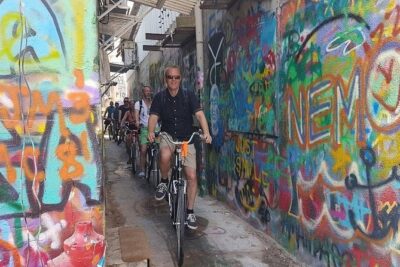 ★ 4.5Tel Aviv Jaffa Guided Bike TourFrom $62178 reviews
 ★ 5.0Guided Pub Crawl Night Tour at Tel AvivFrom $2385 reviews
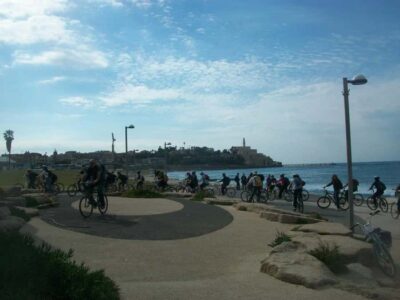 ★ 4.8Tel Aviv 3-Hour Easy Bike TourFrom $5581 reviews
 ★ 5.0Tel Aviv Street Art & Graffiti TourFrom $7876 reviews
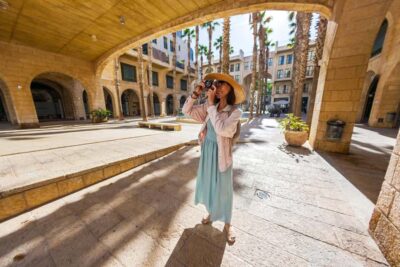 ★ 4.5Tel Aviv: Jaffa Half-Day Walking TourFrom $4970 reviews
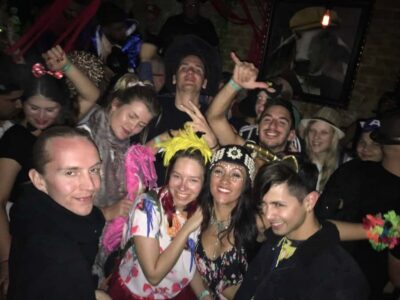 ★ 4.4Tel Aviv: Pub Crawl with 4 Stops and Free ShotsFrom $2866 reviews
 ★ 3.5Tel Aviv: Florentin Saturday Walking TourFrom $6965 reviews
 ★ 4.7Tel Aviv: Jaffa & Carmel Market Walking TourFrom $8960 reviews
Lists this tour appears in