
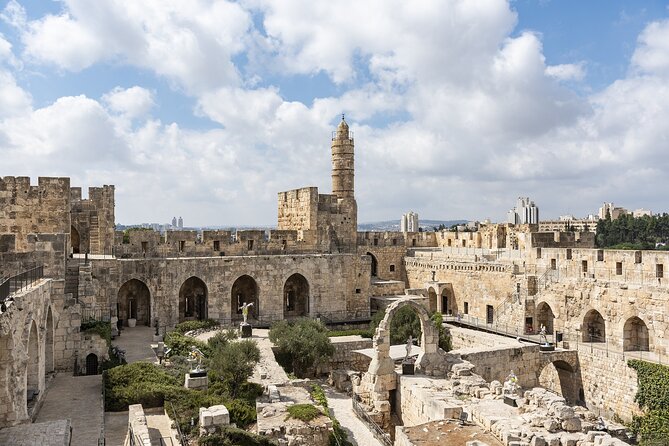
REVIEW · JERUSALEM CITY TOURS
Jerusalem & Dead Sea Private Tour – Visit Holy Jerusalem & Dead Sea Relaxation
Jerusalem and the Dead Sea, packed into one day. You get a full morning in Old Jerusalem at places that matter to multiple faiths, then you escape to the Jordan Rift Valley for the slow, silly joy of floating on the Dead Sea. It is a classic “hit the highlights fast” plan that still leaves room to breathe.
I especially like the comfort and ease of the logistics. Free hotel pickup and drop-off plus an air-conditioned vehicle means you start the day without hunting taxis or timing buses, and you stay with one plan all the way.
The other big win is the guide-driven pacing. With a government-licensed guide (and often guides like Enrique or Saúl who are praised for humor and clear explanations), you spend more time understanding what you are seeing and less time guessing. One thing to consider though: it is a long day with walking in historic streets, and holy-site dress rules plus sun and heat can make it feel busier than the word private suggests.
In This Review
- Key points to know before you go
- The real value: two icons in one long day
- Pickup, timing, and how to make the day feel manageable
- Mount of Olives: the view that sets the mood
- Gethsemane: olive groves, prayer spaces, and quiet weight
- Mount Zion: King David’s Tomb and the Room of Last Supper
- Via Dolorosa and the Church of the Holy Sepulchre
- The Cardo: a restored Roman Road moment in the middle of it all
- Western Wall: Kotel prayer space and why it matters
- Driving to the Dead Sea: the mental switch you need
- Floating and the optional mud bath at the lowest point
- Entrance fees and the one thing you should double-check
- What to wear and pack for Jerusalem plus Dead Sea mud
- Who this private day trip fits best
- Should you book this Jerusalem and Dead Sea private tour?
Key points to know before you go
- Private group, no waiting around: it is only your group in your vehicle, so the pace can match your energy.
- Panoramic start at the Mount of Olives: you get city views before you head into the Old City lanes.
- Holy sites in a smart order: Mount Zion, then the Christian Quarter, then the Western Wall, so you cover a lot without backtracking as much.
- Cardo Roman Road stop: you get a restored feel for Roman Jerusalem, not just churches and prayer spaces.
- Dead Sea floating plus optional mud bath: you can keep it simple or add the mineral mud treatment.
- Comfort items are not optional: plan for walking shoes, sun protection, and a towel for the Dead Sea stretch.
More of Jerusalem, beyond the Old City gates
The real value: two icons in one long day
Jerusalem and the Dead Sea are both worth your time. The trick is that each one is also its own world. Jerusalem can feel dense, emotional, and nonstop. The Dead Sea is the opposite, slow and salty, where your job is mostly to float, rinse, and laugh at your own floating skill.
This tour is built for people who do not want to choose one day for Jerusalem and lose the other must-see. At the same time, it does not feel like you just sprint between photo stops. The time allocations at each site are short but realistic, and the guide role matters, because you are not just looking at stones. You are getting the meanings behind them.
At $220 per person, the value is less about a bargain deal and more about reducing friction. You are paying for private transport, a licensed guide, and a route that strings together Old Jerusalem and the Dead Sea without you having to piece together a half-dozen tickets, directions, and meeting points.
Pickup, timing, and how to make the day feel manageable
This is a private tour from the Tel Aviv area, with hotel pickup and drop-off included. The plan is described as running about 8 to 11 hours (with a day-trip vibe that can stretch), so it is not a light half-day.
That matters because you should plan your rhythm. Start the day with breakfast and water in hand. Then treat the Jerusalem portion like a guided walk with stops that are meant to be felt, not conquered. The Dead Sea portion is what resets you, with time to relax at a resort and float.
Practical tip: pack a small day bag with what you will need for sun, not what you want to organize later. You’ll be glad you have it during the Old City walkways and again when you head to the shore.
Mount of Olives: the view that sets the mood
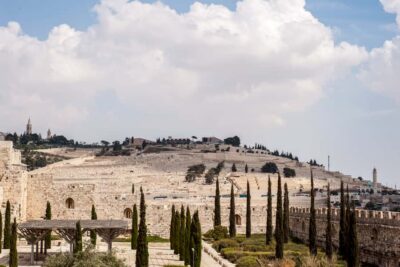
You begin at the Mount of Olives, where you get a panoramic look over Jerusalem. This stop is more than a scenic turnout. It is a spiritual and historical hinge point, because it sits between the Temple Mount area and the Judean Desert to the east.
From here, the guide frames why this location shows up so often in the New Testament, including the idea of Jesus ascending into heaven (Acts 1:9 to 12) and moments associated with Jesus overlooking Jerusalem. Even if you are not a scripture memorizer, the perspective helps you understand why people build pilgrimages here.
The visit is about 30 minutes, and the ticket is listed as free. That short timing is good. You get the big “wow” view without turning the morning into a long wait.
Still choosing a Dead Sea day? Here are the alternatives
Gethsemane: olive groves, prayer spaces, and quiet weight
Next comes the Garden of Gethsemane at the foot of the Mount of Olives. The garden is described as a key place in the Christian story, tied to Jesus’ agony in the garden and the lead-up to his arrest before the crucifixion.
What you will likely notice, depending on the exact church property setup on the day, are the small olive groves arranged around the area. The point is not to treat it like a botanical park. It is to recognize how sacred spaces can carry a sense of quiet through their layout, materials, and the way people move through them.
This is also about 30 minutes. In practice, it works well as a transition. You go from a wide city view to a more intimate, reflective setting.
Mount Zion: King David’s Tomb and the Room of Last Supper
Then you head to Mount Zion, with stops at King David’s Tomb and the Room of Last Supper, also called the Cenacle.
A practical note you’ll appreciate: Mount Zion can mean the hill, but it is also used to mean the city. That kind of detail matters in Jerusalem, because signage, names, and traditions overlap. The tour plan also points out that there is no certainty that the site is literally King David’s burial place, even though it is considered sacred in Jewish tradition.
For Christians, the Cenacle tradition is a major reason people come. The Room of the Last Supper is treated as one of the holiest sites for Christianity in Jerusalem, linked to the tradition about the last supper.
This stop is listed as about 1 hour and free for admission in the plan. In real life, this is a spot where you can feel the emotional intensity. If your group has people of different faiths, this can be a good moment to slow down and listen to the guide’s framing.
Via Dolorosa and the Church of the Holy Sepulchre
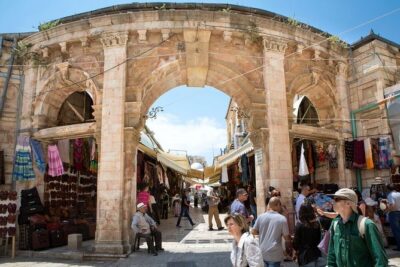
After Mount Zion, the route continues through the Christian Quarter area, with time to walk the Via Dolorosa and visit the Church of the Holy Sepulchre.
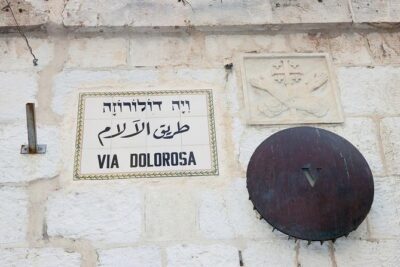
Via Dolorosa is described as a processional route that represents the path believed to be taken on the way to crucifixion. It is a narrow stone path lined with ritual and religious meaning. You should expect it to feel busy even when it is not packed, simply because it is dense with devotion.
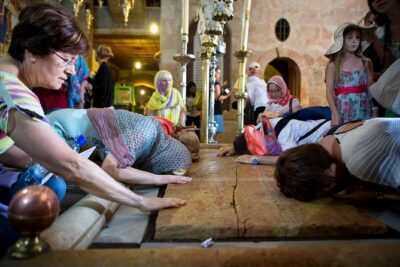
Then you visit the Church of the Holy Sepulchre, presented as the most sacred site for millions of Christians, tied to crucifixion, burial, and resurrection. The tour mentions Helena identifying the site and describes Calvary or Golgotha as part of the story.
If you have only one Jerusalem church to remember, this is the one. Just know it can feel physically tight and emotionally heavy. Give yourself permission to pause, breathe, and let the guide help you connect the locations to the storyline instead of trying to mentally map everything at once.
The plan allocates about 2 hours for Via Dolorosa and about 1 hour for the Church visit. That is enough time to see what matters, without turning it into a sprint.
The Cardo: a restored Roman Road moment in the middle of it all
One stop that can surprise people is the Cardo, the restored Roman Road. The plan has you enter the Old City and walk through Armenian and Jewish quarters to this newly excavated and restored segment.
This is not a church, and it is not a wall you pray at. It is an archaeology and street-history moment. The plan describes the Cardo as linking major Byzantine Jerusalem churches, and that connection helps you picture how people moved in earlier centuries.
Time is shorter here, about 30 minutes. Think of it as your palate cleanser inside the Old City. You stop worship tourism for a bit and get street-level context for how Jerusalem worked.
Western Wall: Kotel prayer space and why it matters
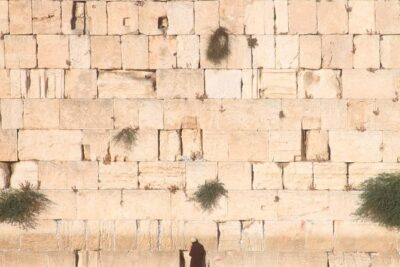
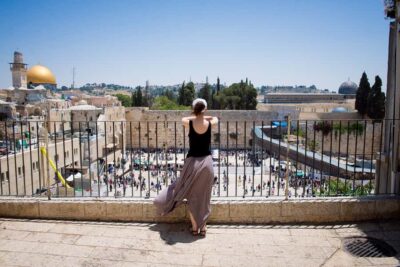
Next is the Western Wall, also called the Kotel. The plan describes it as an ancient limestone wall segment in the Old City, with holiness linked to its proximity to the Temple Mount.
A key detail the tour includes is that because of Temple Mount entry restrictions, the wall is the holiest place where Jews are permitted to pray, though the Foundation Stone is behind it. That helps you understand why this is not just a landmark, but a living prayer space.
This stop is about 30 minutes. In practice, that is long enough to take in the scale, watch the prayer rhythm, and understand etiquette. If you are unsure about how people expect visitors to behave, let the guide cue you on what is respectful. A good private guide makes this easy.
Driving to the Dead Sea: the mental switch you need
When the tour leaves Jerusalem behind, you drive to the Dead Sea area in the Jordan Rift Valley. The plan notes it as the lowest place on earth and highlights the high salt density that lets you float.
This is a real mental switch. In Jerusalem, you are surrounded by stone, story, and crowds. At the Dead Sea, you are surrounded by water that does not act like normal water. You move differently, your skin feels different, and your brain slows down because you are not trying to “do” anything.
This part is about relaxation with a set stop at one of the resorts along the shore.
Floating and the optional mud bath at the lowest point
At the Dead Sea shore, the plan includes time to relax, float, and enjoy the opportunity for an optional mud bath.
Floating is the headline, and the tour explains why it happens: the water’s high salt density. Expect to feel like you are reclining on top of the surface rather than swimming through it. The guide can help you with basic safety and how to handle the float without turning it into a salty face incident.
Then there is the mud bath option. The plan calls the mud mineral rich and “health-giving,” with a chance to cover yourself to benefit from its therapeutic qualities. If you choose it, treat it as a messy activity. Bring a towel and be ready for rinsing stations and the urge to wipe off first, think later.
This stop is listed as about 2 hours. That seems right. It gives you enough time to float more than once, and it leaves room for a calmer rinse-down so you do not feel rushed.
Entrance fees and the one thing you should double-check
The tour description includes a claim that all entrance fees are included, but another section lists entrance fees as not included. I do not like surprises, especially in Jerusalem where the small costs add up fast.
So here is the practical move: before you lock in your day, confirm whether entrance fees are fully covered for the specific sites you will enter. If they are included, great. If not, you will at least know what to budget.
What to wear and pack for Jerusalem plus Dead Sea mud
This tour mixes holy-site etiquette with salty water reality. The plan is clear about what you should bring and how you should dress.
Bring:
- Comfortable walking shoes
- A hat
- Towels
- Sunglasses
- Sun screen
Dress expectations in Jerusalem are noted as modest, with head covering required for holy sites. If you already travel with a light scarf, you are set. If not, plan to get one locally before the tour.
Dead Sea tip: pack for the reality that everything will feel a little salty or muddy after. That means protecting your phone, water bottle, and extra clothes.
Who this private day trip fits best
This experience is a strong match if:
- You want both Jerusalem highlights and the Dead Sea in one day.
- Your group values a guided narrative, not just a checklist.
- You prefer private pacing over group tours and want a driver to handle the long stretches.
It is also a good choice for families and mixed-interest groups, since different stops connect to different traditions. One person can care about the Western Wall. Another cares about the Via Dolorosa walk. Another just wants the views from the Mount of Olives and the Dead Sea float.
If your group has very limited mobility, this is worth thinking through. The plan is heavy on walking in historic areas, even if each stop is timed. I would treat it as a “comfortable walking required” day.
Should you book this Jerusalem and Dead Sea private tour?
Book it if you want a focused day that strings together Jerusalem’s biggest emotional and iconic sites, then gives you real decompression time at the Dead Sea. The biggest reason is value in practice: private pickup, a licensed guide, and a route built so you can cover a lot without wrestling schedules.
Skip or reconsider if you hate long days, need slow pacing, or are sensitive to religious-site dress rules and tight spaces in Jerusalem. And do confirm entrance-fee coverage because the details provided are not perfectly consistent.
If you do go, you will get the best results by packing for heat and walking, listening closely to the guide’s context, and treating the Dead Sea float like the reset button it is meant to be.
More Israel Tour Reviews
- From Tel Aviv: Masada & Dead Sea Full Day Tour with Pick Up
★ 4.5 · 1,496 reviews - From Tel Aviv: Jerusalem and Bethlehem Guided Day Trip
★ 4.3 · 1,316 reviews - Masada and the Dead Sea Day Trip from Tel Aviv
★ 4.5 · 1,014 reviews - Tel Aviv: Jerusalem, Bethlehem & Dead Sea
★ 4.0 · 881 reviews
More Days Down at the Dead Sea
- From Tel Aviv: Masada & Dead Sea Full Day Tour with Pick Up
★ 4.5 · 1,496 reviews - Masada and the Dead Sea Day Trip from Tel Aviv
★ 4.5 · 1,014 reviews - Tel Aviv: Jerusalem, Bethlehem & Dead Sea
★ 4.0 · 881 reviews - From Tel Aviv: Masada, Ein Gedi & Dead Sea Tour
★ 4.2 · 705 reviews
Jerusalem, Other Days Out
- From Tel Aviv: Jerusalem and Bethlehem Guided Day Trip
★ 4.3 · 1,316 reviews - Tel Aviv: Jerusalem, Bethlehem & Dead Sea
★ 4.0 · 881 reviews - Day Tour to Jerusalem and Bethlehem from Tel Aviv
★ 4.5 · 720 reviews - Old and New Jerusalem Day Trip from Tel Aviv
★ 4.5 · 296 reviews
Recently Added Israel Tour Reviews
- private Full-day Tour to Jericho + the Dead Sea★ 5.0 · 3 reviews
- Package VIP Skip Line Services in BGN Airport with Transfer to Tel aviv Hotels★ 5.0 · 3 reviews
- Food & Drink Private Guided Tour in Tel Aviv★ 5.0 · 3 reviews
- Tel Aviv Like a Local: Customized Guided Tour by Lokafy★ 5.0 · 3 reviews
- Private Tour from Tel Aviv to Jerusalem★ 5.0 · 3 reviews
Jerusalem City Tours, compared.
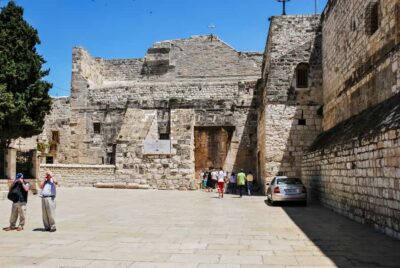 ★ 4.3From Tel Aviv: Jerusalem and Bethlehem Guided Day TripFrom $1181,316 reviews
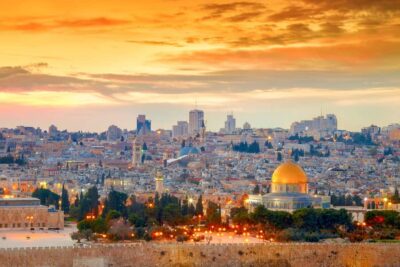 ★ 4.0Tel Aviv: Jerusalem, Bethlehem & Dead SeaFrom $109881 reviews
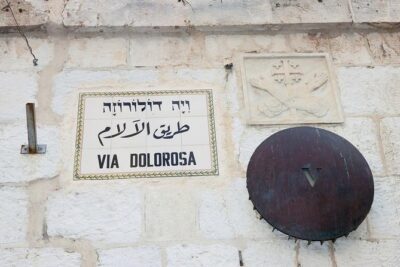 ★ 4.5Day Tour to Jerusalem and Bethlehem from Tel AvivFrom $121720 reviews
 ★ 4.1Full Day City Tour of JerusalemFrom $75367 reviews
 ★ 4.5Old and New Jerusalem Day Trip from Tel AvivFrom $95296 reviews
 ★ 4.0Old and New Jerusalem Full-Day TourFrom $75273 reviews
 ★ 4.5Jerusalem and Bethlehem Day Tour from JerusalemFrom $106258 reviews
 ★ 3.9Jerusalem Half-Day Sightseeing TourFrom $50177 reviews
Lists this tour appears in