
REVIEW · TEL AVIV & JAFFA
Jaffa and Neve Tzedek walking tour
Jaffa by the sea, then a story shift. This 2-hour walking tour ties Jaffa and Neve Tzedek to Tel Aviv’s Bauhaus legacy in an UNESCO World Heritage area along Rothschild Boulevard, with a guide-led street-level walk and context around UNESCO architecture.
I like the small group size (max 15), which keeps things relaxed enough to actually ask questions. I also like the 9:45 am start and the central meet-up at The Setai Tel Aviv, so you can slot this into a morning plan without wrestling with complicated directions.
One thing to consider: this is not a full-on Bauhaus-only architecture tour. The time is split between Jaffa and Neve Tzedek, so if Bauhaus buildings are your top priority, you may want to confirm how much time the guide spends on the architecture side.
In This Review
- Key highlights to know before you go
- Why this Jaffa and Neve Tzedek walk is a smart Tel Aviv starter
- Price and time: $60 for 2 hours that actually teaches you streets
- Meeting at The Setai Tel Aviv, and how to use the start point well
- Stop 1: Jaffa coastline, old city lanes, and a flea market with context
- Stop 2: Neve Tzedek, Tel Aviv’s early neighborhood outside the gates
- Bauhaus and Rothschild Boulevard, explained as you walk
- Group size, vibe, and what your morning will feel like
- How to plan your day around this 2-hour route
- Who this tour is best for
- Should you book this Jaffa and Neve Tzedek walking tour?
- FAQ
- How long is the Jaffa and Neve Tzedek walking tour?
- Where is the meeting point?
- Where does the tour end?
- Is there an admission fee for the stops?
- How big is the group?
- What is the cancellation policy?
Key highlights to know before you go
- UNESCO-connected Bauhaus context: You get design history tied to Tel Aviv’s changing streetscape.
- Jaffa coastline and old-city texture: Expect sea views plus old streets that feel made for walking.
- Flea market route with story time: You walk the market while a guide explains what shaped Jaffa.
- Neve Tzedek’s “first neighborhood” identity: You’ll hear why this area mattered as Tel Aviv grew.
- Efficient 2-hour format: Enough time to get oriented without burning your whole day.
Tel Aviv and Jaffa on foot, on wheels and at the table
Why this Jaffa and Neve Tzedek walk is a smart Tel Aviv starter
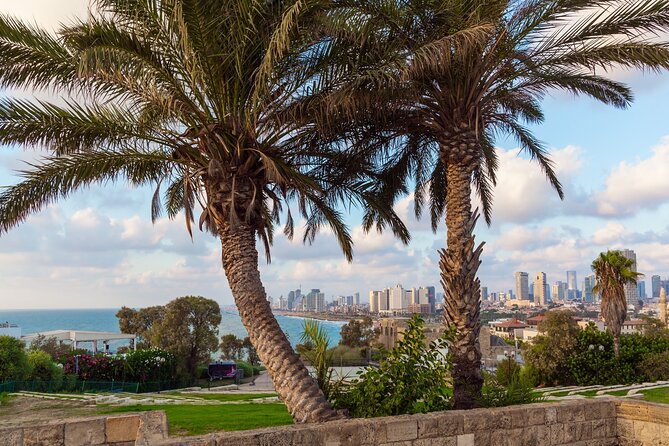
If Tel Aviv feels like a mix of eras, this tour helps you put those pieces in order. You start in Jaffa, the old port area where the city’s layers are obvious, then shift to Neve Tzedek, one of the neighborhoods that shows how Tel Aviv expanded beyond the old city boundary.
The big value here is that you are not just looking at buildings. You are getting the “why” behind the changes: how design and people shaped what you see now along the Bauhaus-linked stretch of Rothschild Boulevard. It turns architecture into a street-level story you can remember when you’re wandering on your own later.
Also, the format is friendly for a first morning. Two hours is long enough to feel like you went somewhere, short enough that you do not lose the rest of the day to walking.
Price and time: $60 for 2 hours that actually teaches you streets
At $60 per person for about 2 hours, you are paying for guided interpretation, not museum-style entry fees. And that matters, because the tour is built around walking segments with free admissions.
Where the value really shows up is in pacing. In a 15-person group, you are more likely to hear details and get questions answered. If you’ve ever taken a long group tour where you are mostly trying to keep up, this small size changes the feel.
Timing is another practical piece. The tour starts at 9:45 am, which is a great window in Tel Aviv for cooler walking and clearer morning light for the old streets and sea-adjacent views.
If you’re budgeting, think of this tour as your architecture orientation plus your neighborhood primer. Then you can use what you learn to choose what to revisit afterward on your own.
Meeting at The Setai Tel Aviv, and how to use the start point well
The meet-up is at The Setai Tel Aviv on David Razi’el St (22). The address is clear, and it’s a central spot that should be easy to reach by public transport.
Here is my practical advice for this kind of walking tour: arrive a few minutes early and take 60 seconds to check the group location. Tel Aviv streets can be busy, and you want to start the walk relaxed, not chasing the tour.
Once you start moving, the tour does what good neighborhood tours do. It gives you an order of operations: first the coastal and old-city feel in Jaffa, then the story shift into Neve Tzedek. That structure helps your brain build a map.
More Israel taken at walking pace


Stop 1: Jaffa coastline, old city lanes, and a flea market with context
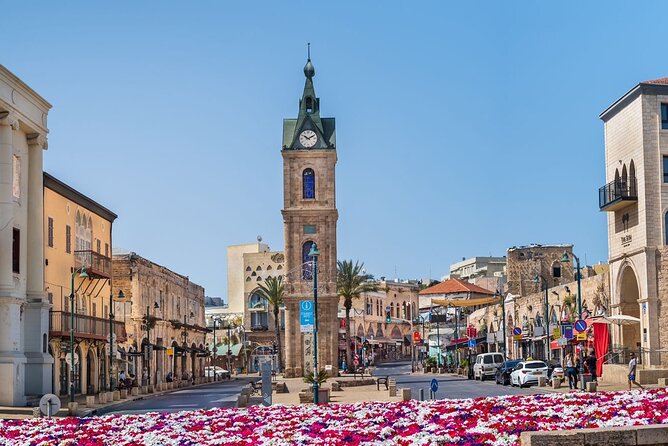
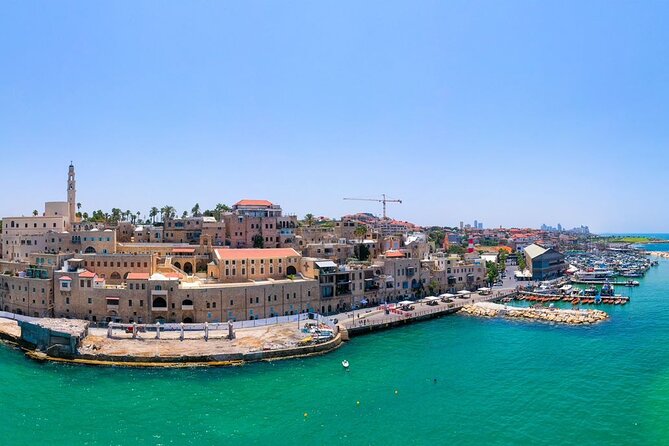
Jaffa is where Tel Aviv’s “before” is easiest to feel. This stop focuses on the Jaffa coastline and old city, then brings you through the flea market while the guide tells you the history behind what you’re seeing.
The coastline piece is important even if you’re not a serious photo person. You get those sea-side cues that make it easier to understand why Jaffa grew as a port city and why its streets have a different rhythm from newer areas.
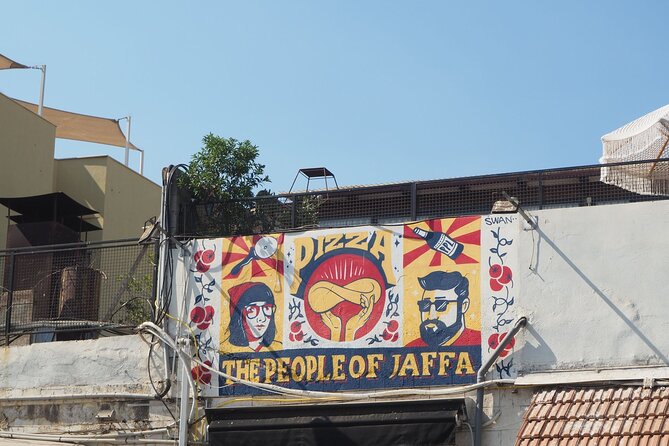
Then you move into the old-city vibe, including the flea market. Market streets are noisy and full of visual clutter, so a guide helps you sort signals: what is happening here, what it means historically, and why Jaffa’s identity still feels strong even as the wider city modernized.
One guide name that stood out in the experience is Merona Levinstein, noted for bringing the history of Jaffa alive. If you happen to get a guide like her, you’ll likely get more than dates and facts. You’ll get the sense of how people and personalities shaped the streets and the way the city evolved.
Possible drawback to keep in mind: markets can be crowded at times. Wear comfortable shoes and expect uneven sidewalk sections. You’ll have a better time if you plan for a gentle walking effort, not a casual stroller pace.
Stop 2: Neve Tzedek, Tel Aviv’s early neighborhood outside the gates
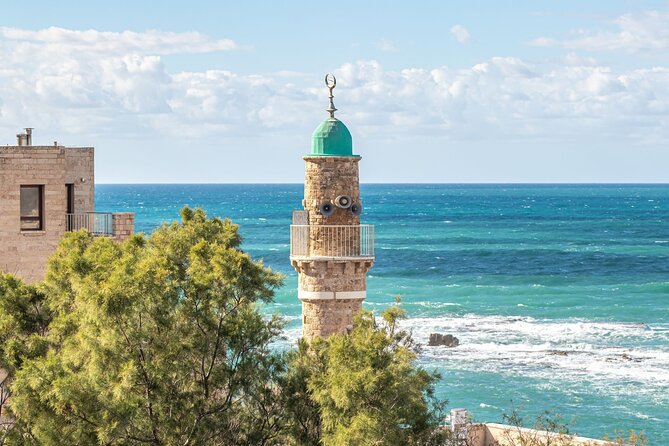
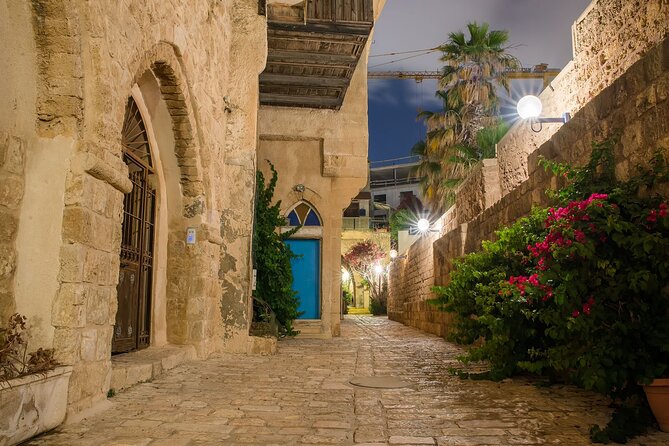
After Jaffa, the tour shifts to Neve Tzedek, described as Tel Aviv’s first neighborhood outside the Jaffa gates. That phrasing is useful because it frames Neve Tzedek as a “next step” in the story, not just a pretty area to wander.
In Neve Tzedek, you’ll see amazing buildings and hear the story behind how the neighborhood developed. This is where the walking tour starts to connect to the larger theme of architecture and design in Tel Aviv.
What I like about a stop like this is that it gives you a mental bridge. You can look at Neve Tzedek and understand it as part of a transition: from the old port and old-city edges into a more planned, neighborhood-building phase.
Neve Tzedek also helps you appreciate why Tel Aviv’s architecture is more than a style. It is a timeline. Once you understand that, you start noticing patterns on your own: how the city expands, how neighborhoods signal identity, and how design reflects the era’s hopes and influences.
Bauhaus and Rothschild Boulevard, explained as you walk
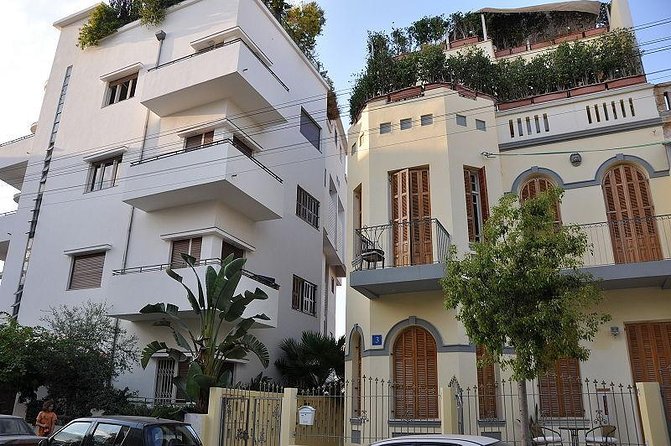
The tour centers on Bauhaus landmarks connected to Rothschild Boulevard, an area recognized as part of a UNESCO World Heritage site for Bauhaus architecture in Tel Aviv.
Here is the practical payoff: you get the design story tied to what you’re seeing and where you’re standing. Instead of treating Bauhaus as an abstract art movement, you see it as a set of choices that affected how the city looked and how it felt.
This is especially helpful if you are doing Tel Aviv for the first time. Many people arrive thinking Bauhaus is only a “look” they can tick off at a photo stop. A guide-led walk helps you understand why those buildings matter and how Tel Aviv changed when that movement arrived.
One caution from real-world experience: if Bauhaus is your main obsession, you should ask the guide early how much time the tour will spend on the Bauhaus side versus the Jaffa and Neve Tzedek storytelling. The itinerary includes both, and there are times when a person expects one thing and gets another. A quick clarification saves disappointment.
Group size, vibe, and what your morning will feel like
With a maximum of 15 travelers, the vibe is small-group friendly. That matters for walking tours because it helps keep everyone together and gives the guide room to interact.
Most travelers can participate, which usually means the walking pace is manageable for a broad range of visitors. Still, treat it as a real walking tour. You’ll be on your feet, moving between neighborhoods, and you’ll want comfortable shoes.
The best part of a smaller group is that you can usually get answers to the questions you actually have. If you are wondering how Tel Aviv became what it is now, this kind of guided format helps you connect dots fast.
How to plan your day around this 2-hour route

Because this runs about 2 hours and ends in Neve Tzedek, it naturally sets you up for a follow-on exploration. You’ll finish near where you spent time, so you can keep walking without needing to think about a new transit plan.
A simple way to plan is:
- After the walk, spend extra time in Neve Tzedek to absorb the building details you heard about.
- Then head back toward other Central Tel Aviv areas at your own pace, using your new neighborhood map.
If you’re the type who likes to cover a lot in one day, this tour is a good anchor. It gives you a grounded start, and then you can roam with more confidence.
Who this tour is best for
This walking tour is a great fit if you:
- Want a guided orientation to Jaffa plus Neve Tzedek
- Like architecture and want the story behind what you see
- Are visiting Tel Aviv for the first time and want to understand how the city changed
It may be less ideal if you:
- Want a long, Bauhaus-focused walking route with lots of exterior architecture time
- Prefer only one neighborhood and nothing else
- Are hoping for a museum-style experience rather than street-level storytelling
In other words, this is a “connections” tour. It links places and eras, so it works best when you’re curious about how Tel Aviv became itself.
Should you book this Jaffa and Neve Tzedek walking tour?
I think this is worth booking if you want to get your bearings fast and learn something meaningful while walking. The $60 price makes sense as a guided experience with free site admissions, and the small-group size helps the tour feel personal without being chaotic.
If Bauhaus is your one big goal, do one thing to protect your expectations: ask the guide (or the day-of lead) how the tour balances Bauhaus context with the Jaffa and Neve Tzedek stops. That tiny step helps you judge whether the itinerary fits your interests.
Overall, I’d book it for an early morning slot. You’ll leave with a clearer picture of Tel Aviv’s layers, not just a list of places.
FAQ
How long is the Jaffa and Neve Tzedek walking tour?
The tour lasts about 2 hours.
Where is the meeting point?
You meet at The Setai Tel Aviv, David Razi’el St 22, Tel Aviv-Yafo. The start time is 9:45 am.
Where does the tour end?
The tour ends in Neve Tzedek, Tel Aviv-Yafo.
Is there an admission fee for the stops?
The tour lists admission as free for both Jaffa and Neve Tzedek.
How big is the group?
The tour has a maximum group size of 15 travelers.
What is the cancellation policy?
You can cancel for a full refund up to 24 hours in advance of the experience’s start time.
Other Tours We Have Reviewed in Israel
- From Tel Aviv: Masada & Dead Sea Full Day Tour with Pick Up
★ 4.5 · 1,496 reviews - From Tel Aviv: Jerusalem Old & New City Bus Tour
★ 4.2 · 824 reviews - Day Tour to Jerusalem and Bethlehem from Tel Aviv
★ 4.5 · 720 reviews - From Tel Aviv: Masada, Ein Gedi & Dead Sea Tour
★ 4.2 · 705 reviews
More Israel Tour Reviews
- From Tel Aviv: Masada & Dead Sea Full Day Tour with Pick Up
★ 4.5 · 1,496 reviews - From Tel Aviv: Jerusalem and Bethlehem Guided Day Trip
★ 4.3 · 1,316 reviews - Masada and the Dead Sea Day Trip from Tel Aviv
★ 4.5 · 1,014 reviews - Tel Aviv: Jerusalem, Bethlehem & Dead Sea
★ 4.0 · 881 reviews
Tel Aviv and Jaffa, More on Foot
- Tel Aviv Jaffa Guided Bike Tour
★ 4.5 · 178 reviews - Guided Pub Crawl Night Tour at Tel Aviv
★ 5.0 · 85 reviews - Tel Aviv 3-Hour Easy Bike Tour
★ 4.8 · 81 reviews - Tel Aviv Street Art & Graffiti Tour
★ 5.0 · 76 reviews
Recently Added Israel Tour Reviews
- private Full-day Tour to Jericho + the Dead Sea★ 5.0 · 3 reviews
- Package VIP Skip Line Services in BGN Airport with Transfer to Tel aviv Hotels★ 5.0 · 3 reviews
- Food & Drink Private Guided Tour in Tel Aviv★ 5.0 · 3 reviews
- Tel Aviv Like a Local: Customized Guided Tour by Lokafy★ 5.0 · 3 reviews
- Private Tour from Tel Aviv to Jerusalem★ 5.0 · 3 reviews
Tel Aviv & Jaffa, compared.
 ★ 4.5Tel Aviv Jaffa Guided Bike TourFrom $62178 reviews
 ★ 5.0Guided Pub Crawl Night Tour at Tel AvivFrom $2385 reviews
 ★ 4.8Tel Aviv 3-Hour Easy Bike TourFrom $5581 reviews
 ★ 5.0Tel Aviv Street Art & Graffiti TourFrom $7876 reviews
 ★ 4.5Tel Aviv: Jaffa Half-Day Walking TourFrom $4970 reviews
 ★ 4.4Tel Aviv: Pub Crawl with 4 Stops and Free ShotsFrom $2866 reviews
 ★ 3.5Tel Aviv: Florentin Saturday Walking TourFrom $6965 reviews
 ★ 5.0Exclusive Private Tour in The Israel Diamond ExchangeFrom $4060 reviews
Lists this tour appears in